
Students Centric
Placements Report
Trackable results, real numbers
Reviews
Proven success, real voices
Trainers
Expert-led, Industry-Driven Training
Life at IIDE
Vibrant Spirit student life
Alumni
Successful Journeys, Inspiring Stories
Learning Centre
Webinars
Blogs
Case studies
Live, Interactive Masterclasses
Fresh Insights, quick reads
Real-life, Industry relevant
More
Hire from us
Hire Top Digital Marketing Talent
Work with us
Join Our Team, Make an Impact
Customised Training
Personalised digital marketing training for your company
Refer & earn
Simple, easy rewards
Contact us
Get the answers you need
About us
Know more about IIDE
Explore all course options

FOR FRESH GRADUATES
Post Graduation Program in Digital Marketing & Business Strategy- Ideal for Age: 20–25 Years

Can’t decide? Explore all our
Digital Marketing Courses
COMPARE BOTH OUR PROGRAMSOffline
Offline AI Courses with Dual CertificationsIndustry-Aligned TRACKMost Popular
UG Program in Digital Business & Entrepreneurship- Ideal for 12th Pass out / FY Degree Student

PARTNER PROGRAMS






Can’t decide? Explore all
BBA In Digital Marketing Colleges
Orginally Written by Aditya Shastri
Updated on Jun 5, 2026
|3,815K+ views
Coca-Cola is sold in more than 200 countries and serves billions of drinks every single day, yet staying at the top has never been simple. Health trends are shifting, competition is growing, and consumer expectations are changing faster than ever.
This SWOT analysis breaks down exactly where Coca-Cola stands today, what is driving its growth, and what challenges it needs to address. Business students, marketers, and entrepreneurs will find plenty of valuable insights here.
About Coca-Cola
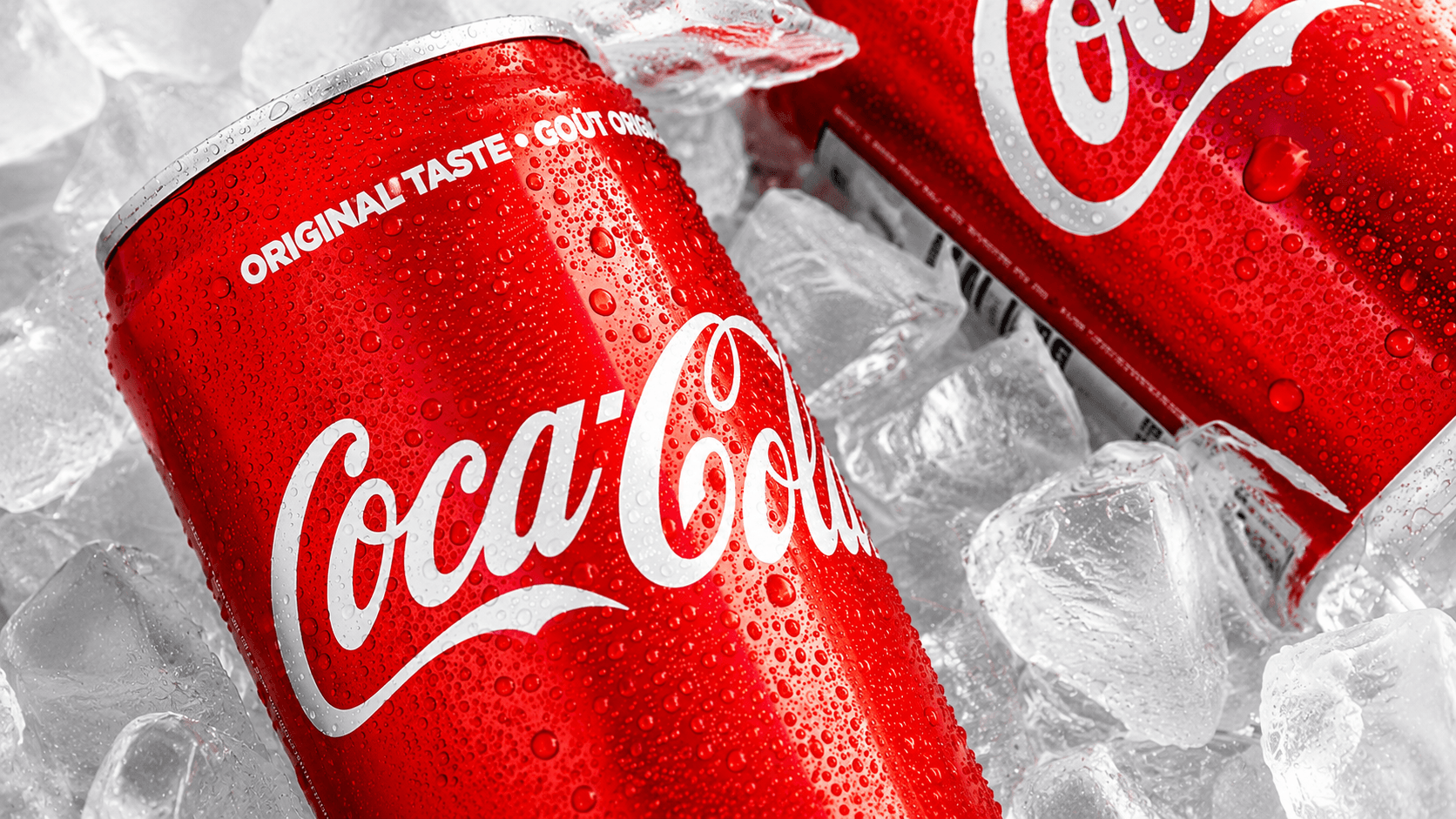
Coca-Cola began as a single syrup formula mixed in a pharmacy in Atlanta, Georgia, in 1886. Over the next 140 years, it grew into something far beyond a soft drink a cultural touchpoint, a symbol of refreshment, and one of the most distributed consumer goods products in history.
Today, The Coca-Cola Company operates in more than 200 countries and territories, runs a portfolio of over 200 brands, and serves roughly 2 billion beverages every single day.
The company operates as a brand and concentrate business not a bottling operation. It sells concentrates and syrups to a vast network of independent and franchise bottling partners who produce, package, and distribute the final product locally.
Brands like Sprite, Fanta, Minute Maid, Powerade, Dasani, fairlife, and Costa Coffee sit alongside the flagship cola.
In India, the brand's "Coke Halftime" campaign in 2026 fronted by actor Yash and amplified through the Indian Premier League captured the idea of pausing and refreshing during the daily grind. It is a strong example of how Coca-Cola continues to localise its global message effectively.
Quick stats of Coca-Cola:
| Detail | Information |
|---|---|
| Founded | 1886, Atlanta, Georgia, USA |
| Parent Company | The Coca-Cola Company (NYSE: KO) |
| Global Presence | 200+ countries and territories |
| Brand Value | $46.3 billion (Brand Finance 2025, up 32% year on year) |
| Core Slogan | "Taste the Feeling" and "Real Magic" |
| Dividend Record | 63 consecutive years of dividend increases |
| Key Competitors | PepsiCo, Monster Energy, Red Bull, Celsius, Liquid Death |
What Does SWOT Stand For in Coca-Cola's Case?
SWOT stands for Strengths, Weaknesses, Opportunities, and Threats. It is a framework that maps a company's internal position against the external environment it operates in. In this article, we dive deep into each of these four aspects to uncover how Coca-Cola navigates the competitive beverage industry and positions itself for continued growth in 2026.
Why SWOT Analysis Matters for Coca-Cola in 2026
- Shifts in Consumer Preferences: Millions of consumers are reducing sugar intake and choosing zero-calorie or functional drinks over traditional sodas.
- Sugar Tax Expansion: The WHO reported in January 2026 that sugar-based levies are now enforced in more than 100 jurisdictions worldwide.
- Competitive Fragmentation: Brands like Celsius, Liquid Death, and a wave of better-for-you RTD startups are carving out audience segments Coca-Cola once dominated.
- Emerging Market Momentum: India, Southeast Asia, and parts of Africa are delivering strong volume growth as developed-market volumes soften.
- Technology and Innovation: AI-driven demand forecasting and supply chain optimisation are becoming critical tools for sustaining Coca-Cola's efficiency advantage.

Is Digital Marketing the Right Career for You?
Find out in a free 45-min masterclass · Career paths, roles and growth explained · By Karan Shah, Founder & CEO, IIDE

Is Digital Marketing the Right Career for You?
Find out in a free 45-min masterclass · Career paths, roles and growth explained · By Karan Shah, Founder & CEO, IIDE
SWOT Analysis of Coca-Cola
A SWOT analysis helps understand the strengths, weaknesses, opportunities, and threats that a brand faces in the market. For Coca-Cola, this analysis is crucial as it evaluates how the brand uses its scale, tackles its vulnerabilities, and stays competitive in a fast-changing beverage industry. By examining Coca-Cola's position in 2026, we gain key insights into its strategies for maintaining global leadership.
Strengths of Coca-Cola: How the Global Beverage Leader Wins
Coca-Cola has successfully built one of the most recognised and trusted brands in the world, backed by a powerful distribution network, a growing portfolio of products, and decades of marketing excellence.
Brand Recognition and Financial Strength:
- Coca-Cola is valued at $46.3 billion by Brand Finance in 2025, making it one of the most recognised brands in the world.
- The company has raised its dividend for 63 consecutive years, which reflects remarkable financial consistency.
- Strong consumer loyalty and pricing power help the brand hold its ground even during economic downturns.
Global Distribution Network:
- Coca-Cola's bottling partners operate across more than 200 countries, covering everything from major retail chains to small local stores.
- This network took over a century to build and no new brand can replicate it in any reasonable timeframe.
- When Coca-Cola launches a product, it has an instant global distribution channel ready to go.
That reach shapes every pricing and placement decision the brand makes, and the Marketing Mix of Coca-Cola shows exactly how it all comes together.
Zero Sugar Portfolio Growth:
- Coca-Cola Zero Sugar is the company's strongest-performing product right now, growing steadily across all major markets.
- Company leadership called it their best innovation on the latest earnings call, and the numbers back that up.
- It gives Coca-Cola a credible, on-trend answer to health-conscious consumers without losing brand loyalty.
Diversified Brand Portfolio:
- Coca-Cola now competes across sparkling drinks, water, sports drinks, dairy, juices, and ready-to-drink coffee reducing its dependence on any single category.
- Brands like fairlife, Costa Coffee, Minute Maid, and Maaza cover a wide range of daily drink occasions across key global markets.
- This portfolio depth gives Coca-Cola a meaningful buffer against declining demand in any one product line.
Marketing Scale and Cultural Relevance:
- The "Real Magic" campaign and the India IPL activation in 2026 show how Coca-Cola connects emotionally with consumers across different cultures.
- The brand uses a large marketing budget across TV, digital, and on-ground channels with genuine effectiveness.
- Decades of consistent storytelling have built a cultural familiarity that very few brands in the world can match.
Weaknesses of Coca-Cola: Challenges the Brand Needs to Address
While Coca-Cola enjoys strong global dominance, there are several internal challenges that the brand must address to stay competitive. These weaknesses are important to understand as they highlight the areas where the company is most vulnerable to shifting market conditions.
Dependence on Carbonated Sugary Drinks:
- The majority of Coca-Cola's revenue still comes from traditional sparkling drinks, a category that is slowing in developed markets.
- The company has not diversified far enough yet to comfortably manage a significant drop in sugary soda demand.
- This is a structural risk that PepsiCo faces too, as explored in the SWOT analysis of PepsiCo.
Foreign Exchange Exposure:
- Around 76% of Coca-Cola's revenue comes from outside the United States.
- When the dollar is strong or when key emerging market currencies weaken, that broad geographic spread becomes a financial problem.
- In 2025, currency movements wiped out several percentage points of earnings, even after the company's hedging efforts.
BODYARMOR Impairment and Sports Drink Struggles:
- Coca-Cola took a nearly $1 billion write-down on BODYARMOR after the acquisition failed to deliver the expected market returns.
- Running both Powerade and BODYARMOR without a clear strategy for each has created confusion rather than strength in the sports drink space.
- With Gatorade dominant and Celsius growing fast, Coca-Cola's position in this category remains weak and unresolved.
Plastic Pollution Reputation:
- Coca-Cola is consistently ranked among the world's largest sources of plastic waste, generating millions of tonnes of packaging each year.
- Its recycled content targets are not due until 2035, which leaves a very visible gap between ambition and current reality.
- This ongoing issue creates tension with younger consumers, sustainability-focused investors, and regulators in key markets.
Slower Innovation Cycle:
- Launching a new product across 200 countries involves bottler agreements, regulatory approvals, and local marketing in every single market.
- Newer brands like Celsius and Liquid Death can go from concept to shelf in a fraction of that time.
- As consumer preferences shift faster than ever, this speed disadvantage is becoming harder to ignore.
Opportunities for Coca-Cola: Where the Growth Potential Lies
Coca-Cola has several exciting opportunities to explore, particularly as consumer preferences shift toward healthier options and emerging markets continue to grow. The brand is well placed to capture this growth, provided it moves with focus and speed in the right directions.
Emerging Market Expansion:
- India is the most exciting emerging market opportunity for Coca-Cola right now.
- As incomes rise and more people move to cities across India, Southeast Asia, Africa, and Latin America, demand for branded packaged drinks grows with them.
- Coca-Cola's existing distribution infrastructure puts it in a strong position to capture that growth ahead of smaller competitors.
Zero Sugar and Functional Beverage Expansion:
- Zero Sugar's strong growth shows consumers want healthier options and are happy to stay with Coca-Cola.
- Functional drinks with vitamins, electrolytes, or protein are growing fast and fit perfectly within Coca-Cola's distribution strength.
- Moving into this space now gives Coca-Cola a clear head start over smaller emerging brands.
Sprite is already a strong example of how Coca-Cola is extending its zero sugar push beyond the flagship cola, and the SWOT Analysis of Sprite gives a closer look at how that brand is performing within the portfolio.
Costa Coffee and Ready-to-Drink Coffee:
- Costa Coffee gives Coca-Cola a real and credible presence in the hot drinks and ready-to-drink coffee market.
- In Asia, where RTD coffee is one of the fastest-growing drink categories, Coca-Cola has existing bottler relationships in Japan, South Korea, China, and across Southeast Asia that it can use to scale Costa-branded products.
Sustainable Packaging Leadership:
- Moving ahead on recycled packaging and water stewardship could become a real brand advantage with younger, eco-conscious consumers.
- Coca-Cola has the scale and capital to lead on sustainability, and shareholder pressure from the April 2026 annual meeting makes it a boardroom priority.
AI-Powered Distribution and Personalisation:
- AI tools for demand forecasting, distribution routing, and inventory planning can deliver real efficiency gains across a 200-country network.
- Personalised digital marketing and loyalty programmes open the door to individual consumer relationships that traditional advertising never allowed.
- Embedding these tools at scale puts Coca-Cola ahead of most competitors when it comes to operational efficiency and consumer engagement.
Threats to Coca-Cola: External Pressures Shaping the Road Ahead
Despite its global strength, Coca-Cola is not immune to external pressures. Sugar taxes, rising competition, and shifting consumer values are forces the brand must navigate carefully to protect its long-term position.
Sugar Tax Proliferation:
- Sugar taxes are now in force across more than 100 countries and the list keeps growing.
- These levies directly push up the shelf price of Coca-Cola's core products, reducing purchase frequency among price-sensitive consumers.
- Several markets are also introducing warning labels on high-sugar drinks, accelerating the shift toward zero-sugar and low-calorie alternatives.
Intensifying Competition:
- PepsiCo remains the strongest direct rival, with its food and snack portfolio giving it a wider daily consumer presence.
- Celsius and Liquid Death are growing fast among younger audiences in categories where Coca-Cola has limited dominance.
- The market Coca-Cola once controlled is now fragmented across many specialised and health-focused brands.
Currency and Macroeconomic Volatility:
- Earning most of its revenue outside the US keeps Coca-Cola exposed to currency swings that eat into earnings.
- Geopolitical tensions are making raw material, energy, and packaging costs harder to predict and manage.
- The planned sale of Coca-Cola Beverages Africa in the second half of the year adds further complexity to an already demanding period.
Regulatory and Health Scrutiny:
- Restrictions on marketing sugary drinks to children are growing across major markets.
- At the April 2026 annual meeting, shareholders pushed on packaging transparency, making this a mainstream investor concern.
- Staying compliant requires continuous investment in reformulation, labelling, and communication.
Changing Consumer Identity Around Health:
- For Gen Z, drink choices reflect personal values around health, wellness, and sustainability.
- Coca-Cola's classic formulas are iconic, but familiarity alone no longer drives purchases among younger consumers.
- Brands that genuinely live these values hold a clear advantage, and that is a gap Coca-Cola still needs to close.
Red Bull has built its entire identity around exactly this kind of value-driven connection with younger audiences, and the Marketing Strategy of Red Bull is a sharp look at how a challenger brand earns loyalty that legacy names struggle to replicate.
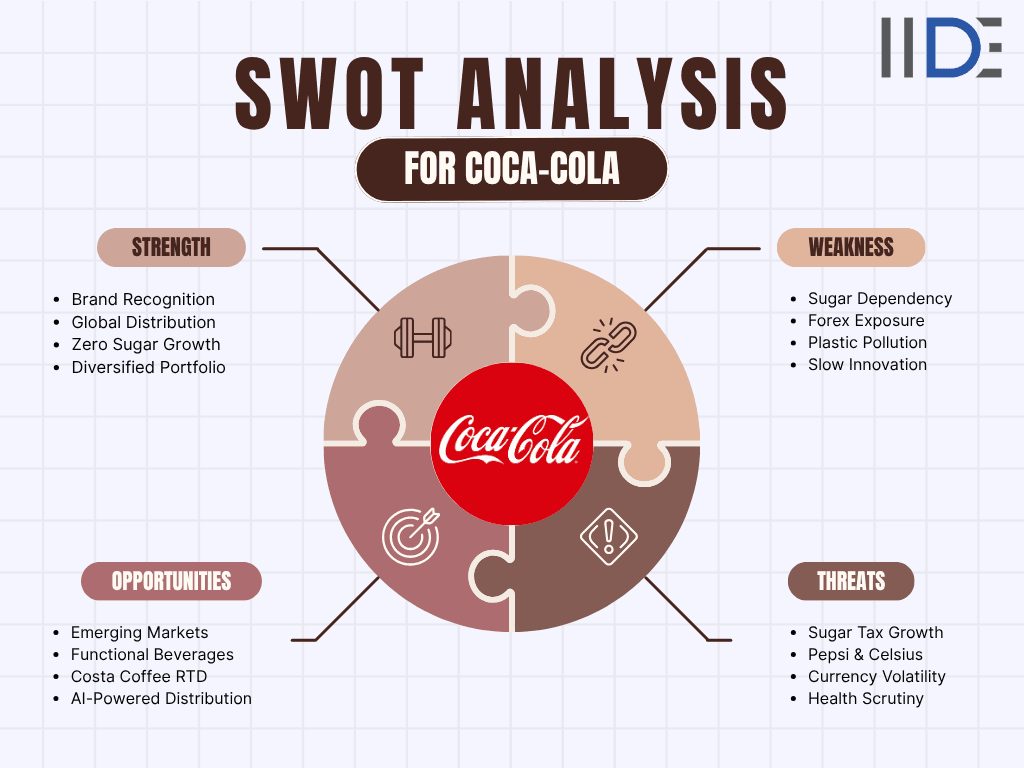
Summary Table – SWOT of Coca-Cola
Conclusion
Coca-Cola in 2026 is a company in a genuinely strong position, but one that faces real and lasting pressures.
The finances are solid, the brand is more valuable than ever, and Coca-Cola Zero Sugar is one of the best-performing products in the beverage industry right now. The full-year outlook is positive and the company is growing in the right areas.
But the bigger picture is more complicated. Sugar taxes are not going away. Younger consumers are rethinking their relationship with sugary drinks, and the competition is more fragmented than it has ever been.
Fixing the plastic pollution problem also requires more than long-dated targets. It requires sustained action, real investment, and visible progress.
The clearest path forward runs through Zero Sugar, emerging markets, and the brands beyond cola.
If Coca-Cola can grow its low-sugar and functional drink lines fast enough to offset slowing soda volumes in developed markets, while at the same time deepening its presence in India, Southeast Asia, and Africa, it has everything it needs to stay at the top for decades to come.
The brand has the capital, the distribution, and the equity to lead the next era of the global beverage industry. The only question is whether it moves decisively enough to shape that era on its own terms.
Want to Know Why 2,50,000+ Students Trust Us?
Dive into the numbers that make us the #1 choice for career success



MBA - Level
Post Graduate in Digital Marketing & Business Strategy

Best For
Fresh Graduates

Mode of Learning
On Campus (Mumbai & Delhi)

Starts from
Nov 27, 2026

Duration
11 Months

Live & Online
Advanced Online Digital Marketing Course
Best For
Working Professionals
Mode of Learning
Online
Starts from
Nov 2, 2026
Duration
4-6 Months

Offline
Top AI Courses to Make You Future Ready!
Best For
AI Enthusiasts
Mode of Learning
2–5 Month Program
Starts from
Nov 24, 2026
Duration
Flexiable

Offline
Undergraduate Program in Digital Business & Entrepreneurship
Best For
12th Passouts
Mode of Learning
On Campus (Mumbai)
Duration
3 Years
Offline
Degree In 2026 ≠ Enough Degree + Digital Skills = Future-Ready
Best For
12th Passouts
Mode of Learning
At IIDE Campus
Duration
3 Years
Recent Post
You May Also Like
Frequently Asked Questions
Pharmacist John S. Pemberton invented the original Coca-Cola syrup in 1886. Businessman Asa Griggs Candler later bought the formula and expanded it into a global enterprise.
Coca-Cola was founded in 1886 in Atlanta, Georgia. It started as a single fountain drink in a local pharmacy and quickly grew into a global beverage empire.
The primary strength of Coca-Cola is its unmatched global distribution network. With operations in over 200 countries, the brand can launch and scale products worldwide faster than almost any other beverage company.
Traditional sodas still drive most of its revenue. However, as health trends shift toward low sugar options, this heavy reliance makes the brand highly vulnerable.
Sugar taxes are now enforced in over 100 countries globally. These levies directly increase the retail price of sugary drinks, which reduces purchase frequency among price sensitive consumers.
India is a massive emerging market opportunity for Coca-Cola. Rising middle class incomes and highly localized campaigns like the 2026 Coke Halftime promotion are driving strong volume growth in the region.
Coca-Cola uses AI for demand forecasting and inventory planning across its supply chain. It also leverages AI in digital marketing to build personalized relationships with its consumers.
It is currently one of the fastest growing products for the brand globally. It helps Coca-Cola retain health conscious consumers who want the classic taste without the calories.


Lead Trainer & Business Development Head at IIDE
Aditya Shastri leads the Business Development segment at IIDE and is a seasoned Content Marketing expert. With over a decade of experience, Aditya has trained more than 20,000 students and professionals in digital marketing, collaborating with prestigious institutions and corporations such as Jet Airways, Godrej Professionals, Pfizer, Mahindra Group, Publicis Worldwide, and many others. His ability to simplify complex marketing concepts, combined with his engaging teaching style, has earned him widespread admiration from students and professionals alike.
Aditya has spearheaded IIDE’s B2B growth, forging partnerships with over 40 higher education institutions across India to upskill students in digital marketing and business skills. As a visiting faculty member at top institutions like IIT Bhilai, Mithibai College, Amity University, and SRCC, he continues to influence the next generation of marketers.
Apart from his marketing expertise, Aditya is also a spiritual speaker, often traveling internationally to share insights on spirituality. His unique blend of digital marketing proficiency and spiritual wisdom makes him a highly respected figure in both fields.