
Students Centric
Placements Report
Trackable results, real numbers
Reviews
Proven success, real voices
Trainers
Expert-led, Industry-Driven Training
Life at IIDE
Vibrant Spirit student life
Alumni
Successful Journeys, Inspiring Stories
Learning Centre
Webinars
Blogs
Case studies
Live, Interactive Masterclasses
Fresh Insights, quick reads
Real-life, Industry relevant
More
Hire from us
Hire Top Digital Marketing Talent
Work with us
Join Our Team, Make an Impact
Customised Training
Personalised digital marketing training for your company
Refer & earn
Simple, easy rewards
Contact us
Get the answers you need
About us
Know more about IIDE
Explore all course options

FOR FRESH GRADUATES
Post Graduation Program in Digital Marketing & Business Strategy- Ideal for Age: 20–25 Years

Can’t decide? Explore all our
Digital Marketing Courses
COMPARE BOTH OUR PROGRAMSOffline
Explore Top AI CoursesIndustry-Aligned TRACKMost Popular
UG Program in Digital Business & Entrepreneurship- Ideal for 12th Pass out / FY Degree Student

PARTNER PROGRAMS






Can’t decide? Explore all
BBA In Digital Marketing Colleges

Orginally Written by Aditya Shastri
Updated on Jan 8, 2026
Share on:


If you’ve ever walked down a beauty aisle, chances are Garnier has caught your eye- bright packaging, eco-friendly messaging, and products that promise effortless skincare and haircare. But how strong is the brand really? And what’s happening behind the scenes that keeps Garnier competing with giants like L’Oréal and Nivea.
By the end, you’ll have a crystal clear understanding of where Garnier stands in 2026 whether you’re a student, a marketer, or just a curious beauty admirer.
Before diving into the article, I would like to inform you that the research and initial analysis for this piece were conducted by Soniya Agrawal. She is a current student of IIDE's Online Digital Marketing Course, June Batch 2025
If you find this article helpful then feel free to reach out to Soniya Agrawal to send a quick note of appreciation for her fantastic research, she will appreciate the kudos!
About Garnier
Garnier was founded in 1904 by Alfred Amour Garnier in France. It is a globally recognized cosmetics brand, known for its skincare and haircare lines. As of 2025, it stands as one of L’Oréal’s core mass-market brands, combining natural ingredient heritage with high-volume reach.
Garnier has built its identity on combining natural ingredient innovation with high accessibility, making it a go to for wide audiences without sacrificing eco-consciousness. But how well is it positioned against rising sustainability demands, digital disruption, and fierce competition?
Overview Table
| Attribute | Details |
|---|---|
| Official Name | Garnier |
| Founded | 1904 |
| Founders | Alfred Amour Garnier |
| Headquarters | Clichy, Hauts-de-Seine, France |
| Parent Company | L’Oréal S.A. |
| Industries | Haircare, Skincare, Cosmetics |
| Global Reach | 140+ countries |
| Brand Value | Strong presence in L’Oréal’s portfolio |
| Competitors |
Other mass-market skincare/hair brands (e.g., Dove, Pantene, Neutrogena) & mid-premium lines |
Why Does SWOT Analysis Matters for Garnier?
1. Consumer Trends Are Shifting: These days, buyers really care about what’s inside their beauty products, they want cleaner, greener, and more transparent options. And honestly, Garnier already has a good head start with its natural ingredient image. The real question is: can the brand scale its sustainability efforts fast enough to keep up with this growing demand?
2. Digital Disruption: We’re seeing a huge wave of direct-to-consumer beauty brands popping up everywhere and they’re winning big by using social media trends, influencers, and viral marketing. With so many of these digital first brands taking over, Garnier can’t rely on traditional strategies anymore. It needs to step up its online game if it wants to protect its market share.
3. Economic Pressures: Right now, inflation, supply chain issues, and rising raw material costs are putting real pressure on beauty brands. Garnier is feeling that squeeze too: which means how it controls costs and sets its prices will play a huge role in how well it can stay competitive.
4. Regulation & Sustainability: With stricter environmental rules and consumers becoming more vocal about sustainability, the pressure is definitely on. For Garnier, this means its eco-friendly packaging, cruelty-free promise, and overall sustainability journey aren’t just nice-to-have, they’re going to be key to staying relevant in the future.
Because of these shifts, a current SWOT of Garnier isn’t just academic, it’s a roadmap for how the brand can grow and defend its market in 2026.

Is Digital Marketing the Right Career for You?
Find out in a free 45-min masterclass · Career paths, roles and growth explained · By Karan Shah, Founder & CEO, IIDE

Is Digital Marketing the Right Career for You?
Find out in a free 45-min masterclass · Career paths, roles and growth explained · By Karan Shah, Founder & CEO, IIDE
SWOT Analysis of Garnier
In this SWOT analysis, we’ll break down Garnier’s Strengths, Weaknesses, Opportunities, and Threats and explore what that means for entrepreneurs, beauty industry students, and brand strategists alike. Let’s dive into Garnier’s strategic landscape.
Strengths
1. Strong Backing from L’Oréal
- Being part of the L’Oréal family gives Garnier a huge advantage.
- L’Oréal is one of the biggest and most innovative beauty companies in the world, so Garnier gets access to top-tier research and development, helping them create better, safer, and more effective products.
- It also benefits from L’Oréal’s massive global distribution network, which means Garnier can reach shelves in nearly every country easily.
- And of course, the credibility of being backed by a trusted global brand makes consumers more confident in Garnier’s products.
2. Heritage & Brand Equity
- Garnier has been around since 1904, which means it’s been in the beauty game for well over a century.
- That kind of longevity builds a lot of trust, people know the brand has stood the test of time.
- It’s especially recognized for its haircare and skincare products, where generations of consumers have relied on Garnier for quality and effectiveness.
- Simply put, its long history gives it a credibility that newer brands often have to work hard to earn.
3. Natural Ingredient Positioning
- Garnier has really carved out its own identity by focusing on what it calls “natural technology.”
- That means combining effective scientific formulas with natural ingredients: the best of both worlds.
- This approach resonates especially well with eco-conscious consumers who care about what goes into their beauty products but still want them to actually work.
4. Cruelty-Free Certification
- Garnier has earned the Leaping Bunny certification, which means none of its products are tested on animals.
- This is a big deal for many consumers today, especially those who care about ethical and cruelty-free beauty.
- It shows that Garnier is serious about animal welfare and aligns with the growing demand for responsible, conscious brands.
5. Sustainability Commitment
- Garnier is also paying attention to how its products impact the environment.
- Many of its formulas are biodegradable, meaning they break down naturally without harming nature.
- On top of that, the brand is working to reduce the water footprint of its products, using less water during production and in the formulas themselves.
- These efforts make Garnier a more eco-friendly choice for consumers who care about sustainability.
6. Wide Global Distribution
- Thanks to being part of L’Oréal, Garnier has a huge distribution advantage.
- Its products are easy to find, whether you’re shopping at mass retail stores or online, and in markets all over the world.
- This widespread availability makes it convenient for consumers everywhere to pick up Garnier, giving the brand a strong presence compared to smaller or newer competitors.
Weaknesses
1. Perception of Being “Mass Market”
- Garnier’s wide availability in supermarkets, drugstores, and online platforms makes it easy for everyone to buy and that’s definitely a strength.
- But there’s a trade-off: because the brand is so accessible and affordable, some consumers may not see it as premium or high-end.
- In other words, being everywhere helps sales, but it can also make the brand feel more “mass-market” rather than luxurious or exclusive
2. Dependency on Parent Company
- Since Garnier is part of the huge L’Oréal group, it doesn’t always get to make every decision on its own.
- Sometimes its plans or investments might take a back seat to L’Oréal’s bigger, company-wide priorities.
- So even if Garnier wants to move fast in a certain direction, it might be limited by what the parent company decides.
3. Sustainability Trade-offs
- Even though Garnier itself is certified cruelty-free, it’s still owned by L’Oréal, a company that has faced criticism in the past for animal testing, mainly because it operates in markets where such testing was once required by law.
- So, while Garnier is doing the right thing, some consumers still associate it with L’Oréal’s broader reputation.
- This can create confusion or doubt, even if Garnier’s own practices meet cruelty-free standards.
4. Ingredient Transparency Complexity
- Garnier has definitely taken steps toward being more eco-friendly, but that doesn’t mean consumers always have a complete picture of how every product impacts the environment from start to finish.
- Things like sourcing ingredients, manufacturing, packaging, transportation, and disposal all play a role and not all of this information is always visible or fully explained to buyers.
- So while Garnier is moving in the right direction, some consumers may still feel unsure about the brand’s total environmental footprint.
5. Competitive Overlap
- Because Garnier is part of the larger L’Oréal family, it sometimes ends up competing with its own “sister brands.”
- This is especially true in skincare, where L’Oréal Paris, La Roche-Posay, and even CeraVe (also owned by L’Oréal) target similar customer needs.
- When multiple brands under the same company offer similar products, it can create overlap and make it harder for Garnier to stand out.
- Essentially, Garnier isn’t just competing with outside brands, it’s also competing within the L’Oréal portfolio.
Explore the marketing strategy of Garnier and learn how they're capturing Gen Z through micro-influencer partnerships, refill systems, and plant-based product lines.
Opportunities
1. Sustainability Innovation
- Garnier is actively working to make its packaging more eco-friendly.
- This includes reducing or eliminating the use of virgin plastic, increasing the amount of recycled materials in bottles and tubes, and exploring refillable product models to cut down waste.
- According to various sustainability reports, the brand is already moving toward these goals, which shows it’s taking environmental responsibilities seriously and trying to meet rising consumer expectations.
2. Ingredient Storytelling
- Garnier has always been known for its “natural” image, and this gives the brand a great opportunity.
- By showcasing more plant-based ingredients and being transparent about ethical sourcing, Garnier can strengthen that reputation even further.
- This means talking more openly about where ingredients come from, how they’re harvested, and why they’re better for people and the planet.
- Highlighting these points helps Garnier connect with consumers who care about clean, responsible beauty.
3. Emerging Markets
- In many developing markets like Asia and Latin America, more and more consumers are looking for beauty products that are both affordable and effective.
- People want good quality without paying luxury prices.
- This growing demand gives Garnier a big opportunity because the brand already fits perfectly into that space, it’s budget-friendly, trusted, and widely available.
- So as these markets expand, Garnier has a strong chance to grow right along with them.
4. Digital & Influencer Growth
- Younger consumers are spending more time online than ever, scrolling through social media, watching short videos, and shopping directly from apps.
- For Garnier, this means there’s a big opportunity to boost digital marketing efforts, work with micro-influencers who have highly engaged followings, and tap into social commerce so people can buy products directly from social platforms.
- Investing in these areas can help Garnier connect with the next generation of beauty buyers and stay relevant in a fast-changing market.
5. Vegan Portfolio Expansion
- Vegan beauty is becoming more popular, with more consumers looking for products free from animal-derived ingredients.
- For Garnier, this is a great opportunity to expand its fully vegan product lines and give them more visibility.
- By doing so, the brand can attract eco-conscious and ethically-minded shoppers, strengthen its “natural and responsible” image, and stay competitive in the growing vegan beauty market.
Threats
1. Intense Competition
- Garnier faces competition on two fronts. On one side, there are other mass-market giants like Unilever and P&G, which offer similar affordable, widely available products.
- On the other hand, there are indie beauty startups, smaller, often digital-first brands that appeal to niche audiences with trendy, innovative, or eco-friendly products.
- This means Garnier has to stay competitive against both established big players and agile newcomers trying to capture attention.
2. Regulatory Risk
- Stricter environmental and chemical regulations are becoming more common around the world.
- For Garnier, this could mean higher production costs or limits on certain ingredients and formulations.
- In other words, some products might become more expensive to make, or Garnier may need to reformulate them entirely to meet new rules.
- Staying compliant is essential, but it can also pose challenges for maintaining product variety and pricing.
3. Economic Slowdown
- In key markets like China and Europe, if consumers start cutting back on spending, it can directly impact how many products Garnier sells.
- For example, L’Oréal has already experienced weaker demand in China, which shows how sensitive the beauty market can be to economic shifts.
- Slower consumer spending in these regions could make it harder for Garnier to grow its sales volume, even if the brand remains popular.
4. Greenwashing Backlash
- These days, consumers are paying close attention to brands’ sustainability claims.
- If Garnier says a product is eco-friendly but the actual environmental impact doesn’t match the promise, people may feel misled.
- This could hurt the brand’s reputation, as modern shoppers are quick to call out “greenwashing” and expect real, measurable action behind any sustainability messaging.
5. Supply Chain Disruptions
- Garnier relies on natural ingredients for many of its products, but the prices and availability of these materials can fluctuate a lot due to weather, crop yields, or supply chain issues.
- This kind of volatility can raise production costs and make it harder for the brand to maintain stable pricing.
- Essentially, relying on natural ingredients is great for the brand’s image, but it also comes with financial risks.
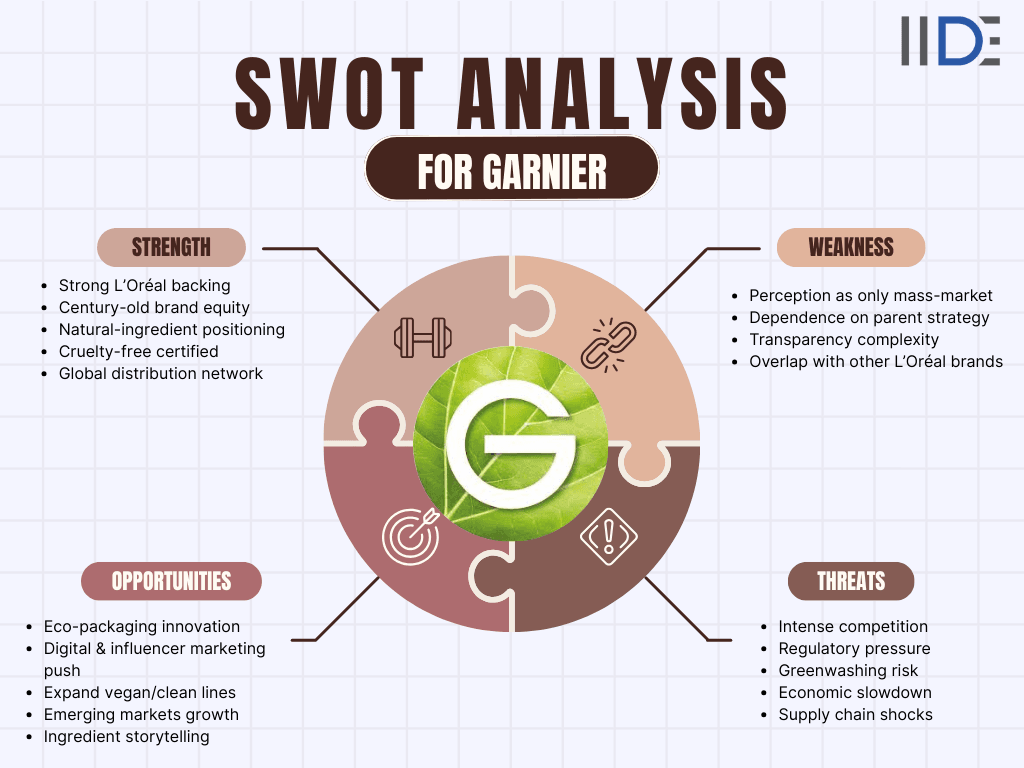
Understand what sets industry leaders apart - our SWOT analysis of L'Oréal maps out the strategic advantages, weaknesses, opportunities, and threats defining the world's largest beauty company.
IIDE Student Takeaway, Conclusion & Recommendations
Key Insights
- Garnier’s biggest advantage is its blend of heritage + accessibility + sustainability.
- Its most significant risk lies in being perceived as “just another L’Oréal mass brand,” especially when consumers demand more purpose-driven beauty.
Recommendations
1. Strengthen Transparency: Launch detailed environmental impact labels that show consumers exactly where ingredients come from and quantify the carbon emissions and water usage associated with each product. This builds trust by moving beyond vague "eco-friendly" claims to provide verifiable, measurable data that empowers informed purchasing decisions.
2. Innovate in Packaging: Invest in refill systems where customers buy durable containers once and purchase lightweight refill pouches afterward, dramatically reducing plastic waste. Simultaneously increase the use of post-consumer recycled plastics and explore biodegradable materials like mushroom-based packaging or seaweed films that genuinely break down in natural environments.
3. Boost Digital Engagement: Partner with micro-influencers who have highly engaged niche audiences and create authentic, relatable content that resonates more deeply than celebrity endorsements. Leverage TikTok and Instagram's short-form video formats for storytelling that demonstrates real product results, and integrate social commerce features that allow followers to purchase instantly while they're emotionally engaged.
4. Localise for Growth Markets: Adapt product formulations to address region-specific skin concerns, climate conditions, and ingredient preferences - such as lighter textures for humid climates or incorporating locally valued botanical ingredients. Tailor marketing campaigns to reflect cultural beauty standards and values while developing pricing and distribution strategies that effectively reach emerging middle-class consumers in secondary cities.
5. Expand Vegan Lines: Develop a comprehensive range of vegan products across all categories by replacing animal-derived ingredients with high-performing plant-based alternatives, not just limiting vegan options to niche lines. Prominently feature these plant-based formulations in marketing campaigns, emphasizing both the ethical benefits and environmental advantages while obtaining recognized vegan certifications to build credibility.
Conclusion
Garnier is well-positioned for the near future: its legacy, scale, and increasing commitment to sustainability give it strong footing. But staying relevant in 2026 means evolving beyond “mass brand”, by being a purposeful, transparent, and innovative beauty leader. Will Garnier double down on its eco heritage and digital-first play, or risk getting outpaced by more nimble, “green” challengers?
Want to Know Why 2,50,000+ Students Trust Us?
Dive into the numbers that make us the #1 choice for career success



MBA - Level
Post Graduate in Digital Marketing & Business Strategy

Best For
Fresh Graduates

Mode of Learning
On Campus (Mumbai & Delhi)

Starts from
Oct 1, 2026

Duration
11 Months

Live & Online
Advanced Online Digital Marketing Course
Best For
Working Professionals
Mode of Learning
Online
Starts from
Sep 4, 2026
Duration
4-6 Months

Offline
Top AI Courses to Make You Future Ready!
Best For
AI Enthusiasts
Mode of Learning
2–5 Month Program
Starts from
Sep 29, 2026
Duration
Flexiable

On Campus
Advanced Certification in Artificial Intelligence
Best For
AI Enthusiasts
Mode of Learning
On Campus (Mumbai)
Starts from
Sep 29, 2026
Duration
3 Months
Offline
Undergraduate Program in Digital Business & Entrepreneurship
Best For
12th Passouts
Mode of Learning
On Campus (Mumbai)
Starts from
-
Duration
3 Years

Offline
Degree In 2026 ≠ Enough Degree + Digital Skills = Future-Ready
Best For
12th Passouts
Mode of Learning
At IIDE Campus
Starts from
-
Duration
3 Years
Recent Post
You May Also Like
You May Also Like
Yes! Garnier doesn't test on animals anywhere in the world and is certified cruelty-free by Cruelty Free International. They've been against animal testing since way before it became trendy.
Absolutely. They have a growing range of vegan products across skincare, haircare, and color. Look for the "vegan formula" label on packaging, or check their website for a full list.
Not really - Garnier positions itself as accessible, affordable beauty. You'll find it at drugstores and supermarkets rather than high-end department stores, which is part of its charm.
L'Oréal owns Garnier. They acquired it back in 1965, and it's now one of L'Oréal's biggest mass-market brands worldwide.
Many are! Garnier has specific lines designed for sensitive skin, like their Micellar Water and SkinActive ranges. Just check the product labels for "hypoallergenic" or "dermatologically tested" if you have concerns.
They're working on it! Garnier has committed to using more recycled plastic, creating refillable packaging, and reducing their carbon footprint. They've set targets for 2026, though, like most big brands, it's an ongoing journey.
Their Micellar Water is iconic - it's sold every second somewhere in the world! The Fructis haircare line and their BB creams are also super popular.
Generally, yes. Their Fructis and Whole Blends lines are loved by millions, though some people with specific hair concerns (like very damaged or color-treated hair) might need more specialized treatments. It's solid quality for the price point.

Lead Trainer & Business Development Head at IIDE
Aditya Shastri leads the Business Development segment at IIDE and is a seasoned Content Marketing expert. With over a decade of experience, Aditya has trained more than 20,000 students and professionals in digital marketing, collaborating with prestigious institutions and corporations such as Jet Airways, Godrej Professionals, Pfizer, Mahindra Group, Publicis Worldwide, and many others. His ability to simplify complex marketing concepts, combined with his engaging teaching style, has earned him widespread admiration from students and professionals alike.
Aditya has spearheaded IIDE’s B2B growth, forging partnerships with over 40 higher education institutions across India to upskill students in digital marketing and business skills. As a visiting faculty member at top institutions like IIT Bhilai, Mithibai College, Amity University, and SRCC, he continues to influence the next generation of marketers.
Apart from his marketing expertise, Aditya is also a spiritual speaker, often traveling internationally to share insights on spirituality. His unique blend of digital marketing proficiency and spiritual wisdom makes him a highly respected figure in both fields.