Application Deadline for 3-Year UG Program closes on 31st Aug. Book a Counselling to know more

Students Centric
Placements Report
Trackable results, real numbers
Reviews
Proven success, real voices
Trainers
Expert-led, Industry-Driven Training
Life at IIDE
Vibrant Spirit student life
Alumni
Successful Journeys, Inspiring Stories
Learning Centre
Webinars
Blogs
Case studies
Live, Interactive Masterclasses
Fresh Insights, quick reads
Real-life, Industry relevant
More
Hire from us
Hire Top Digital Marketing Talent
Work with us
Join Our Team, Make an Impact
Customised Training
Personalised digital marketing training for your company
Refer & earn
Simple, easy rewards
Contact us
Get the answers you need
About us
Know more about IIDE
Explore all course options

FOR FRESH GRADUATES
Post Graduation Program in Digital Marketing & Business Strategy- Ideal for Age: 20–25 Years

Can’t decide? Explore all our
Digital Marketing Courses
COMPARE ALL 3 PROGRAMSOnline & Offline
Explore Top AI CoursesIndustry-Aligned TRACKMost Popular
UG Program in Digital Business & Entrepreneurship- Ideal for 12th Pass out / FY Degree Student

PARTNER PROGRAMS







Can’t decide? Explore all
BBA In Digital Marketing Colleges
Orginally Written by Aditya Shastri
Updated on Jan 6, 2026
Share on:


Lifebuoy isn't just a soap; it’s an institution. This globally recognized Unilever brand has been the defining name in germ protection for generations. But let’s be honest: in 2026, it’s facing serious challenges. We’re seeing pressure from premium competitors, massive shifts in consumer behavior (think "skin-first"), and constant supply chain headaches.
The big question is: What makes Lifebuoy still relevant, and what could finally derail this hygiene giant? This SWOT analysis, researched by Sara Moufica a student in the IIDE’s Online Digital Mrketing Course, June Batch 2025. We encourage you to reach out to Sara Moufica with a note of appreciation for her fantastic research if this content was helpful to you.
For any entrepreneur, student, or marketer, understanding its strategy reveals exactly how a 130-year-old brand attempts to innovate while clinging to its powerful legacy.
About Lifebuoy
Lifebuoy, launched in 1894 by Lever Brothers (now Unilever), is one of the world’s most iconic germ-protection and hygiene brands. Introduced during a cholera outbreak, it quickly became a trusted household name. Today, Lifebuoy operates in 100+ countries, especially across Asia and Africa, where hygiene awareness remains crucial.
The brand’s slogan,“Germ Protection for the Family”, reflects its mission to safeguard public health. Beyond its products, Lifebuoy is known for its large-scale handwashing education programs, reaching millions and strengthening its role as a global health advocate.
As we enter 2026, Lifebuoy retains strong brand equity backed by Unilever’s distribution and 130+ years of trust. However, the rise of natural, premium, and chemical-free competitors creates new market pressures. Even so, Lifebuoy’s social impact initiatives and continuous innovation keep it relevant in the evolving personal care landscape.
Overview Table
| Key Information | Details |
|---|---|
| Official Name | Lifebuoy (Unilever brand) |
| Founded | 1894 |
| Industry | Personal Care/Hygiene |
| Parent Company | Unilever |
| Headquarters | Part of Unilever Global Operations |
| Global Presence |
100+ countries; strong in Asia & Africa |
| Core Positioning | Germ protection & hand hygiene |
| Notable Slogan | “Germ Protection for the Family” |
| 2024-25 Performance |
Skin cleansing grew low single-digit; Lifebuoy declined in some markets |
| Key Competitors | Dettol, Savlon, local hygiene brands |
Why SWOT Analysis Matters Now?
The hygiene industry is evolving faster than ever, and understanding Lifebuoy’s current position is crucial to assessing its future potential.
1. Competitive Landscape: Lifebuoy now faces intense competition from both global giants and fast-growing local hygiene brands. These new entrants, especially natural and premium players, are reshaping the market and challenging Lifebuoy’s long-standing dominance.
2. Shifting Consumer Preferences: Today’s consumers prioritize skin health, mild formulations, and natural ingredients rather than just germ protection. The surge in premium and wellness-focused hygiene products requires Lifebuoy to continuously adapt its offerings.
3. Technology & Innovation: Advances in digital health, telehealth partnerships, and improved skin-friendly formulations create new growth opportunities. Technology is enabling smarter product development, targeted outreach, and better health education.
4. Economic & Cost Pressures: Rising commodity prices, inflation, and global supply chain disruptions continue to impact production costs and margins. These economic shifts also influence consumer buying behavior, especially in price-sensitive markets.
5. Sustainability, Regulations & Purpose: The increasing focus on sustainability, safe ingredients, and regulatory compliance means brands must evolve responsibly. Lifebuoy’s purpose-driven mission, especially its handwashing education campaigns, remains a powerful differentiator but must grow in line with global sustainability expectations.

Is Digital Marketing the Right Career for You?
Find out in a free 45-min masterclass · Career paths, roles and growth explained · By Karan Shah, Founder & CEO, IIDE

Is Digital Marketing the Right Career for You?
Find out in a free 45-min masterclass · Career paths, roles and growth explained · By Karan Shah, Founder & CEO, IIDE
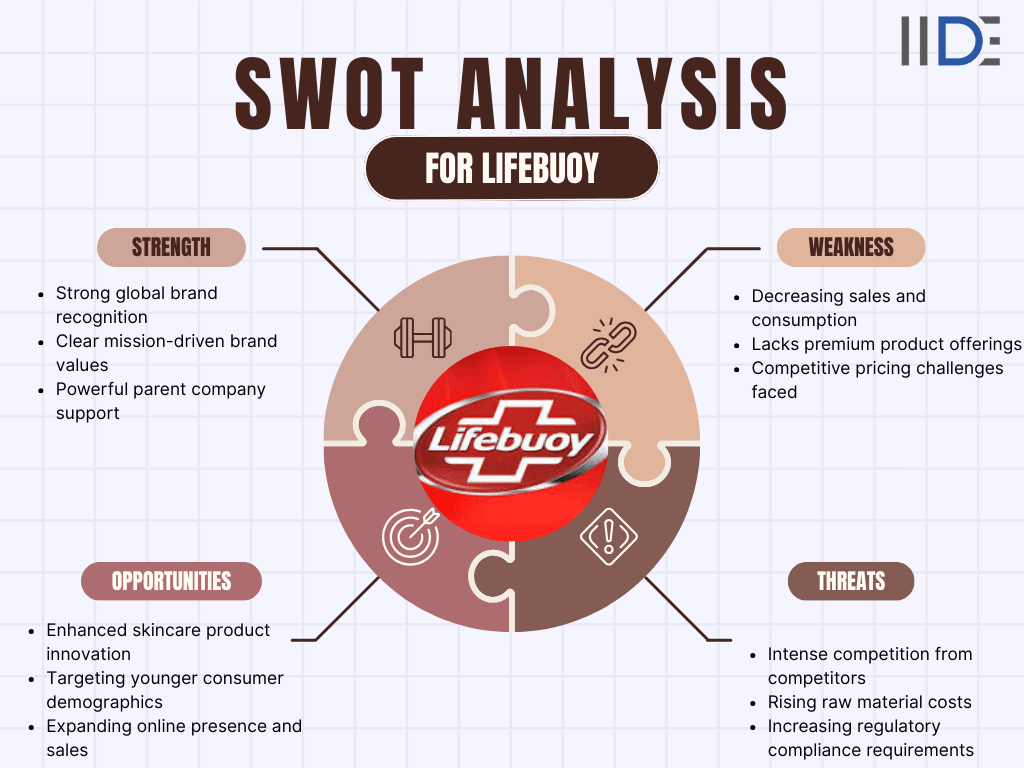
SWOT Analysis of Lifebuoy
Lifebuoy's century-old brand, while backed by unmatched trust and global reach, struggles with low youth appeal and competitive pressure in the rapidly changing hygiene market. Its path forward lies in premium wellness and rural growth, threatened by natural product trends and market saturation.
Strengths: The Unbreakable Core of Lifebuoy's Hygiene Dominance
Lifebuoy remains a dominant hygiene leader in 2026 due to its strong brand legacy, large-scale impact campaigns, and Unilever-backed global infrastructure. With high trust levels and strong penetration in emerging markets, the brand continues to influence the global soap and hygiene category.
- Powerful Heritage & Brand Trust: Over 100+ years of history and category leadership makes Lifebuoy one of the world’s most recognized hygiene brands. This history is irreplaceable brand equity. Its iconic red bar, distinctive fragrance, and long-standing reputation for reliable germ protection continue to build strong consumer recall across generations, making it a default choice in millions of households.
- Purpose-Driven Impact: The handwashing mission has reached 1 billion+ people across 30+ countries, driving global health awareness and reinforcing its position as a global health advocate, which few competitors can match. These large-scale behaviour-change programs have not only improved community hygiene but also strengthened emotional brand loyalty, turning Lifebuoy into a symbol of trusted health education worldwide.
- Strong Market Presence & Penetration: It maintains a significant market share, especially across Asia, Africa, and rural markets, where hygiene adoption is rapidly rising. Affordable pricing, deep rural distribution, and wide product availability enable Lifebuoy to reach underserved communities, ensuring consistent visibility and strong repeat usage in hygiene-conscious yet price-sensitive regions.
- Backed by Unilever's Global Muscle: Access to global R&D, advanced supply chains, and automation-enabled factories accelerates product innovation and efficiency that smaller rivals can't afford. This support allows Lifebuoy to quickly scale new formulations, maintain stable pricing, and launch high-impact campaigns backed by Unilever’s marketing strength and sustainability commitments.
- Innovation in Health Access: Successful digital health partnerships in India, Indonesia, and Bangladesh strengthen Lifebuoy’s positioning as a modern, health-first brand. By integrating hygiene education with telehealth platforms, the brand delivers real-time health guidance to families, making Lifebuoy not just a soap but a meaningful part of everyday preventive healthcare.
Weaknesses: Cracks in the Legacy Armor
While Lifebuoy remains a trusted brand, understanding its weaknesses is essential to see where it lags behind modern, premium, and skincare-focused competitors, threatening its long-term growth.
- Declining Volumes in Key Markets: Unilever’s recent report signals slowing momentum in major regions like India, China, and Indonesia, indicating a struggle to keep up with consumer demands. This drop reflects growing pressure from local competitors, shifting preferences toward skincare-led products, and the need for stronger innovation to retain share in Lifebuoy’s historically strongest markets.
- Limited Premium & Urban Appeal: The brand is still largely perceived as a “functional” germ-protection soap, losing ground in urban premium segments where skincare trends and competitors like Dove dominate. This functional perception makes it harder for Lifebuoy to compete in cities where consumers seek indulgence, aesthetics, and ingredient-led benefits rather than pure hygiene claims.
- Price Pressure and Tightening Margins: As an affordable soap, Lifebuoy faces fierce price competition and margin erosion from cheaper regional players in its core emerging markets. The brand’s heavy reliance on value-based pricing limits flexibility, making it vulnerable to even small fluctuations in raw material costs and aggressive price wars.
- Organizational Complexity: Slower innovation cycles under the layered HUL structure reduce agility compared to emerging, nimble D2C hygiene brands. This bureaucratic pace means Lifebuoy often reacts slower to sudden market shifts, trending ingredients, or fast-moving niche competitors, affecting its ability to stay culturally relevant.
- Risk of Brand Dilution: A wide array of SKUs (Stock Keeping Units) and occasional public debate around “99.9% germ protection” claims affects its premium credibility and may confuse core identity. Too many product formats and mixed messaging weaken the brand’s distinctiveness, making it harder to communicate a unified, premium-forward proposition to modern consumers.
Explore our breakdown of Lifebuoy's marketing mix to see how they've mastered product innovation, pricing strategies, distribution reach, and campaigns that actually connect with millions of consumers globally.
Opportunities: Tapping into the Wellness Revolution
With rising wellness trends, digital adoption, and Gen Z’s preference for natural, science-backed products, Lifebuoy has multiple growth opportunities to strengthen its leadership in 2026 and beyond.
- Premium Hygiene & Skin Health: Develop dermatology-led, ‘skin + germ protection’ lines using Unilever’s R&D, a direct move into the high-margin premiumisation trend. This strategy can reposition Lifebuoy as not just a germ-fighter but a scientifically advanced skincare partner, bridging the gap between hygiene and beauty.
- Digital & Telehealth Expansion: Scale successful pilot projects (like those in India and Indonesia) to new markets, combining hygiene education with valuable digital health support. Integrating product use with preventive health consultation can create a powerful ecosystem that builds long-term brand trust and differentiates Lifebuoy from traditional soap brands.
- Gen Z-Focused Innovation: Launch natural, eco-friendly, and fragrance-led variants to appeal to younger consumers seeking clean-label skincare and sustainability. This demographic values transparency and sensory experience, giving Lifebuoy a chance to reinvent itself with modern textures, ingredient stories, and aesthetic packaging.
- New Markets & Distribution: Accelerate growth through high-volume channels like e-commerce, hospitality, travel, and school/government partnerships beyond traditional retail. Strengthening institutional presence not only drives volume but also reinforces Lifebuoy’s role as a trusted hygiene authority in public spaces.
- Stronger ESG Initiatives: Expand proven social impact programs like “H for Handwashing” to meet stringent ESG (Environmental, Social, and Governance) goals and attract conscious consumers. These initiatives can significantly boost brand reputation, aligning Lifebuoy with purpose-driven purchasing among millennials and global investors alike.
Threats: External Risks Looming Over Market Share
Lifebuoy faces several rising external risks in 2026, driven by competitive pressure, shifting consumer preferences, and global economic uncertainties. These threats directly influence the brand's market share, relevance, and long-term growth potential.
- Intensifying Competition: Dettol, Savlon, and aggressive local brands are capturing hygiene-conscious consumers with premium and natural-positioned alternatives, causing Lifebuoy to lose market share.Competitors are also investing heavily in fragrance innovation and skin-health positioning, areas where Lifebuoy must quickly catch up to stay competitive.
- Economic & Cost Pressures: Inflation and fluctuating raw material prices reduce margins, especially when competing against low-cost players in price-sensitive markets.Prolonged cost volatility can force Lifebuoy to raise prices, risking consumer churn in rural regions where affordability is critical.
- Regulatory Scrutiny: Increasingly strict rules around chemical ingredients and health claims could restrict marketing freedom and force costly, fast-paced reformulations.This adds compliance risks and may delay launches of new variants, reducing the brand's ability to innovate quickly.
- Erosion of Brand Relevance: As consumers shift toward skincare-first body washes, Lifebuoy’s sole germ-focused identity may appear outdated, weakening its appeal among younger demographics.Without lifestyle-led repositioning, the brand risks being perceived as old-fashioned in an era of wellness-driven beauty rituals.
- Sustainability Pressure: Growing demand for eco-friendly, plastic-free packaging creates pressure to innovate faster or risk alienating environmentally conscious consumers.Failure to adopt greener materials and reduce plastic footprint could harm Lifebuoy’s image in markets where sustainability is becoming a purchase driver.
Discover the strategy behind Dettol's dominance in the hygiene market – our detailed marketing mix of Dettol reveals how the brand uses smart product development, strategic pricing, widespread availability, and powerful messaging to stay top-of-mind when consumers think of protection and cleanliness.
IIDE Student Takeaway, Conclusion & Recommendations
Key Takeaways: The Core Tension
- SWOT Highlights: The brand’s foundation is unmatched trust built over 130 years, backed by global distribution and a clear public health mission. However, this heritage results in an outdated perception and volume decline, making it vulnerable to premium, beauty-focused competitors. The path forward is through premiumization, digital health tie-ups, and sustainability.
- The Core Tension: Lifebuoy must evolve from a reliable, low-cost germ soap to a modern, premium hygiene brand that caters to urban, young consumers - all while fiercely safeguarding the deep, generational trust that defines its identity.
Actionable Recommendations: A Strategic Shift
To stay competitive and leverage its strengths against external threats , Lifebuoy must implement a targeted marketing strategy:
1. Launch a "Hygiene Premium" Sub-Brand:
- Focus: Introduce a distinct, premium product line offering advanced skincare benefits (e.g., Hyaluronic Acid, Ceramides) alongside germ protection.
- Goal: Directly compete with beauty-focused rivals and address the perception of being a "low-cost" soap.
2. Digital Integration of Purpose:
- Focus: Transform the "H for Handwashing" campaign into a gamified digital health initiative through telehealth partnerships and interactive educational content.
- Goal: Modernize brand perception and amplify its mission for a younger, digital audience.
3. Lead with Visible Sustainability:
- Focus: Aggressively transition to eco-friendly, refill-based packaging and clearly communicate ethical sourcing practices in all marketing.
- Goal: Meet the rising consumer demand for sustainability and remove a major threat.
Future Outlook: Evolving with Trust
Lifebuoy is uniquely positioned for a successful pivot. By strategically marrying its core strength of unquestioned trust with modern, premium innovation and digital engagement, the brand can solidify its role as the trusted, purpose-led leader in the high-growth premium-hygiene segment.
This calculated evolution will ensure it not only survives but thrives as a relevant and forward-looking health and wellness authority.
Want to Know Why 2,50,000+ Students Trust Us?
Dive into the numbers that make us the #1 choice for career success



MBA - Level
Post Graduate in Digital Marketing & Business Strategy

Best For
Fresh Graduates

Mode of Learning
On Campus (Mumbai & Delhi)

Starts from
Oct 1, 2026

Duration
11 Months

Live & Online
Advanced Online Digital Marketing Course
Best For
Working Professionals
Mode of Learning
Online
Starts from
Sep 4, 2026
Duration
4-6 Months

Online
Professional Certification in AI Strategy
Best For
AI Enthusiasts
Mode of Learning
Online
Starts from
Sep 8, 2026
Duration
5 Months

Online or Offline
Top AI Courses to Make You Future Ready!
Best For
AI Enthusiasts
Mode of Learning
2–5 Month Program
Starts from
Sep 8, 2026
Duration
Flexiable

On Campus
Advanced Certification in Artificial Intelligence
Best For
AI Enthusiasts
Mode of Learning
On Campus (Mumbai)
Starts from
Sep 1, 2026
Duration
3 Months

Offline
Degree In 2026 ≠ Enough Degree + Digital Skills = Future-Ready
Best For
12th Passouts
Mode of Learning
At IIDE Campus
Starts from
Aug 31, 2026
Duration
3 Years
Offline
Undergraduate Program in Digital Business & Entrepreneurship
Best For
12th Passouts
Mode of Learning
On Campus (Mumbai)
Starts from
Aug 31, 2026
Duration
3 Years
Recent Post
You May Also Like
Lifebuoy is owned by Unilever, one of the largest consumer goods companies globally. Unilever acquired the brand over a century ago and has since expanded it into multiple countries, making it one of their most successful personal care products with a strong presence in Asia, Africa, and the Middle East.
Lifebuoy is primarily designed for cleanliness and germ protection rather than intensive skincare. While it effectively kills bacteria and keeps you clean, some variants can be a bit drying for sensitive skin due to their antibacterial formulation. However, Lifebuoy has introduced milder variants with added moisturizers and natural ingredients to address different skin types and concerns.
Lifebuoy stands out for its strong focus on health and hygiene rather than just beauty or fragrance. The brand emphasizes germ protection with its Activ Silver and other antibacterial formulas, and it's deeply committed to public health education through initiatives like handwashing campaigns. It's also positioned as an affordable, accessible option that doesn't compromise on quality or protection.
According to Lifebuoy's claims and laboratory testing, their antibacterial soaps are designed to kill 99.9% of germs when used properly. However, this effectiveness depends on proper handwashing technique, washing for at least 20 seconds with adequate lather and rinsing. The percentage refers to common bacteria and germs encountered in daily life, not necessarily all pathogens.
Lifebuoy has expanded well beyond traditional bar soap. Their product line now includes liquid handwash, body wash, hand sanitizers, and even soap-free cleansing formats. They offer different variants targeting specific needs like total protection, skin-lightening (in some markets), natural ingredients, or sensitivity, catering to diverse consumer preferences across different regions.
Lifebuoy gained massive popularity in India through strategic positioning as an affordable health soap for families, coupled with strong distribution reaching even remote rural areas. Their consistent messaging around germ protection resonated with Indian consumers' health concerns, and campaigns focused on children's health and disease prevention struck an emotional chord.
Lifebuoy has been making efforts toward sustainability, including reducing plastic in packaging, using more recycled materials, and working on biodegradable formulations. However, like many mass-market personal care brands, there's still room for improvement. Unilever has committed to broader sustainability goals, and Lifebuoy is part of that initiative, though consumers looking for eco-friendly options might want to check specific product details.

Lead Trainer & Business Development Head at IIDE
Aditya Shastri leads the Business Development segment at IIDE and is a seasoned Content Marketing expert. With over a decade of experience, Aditya has trained more than 20,000 students and professionals in digital marketing, collaborating with prestigious institutions and corporations such as Jet Airways, Godrej Professionals, Pfizer, Mahindra Group, Publicis Worldwide, and many others. His ability to simplify complex marketing concepts, combined with his engaging teaching style, has earned him widespread admiration from students and professionals alike.
Aditya has spearheaded IIDE’s B2B growth, forging partnerships with over 40 higher education institutions across India to upskill students in digital marketing and business skills. As a visiting faculty member at top institutions like IIT Bhilai, Mithibai College, Amity University, and SRCC, he continues to influence the next generation of marketers.
Apart from his marketing expertise, Aditya is also a spiritual speaker, often traveling internationally to share insights on spirituality. His unique blend of digital marketing proficiency and spiritual wisdom makes him a highly respected figure in both fields.