
Students Centric
Placements Report
Trackable results, real numbers
Reviews
Proven success, real voices
Trainers
Expert-led, Industry-Driven Training
Life at IIDE
Vibrant Spirit student life
Alumni
Successful Journeys, Inspiring Stories
Learning Centre
Webinars
Blogs
Case studies
Live, Interactive Masterclasses
Fresh Insights, quick reads
Real-life, Industry relevant
More
Hire from us
Hire Top Digital Marketing Talent
Work with us
Join Our Team, Make an Impact
Customised Training
Personalised digital marketing training for your company
Refer & earn
Simple, easy rewards
Contact us
Get the answers you need
About us
Know more about IIDE
Explore all course options

FOR FRESH GRADUATES
Post Graduation Program in Digital Marketing & Business Strategy- Ideal for Age: 20–25 Years

Can’t decide? Explore all our
Digital Marketing Courses
COMPARE BOTH OUR PROGRAMSOffline
Offline AI Courses with Dual CertificationsIndustry-Aligned TRACKMost Popular
UG Program in Digital Business & Entrepreneurship- Ideal for 12th Pass out / FY Degree Student

PARTNER PROGRAMS



Can’t decide? Explore all
BBA In Digital Marketing Colleges
Orginally Written by Kartik Mittal
Updated on Jun 10, 2026
There is a high debate around choosing the traditional B.Com degree and a Bachelor's in Digital Business. And if you are in Class 12, this matters for you a lot.
Here's what's actually happening in 2026. Some top colleges in Mumbai have introduced a Bachelor's in Digital Business degree in partnership with IIDE - The Digital Business School as the industry knowledge partner. This course is built for students who want to graduate job-ready in 2026. While many students still choose B.Com, its syllabus is shallow and a decade old.
When you compare B.Com vs Bachelor's in Digital Business, you're not just picking between two degrees. You're choosing between two completely different career paths. Here's what actually matters when you're making that choice.
You think B.Com is your only option, and it's not just you. Most Class 12 students believe the same thing. It's the default path, the safe choice, what everyone else is doing. But here's the thing: A B.Com degree is preparing you for the world that doesn't exist anymore.
India's digital economy is projected to cross $1 trillion by 2030. The jobs are being created right now. From performance marketing, e-commerce management, AI strategy, and content-led businesses. These didn't exist when the B.Com curriculum was last refreshed.
Most B.Com curriculum still teaches what they taught 15 years ago: accounting, taxation, finance, and business law. Important? Yes. What companies are hiring for in 2026? No.
Six of India's top colleges launched the Bachelor's in Digital Business because they recognised the gap. Students want a recognised degree and job-ready skills. Not one or the other, but both. And this degree gives you that.
When you graduate in 2026, the job market will favour candidates who can hit the ground running. A B.Com degree alone won't do that. A Bachelor's in Digital Business Program is designed exactly for that.
Here's the detailed breakdown.
Admissions Closing Soon: Bachelor's in Digital Business!
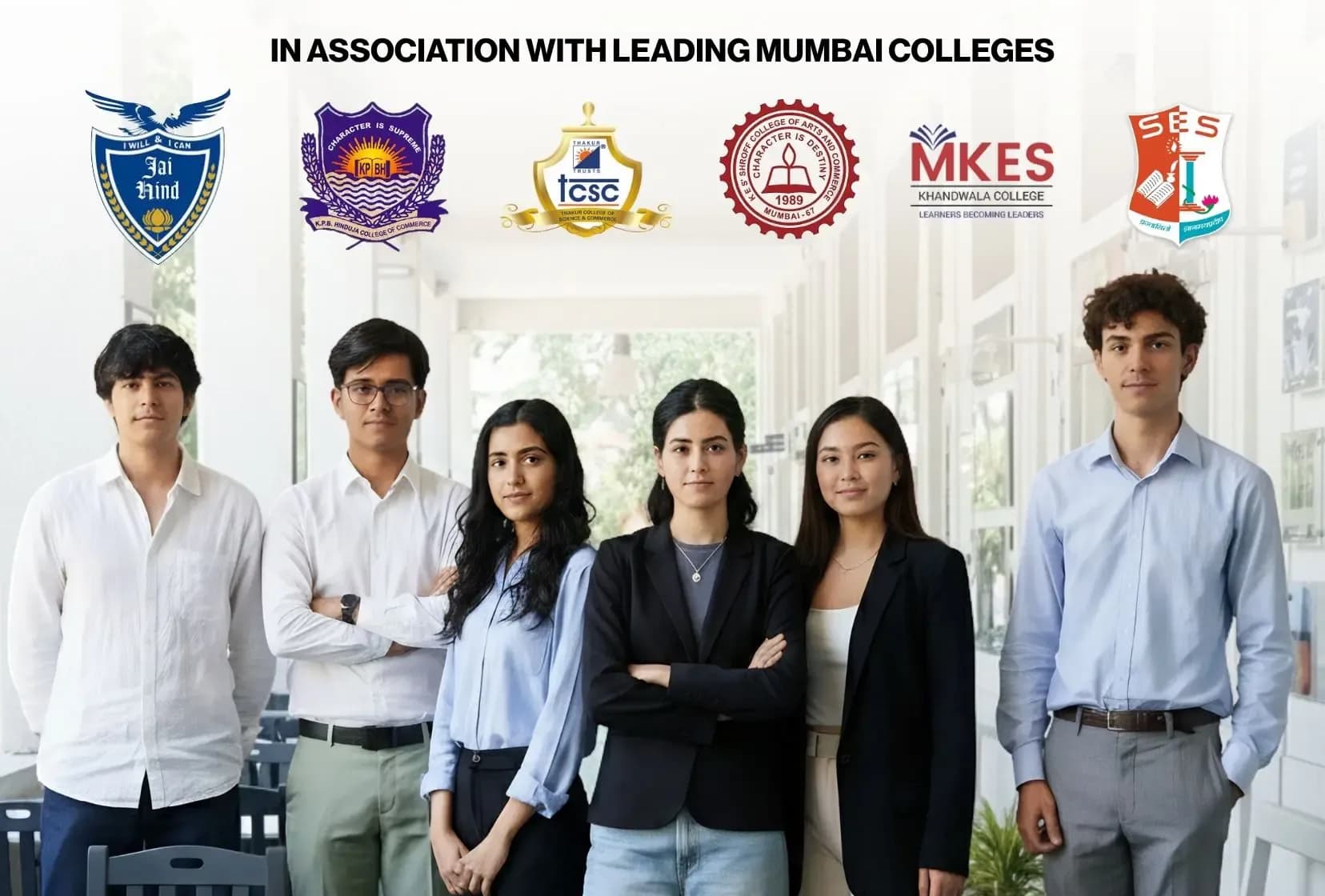
Offered at: Jai Hind, KPB Hinduja, LS Raheja, KES Shroff, Thakur & Nagindas Khandwala
📅 Apply Before: 15th June, 2026
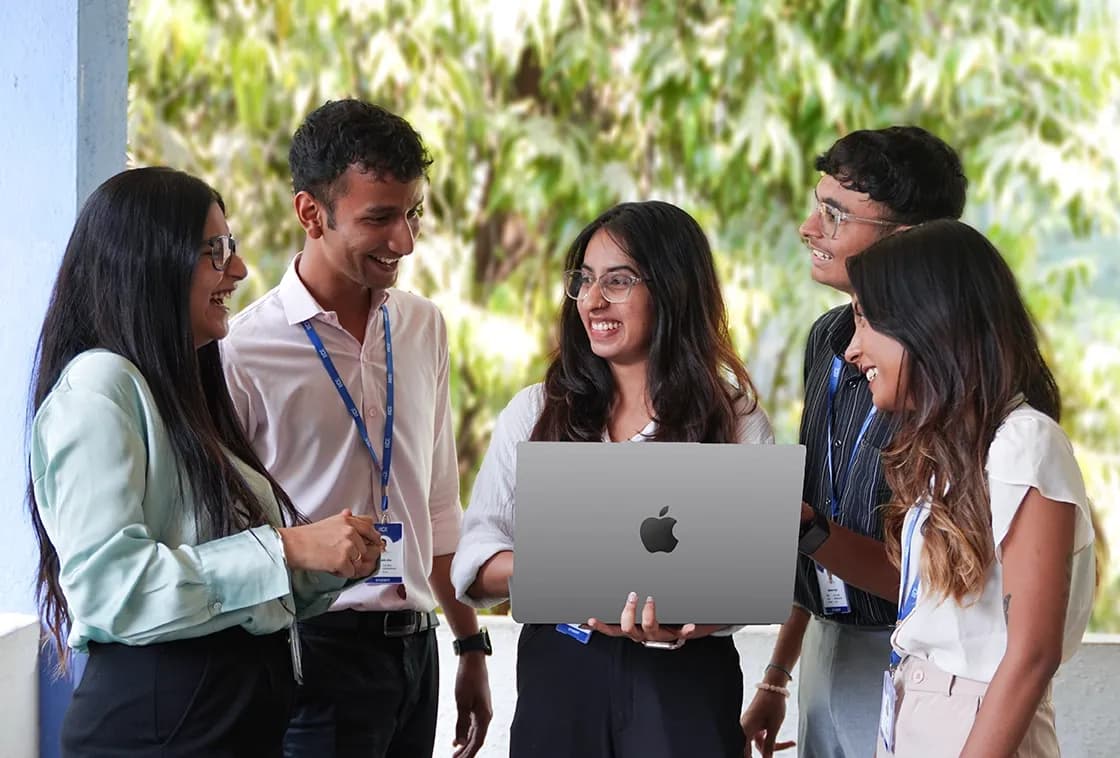
Admissions Closing Soon: Bachelor's in Digital Business!
Offered at: Jai Hind, KPB Hinduja, LS Raheja, KES Shroff, Thakur & Nagindas Khandwala
📅 Apply Before: 15th June, 2026
What is a B.Com Degree?
A B.Com, or Bachelor of Commerce, is a 3-year traditional degree that's been around for decades. It was designed to teach the fundamentals of accounting, finance, and commerce. Students study accounting, financial management, taxation, business law, and auditing. If you're exploring courses after 12th commerce, B.Com is typically the default choice. It might feel safe to pursue while the curriculum remains narrow, theoretical, and hasn't evolved much since the 1990s.
The problem is that if you want to work in digital marketing, e-commerce, startups, content strategy, or AI, the B.Com doesn't prepare you. And these are the fastest-growing skills in the digital age. Most fast-growing companies like fintech, SaaS, D2C brands, and digital agencies barely consider B.Com graduates because the degree doesn't teach you about how the modern business works.
What You'll Study in B.Com
Here's what the B.Com curriculum actually looks like. Same subjects across most Indian colleges, with minimal variation.
- Financial Accounting: This subject teaches you how to record and report financial transactions using traditional accounting principles. You'll learn journal entries, ledgers, and balance sheets. Useful if you're working in an accounting firm. However, in 2026, companies are using AI to automate accounting.
- Cost Accounting and Management Accounting: Focuses on calculating the cost of production, pricing strategies, and budgeting. You'll spend time on manual cost sheet calculations. The reality is that businesses today use software that does this automatically. You're learning a skill that's being automated.
- Income Tax and Indirect Taxes: Deep dive into tax laws, tax calculations, and compliance. This changes every year, which means half of what you learn is outdated by the time you graduate. And if tax laws change, you're back to square one anyway.
- Auditing: Learn how to audit financial statements, verify records, and check compliance. A useful skill for audit firms, but not for any other type of company.
- Business Economics: Theory about markets, supply and demand, and economic principles. This is a core subject to understand businesses, but this alone won't help in strong career building.
- Corporate Law: Study of company law, contract law, and legal procedures. This subject is important and limited to lawyers and compliance officers.
- Financial Management: An integral part of managing business, but it's mostly taught in theory in most colleges and will have very little impact on career building.
While these are important in specific finance roles, they're not what modern companies prioritise when hiring. You graduate with strong knowledge of financial procedures and regulations, but without practical experience in how businesses actually create and capture value.
Where Do B.Com Graduates Work
Here's where a career after B.Com typically leads. The options are real, but they're also narrow.
- Banking and Financial Services: B.Com graduates work as relationship managers, credit analysts, and loan officers. You're processing applications and managing client accounts. It's stable work, but you're executing someone else's strategy, not building one.
- Accounting and Audit Firms: Places like Big 4 firms (Deloitte, EY, KPMG, PwC) hire B.Com graduates as junior auditors and tax consultants. You're verifying financial records and ensuring compliance. Again, stable, but limited upside and capped career trajectory without additional certifications.
- Insurance Companies: Roles in underwriting, claims, and financial analysis. Functional work that doesn't expand your skill set beyond what you studied.
- Government and Tax Departments: Income tax officer roles, GST departments, and finance ministry positions. Secure government jobs, but work focused entirely on compliance and regulation.
- Stock Market and Brokerage Firms: Some B.Com graduates work as brokers or in operations teams. But without additional knowledge of market trends or technology, you're limited to transactional roles.
- Corporate Finance Teams: In-house finance and accounts roles at larger companies. You manage budgets, track expenses, and ensure financial compliance. Again, execution-focused, not strategy-focused.
The pattern is clear - commerce graduate jobs are concentrated in finance, audit, banking, and compliance. These are important functions. But they're also shrinking as companies automate financial processes and move toward AI-driven decision-making.
You're competing in a pool that's getting smaller, not larger. And you're doing work that machines are getting better at every year.
What is a Bachelor's in Digital Business?
The Bachelor's in Digital Business is a 3-year undergraduate degree that teaches business fundamentals and the skills companies are actually hiring for in 2026. Unlike traditional degrees, a digital business degree bridges what universities teach and what the job market needs.
You graduate as a job-ready degree holder with hands-on experience in digital marketing skills, e-commerce, AI strategy, and 25+ industry tools. You also earn certifications from Google, Meta, and HubSpot, build a portfolio of real-world projects, and complete mandatory internship and on-the-job training - all part of the degree.
This programme was created through a partnership between IIDE (The Digital Business School) and six of the top colleges: Jai Hind College, K.P.B. Hinduja College, Thakur College, BK Shroff College, Nagindas Khandwala College, and L.S. Raheja College.
IIDE, the industry knowledge partner, works with each college's faculty to ensure the Bachelor's in Digital Business is both academically recognised and practically relevant for modern careers.
What You'll Study in a Bachelor's in Digital Business
Here's what the Bachelor's in Digital Business curriculum actually looks like. Same core business foundations as traditional programmes, but built alongside skills that make you valuable in 2026.
- Digital Marketing and SEO: Learn how to plan, execute, and measure digital marketing campaigns. You'll work with real brands, run actual campaigns on Google, Meta, and other platforms, and see real results. Not theory, but actual marketing. If you want to explore more about this field, check out digital marketing courses after 12th to understand the broader landscape.
- E-commerce Management: Build and optimise online stores. You'll learn product strategy, pricing, inventory management, and how to drive sales through digital channels. By the end, you've run real e-commerce operations.
- Web Analytics and Data-Driven Decision Making: Understand how to read data, build dashboards, and make business decisions based on numbers. You'll use tools like Google Analytics, and you'll be able to answer questions like "why did sales drop?" or "which campaign is working?"
- Content Strategy: Learn how to build a brand through content. You'll create, distribute, and measure content across multiple channels. Practical skills that apply to every company that exists.
- Marketing Automation: Understand how to scale marketing efforts through automation. You'll learn tools, workflows, and strategies that let one person do the work of five.
- AI Strategy and Business Applications: Learn how AI is reshaping business. You'll work on real AI applications, understand how to use tools like Make.ai & Claude in a business context, and think about strategy in an AI-first world.
- Financial Accounting and Business Economics: Yes, you still learn the fundamentals. But you learn them alongside practical application. You understand how a business actually makes money, not just how to record transactions.
- Startup Building and Entrepreneurship: Learn how to go from idea to business. You'll work on projects where you build actual products, find customers, and generate revenue. Real entrepreneurship, not case studies. To dive deeper into this path, explore degree in digital marketing and see how it compares to other digital education options.
Unlike the B.Com curriculum, every subject in the Bachelor's in Digital Business has a direct application to jobs being created right now. You're not learning rules. You're learning how to create value.
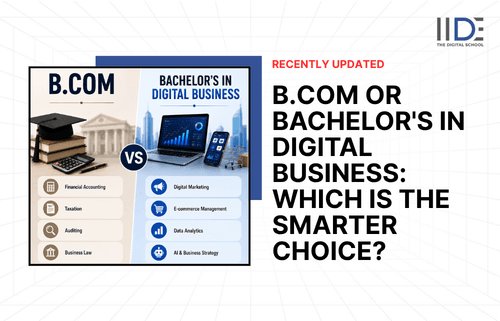
B.Com vs. Bachelor's in Digital Business: The Quick Breakdown
Here's the side-by-side comparison. This is what actually matters when you're making the choice.
| Parameter | B.Com | Bachelor's in Digital Business |
|---|---|---|
| Career Type | Traditional Finance Career | Digital and Growth Roles |
| Job Examples |
Accountant, Tax Officer, Bank Teller, Audit Junior |
Performance Marketer, E-commerce Manager, Growth Strategist |
| Launch Year | Existed for decades | Built in 2020 for 2026 onwards |
| Positioning | Safe traditional path | The forward-thinking choice |
| Core Learning | Accounting, Taxation, Compliance |
How to Acquire Customers and Drive Revenue |
| Practical Learning | Manual exercises, theory-based |
Real campaigns, live projects, actual business impact |
| Skills Example |
Tax filing procedures, balance sheet analysis |
Run Google Ads, build Shopify stores, use ChatGPT in business |
| Salary Range | ₹20,000-₹30,000/month | ₹25,000-₹40,000/month |
The difference is clear. B.Com locks you into finance. A Bachelor's in Digital Business opens doors across every growing sector.
For Students Who Want to Grow Beyond
If you have decided that Digital Business is the direction you want to move on and you want the deepest possible preparation for the real working world, then IIDE's Undergraduate Program in Digital Business and Entrepreneurship is worth looking at.
This is a three-year, on-campus program at IIDE's Mumbai campus, accredited by MEPSC under the Ministry of Skill Development and Entrepreneurship, and backed by NSDC, Nasscom, and industry partners, including Google, Meta, and HubSpot.
What makes it different is how students spend their three years. They do not just attend lectures and attend exams. They run live advertising campaigns, launch real brands, and work with actual businesses from year one, graduating with a portfolio of real work that speaks louder than any certificate.
The program also includes an international immersion in Dubai, giving students global exposure that most Indian undergraduate degrees simply do not offer. Students can also participate in the IIDE Launchpad Challenge, where they get the opportunity to win seed funding of up to ₹5 lakh for their own business ideas.
A recognised degree that is also a genuine career launchpad is what this program delivers.
How to Know Which Course is Right for You?
The choice comes down to what you want your future to look like. Here's how to know which path fits you.
Choose B.Com If:
- You want to work in banking, accounting, audit, or taxation and see yourself building a career in traditional finance.
- You prefer stable, predictable roles in established sectors over fast-moving startup environments.
- You're comfortable with theoretical learning and traditional exam-based education.
- You want to pursue an MBA later and need a broad business foundation first.
- Job security and government sector roles appeal to you more than building something from scratch.
Explore BCom colleges in Mumbai, where traditional commerce education thrives among India's leading financial institutions, shaping professionals for careers in audit, banking, and corporate compliance.
Choose Digital Business If:
- You want to work in digital marketing, e-commerce, startups, SaaS, or performance marketing roles.
- You see yourself in roles where you directly drive revenue and customer acquisition, not just manage finances.
- You want to graduate job-ready with a portfolio of real work, not needing 1-2 years to catch up.
- You're interested in AI, content creation, data analytics, or building digital products.
- You prefer hands-on, experiential learning where theory is immediately applied to real business problems.
- You're considering entrepreneurship or eventually building your own venture.
- You want career options across every growing sector in India, not locked into finance.
Want to Know Why 5,00,000+ Students Trust Us?
Dive into the numbers that make us the #1 choice for career success


Courses Recommended for you
MBA - Level
Post Graduate in Digital Marketing & Business Strategy

Best For
Fresh Graduates

Mode of Learning
On Campus (Mumbai & Delhi)

Starts from
Nov 27, 2026

Duration
11 Months

Live & Online
Advanced Online Digital Marketing Course
Best For
Working Professionals
Mode of Learning
Online
Starts from
Nov 2, 2026
Duration
4-6 Months

Offline
Top AI Courses to Make You Future Ready!
Best For
AI Enthusiasts
Mode of Learning
2–5 Month Program
Starts from
Nov 24, 2026
Duration
Flexiable
Offline
Undergraduate Program in Digital Business & Entrepreneurship
Best For
12th Passouts
Mode of Learning
On Campus (Mumbai)
Duration
3 Years
Offline
Degree In 2026 ≠ Enough Degree + Digital Skills = Future-Ready
Best For
12th Passouts
Mode of Learning
At IIDE Campus
Duration
3 Years
Recent Post
Interesting Reads
You May Also Like


Partner & CEO at One Impact and Digital Marketing Trainer
Kartik is a certified digital marketer and an experienced marketing trainer with a strong passion for imparting knowledge in the field of digital marketing. As a marketing leader, he brings expertise in SEO (Search Engine Optimization), ASO (App Store Optimization), Website Development & much more. His curiosity and commitment to staying updated with industry trends have made him a dedicated digital marketing educator.
Kartik's dedication to teaching has led him to train over 55,000 students globally. His students range from engineers, MBA graduates, start-up entrepreneurs, marketing managers, and even those new to the world of digital marketing. His sessions have reached learners across India, Canada, Dubai, the USA, and other parts of the globe.
Kartik is committed to helping students and professionals alike understand the complexities of digital marketing, empowering them to advance their careers and businesses in this dynamic industry. His deep knowledge and practical approach have earned him a reputation as top 1% digital marketing trainer.