
Students Centric
Placements Report
Trackable results, real numbers
Reviews
Proven success, real voices
Trainers
Expert-led, Industry-Driven Training
Life at IIDE
Vibrant Spirit student life
Alumni
Successful Journeys, Inspiring Stories
Learning Centre
Webinars
Blogs
Case studies
Live, Interactive Masterclasses
Fresh Insights, quick reads
Real-life, Industry relevant
More
Hire from us
Hire Top Digital Marketing Talent
Work with us
Join Our Team, Make an Impact
Customised Training
Personalised digital marketing training for your company
Refer & earn
Simple, easy rewards
Contact us
Get the answers you need
About us
Know more about IIDE
Explore all course options

FOR FRESH GRADUATES
Post Graduation Program in Digital Marketing & Business Strategy- Ideal for Age: 20–25 Years

Can’t decide? Explore all our
Digital Marketing Courses
COMPARE BOTH OUR PROGRAMSOffline
Offline AI Courses with Dual CertificationsIndustry-Aligned TRACKMost Popular
UG Program in Digital Business & Entrepreneurship- Ideal for 12th Pass out / FY Degree Student

PARTNER PROGRAMS






Can’t decide? Explore all
BBA In Digital Marketing Colleges
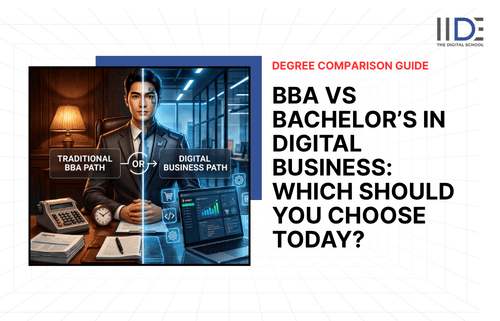
Orginally Written by Kartik Mittal
Updated on Jun 19, 2026
For years, BBA was the obvious choice for any student stepping into business. No debate, no alternatives. But in 2026, things have shifted. The job market is not asking for generalists anymore. It is asking for people who understand how digital tools, data, and technology actually drive business growth.
A Bachelor's in Digital Business was built to bridge that gap. This is not about BBA becoming irrelevant. It is about understanding which degree puts you closer to where the market is heading.
You assume BBA is your safest choice, and you're not wrong in thinking like that. Most Class 12 students lean toward it. But here's what's actually happening in the real world - A BBA degree today is preparing you for an economy that's already moving on.
India's digital economy is on track to hit $1 trillion by 2030. And the jobs are opening up in performance marketing, e-commerce operations, AI strategy, and content-driven businesses. These fields barely existed when the BBA curriculum was last shaped.
Take a look at what BBA still teaches today - management principles, organisational behaviour, business strategy, and general commerce. These subjects build a broad foundation, but they're not the only ones that today's employers are seeking. The companies today demand people who understand e-commerce, digital marketing, AI strategy, and content-led businesses, alongside those foundations.
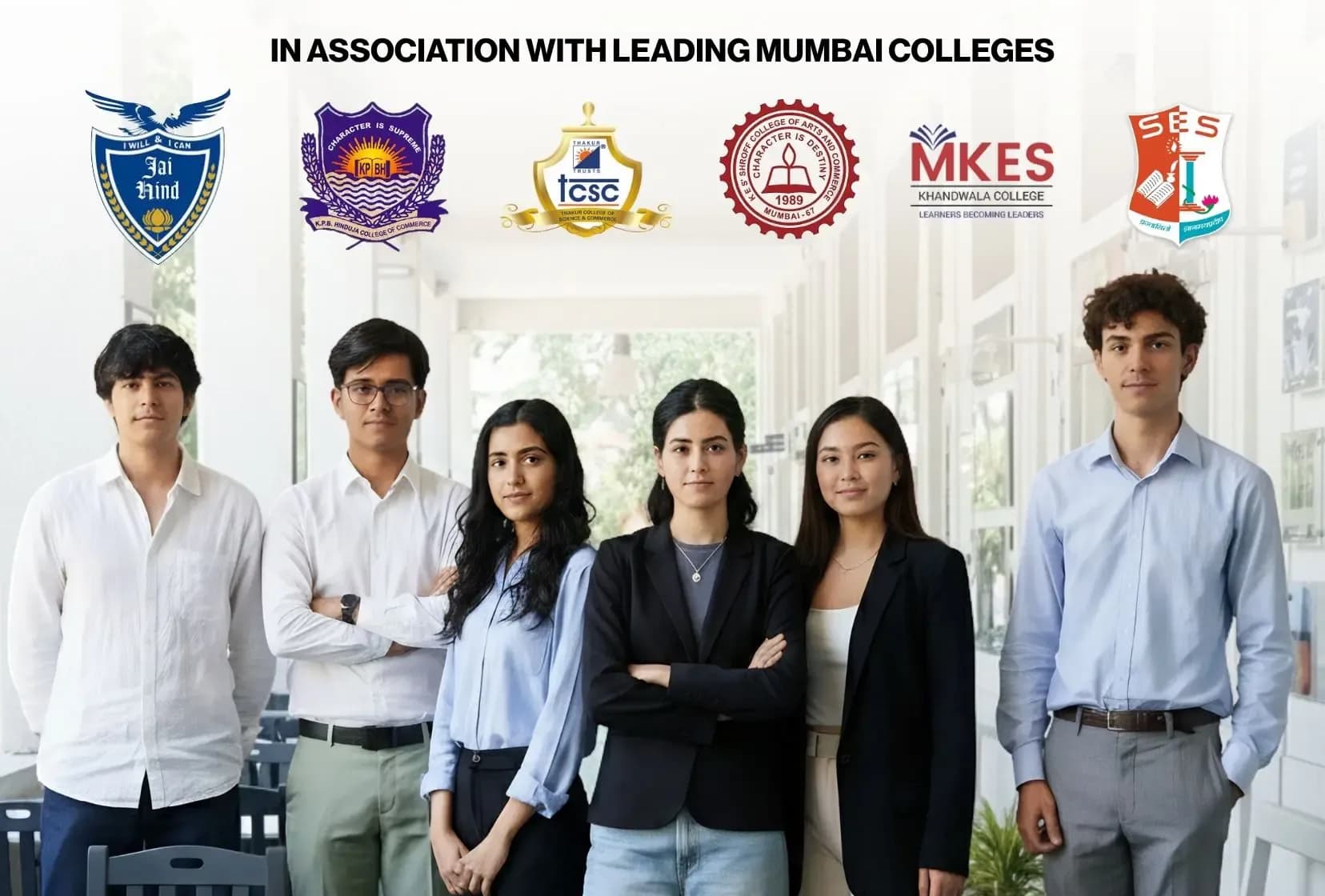
That's why six of Mumbai's best colleges - Jai Hind College, KPB Hinduja College, Raheja College, Nagindas Khandwala College, Thakur College, and KES Shroff College have launched the Bachelor's in Digital Business in collaboration with IIDE - The Digital Business School. They identified this gap and built a degree specifically to close it.
This degree is genuinely recognised and teaches skills that make you immediately useful on the job. Employers are looking for people who can walk in, understand digital tools like SEMrush and Google Analytics, and contribute from day one. BBA alone won't get you there. But a Bachelor's in Digital Business is built for exactly that moment.
Admissions Closing Soon: Bachelor's in Digital Business!
Offered at: Jai Hind, KPB Hinduja, LS Raheja, KES Shroff, Thakur & Nagindas Khandwala
📅 Apply Before: 15th June, 2026
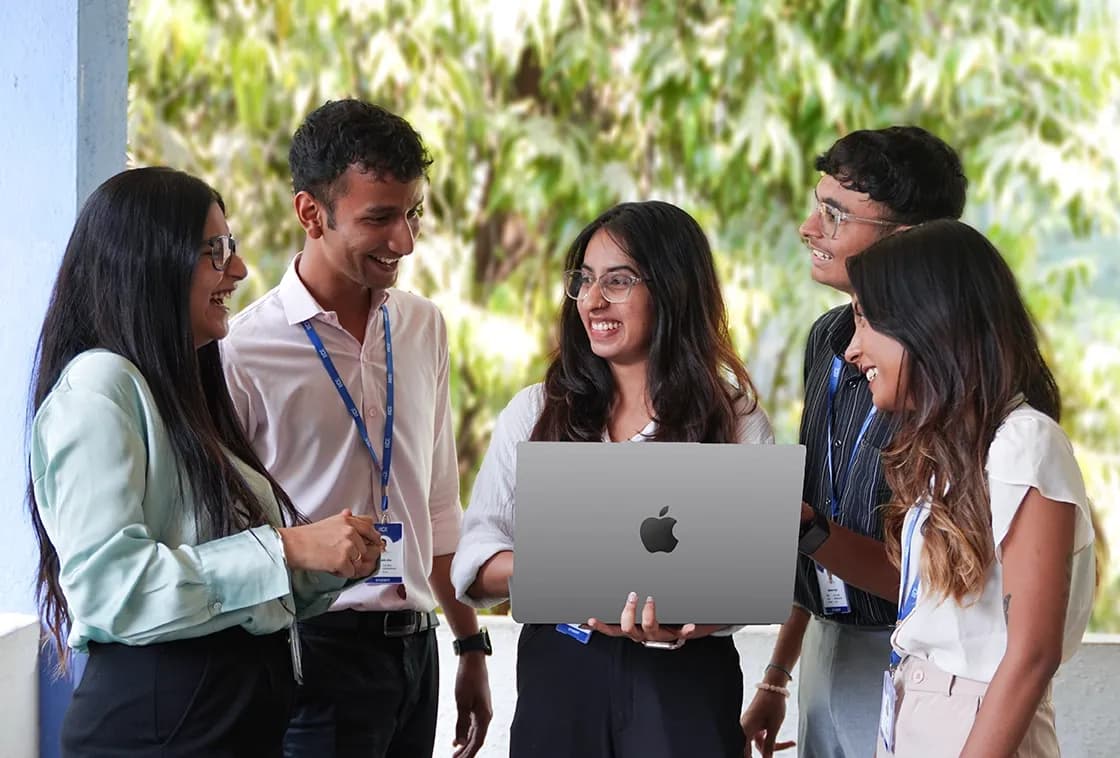
Admissions Closing Soon: Bachelor's in Digital Business!
Offered at: Jai Hind, KPB Hinduja, LS Raheja, KES Shroff, Thakur & Nagindas Khandwala
📅 Apply Before: 15th June, 2026
Understanding the BBA Degree
A BBA degree has been the standard entry point into business education for decades and for good reason. It gives students a structured, broad foundation across every major business function. Finance, HR, operations, marketing, you learn how all of it connects before you specialise in any of it.
What You'll Study in BBA
A BBA Degree curriculum is designed to give you a broad foundation across all business functions. Most BBA programs include core subjects like:
- Financial Management: Teaches balance sheet analysis and budgeting theory, which is a solid foundation, though real-world capital decisions move faster than textbooks.
- Human Resources Management: Covers recruitment, training, and retention frameworks. It is foundational, though the landscape is shifting faster than the curriculum updates.
- Operations Management: Introduces supply chain mechanics and process optimisation. Solid in theory, though real-world logistics and e-commerce speed have outpaced the material.
- Marketing Fundamentals: Overview of the 4Ps and consumer psychology - necessary basics, though increasingly abstract compared to how actual performance marketing works.
- Accounting and Economics: Provides an analytical foundation through financial recording and macroeconomics. Useful, but separate from the real-time dashboards modern businesses run on.
- Business Analytics: Introduces data basics and dataset interpretation - a starting point, though introductory-level analytics feels theoretical compared to what growth roles actually demand.
The BBA is built to give you theoretical exposure first and specialisation later, which doesn't suit students who want to gain a core understanding of business.
However, if you choose BBA and are based in Rajasthan, then the range of BBA Courses in Jaipur is worth exploring.
Where BBA Graduates Work
BBA graduates can build careers across various established industries and organisational structures as mentioned below:
- Finance & Banking: Banks and financial institutions hire for treasury and risk management. These are stable roles, though the sector is moving toward fintech and algo-trading faster than traditional banking career paths.
- Consulting: Management consulting firms value analytical skills, though entry-level roles often involve standard case work and report building rather than strategic decision-making.
- Government & Public Sector: Government agencies hire for business and financial management - secure positions, though the pace of change and innovation is typically slower than in the private sector.
- Manufacturing & Supply Chain: Large manufacturers need operations and supply chain roles - an established field, though automation and AI are reshaping what these positions actually require day-to-day.
- Retail & FMCG: Traditional retail and consumer goods hire for store and operations management - structured roles, though the sector is contracting as e-commerce reshapes the landscape.
- Corporate Management: Large organisations offer business analyst and management trainee positions - conventional career paths, though these roles are increasingly commodified across industries.
- Human Resources: Companies build talent and recruitment teams - traditional function, though HR is evolving toward culture and tech roles that traditional BBA training doesn't always cover.
- Telecommunications & Media: Telecom and media companies offer structured career progression - established sectors, though both are facing disruption from digital platforms and changing consumer habits.
Understanding Bachelor's in Digital Business
A Bachelor's in Digital Business is designed for an economy where technology is no longer separate from business; it is the backbone of it. Unlike a traditional degree that treats digital as one module among many, this program builds everything around how modern businesses actually operate and grow.
What You'll Study in a Bachelor's in Digital Business
The Digital Business curriculum is built around the intersection of business strategy and technology:
- Digital Marketing and SEO: You're not reading case studies. You plan, launch, and measure marketing campaigns with real brands. You manage accounts on Google, Meta, and other platforms, watching real results happen. This is applied marketing, not textbook theory.
- E-commerce Operations: Build and scale online selling platforms. Master product positioning, pricing mechanics, stock control, and strategies to boost digital sales. By graduation, you've actually managed e-commerce businesses.
- Data Analytics and Business Insights: Learn to interpret data, construct analytics reports, and ground decisions in numbers. Using platforms like Google Analytics, you'll answer questions like "what caused the revenue decline?" or "which marketing effort is paying off?"
- Brand and Content Development: Master the art of building brand presence through strategic storytelling. You'll create, publish, and track content performance across different channels. Skills that translate to virtually any modern organisation.
- Workflow and Marketing Scaling: Discover how to grow your marketing footprint through smart automation. You'll learn the systems and strategies that let a single person deliver the impact of an entire team.
- AI in Business Context: Explore how AI is transforming industries and business models. You'll apply AI solutions to real scenarios, work with platforms like Make.ai and Claude for business applications, and develop thinking around an AI-first strategy.
- Accounting Fundamentals and Economics: Yes, core business subjects are included. But you learn them through a practical lens. You grasp how revenue actually flows in modern businesses, not just transaction recording mechanics.
- Venture Building and Founder Mindset: Move from concept to execution. You'll work on initiatives where you validate ideas, locate your customer base, and generate actual revenue. It's real entrepreneurship, not simulations.
Where Digital Business Graduates Work
Digital Business graduates are among the most actively recruited profiles in India's fastest-growing sectors:
- Technology & SaaS Companies - Software firms that need people who understand both product and business strategy.
- E-commerce & Retail - Online marketplaces, D2C brands, and traditional retailers shifting to digital-first models.
- Fintech & Financial Services - Digital banking platforms and payment apps are hiring for roles that blend finance with digital innovation.
- Startups & Scale-ups - Early-stage companies where graduates contribute across functions and grow into leadership within 2-3 years.
- Digital Agencies & Marketing - Performance and creative agencies managing campaigns and client growth at scale.
- Traditional Companies in Transition - Banks, insurance firms, and legacy businesses are rebuilding around digital infrastructure.
- EdTech & Content Platforms - Online learning and digital publishing companies hiring for business operations and growth roles.
For students serious about building a career in digital marketing in India, these sectors represent the highest concentration of opportunity right now. Unlike traditional business programmes, every module in the Bachelor's in Digital Business connects directly to roles that companies are opening right now.
You're acquiring skills, not memorising rules.
BBA vs. Digital Business: The Quick Breakdown
Both degrees open real career doors. The difference is in where those doors lead and how quickly you're ready to walk through them.
| Feature | BBA | Bachelor's in Digital Business |
|---|---|---|
| Focus |
Broad business fundamentals across all functions |
Digital-first business with AI, data & e-commerce |
| Expertise |
General knowledge specialisation happens on the job |
Job-ready skills by graduation |
| Industry Recognition |
Established preferred by banking, consulting, and government |
Fast-growing preferred by tech, startups, and digital agencies |
| Curriculum Updates | Slow to adapt to market changes | Built to evolve with industry trends |
| Hands-on Learning |
Mostly theoretical with limited practical exposure |
Live brand projects, real briefs, industry mentors |
| Career Trajectory |
Management roles across traditional sectors |
Digital-first roles in India's fastest- growing sectors |
| Salary Potential | ₹3.5 - 9 LPA starting range | ₹3.5 - 11 LPA starting range |
If you are still leaning toward the traditional route and are based in Mumbai, it is helpful to research the top-rated BBA courses in Mumbai to see which institutions offer the best corporate exposure.
For Students Who Want To Go Beyond
If you have decided that Digital Business is the direction you want to move on and you want the deepest possible preparation for the real working world, then IIDE's Undergraduate Program in Digital Business and Entrepreneurship is worth looking at.
This is a three-year, on-campus program at IIDE's Mumbai campus, accredited by MEPSC under the Ministry of Skill Development and Entrepreneurship, and backed by NSDC, Nasscom, and industry partners, including Google, Meta, and HubSpot.
What makes it different is how students spend their three years. They do not just attend lectures and exams. They run live advertising campaigns, launch real brands, and work with actual businesses from year one, graduating with a portfolio of real work that speaks louder than any certificate.
The program also includes an international immersion in Dubai, giving students global exposure that most Indian undergraduate degrees simply do not offer. Students can also participate in the IIDE Launchpad Challenge, where they get the opportunity to win seed funding of up to ₹5 lakh for their own business ideas.
A recognised degree that is also a genuine career launchpad is what this program delivers.
How to Know Which Course is Right for You?
Your decision ultimately depends on the kind of career you're building. Here's a framework to figure out which direction aligns with your goals.
Choose a BBA If:
- You envision yourself in banking, corporate finance, human resources, or management roles and want to establish a traditional business career path.
- You're drawn to stability and structured corporate environments where processes are well-defined and career progression is predictable.
- You're comfortable with classroom-based learning and conventional exam-based assessment methods.
- You're planning to pursue an MBA after your undergraduate degree and want broad foundational business knowledge first.
- You're attracted to government positions, public sector roles, or established organisations where job security and seniority-based advancement are the priority.
- You're unsure about your specific direction and want a general business degree that keeps options open in traditional sectors.
Choose a Bachelor's in Digital Business If:
- You're passionate about digital marketing, e-commerce, AI strategy, performance marketing, or scaling growth-stage companies.
- You picture yourself in roles where you directly impact revenue by running campaigns, optimising conversions, building customer acquisition strategies, not just analysing historical data.
- You want to finish your degree and step into a job where you're productive from day one, without needing months of training to become useful.
- You're fascinated by artificial intelligence, content-driven businesses, marketing automation, or building digital products.
- You thrive with hands-on learning where classroom concepts immediately connect to live business problems.
- You harbour entrepreneurial ambitions or want to launch your own venture while you're young and learning.
- You want flexibility across India's fastest-growing industries like startups, agencies, D2C brands, and tech companies, rather than being limited to traditional banking and operations.
Conclusion
The job market in 2026 is not waiting for education to catch up. Companies are hiring for roles that did not exist five years ago, and the skills they need are specific data, digital strategy, AI integration, and the ability to execute in a technology-driven environment.
A BBA will give you a solid foundation in how businesses are structured and how they have traditionally operated. That knowledge does not become irrelevant overnight.
But the foundation alone is not what the market is paying a premium for right now. A Bachelor's in Digital Business gives you that same foundation and layers on top of it exactly what employers are actively searching for. You graduate with a portfolio, not just a degree. You walk into your first role ready to contribute, not spend two years catching up.
The decision is not about which degree sounds better. It is about where you want to be on day one of your career and how much ground you want to cover before you get there.
Want to Know Why 2,50,000+ Students Trust Us?
Dive into the numbers that make us the #1 choice for career success



MBA - Level
Post Graduate in Digital Marketing & Business Strategy

Best For
Fresh Graduates

Mode of Learning
On Campus (Mumbai & Delhi)

Starts from
Nov 27, 2026

Duration
11 Months

Live & Online
Advanced Online Digital Marketing Course
Best For
Working Professionals
Mode of Learning
Online
Starts from
Nov 2, 2026
Duration
4-6 Months

Offline
Top AI Courses to Make You Future Ready!
Best For
AI Enthusiasts
Mode of Learning
2–5 Month Program
Starts from
Nov 24, 2026
Duration
Flexiable
Offline
Undergraduate Program in Digital Business & Entrepreneurship
Best For
12th Passouts
Mode of Learning
On Campus (Mumbai)
Duration
3 Years
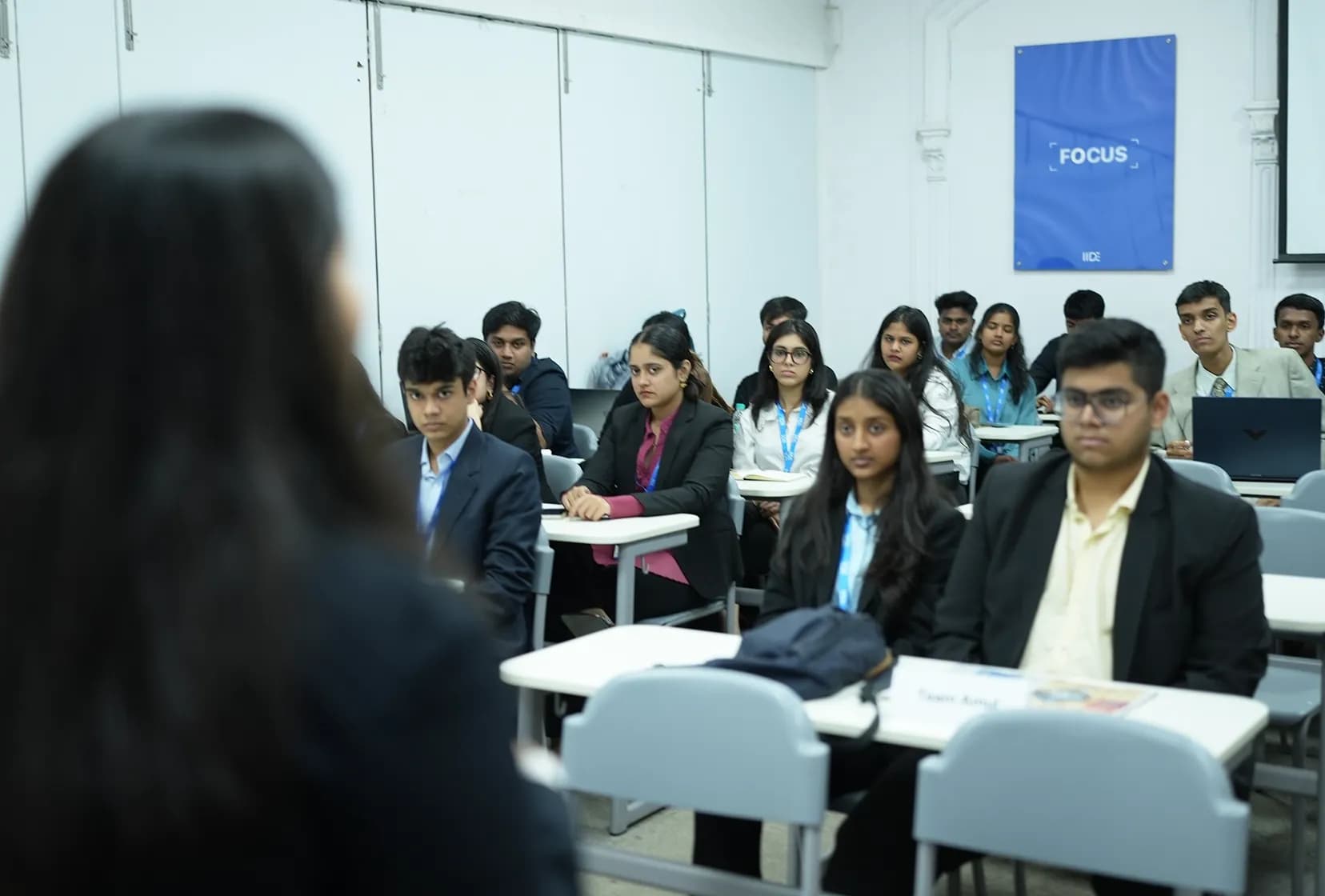
Offline
Degree In 2026 ≠ Enough Degree + Digital Skills = Future-Ready
Best For
12th Passouts
Mode of Learning
At IIDE Campus
Duration
3 Years
Recent Post
Interesting Reads
You May Also Like
In 2026, a Digital Business degree is one of the smartest career moves you can make. It combines business sense with the tech skills companies need most right now, like e-commerce and digital strategy. Because the global economy is now powered by technology, this degree is an investment that prepares you to lead in a high-growth, digital world.
The primary difference is that a Digital Business program focuses on using tech and data to grow modern companies, whereas a traditional BBA focuses on the basics of management. While the traditional degree gives you a broad background in finance and marketing, the Digital Business degree teaches you how to master e-commerce and online strategies.
While specific tools and platforms evolve, a Digital Business degree is far from outdated because it teaches you how to manage innovation rather than just use a single piece of software. Even as platforms like Meta-ads become fully automated by 2026, the foundational skills you gain remain essential. The degree provides the high-level education you need to stay on par.
You can easily switch to a traditional business role later because a Digital Business degree covers all the same fundamentals as a standard BBA. You still master core pillars like management, strategy, and marketing, but you gain the added advantage of modern tech skills. This makes your background more versatile.
You don't need to be a programmer to succeed in digital business or marketing, especially now that no-code tools and generative AI handle the heavy lifting. While roles like content marketing and advertising don't require coding at all, having a basic grasp of HTML or CSS can still be a plus for making quick website tweaks or better understanding SEO. Ultimately, you don't need to write the code yourself to manage the technology that drives a business forward.
Digital Business graduates are highly sought after in sectors like tech, consulting, e-commerce, and finance. Top recruiters are looking for professionals who can bridge the gap between technical tools and high-level business strategy. Whether it's optimizing a global supply chain or leading a digital marketing overhaul, these roles require the exact blend of innovation and leadership that this degree provides.
Yes. Graduates with a Digital Business degree often earn higher starting salaries and see faster raises than those with a traditional BBA. This is because their skills in data, e-commerce, and digital strategy are in extremely high demand in 2026. Companies are willing to pay a premium for professionals who already understand how to use modern technology to drive profit.
Pursuing an MBA after a Digital Business degree is an excellent way to transition from tactical tech roles into high-level leadership. By combining your technical data skills with an MBA’s focus on management and strategy, you become a top candidate for roles in marketing, analytics, or tech leadership. You can specialize in areas like Marketing, Data Analytics, or FinTech to further sharpen your edge.
Yes. IIDE's Bachelor's in Digital Business & Entrepreneurship is a legitimate undergraduate degree that qualifies students for higher education and employment. The curriculum is designed in collaboration with industry leaders, and recruiters actively hire IIDE graduates because the skills are immediately applicable.
Most traditional business degrees teach theory. IIDE focuses on what the industry actually does right now. Students work on real client projects, learn current tools and strategies, and understand how digital channels drive business decisions. IIDE was founded specifically to bridge the gap between what colleges teach and what companies actually need.
Yes. IIDE's curriculum of Undergraduation in Digital Business & Entrepreneurship is built around practical skills and real brand projects. By graduation, students have portfolios with actual campaign work, data analysis, strategy documents, and sometimes live client projects. This makes them competitive from day one because they're not learning theory; they're learning what works.
Yes. IIDE welcomes students from all streams - commerce, science, humanities. The Undrgraduate Digital Business programme doesn't assume prior business knowledge; it builds everything from the ground up. Students learn the fundamentals alongside digital skills.
IIDE graduates work as digital marketers, business strategists, operations managers, brand managers, startup founders, and in many other roles. Because the degree teaches both business thinking and AI driven digital skills. Graduates become flexible, and they can move between functions and grow quickly.
Absolutely. IIDE's curriculum includes a strong focus on entrepreneurship alongside digital business fundamentals. Students learn how to identify opportunities, validate ideas, build business models, and launch ventures. Many graduates feel confident starting their own businesses, and some already have ideas in motion by the time they graduate.


Partner & CEO at One Impact and Digital Marketing Trainer
Kartik is a certified digital marketer and an experienced marketing trainer with a strong passion for imparting knowledge in the field of digital marketing. As a marketing leader, he brings expertise in SEO (Search Engine Optimization), ASO (App Store Optimization), Website Development & much more. His curiosity and commitment to staying updated with industry trends have made him a dedicated digital marketing educator.
Kartik's dedication to teaching has led him to train over 55,000 students globally. His students range from engineers, MBA graduates, start-up entrepreneurs, marketing managers, and even those new to the world of digital marketing. His sessions have reached learners across India, Canada, Dubai, the USA, and other parts of the globe.
Kartik is committed to helping students and professionals alike understand the complexities of digital marketing, empowering them to advance their careers and businesses in this dynamic industry. His deep knowledge and practical approach have earned him a reputation as top 1% digital marketing trainer.