Application Deadline for 3-Year UG Program closes on 31st Aug. Book a Counselling to know more

Students Centric
Placements Report
Trackable results, real numbers
Reviews
Proven success, real voices
Trainers
Expert-led, Industry-Driven Training
Life at IIDE
Vibrant Spirit student life
Alumni
Successful Journeys, Inspiring Stories
Learning Centre
Webinars
Blogs
Case studies
Live, Interactive Masterclasses
Fresh Insights, quick reads
Real-life, Industry relevant
More
Hire from us
Hire Top Digital Marketing Talent
Work with us
Join Our Team, Make an Impact
Customised Training
Personalised digital marketing training for your company
Refer & earn
Simple, easy rewards
Contact us
Get the answers you need
About us
Know more about IIDE
Explore all course options

FOR FRESH GRADUATES
Post Graduation Program in Digital Marketing & Business Strategy- Ideal for Age: 20–25 Years

Can’t decide? Explore all our
Digital Marketing Courses
COMPARE ALL 3 PROGRAMSOnline & Offline
Explore Top AI CoursesIndustry-Aligned TRACKMost Popular
UG Program in Digital Business & Entrepreneurship- Ideal for 12th Pass out / FY Degree Student

PARTNER PROGRAMS







Can’t decide? Explore all
BBA In Digital Marketing Colleges
Orginally Written by Aditya Shastri
Updated on Dec 12, 2025
Share on:


What is a more effective beverage to have in the morning? A hot cup of chai? Or a brewing coffee? The debate will go on, but hey! Tim Hortons, Canada’s iconic coffee brand, has grown from a single doughnut shop in 1964 to over 5,700 outlets across 13 countries.
While it dominates in Canada, global competition and changing consumer habits raise some serious questions. Can it continue to brew success internationally? This SWOT analysis is a must-read for business students, marketers, and entrepreneurs trying to understand what makes a national brand go global, and what might hold it back.
About Tim Hortons
Tim Hortons was founded in 1964 by Canadian hockey legend Tim Horton and businessman Ron Joyce. The slogan “Always Fresh” reflects its focus on quick service and warm familiarity.
Tim Hortons is a part of Restaurant Brands International (RBI), alongside Burger King and Popeyes. Beloved as a cultural symbol in Canada, Tim Hortons isn’t just a café, it’s a part of lifestyle. Let's swim in the steamy SWOT analysis of Tim Hortons.
SWOT ANALYSIS OF TIM HORTONS
1. Strengths - Why Tim Hortons Still Owns the Morning Rush
If you've ever walked into a Tim Hortons during a Canadian winter morning, you'll understand why it's more than just a coffee shop. It’s a ritual. This emotional connection is one of its biggest strengths.
- Cultural Icon of Canada:
Tim Hortons isn’t just loved, but it’s trusted. Over 75% of Canadians regularly buy from it. It’s built deep emotional equity that global brands would envy.
- Affordability Meets Familiarity:
While competitors like Starbucks charge a premium, Tim Hortons has stayed accessible for all. That affordability factor makes it the go-to for students, workers, and retirees alike.
- Massive National Footprint:
With nearly 4,000 outlets in Canada alone, Tim Hortons is everywhere. You’ll find one in hospitals, gas stations, universities - you name it.
- Menu That Evolved with Time:
It started with doughnuts and coffee, but now offers breakfast wraps, hot bowls, cold brews, oat milk lattes, and even plant-based sandwiches.
- Celebrity Campaigns That Work:
Collaborations like “Timbiebs” with Justin Bieber weren’t just viral, they drove real sales. These campaigns helped the brand connect with Gen Z without losing older audiences.

- Part of a Global Powerhouse:
Being owned by Restaurant Brands International gives Tim Hortons the backend support, capital, and infrastructure to expand fast and compete globally.
2. Weaknesses - Where the Cracks Begin to Show
Even national treasures aren’t perfect. And Tim Hortons, despite its loyalty, has some challenges that are hard to ignore.
- Too Canada-Centric:
Nearly all its revenue still comes from Canada. Its attempts to go big in the U.S. and UK haven’t made much noise. That overdependence is risky in a global market.
- Inconsistent Experience Across Stores:
Some outlets feel warm and fresh, while others… not so much. Franchise-driven growth has led to quality control issues.
- Health Trend Blind Spot:
Consumers today are looking for clean labels, organic ingredients, and lower sugar content. Tim Hortons hasn’t quite caught up here.
- Environmental Concerns:
In a world where plastic-free, zero-waste initiatives matter, Tim Hortons has received flak for its use of disposable cups and lack of sustainable packaging.
- Labour and PR Issues:
In recent years, franchisees have been in the news for wage disputes and poor employee treatment, hurting the brand’s “community-first” image.
3. Opportunities - The Aroma Still Has Room to Outspread
With the right moves, Tim Hortons can go from a local legend to a global powerhouse. And the opportunities are plenty.
- Emerging Markets Are Thirsty for Coffee:
Asia, the Middle East, and even Africa are witnessing a café culture boom. Tim Hortons is already present in India and the UAE, and this is just the beginning.
- Cold Beverages Are Heating Up
Believe it or not, iced drinks and cold brews now make up a growing chunk of sales. In 2024, cold drinks saw a 6% rise, something Tim Hortons is doubling down on.
- Digital Ordering and Delivery:
With mobile apps, loyalty programs, and drive-thru upgrades, Tim Hortons has a massive opportunity to create seamless, tech-first experiences.
- Menu Innovation for Gen Z:
More protein-rich breakfast bowls, vegan wraps, oat milk cappuccinos - there’s a hell of scope to appeal to a younger, health-conscious crowd.
- Lead the Sustainability Shift:
Compostable cups, reusable containers, and carbon-neutral stores can help reposition Tim Hortons as a responsible, modern brand.
- Creative Collaborations:
More campaigns like Timbiebs, or tie-ins with local artists and influencers, can keep the brand relevant and exciting.
4. Threats – Tim Hortons Could Stumble If....
The coffee market is fast, competitive, and unforgiving. And even iconic brands like Tim Hortons are not immune to growing threats.
- Coffee Wars Are Real:
In international markets, Tim Hortons is a small player compared to Starbucks, Dunkin’, or even local boutique cafés. Gaining share won’t be easy.
- Economic Uncertainty:
Inflation is impacting food costs and customer spending. Even loyal customers may think twice about their daily coffee habit.
- Climate Change Is Hitting Sales:
Warmer winters in Canada have led to fewer hot drinks being sold. That’s not a short-term stress, but it’s a long-term reality.
- Social Media Backlash:
One viral post about bad service or plastic use can hurt reputation fast. Tim Hortons needs to be agile and proactive in online brand management.
- Changing Preferences:
The next generation of consumers wants more than just taste - they want transparency, health benefits, and ethical sourcing. Standing still is not an option.

Is Digital Marketing the Right Career for You?
Find out in a free 45-min masterclass · Career paths, roles and growth explained · By Karan Shah, Founder & CEO, IIDE

Is Digital Marketing the Right Career for You?
Find out in a free 45-min masterclass · Career paths, roles and growth explained · By Karan Shah, Founder & CEO, IIDE
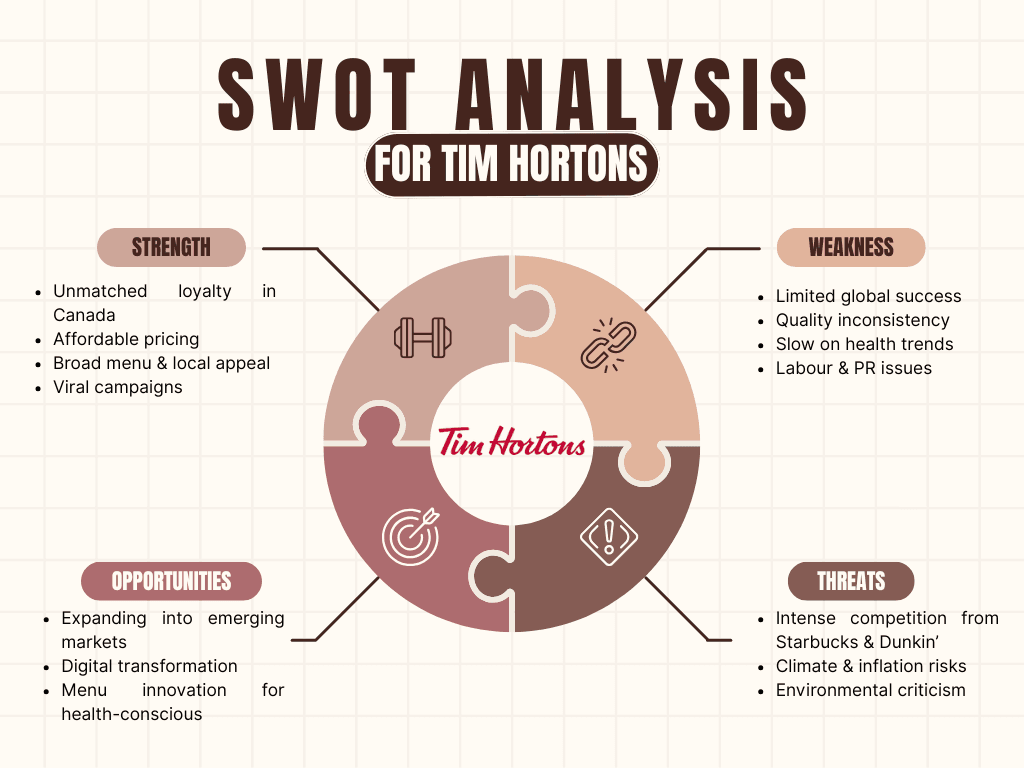
The SWOT Summed Up in a Table
What Can Business Learners Extract from Tim Hortons' Journey?
Tim Hortons isn’t just a case study in building a brand; it’s a lesson in building trust. It shows how consistency in customer experience can create a cultural movement, not just a business.
But here’s the key takeaway for students and entrepreneurs: what gets you to the top isn't always what keeps you there.
- Tim Hortons built its empire on routine, familiarity, and warmth. But the future demands agility
- Whether you’re starting a new brand or managing an established one, you must evolve with your audience - from taste to tech to transparency
- As consumers get smarter and more socially conscious, brands must go beyond just product - they need to build community, sustainability, and purpose into every strategy
So if you're studying brand building or marketing, think beyond product launches. Think ecosystems. Think emotional value. That’s where Tim Hortons started, and where it must return, with a global twist.
Want to Know Why 2,50,000+ Students Trust Us?
Dive into the numbers that make us the #1 choice for career success



MBA - Level
Post Graduate in Digital Marketing & Business Strategy

Best For
Fresh Graduates

Mode of Learning
On Campus (Mumbai & Delhi)

Starts from
Oct 1, 2026

Duration
11 Months

Live & Online
Advanced Online Digital Marketing Course
Best For
Working Professionals
Mode of Learning
Online
Starts from
Aug 7, 2026
Duration
4-6 Months

Online
Professional Certification in AI Strategy
Best For
AI Enthusiasts
Mode of Learning
Online
Starts from
Sep 8, 2026
Duration
5 Months

On Campus
Advanced Certification in Artificial Intelligence
Best For
AI Enthusiasts
Mode of Learning
On Campus (Mumbai)
Starts from
Sep 1, 2026
Duration
3 Months

Online or Offline
Top AI Courses to Make You Future Ready!
Best For
AI Enthusiasts
Mode of Learning
2–5 Month Program
Starts from
Sep 8, 2026
Duration
Flexiable
Offline
Undergraduate Program in Digital Business & Entrepreneurship
Best For
12th Passouts
Mode of Learning
On Campus (Mumbai)
Starts from
Aug 19, 2026
Duration
3 Years
Offline
Degree In 2026 ≠ Enough Degree + Digital Skills = Future-Ready
Best For
12th Passouts
Mode of Learning
At IIDE Campus
Starts from
Aug 19, 2026
Duration
3 Years
Recent Post
Tim Hortons could expand its franchise next in Asia-Pacific, India, MENA region, and Latin America. The regions display a strong potential for its growth.
The Justin Bieber “Timbiebs” campaign was a major hit among young customers recently.
Tim Horton is a part of an exclusive agreement with a joint venture entity owned by Apparel Group and Gateway Partners of India.
The Tim Hortons coffee is roasted with quality ingredients using only 100% premium arabica beans, making it of a premium quality.

Lead Trainer & Business Development Head at IIDE
Aditya Shastri leads the Business Development segment at IIDE and is a seasoned Content Marketing expert. With over a decade of experience, Aditya has trained more than 20,000 students and professionals in digital marketing, collaborating with prestigious institutions and corporations such as Jet Airways, Godrej Professionals, Pfizer, Mahindra Group, Publicis Worldwide, and many others. His ability to simplify complex marketing concepts, combined with his engaging teaching style, has earned him widespread admiration from students and professionals alike.
Aditya has spearheaded IIDE’s B2B growth, forging partnerships with over 40 higher education institutions across India to upskill students in digital marketing and business skills. As a visiting faculty member at top institutions like IIT Bhilai, Mithibai College, Amity University, and SRCC, he continues to influence the next generation of marketers.
Apart from his marketing expertise, Aditya is also a spiritual speaker, often traveling internationally to share insights on spirituality. His unique blend of digital marketing proficiency and spiritual wisdom makes him a highly respected figure in both fields.