Application Deadline for 3-Year UG Program closes on 31st Aug. Book a Counselling to know more

Students Centric
Placements Report
Trackable results, real numbers
Reviews
Proven success, real voices
Trainers
Expert-led, Industry-Driven Training
Life at IIDE
Vibrant Spirit student life
Alumni
Successful Journeys, Inspiring Stories
Learning Centre
Webinars
Blogs
Case studies
Live, Interactive Masterclasses
Fresh Insights, quick reads
Real-life, Industry relevant
More
Hire from us
Hire Top Digital Marketing Talent
Work with us
Join Our Team, Make an Impact
Customised Training
Personalised digital marketing training for your company
Refer & earn
Simple, easy rewards
Contact us
Get the answers you need
About us
Know more about IIDE
Explore all course options

FOR FRESH GRADUATES
Post Graduation Program in Digital Marketing & Business Strategy- Ideal for Age: 20–25 Years

Can’t decide? Explore all our
Digital Marketing Courses
COMPARE ALL 3 PROGRAMSOnline & Offline
Explore Top AI CoursesIndustry-Aligned TRACKMost Popular
UG Program in Digital Business & Entrepreneurship- Ideal for 12th Pass out / FY Degree Student

PARTNER PROGRAMS







Can’t decide? Explore all
BBA In Digital Marketing Colleges
Orginally Written by Aditya Shastri
Updated on May 22, 2026
Share on:


Humana is not just a health insurer. It is America's Medicare giant, building an integrated care ecosystem through CenterWell that most competitors are still trying to replicate.
But deep government program dependence, star rating pressure, and rising medical costs are vulnerabilities that cannot be ignored.
The aging American population is a structural tailwind no competitor can stop. The real question is whether Humana can scale fast enough, innovate boldly enough, and execute consistently enough to widen its competitive moat before the giants close in.
Before diving into the article, I would like to inform you that the research and initial analysis for this piece were conducted by Muskan Jain. She is a current student in IIDE's Post Graduation in Digital Marketing and Business Strategy, August Batch 2025.
If you found this helpful, feel free to reach out to Muskan Jain to send a quick note of appreciation for her fantastic research, She will appreciate the kudos!
About Humana
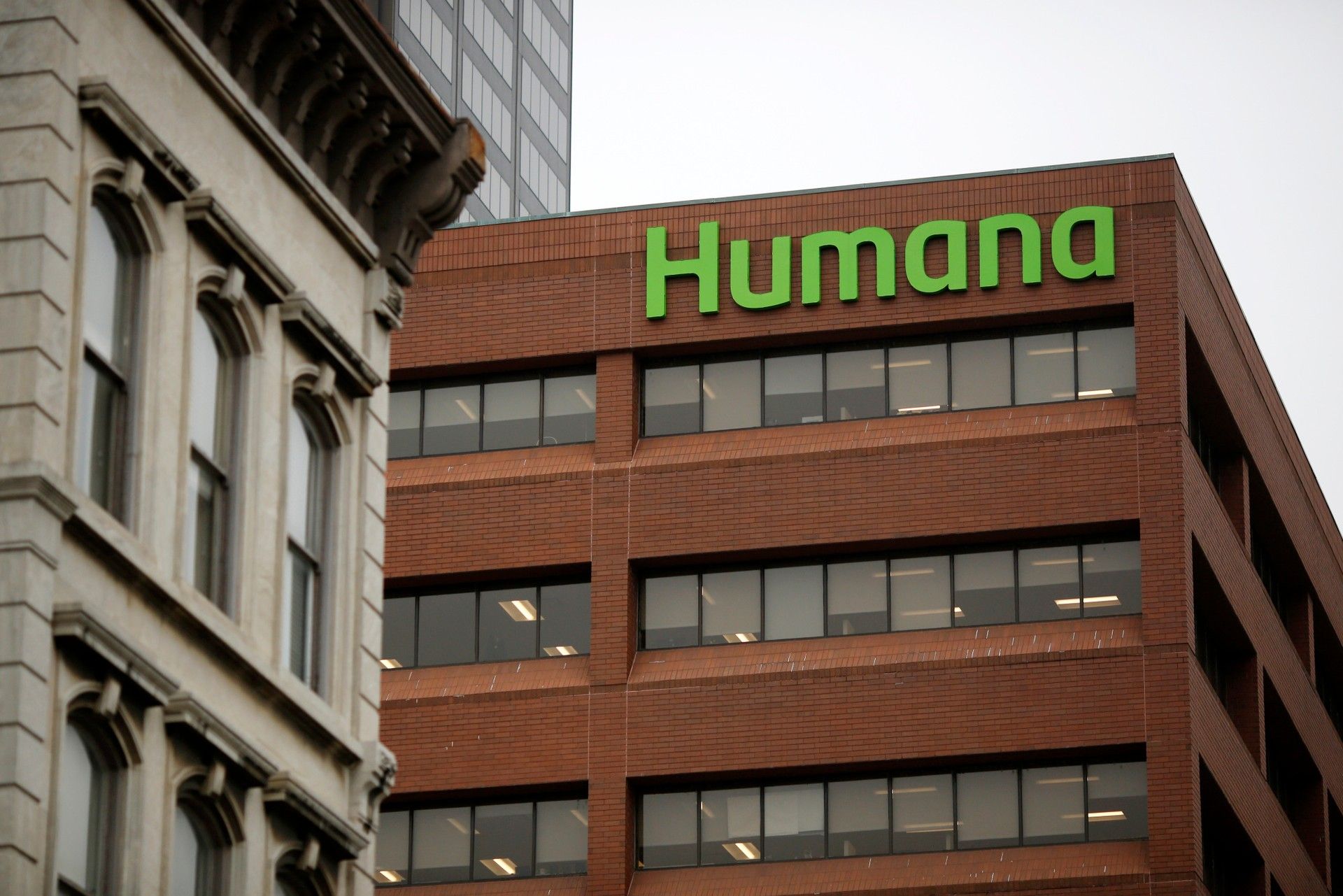
Humana Inc. was founded in 1961 and is headquartered in Louisville, Kentucky. What began as a nursing home company has evolved over six decades into one of America's most influential health insurers, with a laser focus on senior care, Medicare Advantage, and integrated health services.
In 2026, Humana ranks among the top Fortune 100 companies, employing approximately 65,000+ professionals across the United States.
Its CenterWell brand, covering primary care clinics, home health, and pharmacy services, positions Humana not just as a traditional payer, but as a full-spectrum healthcare platform built around improving patient outcomes at every stage of the care journey.
Humana's core mission: "Making it easy for people to achieve their best health."
Quick Stats about Humana:
| Feature | Details |
|---|---|
| Official Name | Humana Inc. |
| Founded | 1961 |
| Headquarters | Louisville |
| Industries Served | Health Insurance, Medicare Advantage, Medicaid, Pharmacy Benefits, Home Health |
| Geographic Presence | United States (nationwide), Puerto Rico & select U.S. territories |
| Revenue (2024) | ~$117.76 billion USD |
| Employees (2024–25) | ~65,680 |
| Fortune 500 Rank | 92nd (2024) |
| Key Subsidiary | CenterWell (Primary Care, Home Health, Pharmacy) |
| Main Competitors | UnitedHealth Group, CVS Health (Aetna), Elevance Health, The Cigna Group, Centene Corporation, Kaiser Permanente |
Why SWOT Analysis Matters for Humana in 2026
The healthcare industry is one of the most volatile, regulated, and competitive sectors globally. For a company of Humana's scale, a structured SWOT analysis is not just an academic exercise, it is a strategic necessity that informs everything from capital allocation to product design and market expansion.
Here is why this analysis is especially critical in 2026:
- Intense Market Consolidation: The U.S. health insurance market is consolidating fast. Humana must defend its position against rivals like UnitedHealth Group and CVS Health/Aetna, both aggressively expanding through vertical integration.
- Medicare Policy Shifts: CMS regularly revises reimbursement rates and star rating methodologies, directly exposing Humana's revenue to regulatory shifts that can happen overnight. Policy monitoring is mission-critical.
- Consumer Expectations Have Evolved: Members in 2026 expect seamless digital experiences, proactive care management, and personalized health journeys, not just insurance cards. The bar for member satisfaction has never been higher.
- Technology as a Competitive Moat: AI-driven risk stratification, telehealth, and predictive analytics are no longer differentiators, they are table stakes. Insurers that fall behind on technology risk losing ground on both margins and outcomes.
- Demographic Tailwinds: With 73 million Baby Boomers at or approaching Medicare eligibility, demand for senior health coverage keeps growing. Few competitors are as well positioned as Humana to capture this at scale.
- Sustainability & ESG Pressure: Investors and regulators are scrutinizing healthcare companies on environmental impact, data privacy, and social responsibility. For Humana, meeting these expectations is now a strategic imperative, not just good practice.

Is Digital Marketing the Right Career for You?
Find out in a free 45-min masterclass · Career paths, roles and growth explained · By Karan Shah, Founder & CEO, IIDE

Is Digital Marketing the Right Career for You?
Find out in a free 45-min masterclass · Career paths, roles and growth explained · By Karan Shah, Founder & CEO, IIDE
SWOT Analysis of Humana 2026
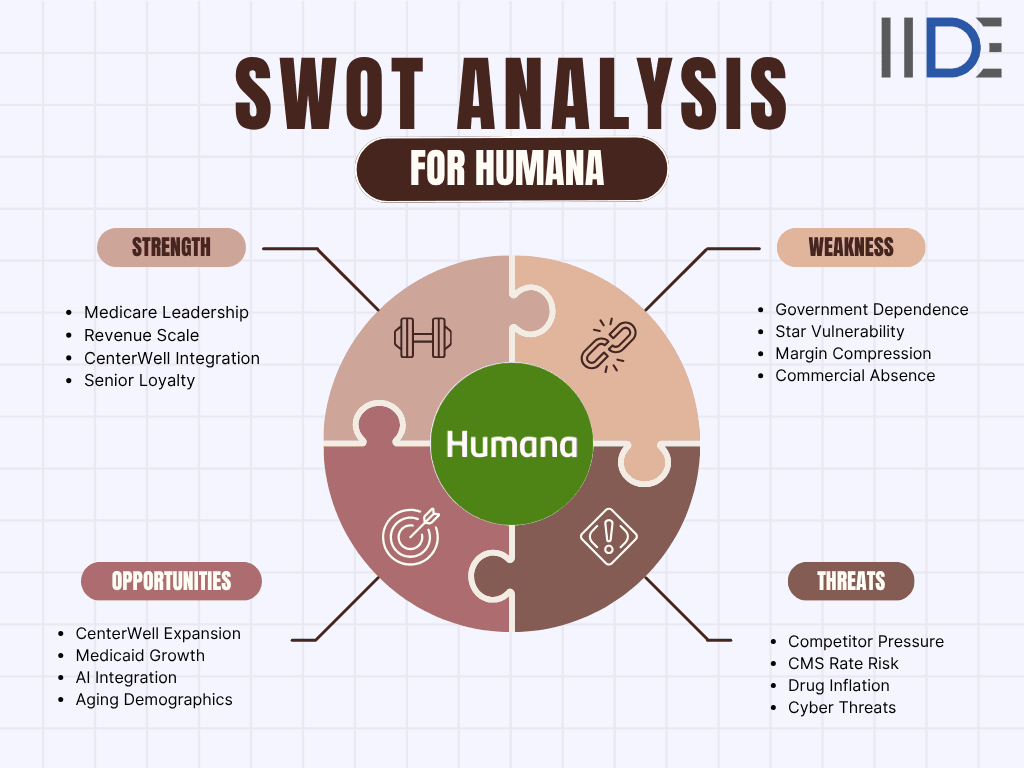
A SWOT analysis provides a clear framework to evaluate where Humana stands today and where it is headed. By examining its internal strengths and weaknesses alongside external opportunities and threats, we can decode the strategic levers that will determine Humana's competitive edge in 2026 and the years ahead.
Strengths of Humana: How America's Medicare Giant Wins in 2026
Humana's competitive advantages are deeply rooted in its government program expertise, integrated care model, and the scale that comes with six decades of industry presence. Here is what sets it apart:
Medicare Advantage Market Leadership:
- Humana is consistently ranked among the top two Medicare Advantage insurers in the United States by enrollment.
- Its deep expertise in government-sponsored programs creates high regulatory barriers that smaller competitors simply cannot replicate.
- Long-standing relationships with CMS provide institutional knowledge that translates into better plan design and risk management.
For a broader perspective on how government-focused insurers build and protect this kind of regulatory positioning, the SWOT Analysis of Aflac is worth exploring
Massive Revenue Scale & Financial Muscle:
- With ~$117.76 billion in revenue in 2024, Humana has the financial capacity to absorb market shocks, fund innovation, and aggressively expand its service lines.
- This scale enables bulk negotiating power with hospital networks, pharmaceutical companies, and technology vendors.
- Strong capital reserves allow Humana to invest in long-term infrastructure even during periods of margin compression.
CenterWell: The Integrated Care Advantage:
- CenterWell is Humana's fastest-growing strategic asset, combining primary care clinics, home health services, and pharmacy benefits under one ecosystem.
- This vertical integration reduces dependency on third-party providers and enables Humana to capture more of the healthcare value chain.
- Value-based care contracts through CenterWell improve patient outcomes while simultaneously lowering the cost of care, a win-win for both members and margins.
Deep Senior Consumer Trust & Brand Loyalty:
- Decades of serving the senior demographic have built an exceptionally loyal member base.
- Brand recognition among Medicare-eligible adults gives Humana a natural enrollment pipeline that competitors must spend heavily to replicate.
- Strong Net Promoter Scores in Medicare Advantage plans reflect member satisfaction that directly supports retention and referrals.
Data & Analytics Capabilities:
- Humana manages health data for millions of members, giving it a rich dataset to power AI-driven risk stratification, predictive modeling, and personalized care interventions.
- These capabilities allow Humana to identify high-risk members early, reduce hospitalizations, and improve star ratings, a direct driver of revenue under Medicare's quality-based payment model.
Weaknesses of Humana: Challenges in a High-Stakes Market
Even the strongest healthcare brands carry vulnerabilities. For Humana in 2026, the following weaknesses represent areas that demand urgent strategic attentions.
Over-Reliance on Medicare & Government Programs:
- The vast majority of Humana's revenue flows from Medicare Advantage and other government-funded programs.
- This concentration means that any adverse CMS policy change, rate cuts, star rating methodology shifts, or benefit reductions, can have an outsized impact on Humana's financials.
- Unlike diversified competitors such as UnitedHealth Group, which balances insurance with Optum's commercial health services, Humana has less of a buffer against government program volatility.
Star Rating Vulnerability:
- Humana has faced challenges maintaining consistently high CMS star ratings across its Medicare Advantage plans, and lower ratings directly translate to reduced bonus payments and lower plan attractiveness.
- Star rating recovery requires multi-year operational investment, making it a slow and costly process.
- A drop in ratings can trigger a negative member perception cycle, increasing the risk of enrollment losses during open enrollment periods.
Margin Compression from Rising Medical Costs:
- Medical cost inflation, driven by post-pandemic utilization surges, specialty drug costs, and chronic disease management, continues to squeeze Humana's operating margins.
- Unlike commercial insurers who can more flexibly adjust premiums, government program pricing is largely dictated by CMS, limiting Humana's ability to offset cost increases.
- In 2024, elevated medical loss ratios were a key factor putting pressure on Humana's profitability.
Limited Commercial & Employer-Sponsored Insurance Presence:
- Humana exited much of the commercial group insurance market in 2015, leaving it with minimal exposure to the employer-sponsored insurance (ESI) segment, the largest segment of U.S. health insurance by enrollment.
- This narrows Humana's addressable market and leaves revenue diversification gaps that peers like Cigna and Aetna do not face.
Talent Acquisition & Retention Challenges:
- Like most major healthcare organizations, Humana competes in a tight labor market for clinical talent, technology professionals, and data scientists.
- Talent shortages in these areas can slow CenterWell's expansion and delay the rollout of AI-driven care management programs.
Opportunities for Humana: Growth Levers in 2026and Beyond
The healthcare landscape of 2026 presents Humana with a compelling set of growth opportunities. The brands that act swiftly and strategically on these trends will define the next decade of managed care.
Scaling CenterWell as a Standalone Growth Engine:
- CenterWell's primary care, home health, and pharmacy businesses are growing rapidly and could increasingly function as profit centers independent of Humana's insurance operations.
- Expanding CenterWell clinic locations in underserved urban and rural markets can simultaneously improve care quality, reduce costs, and capture new revenue streams.
- The home health segment is particularly attractive, given the growing preference among seniors for aging in place rather than transitioning to institutional care.
Dual-Eligible & Medicaid Expansion:
- The dual-eligible population, individuals qualifying for both Medicare and Medicaid, is one of the fastest-growing and highest-need segments in U.S. healthcare.
- Humana's government program expertise positions it exceptionally well to expand its Dual-Eligible Special Needs Plans (D-SNPs), which are gaining traction as states push for integrated care models.
- With Medicaid managed care expanding in multiple states, Humana can leverage existing infrastructure to enter new state contracts efficiently.
AI, Telehealth & Digital Health Integration:
- Humana has already invested in predictive analytics and telehealth platforms, but the opportunity to deepen AI integration across care management, fraud detection, and member engagement is enormous.
- Deploying conversational AI for member services, AI-powered chronic disease monitoring, and remote patient management tools can significantly reduce costs while improving member experience.
- Partnerships with digital health startups can accelerate capability development faster than organic build approaches.
Aging U.S. Demographics as a Structural Tailwind:
- With approximately 11,000 Americans turning 65 every day in 2026, the Medicare-eligible population is expanding at a pace that structurally benefits Humana more than any competitor given its Medicare-centric model.
- Humana can build comprehensive senior ecosystems that address not just medical needs but also social determinants of health, housing, nutrition, and transportation, creating holistic value that drives loyalty.
Strategic Acquisitions & Partnerships:
- Targeted acquisitions in home health technology, specialty care, or value-based care enablement could rapidly enhance Humana's capabilities.
- Partnerships with retail pharmacy chains, fitness platforms, and chronic disease management companies can create new touchpoints with members and reduce overall care costs.
Threats to Humana: Navigating a Volatile Healthcare Landscape in 2026
Humana's growth trajectory faces a number of significant external threats that require proactive risk management and strategic agility.
Dominant Competitor Ecosystem:
- UnitedHealth Group, CVS Health/Aetna, Elevance Health, and Cigna are all formidable rivals with significant resources, diversified business models, and aggressive expansion strategies.
- UnitedHealth's Optum platform in particular represents a deeply integrated care and data model that Humana is racing to match through CenterWell.
- Price-based competition in Medicare Advantage plan offerings intensifies every open enrollment cycle.
The Marketing Strategy of Cigna breaks down how diversified health insurers manage this exact pressure across both government and commercial portfolios.
CMS Reimbursement Rate Risk:
- CMS rate announcements annually determine the financial viability of Medicare Advantage plans. Unfavorable rate adjustments, combined with star rating penalties, can rapidly erode margins.
- Proposed regulatory changes to Medicare Advantage marketing practices and benefit design add compliance costs and limit plan differentiation strategies.
Economic Uncertainty & Consumer Financial Stress:
- Economic downturns can lead to increased Medicaid enrollment while reducing consumer spending power, creating a complex mix of demand shifts.
- Rising inflation can push members toward lower-benefit, lower-premium plan options, compressing Humana's average revenue per member.
Healthcare Cost & Utilization Volatility:
- Post-pandemic healthcare utilization continues to be unpredictable, with pent-up demand for elective procedures and rising behavioral health service usage creating cost unpredictability.
- Specialty drug costs, particularly GLP-1 medications like Ozempic and Wegovy, are creating enormous pressure on pharmacy benefit costs across all major insurers, including Humana.
Cybersecurity & Data Privacy Threats:
- As a custodian of highly sensitive health data for millions of Americans, Humana is a prime target for cyberattacks.
- A major data breach could result in regulatory fines, member trust erosion, and significant reputational damage, making cybersecurity investment a non-negotiable strategic priority in 2026.
Regulatory & Political Risk:
- Healthcare policy remains politically contentious in the U.S. Major legislative changes, such as drug pricing reforms, expansion of government health programs, or restructuring of Medicare, could fundamentally alter Humana's operating environment.
Summary Table - SWOT of Humana
IIDE Student Takeaway, Recommendations & Conclusion for Humana in 2026 and Beyond
Humana's SWOT analysis in 2026 paints the picture of a strategically focused, financially powerful insurer that has made bold bets on integrated care, but one that must urgently diversify its risk profile and accelerate innovation to stay ahead.
Core Tension: Humana's greatest strength, its deep specialization in Medicare and government programs, is simultaneously its greatest vulnerability. When CMS policy shifts or star ratings dip, the impact is immediate and significant because there is limited revenue from other segments to cushion the blow.
Future Outlook: The next three to five years will be decisive. Humana's ability to scale CenterWell into a truly differentiated, tech-enabled care platform, while managing regulatory risk and controlling medical costs, will determine whether it widens its competitive moat or finds itself squeezed between giants.
Recommendations:
- Prioritize Star Rating Recovery as a Board-Level KPI: Star ratings directly drive bonus revenue and member growth. Investing in care quality programs, member engagement, and HEDIS measure improvement should be treated as a top-tier strategic priority, not just an operational one.
- Accelerate CenterWell Expansion in Underserved Markets: There is significant white space in rural and secondary markets where senior populations are growing but access to quality primary care remains limited. CenterWell clinic expansion in these geographies creates both social impact and competitive differentiation.
- Build a Serious Medicaid Capability: Dual-eligible integrated care is among the most complex but also most rewarding segments in U.S. healthcare. Humana should invest in state-specific Medicaid expertise and pursue aggressive D-SNP growth to reduce its Medicare concentration risk.
- Double Down on AI-Driven Care Management: Deploying AI for predictive risk scoring, early intervention programs, and personalized member communications can simultaneously improve outcomes, reduce inpatient utilization, and increase member satisfaction, a direct path to better star ratings and lower medical costs.
- Strengthen Cybersecurity Infrastructure: Given the sensitivity of health data and the escalating threat landscape, Humana must treat cybersecurity as a core competency, not a back-office function.
Humana in 2026 stands at a strategic crossroads that will define its next chapter.
The company's deep expertise in government health programs, its massive revenue scale, and the emerging potential of CenterWell give it a strong foundation to build from.
However, over-reliance on a single regulatory ecosystem, mounting competitive pressure, and the relentless rise of medical costs demand bold, decisive strategic action.
The brands that win in healthcare over the next decade will not simply be the largest payers. They will be the ones that successfully transition into patient-centric, technology-enabled health platforms that deliver measurable outcomes.
For Humana, that transformation is already underway. The question is whether it can execute fast enough to stay ahead of the competition while managing the short-term pressures that come with operating at this scale.
For students and marketing professionals, Humana's journey is a masterclass in the intersection of brand strategy, regulatory navigation, and operational innovation, a reminder that in highly controlled industries, strategic thinking must go far beyond traditional marketing to encompass policy, incentives, and systems design.
Want to Know Why 2,50,000+ Students Trust Us?
Dive into the numbers that make us the #1 choice for career success



MBA - Level
Post Graduate in Digital Marketing & Business Strategy

Best For
Fresh Graduates

Mode of Learning
On Campus (Mumbai & Delhi)

Starts from
Oct 1, 2026

Duration
11 Months

Live & Online
Advanced Online Digital Marketing Course
Best For
Working Professionals
Mode of Learning
Online
Starts from
Sep 4, 2026
Duration
4-6 Months

Online
Professional Certification in AI Strategy
Best For
AI Enthusiasts
Mode of Learning
Online
Starts from
Sep 8, 2026
Duration
5 Months

Online or Offline
Top AI Courses to Make You Future Ready!
Best For
AI Enthusiasts
Mode of Learning
2–5 Month Program
Starts from
Sep 8, 2026
Duration
Flexiable

On Campus
Advanced Certification in Artificial Intelligence
Best For
AI Enthusiasts
Mode of Learning
On Campus (Mumbai)
Starts from
Sep 1, 2026
Duration
3 Months

Offline
Undergraduate Program in Digital Business & Entrepreneurship
Best For
12th Passouts
Mode of Learning
On Campus (Mumbai)
Starts from
Aug 19, 2026
Duration
3 Years

Offline
Degree In 2026 ≠ Enough Degree + Digital Skills = Future-Ready
Best For
12th Passouts
Mode of Learning
At IIDE Campus
Starts from
Aug 19, 2026
Duration
3 Years
Recent Post
You May Also Like
Humana Inc. is one of the US's largest health insurance companies, founded in 1961, offering Medicare Advantage plans, Medicaid, employer health benefits, and integrated care through its CenterWell pharmacy and clinic network.
Humana is the 3rd largest Medicare Advantage provider in the US, with deep expertise in senior healthcare, a growing CenterWell integrated care model, and strong digital health capabilities.
Heavy concentration in Medicare Advantage makes Humana highly vulnerable to federal reimbursement policy changes, while rising medical cost ratios have pressured recent profitability.
The aging Baby Boomer population, telehealth expansion, value-based care partnerships, Medicaid market growth, and further scaling of the CenterWell pharmacy-clinic integrated model are Humana's strongest opportunities.
UnitedHealth Group, CVS Health (Aetna), Elevance Health (Anthem), Cigna, and Centene Corporation are Humana's primary competitors in US managed care.
CMS Medicare Advantage reimbursement cuts, rising healthcare costs, intense competition for senior members, cybersecurity vulnerabilities in health data, and regulatory scrutiny of large insurers are key threats.
Medicare Advantage drives the majority of Humana's revenue and membership making it the foundation of the brand's business model and the area where it invests most heavily in growth and retention.

Lead Trainer & Business Development Head at IIDE
Aditya Shastri leads the Business Development segment at IIDE and is a seasoned Content Marketing expert. With over a decade of experience, Aditya has trained more than 20,000 students and professionals in digital marketing, collaborating with prestigious institutions and corporations such as Jet Airways, Godrej Professionals, Pfizer, Mahindra Group, Publicis Worldwide, and many others. His ability to simplify complex marketing concepts, combined with his engaging teaching style, has earned him widespread admiration from students and professionals alike.
Aditya has spearheaded IIDE’s B2B growth, forging partnerships with over 40 higher education institutions across India to upskill students in digital marketing and business skills. As a visiting faculty member at top institutions like IIT Bhilai, Mithibai College, Amity University, and SRCC, he continues to influence the next generation of marketers.
Apart from his marketing expertise, Aditya is also a spiritual speaker, often traveling internationally to share insights on spirituality. His unique blend of digital marketing proficiency and spiritual wisdom makes him a highly respected figure in both fields.