Newly Launched: Post Graduation Program in Digital Marketing & Business Strategy.

Students Centric
Placements Report
Trackable results, real numbers
Reviews
Proven success, real voices
Trainers
Expert-led, Industry-Driven Training
Life at IIDE
Vibrant Spirit student life
Alumni
Successful Journeys, Inspiring Stories
Learning Centre
Webinars
Blogs
Case studies
Live, Interactive Masterclasses
Fresh Insights, quick reads
Real-life, Industry relevant
More
Hire from us
Hire Top Digital Marketing Talent
Work with us
Join Our Team, Make an Impact
Customised Training
Personalised digital marketing training for your company
Refer & earn
Simple, easy rewards
Contact us
Get the answers you need
About us
Know more about IIDE
Explore all course options

FOR FRESH GRADUATES
Post Graduation Program in Digital Marketing & Business Strategy- Ideal for Age: 20–25 Years

Can’t decide? Explore all our
Digital Marketing CoursesTrending

Professional Certification in AI Strategy
- Ideal for AI Enthusiast










Orginally Written by Aditya Shastri
Updated on Jul 23, 2025
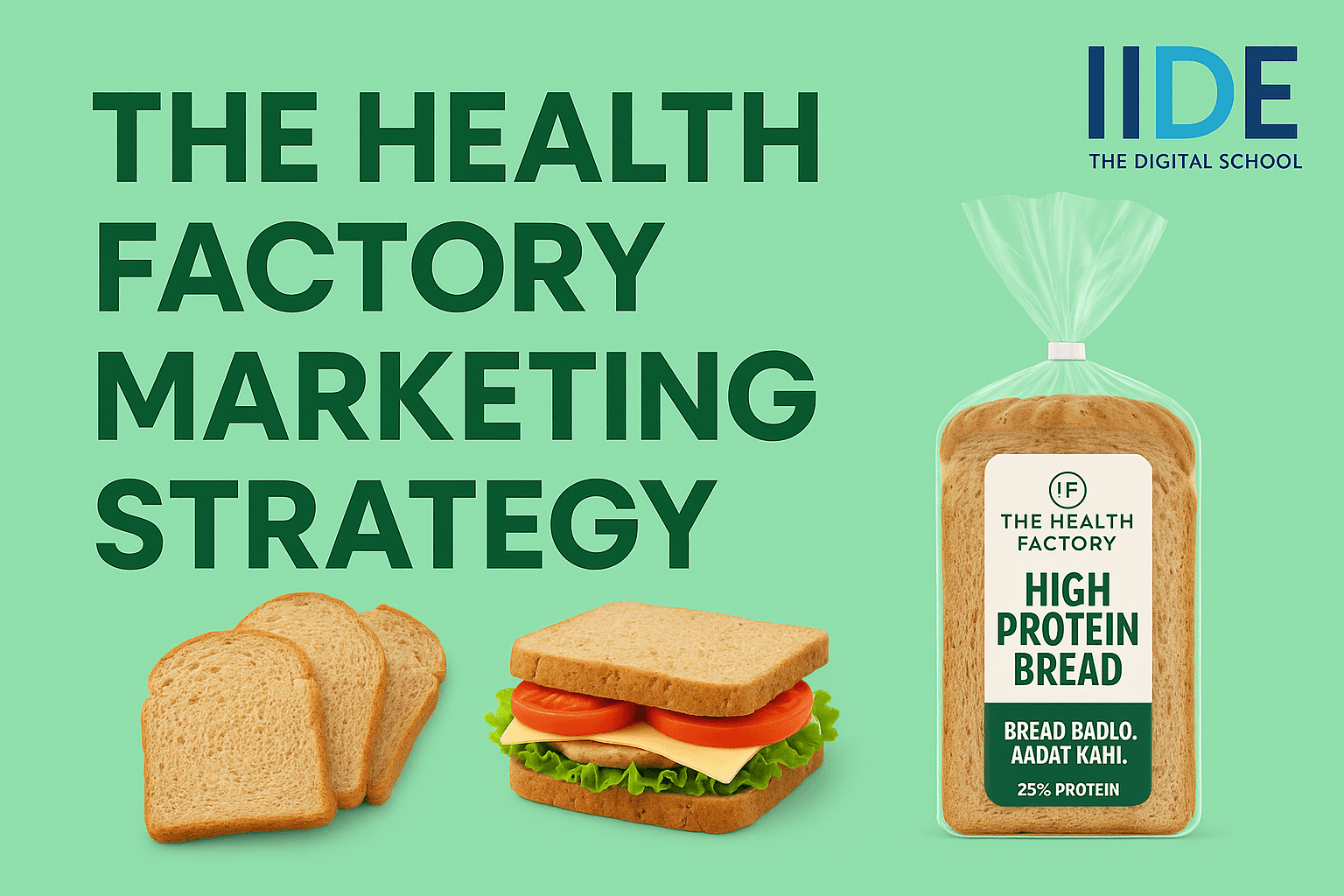
In an age where “healthy” often means “bland,” one emerging brand is flipping the script - Bread Badlo. Aadat Nahi. The Health Factory isn’t trying to change how we eat—it’s reengineering what we eat.
With their high-protein, zero-maida bread, they’re reshaping a daily habit without asking consumers to compromise on comfort, taste, or tradition.
But what’s even more impressive than their high-protein bread? The digital strategy that baked it into a brand people can’t stop talking about.
From performance-driven campaigns to clever social storytelling and D2C precision, The Health Factory has built more than a product—it’s built a movement.
This case study examines how an emerging health brand, lacking celebrity backing and a substantial offline presence, achieved success in digital marketing through a focused, data-driven, and audience-centric approach.
Before diving into the marketing strategy of Licksters, I’d like to inform you that the research and initial analysis for this piece were conducted by Kalpana Ramchandani. She is a current student in IIDE's Post Graduation course (May 2024 Batch).
If you found this case study on The Health Factory's marketing strategy, feel free to reach out to Kalpana to send a quick note of appreciation for her fantastic research - she’ll appreciate the kudos!
About The Health Factory
The Health Factory is a growing health and wellness brand focused on transforming everyday food staples, beginning with bread.
By offering high-protein, zero-maida alternatives and aligning with the preferences of modern consumers, the brand has established a niche in the functional food category.
This case study highlights how a well-structured digital marketing strategy can go beyond driving sales to influence consumer behaviour, foster brand communities, and support long-term positioning.
It examines how The Health Factory leveraged social media, performance marketing, and content-led storytelling to build a strong clean-label identity in a competitive market.
Founded in 2018 by Vinay Maheshwari and Mohit Sankhala, The Health Factory emerged from a personal quest to create healthier bread alternatives for Indian consumers.
The Mumbai-based company specialises in nutritious, preservative-free bread products, including its flagship Zero Maida range (100% whole wheat bread), India's first Multi-Protein Bread, and Vegan Protein options.
The Health Factory has positioned itself as a disruptor in the traditional bread industry with its mission to provide "bread in its truest form".

Want to achieve results like The Health Factory?
Join our Digital Marketing Masterclass and learn the exact strategies in just 45 mins.

Marketing Objectives & Business Challenges
The Health Factory faced two major challenges in establishing itself in India's traditional bread market:
- Category Education: Most Indian consumers viewed bread as a convenience food, not a health product. The challenge was shifting perception from "bread as filler" to "bread as functional nutrition."
- Premium Positioning: As a new D2C brand competing against established FMCG giants like Britannia and Modern, convincing consumers to pay premium prices for healthier alternatives was crucial.
The objective was to build brand awareness, educate the market about healthy bread alternatives, and drive customer acquisition through targeted digital campaigns.
Buyers Persona:

Priya Singh
Metropolitan Cities
Occupation: Working Profession
Age: 28 - 38 year old
Motivation
- Actively seeking healthier alternatives to regular bread and everyday food without compromising on taste.
- Interested in high-protein, zero-maida, or gut-friendly products that align with their wellness goals.
- Want to make food choices that reflect better lifestyle decisions for self and family.
Interest & Hobbies
- Follows health, fitness, and nutrition influencers across Instagram and YouTube.
- Engaged in wellness communities and healthy recipe forums.
- Enjoys trying out new-age D2C health food brands and reviewing them online.
Pain Points
- Struggles to find bread and bakery products that are nutritious, tasty, and preservative-free.
- Frustrated with misleading “healthy” tags that don’t deliver actual benefits.
- Lack of trust in mass-produced options claiming to be healthy.
Social Media Presence
Marketing Channels Used by The Health Factory
The Health Factory has cracked the code for marketing healthy bread in a country obsessed with traditional maida-based options. Their strategy? A perfect blend of performance marketing, bold celebrity collaborations, and smart educational content that actually makes people want to change their bread habits.
On the digital front, they've invested heavily in:
- SEO and content marketing to capture health-conscious consumers searching for "zero maida bread"
- Meta Ads (Facebook & Instagram) targeting urban millennials and Gen Z with visually appealing content
- Google Ads across Search and Display for high-intent keywords like "healthy bread alternatives"
- Instagram Reels and viral content to educate consumers while entertaining them
This omni-channel approach has helped them educate the market, build trust, and convert sceptical bread lovers into loyal customers..
Marketing Strategy Breakdown
1. Content Marketing & SEO
The Health Factory's SEO game is still growing, but they're making smart moves. With a domain authority of 15, they're sitting pretty for a newer D2C food brand building digital presence.
Current reality check:
- Desktop loads in 3.28s (decent), Mobile at 7s (needs work)
- Core Web Vitals passed - solid technical foundation
- They're pulling 16,175 monthly organic visitors with 506 keywords ranking and 223 backlinks
2. Performance Marketing & Paid Campaign
They're running a comprehensive paid strategy to capture high-intent audiences ready to switch their bread habits:
- Google Search Ads for keywords with high search volume
- Meta Ads with strong visual storytelling showing real ingredients
- Display campaigns retargeting interested website visitors
Their #JustGoodBread and #TuJaantaNaiMeraBreadwalaKounHai campaigns combine education with performance marketing. What's impressive? Their paid ads don't scream "advertisement" - they feel like helpful info from a nutrition-savvy friend.
3. Celebrity & Influencer Marketing
Bread mein bhi drama hona chahiye! They made bold moves with celebrity partnerships nobody saw coming.
Uorfi Javed's collaboration was pure genius - she literally wrapped herself in bread slices and performed a rap for #BreadBadloAadatNahi. Weird, wonderful, and everywhere on social media.
Then they brought in Kunal Vijaykar for credibility - smart move balancing viral appeal with authentic food expertise.
Why it worked:
- Unexpected factor - nobody expects bread marketing to be this entertaining
- People shared it because it was genuinely surprising
- Even in the chaos, the "zero maida" message came through clear
5. B2B & HoReCa Expansion
While building consumer love, they smartly expanded into B2B with Suba Hotels partnership in Mumbai. This serves multiple purposes:
- Hotel partnerships signal quality and scale
- New revenue streams beyond direct consumer sales
- Hotel guests experience the product in premium settings
- Professional kitchens choosing their bread validates quality claims
They're reportedly in talks with more hotel chains - a major growth pillar for 2025.
6. Messaging & Brand Voice
The Health Factory strikes the perfect balance between health education and street-smart appeal. Their voice is confident, slightly cheeky, and refreshingly honest.
Core messages that resonate:
- "Bread Badlo, Aadat Nahi!" - removes the fear of change
- "All Good. No Nasties. Nothing Artificial" - simple, trustworthy transparency
- "Zero Maida" - clear, memorable differentiation
Whether it's a quirky Urfi Javed collab or serious nutritional content, the voice stays consistent, approachable, informative, and slightly rebellious against traditional bread brands.
Works particularly well with urban millennials and Gen Z who value authenticity, pay for quality, and appreciate brands that educate rather than manipulate.
Fascinated by the marketing strategy of the health factory? Dive into Taco Bell’s marketing strategy to see how they use bold tactics to captivate audiences
Results & Impact
The Health Factory's creative collaborations and content strategy delivered impressive engagement across platforms:
- Their YouTube campaigns became viral sensations - the Urfi Javed "Wrapper ya Rapper" video hit 270,531 views while Kunal Vijaykar's campaign reached 138K views (#TuJaantaNaiMeraBreadwalaKaunHai).
- The brand's YouTube channel now boasts 36.7M total views and 26.3K subscribers across 139 videos, proving their content strategy works.
- Instagram maintains 44.9K followers with a 1.15% engagement rate, while Facebook shows 7.6K followers with 6.4K page likes, demonstrating solid community engagement across platforms.
- Bhavya Comedian's "roast with toast" content generated 3.9M views online, proving that humour mixed with product placement works brilliantly.
- Fitness collaboration with coach Aayush Grover reached 1M views, positioning their bread as a fitness-friendly option for health-conscious consumers.
- Fun educational content like "how to spell focaccia" made their premium bread types more approachable and memorable for Indian audiences.
- Street-level partnerships with local vendors (like vada pav sellers) to supply zero maida pav demonstrated their commitment to promoting health at the grassroots level.
- BigBasket’s Instagram collaboration created significant brand visibility, leveraging the platform's massive grocery shopping audience.
What Worked & Why
The Health Factory's success came from making bread marketing fun when everyone else was being boring. Their Urfi Javed campaign was so weird that people couldn't ignore it - sometimes being absurd is the best way to cut through the noise.
They were smart about building trust from different angles. Getting Kunal Vijaykar gave them food credibility, while fitness collaborations showed health-conscious people that bread can fit their lifestyle. Hotel partnerships proved their quality without them having to say it.
Their "zero maida" message was genius because it's simple and everyone gets it. Instead of confusing people with nutrition facts, they just said what they don't put in their bread.
Content strategy was on point, too. Quick recipe videos for Instagram, longer storytelling for YouTube, and real street vendor partnerships that felt authentic. They understood that different platforms need different approaches.
Enjoyed the marketing strategy of the health factory? Check out Nestle’s marketing strategy to see how the brand uses digital innovation while staying true to tradition.
What Did Not Work & Why
The biggest problem is that their mobile site takes 7 seconds to load. When people want to buy food online, they expect it to be fast. This definitely cost them sales.
Pricing is a real barrier. Their bread costs more than regular options, which limits them to metro cities and health-conscious consumers who can afford premium products.
Customer reviews mention packaging issues - bread arriving in pieces because of poor delivery protection. For a food product, this kills the experience and stops repeat purchases.
The sugar content criticism hurt their health positioning. When customers found out their "healthy" bread has twice the sugar of regular bread, it created trust issues.
They're also too dependent on creating viral moments. What happens when the next campaign doesn't go viral? They need more consistent ways to stay relevant beyond hoping for the next big hit.
IIDE Student Recommendations: Key Areas for Brand Improvement
- Mobile Performance Optimisation - Fix the 7-second load time by compressing images, implementing lazy loading, and upgrading server infrastructure to achieve under 3-second page loads for better conversion rates.
- Content Marketing Strategy Enhancement:
- Launch consistent blog content targeting keywords like "multigrain bread," "vegan bread," and "protein bread" with topics such as "Best Zero Maida Snacks for Kids' Tiffin Boxes"
- Create a nutrient comparison page showing transparent ingredient breakdowns vs competitors
- Implement a fresh, updated content calendar to support SEO growth beyond the current 506 keywords.
- Website Conversion Optimisation:
- Add entry and exit intent pop-ups to capture leaving visitors
- Install an AI chatbot for instant customer support and query resolution
- Create targeted landing pages for different customer segments (fitness enthusiasts, parents, health-conscious consumers)
- Email Marketing & Customer Retention:
- Launch referral program: "Refer a friend and get ₹100 off each with code BREADPAL100"
- Implement newsletter incentives with occasion-based promotions like "Buy 1, Get 1 FREE - perfect for gym mornings or Sunday brunch."
- Segment email campaigns by customer type (fitness, family, health-focused) for personalised messaging
- Website Conversion Optimisation:
- Add entry and exit intent pop-ups to capture leaving visitors
- Install an AI chatbot for instant customer support and query resolution
- Create targeted landing pages for different customer segments (fitness enthusiasts, parents, health-conscious consumers)
- SEO Schema Implementation - Add FAQ schema, product schema, and review schema to improve search result visibility and increase click-through rates for bread-related searches.
Want to Know Why 2,50,000+ Students Trust Us?
Dive into the numbers that make us the #1 choice for career success


MBA - Level
Post Graduate in Digital Marketing & Business Strategy

Best For
Fresh Graduates

Mode of Learning
On Campus (Mumbai & Delhi)

Starts from
May 29, 2026

Duration
11 Months
Live & Online
Advanced Online Digital Marketing Course
Best For
Working Professionals
Mode of Learning
Online
Starts from
Apr 6, 2026
Duration
4-6 Months

Online
Professional Certification in AI Strategy
Best For
AI Enthusiasts
Mode of Learning
Online
Duration
5 Months
Offline
Undergraduate Program in Digital Business & Entrepreneurship
Best For
12th Passouts
Mode of Learning
On Campus (Mumbai)
Duration
3 Years
Recent Post
I’m Aditya Shastri, and this case study has been created with the support of my students from IIDE's digital marketing courses.
The practical assignments, case studies, and simulations completed by the students in these courses have been crucial in shaping the insights presented here.
If you found this case study helpful, feel free to leave a comment below.

Aditya Shastri

Lead Trainer & Business Development Head at IIDE
Aditya Shastri leads the Business Development segment at IIDE and is a seasoned Content Marketing expert. With over a decade of experience, Aditya has trained more than 20,000 students and professionals in digital marketing, collaborating with prestigious institutions and corporations such as Jet Airways, Godrej Professionals, Pfizer, Mahindra Group, Publicis Worldwide, and many others. His ability to simplify complex marketing concepts, combined with his engaging teaching style, has earned him widespread admiration from students and professionals alike.
Aditya has spearheaded IIDE’s B2B growth, forging partnerships with over 40 higher education institutions across India to upskill students in digital marketing and business skills. As a visiting faculty member at top institutions like IIT Bhilai, Mithibai College, Amity University, and SRCC, he continues to influence the next generation of marketers.
Apart from his marketing expertise, Aditya is also a spiritual speaker, often traveling internationally to share insights on spirituality. His unique blend of digital marketing proficiency and spiritual wisdom makes him a highly respected figure in both fields.