
Students Centric
Placements Report
Trackable results, real numbers
Reviews
Proven success, real voices
Trainers
Expert-led, Industry-Driven Training
Life at IIDE
Vibrant Spirit student life
Alumni
Successful Journeys, Inspiring Stories
Learning Centre
Webinars
Blogs
Case studies
Live, Interactive Masterclasses
Fresh Insights, quick reads
Real-life, Industry relevant
More
Hire from us
Hire Top Digital Marketing Talent
Work with us
Join Our Team, Make an Impact
Customised Training
Personalised digital marketing training for your company
Refer & earn
Simple, easy rewards
Contact us
Get the answers you need
About us
Know more about IIDE
Explore all course options

FOR FRESH GRADUATES
Post Graduation Program in Digital Marketing & Business Strategy- Ideal for Age: 20–25 Years

Can’t decide? Explore all our
Digital Marketing Courses
COMPARE ALL 3 PROGRAMSOnline & Offline
Explore Top AI CoursesIndustry-Aligned TRACKMost Popular
UG Program in Digital Business & Entrepreneurship- Ideal for 12th Pass out / FY Degree Student

PARTNER PROGRAMS







Can’t decide? Explore all
BBA In Digital Marketing Colleges

Orginally Written by Aditya Shastri
Updated on Dec 12, 2025
Share on:


About mCaffeine – Company Overview

mCaffeine is an Indian personal care brand that offers a range of caffeine-infused skincare and haircare products.
Founded in 2016 by Tarun Sharma and Vikas Lachhwani, mCaffeine is one of the few homegrown brands that has gained significant popularity in the country.
The brand’s products are cruelty-free, dermatologically tested, and free from harmful chemicals such as parabens and sulfates. Some of its popular products include caffeine-infused face wash, body scrub, shampoo, and hair serum.
mCaffeine’s unique selling proposition is its use of caffeine, which is known to have multiple benefits for the skin and hair, such as reducing puffiness, brightening skin, and promoting hair growth.
| CEO | Tarun Sharma |
|---|---|
| CMO | Vaishali Gupta |
| Area Served | India |
| Industry | Cosmetics |
| Market Share/ Revenue | 250 Crores |
| Vision | mCaffeine believes in confidence in overall skin and body biases. |
| Tagline | You are a revolution, a culture, a routine, a high, and essentially now – a Lifestyle. You are Bold, Young and Confident. |
Marketing Strategy of mCaffeine
Let us have a look at the fantastic marketing strategies of mCaffeine. We will look into its marketing campaigns, SEO strategies, etc.
Segmentation, Targeting, Positioning
STP analysis is a marketing tool used to identify and understand a brand’s target market, positioning, and messaging. For mCaffeine, the segmentation of its target market can be based on demographics, psychographics, and behaviour.
Demographically, the brand can target young adults aged 18-35 years, who are interested in personal care and wellness. Psychographically, the brand can target individuals who value sustainability, cruelty-free products and are health-conscious.
In terms of behaviour, the brand can target individuals who prefer natural and organic products and are willing to pay a premium for quality. For positioning, mCaffeine can position itself as a unique personal care brand that uses caffeine as its key ingredient and offers cruelty-free, natural, and effective products.
The messaging can focus on the brand’s benefits such as reducing puffiness, brightening skin, and promoting hair growth. Overall, by using STP analysis, mCaffeine can tailor its marketing strategy to reach its target audience effectively and differentiate itself from its competitors.
Marketing Campaigns
mCaffeine has been known for its innovative marketing campaigns that focus on promoting its unique selling proposition of caffeine-infused personal care products. Here are some of the brand’s notable marketing campaigns:
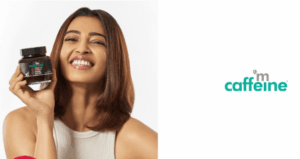
(Source: 4psnews.com)
- #GetHighOnGoodness: This campaign focused on promoting the brand’s sustainability and cruelty-free products. The campaign featured a series of videos that showcased the brand’s commitment to using natural and eco-friendly ingredients.
- #SkinCaffeine: This campaign aimed to educate consumers on the benefits of caffeine for the skin. The brand partnered with influencers and beauty bloggers to create engaging content that highlighted the brand’s caffeine-infused skincare products.
- #HairCaffeine: This campaign focused on promoting the brand’s caffeine-infused hair care products. The campaign featured videos and tutorials that demonstrated how the products can promote healthy hair growth and reduce hair fall.
- #mCaffeineSquad: This campaign aimed to create a community of brand advocates and loyal customers. The brand invited its followers to join the #mCaffeineSquad and share their experiences with the brand’s products on social media.
Overall, mCaffeine’s marketing campaigns have been successful in creating brand awareness, educating consumers about the benefits of caffeine for the skin and hair, and promoting the brand’s sustainability and cruelty-free values.
Social Media Marketing
| 1lakh+ Followers | |
| 443K Followers | |
| 43K Followers | |
| 1816 Followers | |
| Youtube | 17.5K Followers |
SEO Strategies
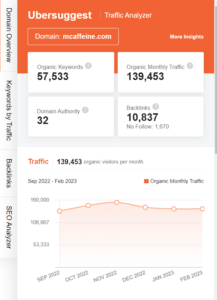
SEO is an important aspect of digital marketing.
As per SEO ranking, it is said that the number of keywords – below 500 is bad, above 1000 is good, and 10,000+ is amazing. As we can witness, mCaffeine has 57,000+ keywords. Also, the traffic per month is around 1 lakh + which is considered to be fantastic.
Influencer Marketing
Influencer marketing is an important part of mCaffeine’s marketing strategy. The brand has collaborated with several influencers and beauty bloggers to promote its products and reach a wider audience. Here are some of the brand’s notable influencer marketing campaigns:
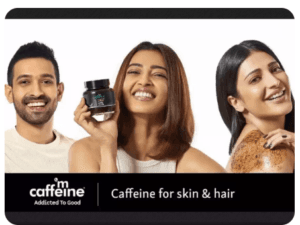
(Source: BrandEquity.EconimicTimes.IndiaTimes.com)
- Aashna Shroff: mCaffeine partnered with popular influencer Aashna Shroff to promote its skincare products. Shroff created engaging content featuring the brand’s products and shared it with her followers on social media.
- Komal Pandey: The brand collaborated with fashion influencer Komal Pandey to promote its hair care products. Pandey created a tutorial on how to use the products and shared it on her social media channels.
- Team Naach: mCaffeine partnered with popular dance duo Team Naach to promote its products. The duo created a dance video featuring the brand’s products and shared it on their social media channels.
- Sejal Kumar: The brand collaborated with popular influencer Sejal Kumar to promote its sustainability values. Kumar created a video highlighting the brand’s commitment to using natural and eco-friendly ingredients.
Overall, mCaffeine’s influencer marketing campaigns have been successful in creating buzz around its products and reaching a wider audience.
By collaborating with popular influencers, the brand has been able to increase its brand awareness and establish itself as a trusted personal care brand.
E-commerce Strategies
mCaffeine has implemented several e-commerce strategies to increase its online presence and reach a wider audience. Here are some of the brand’s notable e-commerce strategies:
Online store: mCaffeine has a dedicated online store where customers can purchase its products directly. The online store offers a seamless shopping experience and features a wide range of products along with detailed descriptions and customer reviews.
Partnering with e-commerce platforms: The brand has partnered with popular e-commerce platforms such as Amazon, Nykaa, and Flipkart to increase its reach and visibility. By partnering with these platforms, mCaffeine has been able to tap into a wider customer base and make its products easily accessible to online shoppers.
Discounts and offers: mCaffeine frequently offers discounts and special offers to its customers to incentivize purchases. The brand also offers free shipping on orders above a certain amount to encourage customers to make larger purchases.
Social media commerce: mCaffeine has integrated social media commerce into its e-commerce strategy by allowing customers to purchase its products directly from its social media channels. The brand also uses social media to showcase its products and engage with customers through contests and giveaways.
Overall, mCaffeine’s e-commerce strategies have been successful in driving online sales and increasing its brand visibility. By offering a seamless shopping experience, partnering with popular e-commerce platforms, and leveraging social media, the brand has been able to establish itself as a leading personal care brand in India.
Mobile Apps
mCaffeine currently does not have a dedicated mobile app. However, the brand’s website is optimized for mobile devices and offers a seamless mobile browsing experience. Customers can easily access the website from their smartphones and purchase products directly from their mobile devices.
While a dedicated mobile app could potentially enhance the brand’s online shopping experience, the brand may consider developing a mobile app in the future to further improve its mobile shopping experience and enhance customer engagement.
Content Marketing Strategies
Content marketing is a strategic approach to creating and sharing valuable, relevant, and consistent content to attract and retain a clearly defined audience — and, ultimately, to drive profitable customer action.
mCaffeine has implemented several content marketing strategies to promote its brand and products and to educate customers about the benefits of caffeine for the skin and hair. Here are some of the brand’s notable content marketing strategies:
Blog: mCaffeine has a dedicated blog on its website that features articles on a variety of topics related to personal care and wellness. The brand regularly publishes informative articles that provide customers with useful tips and insights on skincare and haircare.
Video content: The brand creates engaging video content to promote its products and showcase the benefits of caffeine for the skin and hair. The videos feature product tutorials, customer reviews, and informative content on skincare and haircare.
Social media content: mCaffeine regularly posts updates and informative content on its social media channels, including Instagram, Facebook, and Twitter. The brand’s social media content features product information, customer reviews, and lifestyle content related to personal care and wellness.
Influencer collaborations: The brand collaborates with influencers and beauty bloggers to create engaging content and promote its products. The influencers create content such as product reviews, tutorials, and lifestyle content related to personal care and wellness.
Overall, mCaffeine’s content marketing strategies have been successful in promoting its brand and educating customers about the benefits of caffeine for the skin and hair. By creating informative and engaging content, the brand has been able to establish itself as a trusted personal care brand in India.

Learn Digital Marketing for FREE

Want to Know Why 2,50,000+ Students Trust Us?
Dive into the numbers that make us the #1 choice for career success


MBA - Level
Post Graduate in Digital Marketing & Business Strategy

Best For
Fresh Graduates

Mode of Learning
On Campus (Mumbai & Delhi)

Starts from
Jul 31, 2026

Duration
11 Months

Live & Online
Advanced Online Digital Marketing Course
Best For
Working Professionals
Mode of Learning
Online
Starts from
Aug 7, 2026
Duration
4-6 Months

Online
Professional Certification in AI Strategy
Best For
AI Enthusiasts
Mode of Learning
Online
Starts from
Jul 28, 2026
Duration
5 Months

On Campus
Advanced Certification in Artificial Intelligence
Best For
AI Enthusiasts
Mode of Learning
On Campus (Mumbai)
Starts from
Jul 27, 2026
Duration
3 Months

Online or Offline
Top AI Courses to Make You Future Ready!
Best For
AI Enthusiasts
Mode of Learning
2–5 Month Program
Starts from
Jul 28, 2026
Duration
Flexiable
Offline
Undergraduate Program in Digital Business & Entrepreneurship
Best For
12th Passouts
Mode of Learning
On Campus (Mumbai)
Starts from
Aug 1, 2026
Duration
3 Years
Offline
Degree In 2026 ≠ Enough Degree + Digital Skills = Future-Ready
Best For
12th Passouts
Mode of Learning
At IIDE Campus
Starts from
Aug 1, 2026
Duration
3 Years
Recent Post

Lead Trainer & Business Development Head at IIDE
Aditya Shastri leads the Business Development segment at IIDE and is a seasoned Content Marketing expert. With over a decade of experience, Aditya has trained more than 20,000 students and professionals in digital marketing, collaborating with prestigious institutions and corporations such as Jet Airways, Godrej Professionals, Pfizer, Mahindra Group, Publicis Worldwide, and many others. His ability to simplify complex marketing concepts, combined with his engaging teaching style, has earned him widespread admiration from students and professionals alike.
Aditya has spearheaded IIDE’s B2B growth, forging partnerships with over 40 higher education institutions across India to upskill students in digital marketing and business skills. As a visiting faculty member at top institutions like IIT Bhilai, Mithibai College, Amity University, and SRCC, he continues to influence the next generation of marketers.
Apart from his marketing expertise, Aditya is also a spiritual speaker, often traveling internationally to share insights on spirituality. His unique blend of digital marketing proficiency and spiritual wisdom makes him a highly respected figure in both fields.