Application Deadline for 3-Year UG Program closes on 31st Aug. Book a Counselling to know more

Students Centric
Placements Report
Trackable results, real numbers
Reviews
Proven success, real voices
Trainers
Expert-led, Industry-Driven Training
Life at IIDE
Vibrant Spirit student life
Alumni
Successful Journeys, Inspiring Stories
Learning Centre
Webinars
Blogs
Case studies
Live, Interactive Masterclasses
Fresh Insights, quick reads
Real-life, Industry relevant
More
Hire from us
Hire Top Digital Marketing Talent
Work with us
Join Our Team, Make an Impact
Customised Training
Personalised digital marketing training for your company
Refer & earn
Simple, easy rewards
Contact us
Get the answers you need
About us
Know more about IIDE
Explore all course options

FOR FRESH GRADUATES
Post Graduation Program in Digital Marketing & Business Strategy- Ideal for Age: 20–25 Years

Can’t decide? Explore all our
Digital Marketing Courses
COMPARE ALL 3 PROGRAMSOnline & Offline
Explore Top AI CoursesIndustry-Aligned TRACKMost Popular
UG Program in Digital Business & Entrepreneurship- Ideal for 12th Pass out / FY Degree Student

PARTNER PROGRAMS






Can’t decide? Explore all
BBA In Digital Marketing Colleges
Orginally Written by Aditya Shastri
Updated on Dec 10, 2025
Share on:


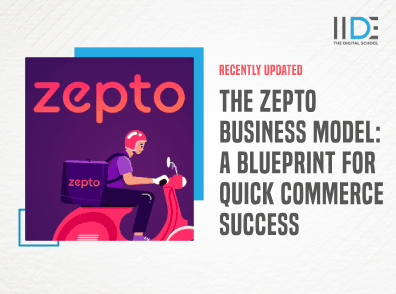
Zepto's business model is built on offering ultra-fast delivery, focusing on fulfilling orders in under 10 minutes. This "quick commerce" approach has disrupted traditional e-commerce models by leveraging dark stores, local inventory, and an efficient delivery network. By focusing on high-demand urban areas, Zepto has gained significant traction, increasing its market share in India’s growing on-demand delivery space.
Learn From Asia’s #1
Digital Marketing Institute
AI-Based Curriculum
Dive in to the future with the latest AI tools
Placement at top brands and agencies


 & more...

About Zepto
Zepto was founded in 2020 by Aadit Palicha and Kaivalya Vohra in India, with the aim of revolutionising online grocery shopping with 10-minute delivery. The company has quickly grown to become one of the largest players in the "quick commerce" industry.
By creating a network of "dark stores" (mini-warehouses) in urban areas, Zepto ensures rapid inventory restocking and efficient fulfilment. As of 2026, Zepto is rapidly expanding its reach across India and attracting significant investments, while offering groceries, essentials, and lifestyle products. Zepto's unique value proposition lies in its ability to deliver products to customers faster than traditional e-commerce models, meeting the needs of today’s fast-paced lifestyle.
| Feature | Details |
|---|---|
| Founded | 2020 |
| Founder | Aadit Palicha, Kaivalya Vohra |
| Headquarters | Mumbai, India |
| Industry | Quick Commerce, Delivery Services |
| Revenue (2023) | Estimated $1 billion+ |
| Presence | Over 20 cities in India |
| Employees | 5,000+ |
| Popular For | 10-minute grocery and essentials delivery |

Is Digital Marketing the Right Career for You?
Find out in a free 45-min masterclass · Career paths, roles and growth explained · By Karan Shah, Founder & CEO, IIDE

Is Digital Marketing the Right Career for You?
Find out in a free 45-min masterclass · Career paths, roles and growth explained · By Karan Shah, Founder & CEO, IIDE
How does Zepto make money?
Revenue Stream Breakdown:
- Product Sales: Revenue from groceries, lifestyle products, and daily essentials sold via the app and website
- Delivery Fees: Charging a fee for express deliveries, depending on the order size and location
- Subscription Fees: Revenue from premium services like faster delivery and loyalty programs
Revenue Contribution:
- Product Sales: 70%
- Delivery Fees: 20%
- Subscription Fees: 10%
Pricing Strategy:
Zepto adopts a competitive pricing strategy, offering affordable prices for groceries and essentials. By optimising its supply chain and delivery efficiency, the brand maintains cost-effectiveness, even with its fast delivery services.
Zomato’s marketing strategy emphasises customer engagement and efficient delivery, similar to how Zepto positions itself in the competitive online grocery delivery market. Tap to learn more.
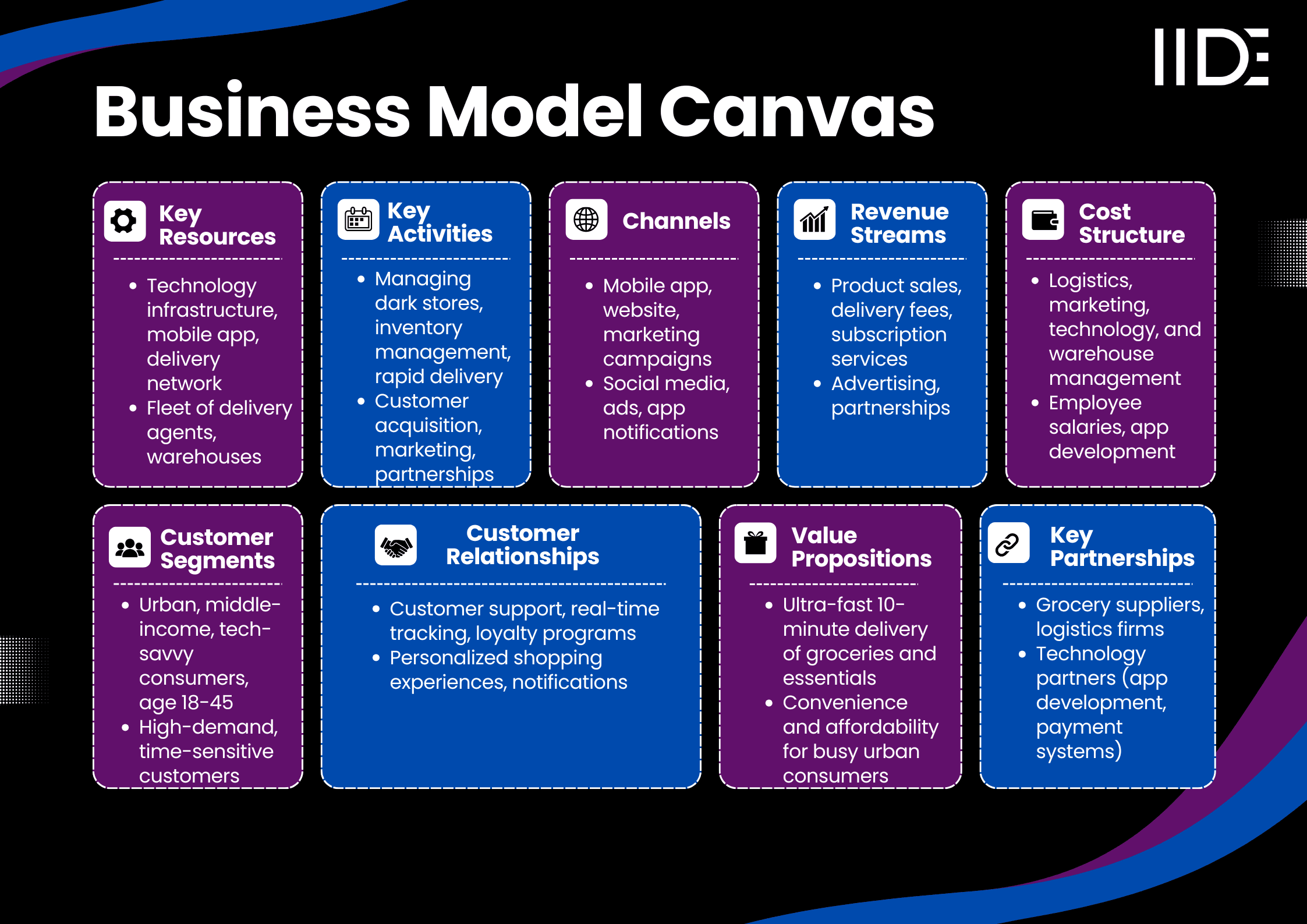
Zepto Business Model Canvas
Zepto Value Proposition
Zepto's business model is anchored in its ability to provide ultra-fast delivery within 10 minutes, setting it apart from traditional e-commerce. This model caters to customers' increasing demand for convenience, particularly in urban areas where time is of the essence. The use of "dark stores" (local warehouses) allows Zepto to efficiently store and dispatch products, reducing delivery times and costs.
The app-based platform allows customers to easily browse, order, and track their items. Zepto focuses on delivering a seamless experience by offering groceries, snacks, and daily essentials at competitive prices. With its subscription services, Zepto not only caters to one-time buyers but also builds customer loyalty through personalised offers and premium services.
By focusing on high-density urban areas, Zepto has managed to significantly reduce delivery times and costs while maintaining strong customer relationships. The brand also embraces innovation in the form of AI-powered logistics and customer service, ensuring an efficient and user-friendly shopping experience.
Zepto Cost Structure
Zepto’s major costs include logistics, marketing, technology development, and warehouse operations. The company minimises operational expenses through efficient fleet management and optimised supply chain processes. Key cost-saving strategies include automation in inventory management, outsourcing of logistics to third-party providers, and leveraging economies of scale in dark stores. Despite its rapid delivery model, Zepto maintains healthy margins by focusing on efficient operations and leveraging technology to streamline processes.
Zepto Customer Segment
Zepto primarily targets urban, middle-income consumers aged 18-45 who are tech-savvy and value convenience. These customers are often busy professionals or families who seek quick and reliable grocery delivery. The brand also appeals to young, digital-first consumers who prefer using mobile apps for their daily needs. Zepto’s customer base is concentrated in high-density urban areas where quick commerce is most in demand.
Zepto Distribution Channels
Zepto operates on a digital-first model, with its primary channel being its mobile app and website, where customers place orders for quick delivery. The brand also leverages social media platforms and targeted digital marketing to reach customers. Zepto’s unique omnichannel approach integrates digital interfaces with physical operations, including dark stores in urban areas, ensuring a seamless shopping experience for its customers.
Zepto Key Partnerships
Zepto’s key partnerships include grocery suppliers, third-party logistics providers, and technology partners. These collaborations allow Zepto to maintain a robust supply chain and deliver goods in a time-efficient manner. The company also partners with delivery fleet providers, optimising its delivery network to ensure fast, reliable services. Additionally, Zepto is focused on forging alliances with sustainable packaging companies and eco-friendly initiatives, in line with its commitment to responsible business practices.
Swiggy’s marketing strategy, focused on customer-centric campaigns and tech-driven convenience, offers valuable comparisons to Zepto’s marketing approach in the online grocery sector. Know more.
SWOT Analysis of Zepto
| Strengths | Weaknesses | Opportunities | Threats |
|---|---|---|---|
| 10-minute delivery model | High operational costs | Expansion into new markets | Competition from Swiggy, Blinkit |
| Fast-growing customer base | Dependency on urban areas | Diversification of product offerings | Rising fuel costs are affecting delivery |
| Tech-driven efficiency | Limited brand recognition | Partnership with more retailers | Regulatory challenges in logistics |
Zepto Competitor Comparison
| Brand | Pricing | Customer Experience | Channel Strategy | Market Focus | Innovation |
|---|---|---|---|---|---|
| Zepto | Competitive | Ultra-fast delivery, mobile app experience | Digital-first, app-based | Urban, middle-income | 10-minute delivery |
| Blinkit | Competitive | Fast delivery, user-friendly app | Omnichannel, digital | Urban, middle-income | Fast commerce |
| Swiggy | Affordable | Reliable, app-based, various categories | Omnichannel | Urban, tech-savvy | Rapid delivery, diverse services |
What’s New With Zepto?
Zepto continues to innovate with its use of AI-powered logistics for faster order processing and efficient fleet management. The brand is also increasing its focus on sustainability with green packaging and responsible sourcing. Furthermore, Zepto is exploring opportunities in new markets and expanding its product offerings beyond groceries, including lifestyle products and personal care items.
Key Takeaways for Students / Marketers
- Scalable Business Model: Zepto’s model can scale rapidly by expanding dark stores in high-density urban locations, adapting to growing demand for quick commerce
- Efficiency in Logistics: Zepto’s focus on logistics optimisation is key to its ability to offer fast delivery and maintain profitability
- Customer-Centric Strategy: Zepto’s emphasis on speed and convenience sets a benchmark for brands aiming to innovate in customer experience
Conclusion
Zepto’s business model has redefined the grocery delivery industry by focusing on ultra-fast service and a seamless digital experience. As the demand for quick commerce continues to grow, Zepto is well-positioned for long-term success. Will its rapid expansion disrupt traditional e-commerce further?
Want to Know Why 2,50,000+ Students Trust Us?
Dive into the numbers that make us the #1 choice for career success



MBA - Level
Post Graduate in Digital Marketing & Business Strategy

Best For
Fresh Graduates

Mode of Learning
On Campus (Mumbai & Delhi)

Starts from
Oct 1, 2026

Duration
11 Months

Live & Online
Advanced Online Digital Marketing Course
Best For
Working Professionals
Mode of Learning
Online
Starts from
Sep 4, 2026
Duration
4-6 Months

Online
Professional Certification in AI Strategy
Best For
AI Enthusiasts
Mode of Learning
Online
Starts from
Sep 8, 2026
Duration
5 Months

Online or Offline
Top AI Courses to Make You Future Ready!
Best For
AI Enthusiasts
Mode of Learning
2–5 Month Program
Starts from
Sep 8, 2026
Duration
Flexiable

On Campus
Advanced Certification in Artificial Intelligence
Best For
AI Enthusiasts
Mode of Learning
On Campus (Mumbai)
Starts from
Sep 1, 2026
Duration
3 Months
Offline
Degree In 2026 ≠ Enough Degree + Digital Skills = Future-Ready
Best For
12th Passouts
Mode of Learning
At IIDE Campus
Starts from
Aug 31, 2026
Duration
3 Years

Offline
Undergraduate Program in Digital Business & Entrepreneurship
Best For
12th Passouts
Mode of Learning
On Campus (Mumbai)
Starts from
Aug 31, 2026
Duration
3 Years
Recent Post
Digital Marketing Courses Nearby
You May Also Like
Dark stores are small warehouses optimised for online orders, allowing rapid picking, packing, and delivery within a local area.
Zepto faces challenges in maintaining profitability, competing with local kirana stores, and managing low average order values.
Zepto ensures rapid delivery by using technology-driven logistics and strategically located dark stores to minimise travel time.
Zepto's model is unique due to its emphasis on speed, leveraging dark stores to deliver groceries and essentials in under 10 minutes.
Yes, Zepto's model can scale to other regions if supported by a network of dark stores and efficient logistics tailored to local demands.
Future trends include increased competition from larger retailers, shifts in consumer shopping habits, and advancements in logistics technology that could either enhance or challenge Zepto’s operational model.

Lead Trainer & Business Development Head at IIDE
Aditya Shastri leads the Business Development segment at IIDE and is a seasoned Content Marketing expert. With over a decade of experience, Aditya has trained more than 20,000 students and professionals in digital marketing, collaborating with prestigious institutions and corporations such as Jet Airways, Godrej Professionals, Pfizer, Mahindra Group, Publicis Worldwide, and many others. His ability to simplify complex marketing concepts, combined with his engaging teaching style, has earned him widespread admiration from students and professionals alike.
Aditya has spearheaded IIDE’s B2B growth, forging partnerships with over 40 higher education institutions across India to upskill students in digital marketing and business skills. As a visiting faculty member at top institutions like IIT Bhilai, Mithibai College, Amity University, and SRCC, he continues to influence the next generation of marketers.
Apart from his marketing expertise, Aditya is also a spiritual speaker, often traveling internationally to share insights on spirituality. His unique blend of digital marketing proficiency and spiritual wisdom makes him a highly respected figure in both fields.