
Students Centric
Placements Report
Trackable results, real numbers
Reviews
Proven success, real voices
Trainers
Expert-led, Industry-Driven Training
Life at IIDE
Vibrant Spirit student life
Alumni
Successful Journeys, Inspiring Stories
Learning Centre
Webinars
Blogs
Case studies
Live, Interactive Masterclasses
Fresh Insights, quick reads
Real-life, Industry relevant
More
Hire from us
Hire Top Digital Marketing Talent
Work with us
Join Our Team, Make an Impact
Customised Training
Personalised digital marketing training for your company
Refer & earn
Simple, easy rewards
Contact us
Get the answers you need
About us
Know more about IIDE
Explore all course options

FOR FRESH GRADUATES
Post Graduation Program in Digital Marketing & Business Strategy- Ideal for Age: 20–25 Years

Can’t decide? Explore all our
Digital Marketing Courses
COMPARE ALL 3 PROGRAMSOnline & Offline
Explore Top AI CoursesIndustry-Aligned TRACKMost Popular
UG Program in Digital Business & Entrepreneurship- Ideal for 12th Pass out / FY Degree Student

PARTNER PROGRAMS







Can’t decide? Explore all
BBA In Digital Marketing Colleges
Orginally Written by Aditya Shastri
Updated on Dec 11, 2025
Share on:


About Tyson
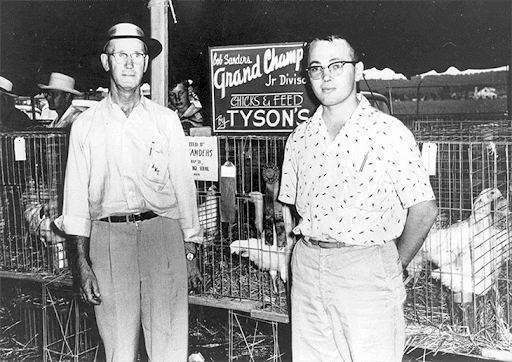
(John W. Tyson (In Right) – The Founder of Tyson)
Tyson Foods Incorporated is an American multinational based in Arkansas, Springdale, that operates in the food industry. It is known to be the world’s second-largest processor and marketer of beef and chicken after JBS S.A. and annually exports a huge volume of beef throughout the United States. Tyson Foods has secured the rank of 79 in the year 2020 in the list of Fortune 500 in United States Corporations by total revenue.
John W. Tyson founded the company in 1935, and it prospered during World War II when the chicken was not included in rationed commodities. The corporation employs 141,000 employees worldwide, including 122,000 in the United States, as of 2019. The majority of Tyson’s locations are in the Midwest, with 16 in Arkansas, 11 in Texas, 9 in Iowa, and the rest primarily in the east.
Tyson is responsible for nearly a fifth of the beef, chicken, and pork sold in the United States. It is a major marketer of chicken, beef, and pork to supermarkets, foodservice distributors, and national fast food and full-service restaurant chains in the United States.
| Founder | John W. Tyson |
|---|---|
| Year Founded | 1935 |
| Origin | The United States |
| No. of Employees | 139,000 |
| Company Type | Public |
| Market Cap | US$ 35.779 Billion (2021) |
| Annual Revenue | US$ 43.185 Billion (2020) |
| Net Income/ Profit | US$ 2.061 Billion (2020) |
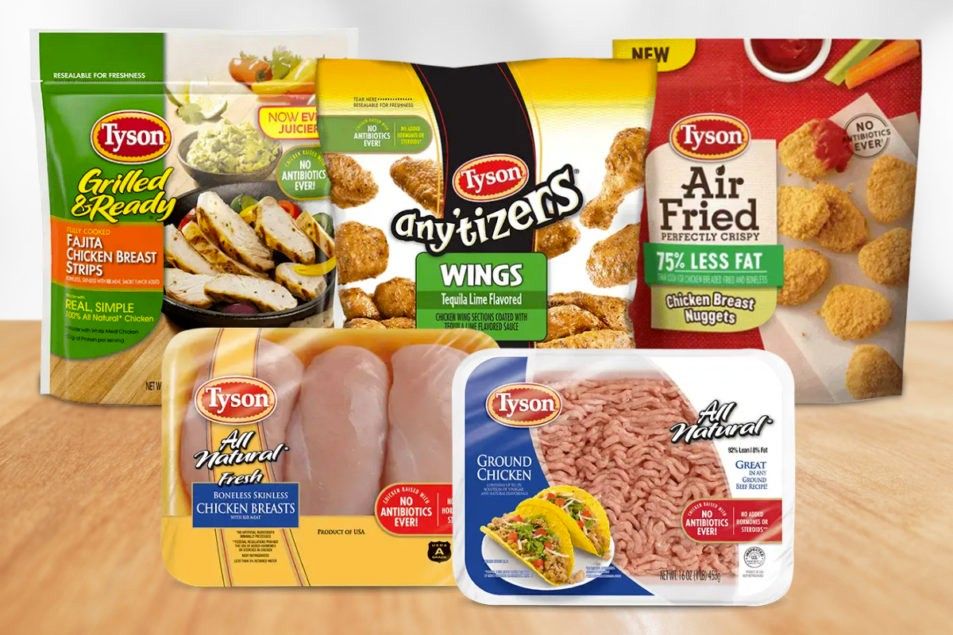
Products of Tyson
Tyson has been dealing in these areas for a while:
- Breaded Chicken
- Any’tizers® Snacks
- Grilled Chicken
- Meal Kits
- Fresh Chicken
- Frozen Chicken
- Meat and Cultured Meat
Competitors of Tyson
- Hormel Foods
- Bunge
- Conagra Brands
- Pilgrims Pride
- Golden State Foods
Now that we understand the company’s core business, let’s delve into the SWOT analysis of Tyson.
SWOT Analysis of Tyson
SWOT Analysis of Tyson can show how a well-established company uses its opportunities to ensure its growth. It can show how the company takes advantage of its strengths to use the opportunities while working on its weaknesses. SWOT Analysis of Tyson will also reveal its expansion plans.
To better understand the SWOT analysis of Tyson, refer to the infographic below:
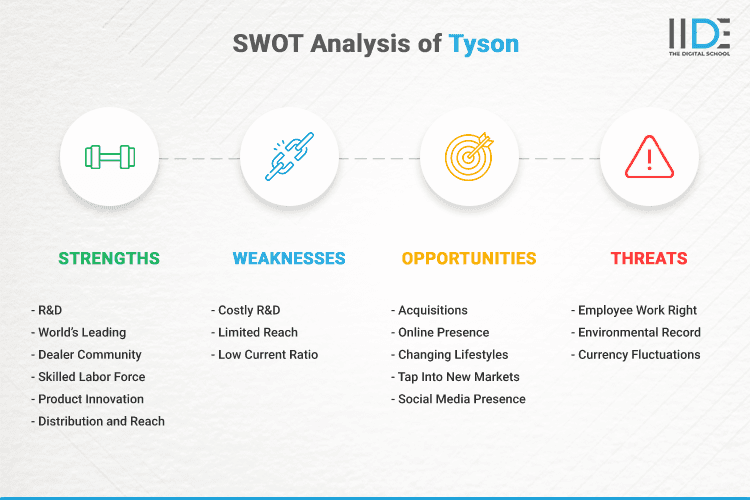
Now first let’s begin with the strengths of the company from the SWOT analysis of Tyson.
Strengths of Tyson
An organization’s unique capabilities that give it an advantage in capturing more market share, attracting more customers, and maximizing profits are referred to as its strengths. Following are Tyson’s strengths:
- Distribution and Reach: Tyson has more than 123 food processing plants and ship bases that are backed up by a strong distribution network that ensures its animal-based products are easily accessible in a timely manner to a large number of customers.
- Dealer Community: The company is self-sufficient in some product areas and has strong relationships with its suppliers. The link between local sales organizations helps to develop the market ensuring a deep understanding of local customer and consumer needs.
- World’s Leading: Tyson is one of the largest producers of meat, chicken and beef in the world, especially in the United States where it has a strong presence with over 300 facilities spread across the US and abroad.
- Product Innovation: Automation of activities improved the consistency of Tyson Foods’ goods and allowed the company to scale up and down in response to market demand. Product innovation is a successful track record of developing new products.
- R&D: Tyson has its headquarters in Springdale, Arkansas where Tyson has created a 100,000 square foot Discovery Centre and employed around 300 employees in R&D to work on new products and better packaging.
- Skilled Labor Force: Tyson has invested heavily in employee training of its 139,000+ employees, resulting in a large number of skilled and motivated employees.
Weaknesses of Tyson
Weaknesses are aspects of a business or brand that should be improved. Tyson’s major flaws are as follows:
- Limited Reach: One of the major limitations of Tyson is its reach. It is currently operating in limited countries. Majorly working in the metropolitan cities. It does not deliver to some of the major countries in the globe such as India & Russia and this becomes a weakness as the company is losing some of its potential customers.
- Costly R&D: Tyson has spent a lot of money to build its branches in different countries. For Tyson, CSR and corporate charity are not just words, but a tangible commitment to taking great social responsibility, even when it comes at a high financial cost.
- Low Current Ratio: The company’s current ratio, which measures its ability to meet short-term financial obligations, is lower than the industry average. This could imply that the company will face liquidity issues in the future.
Opportunities for Tyson
Opportunities are potential areas of focus for a company to improve results, increase sales, and, ultimately, profit.
- Tap Into New Markets: Tyson Foods may be able to tap into new markets as a result of changing customer behaviour. It gives the company a wonderful chance to diversify into new product categories while also generating new revenue sources.
- Social Media Presence: Currently, Tyson social media presence is zero should be considered by the marketing team of Tyson because a presence on social media is vital in today’s marketing industry. Tyson can increase its market base by sharing seafood recipes or posting product pictures with attractive packaging to capture the attention of customers. If you are interested in the field, check out our social media marketing course to get started.
- Changing Lifestyles: Like the changing lifestyle and workload get even more increased for working professionals, people are more likely to consume ready to cook meals which saves their time. Tyson has an opportunity to tap and enter this gap where it can deliver food ingredients and recipes to customers.
- Online Presence: As more and more people come online and spend most of their time over the internet, the ways to widen its e-commerce presence creates a great opportunity for Tyson to connect and serve more and more people which will ultimately increase its customer base.
- Acquisitions: Tyson is well known for its number of acquisitions which includes acquisitions of companies like IBP Inc., cheesesteak, American Protein etc. and many more. Continuing such acquisitions will be advantageous for Tyson to capture more market share.
Threats to Tyson
Threats are environmental factors that can be harmful to a company’s growth. The following are some of the threats to Tyson
- Currency Fluctuations: Tyson Foods’ profitability may be jeopardised by rising raw material costs. Because the company operates in a variety of nations, it is subject to currency swings, which are exacerbated by the turbulent political atmosphere in a number of markets throughout the world.
- Environmental Record: Tyson Foods has been involved in a number of controversies related to the environment, animal welfare, and the welfare of its own employees. Tyson Foods has been accountable for multiple examples of environmental damage. Tyson is the second-largest emitter of greenhouse gases in the global food industry.
- Employee Work Right: Employees in Tyson are not treated well where Tyson doesn’t care about its employee’s wellness. Cases are recorded where numerous employees got injured at Tyson’s meatpacking plants. If such practices including environment, animal welfare, and the welfare of employees are continued will no longer take Tyson to face serious allegations or even closing of the brand by the country’s government.
This ends our complete SWOT analysis of Tyson. Let us conclude our learning below.

Learn Digital Marketing for FREE

Learn Digital Marketing for FREE
Want to Know Why 2,50,000+ Students Trust Us?
Dive into the numbers that make us the #1 choice for career success



MBA - Level
Post Graduate in Digital Marketing & Business Strategy

Best For
Fresh Graduates

Mode of Learning
On Campus (Mumbai & Delhi)

Starts from
Oct 1, 2026

Duration
11 Months

Live & Online
Advanced Online Digital Marketing Course
Best For
Working Professionals
Mode of Learning
Online
Starts from
Aug 7, 2026
Duration
4-6 Months

Online
Professional Certification in AI Strategy
Best For
AI Enthusiasts
Mode of Learning
Online
Starts from
Sep 8, 2026
Duration
5 Months

On Campus
Advanced Certification in Artificial Intelligence
Best For
AI Enthusiasts
Mode of Learning
On Campus (Mumbai)
Starts from
Sep 1, 2026
Duration
3 Months

Online or Offline
Top AI Courses to Make You Future Ready!
Best For
AI Enthusiasts
Mode of Learning
2–5 Month Program
Starts from
Sep 8, 2026
Duration
Flexiable
Offline
Undergraduate Program in Digital Business & Entrepreneurship
Best For
12th Passouts
Mode of Learning
On Campus (Mumbai)
Starts from
Aug 19, 2026
Duration
3 Years
Offline
Degree In 2026 ≠ Enough Degree + Digital Skills = Future-Ready
Best For
12th Passouts
Mode of Learning
At IIDE Campus
Starts from
Aug 6, 2026
Duration
3 Years
Recent Post

Lead Trainer & Business Development Head at IIDE
Aditya Shastri leads the Business Development segment at IIDE and is a seasoned Content Marketing expert. With over a decade of experience, Aditya has trained more than 20,000 students and professionals in digital marketing, collaborating with prestigious institutions and corporations such as Jet Airways, Godrej Professionals, Pfizer, Mahindra Group, Publicis Worldwide, and many others. His ability to simplify complex marketing concepts, combined with his engaging teaching style, has earned him widespread admiration from students and professionals alike.
Aditya has spearheaded IIDE’s B2B growth, forging partnerships with over 40 higher education institutions across India to upskill students in digital marketing and business skills. As a visiting faculty member at top institutions like IIT Bhilai, Mithibai College, Amity University, and SRCC, he continues to influence the next generation of marketers.
Apart from his marketing expertise, Aditya is also a spiritual speaker, often traveling internationally to share insights on spirituality. His unique blend of digital marketing proficiency and spiritual wisdom makes him a highly respected figure in both fields.