
Students Centric
Placements Report
Trackable results, real numbers
Reviews
Proven success, real voices
Trainers
Expert-led, Industry-Driven Training
Life at IIDE
Vibrant Spirit student life
Alumni
Successful Journeys, Inspiring Stories
Learning Centre
Webinars
Blogs
Case studies
Live, Interactive Masterclasses
Fresh Insights, quick reads
Real-life, Industry relevant
More
Hire from us
Hire Top Digital Marketing Talent
Work with us
Join Our Team, Make an Impact
Customised Training
Personalised digital marketing training for your company
Refer & earn
Simple, easy rewards
Contact us
Get the answers you need
About us
Know more about IIDE
Explore all course options

FOR FRESH GRADUATES
Post Graduation Program in Digital Marketing & Business Strategy- Ideal for Age: 20–25 Years

Can’t decide? Explore all our
Digital Marketing Courses
COMPARE ALL 3 PROGRAMSOnline & Offline
Explore Top AI CoursesIndustry-Aligned TRACKMost Popular
UG Program in Digital Business & Entrepreneurship- Ideal for 12th Pass out / FY Degree Student

PARTNER PROGRAMS






Can’t decide? Explore all
BBA In Digital Marketing Colleges
Orginally Written by Aditya Shastri
Updated on Aug 9, 2025
Share on:


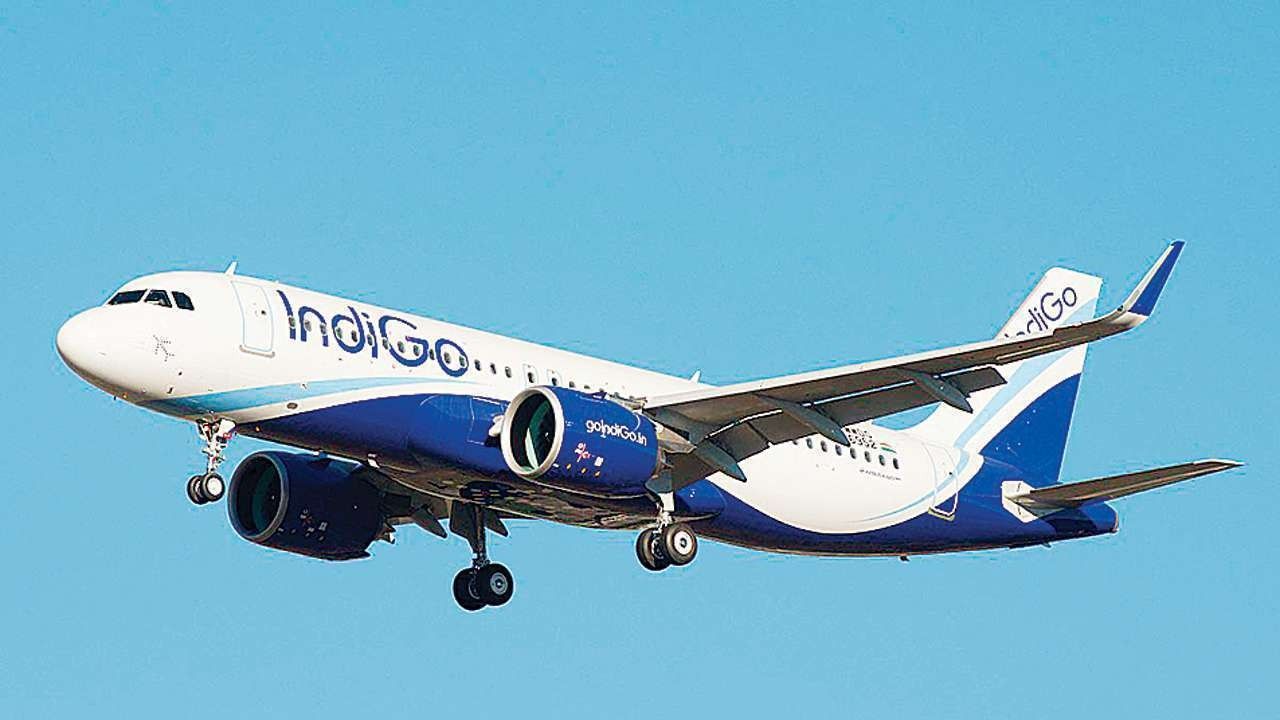
IndiGo Airlines, the poster child of low-cost aviation in India, has built a name for itself through efficiency, affordability, and massive domestic dominance. But as it eyes global skies and experiments with premium offerings, new challenges and opportunities await.
Will IndiGo’s formula work beyond borders? This SWOT analysis offers valuable lessons for business students, aviation geeks, and growth-focused entrepreneurs alike.
About IndiGo Airlines
InterGlobe Aviation Ltd., operating under the brand IndiGo, is a low-cost carrier that has revolutionised Indian aviation. With its “on-time performance, low fares, and hassle-free service,” IndiGo has not only become a household name in India but also extended its wings globally.
SWOT stands for Strengths, Weaknesses, Opportunities, and Threats. It is a tool every brand strategist must understand deeply. So now let us take off to Indigo's SWOT analysis.

Learn Digital Marketing for FREE


Learn Digital Marketing for FREE
SWOT Analysis of IndiGo Airlines
1. IndiGo’s Strengths: Why It’s Flying High in 2025
- India’s Largest Airline
With over 60% domestic market share, IndiGo dominates Indian skies. In an industry full of turbulence, it has held steady leadership since 2012.
- Low-Cost Champion
Operating a single aircraft model (Airbus A320/A321) helps IndiGo save big on training, maintenance, and operations. This lean approach keeps ticket prices competitive, making it the go-to choice for budget-conscious flyers.
- Impeccable On-Time Performance
Consistently ranked #1 in punctuality by DGCA, IndiGo’s flight scheduling and turnaround efficiency have become industry benchmarks.
- Fleet Size & Orders
IndiGo has over 350 aircraft in operation and 1,000+ aircraft on order (including A321XLRs). This gives it unmatched fleet planning power for the next decade.
- Profitable Post-COVID Rebound
While others struggled to stay airborne, IndiGo clocked a net profit of ₹8,172 crore in FY24, proving the resilience of its business model.
- Wide Domestic Connectivity
IndiGo connects 80+ cities in India with over 1,800 daily flights. No other airline serves Bharat as deeply.
- Simple, Strong Branding
The blue-and-white aircraft, clean UX on its app/website, and slogan “India by IndiGo” resonate with clarity and mass appeal.
💡Tip
IndiGo should double down on its reputation for reliability and simplicity in all marketing. Storytelling around “Bharat’s airline”, especially in Tier-2/3 cities, and customer-first innovations like 6E QuickBoard or IndiGo CarGo can build more substantial brand equity across income segments.
2. IndiGo’s Weaknesses: Where Turbulence Lurks
- No Business or Premium Class
IndiGo sticks to an all-economy layout. While this supports its low-cost strategy, it misses out on higher-margin business travellers, especially on longer routes.
- Heavy Domestic Dependence
Over 80% of IndiGo’s operations are domestic, which leaves it vulnerable to India-specific economic, regulatory, or seasonal fluctuations.
- Limited Loyalty Program Value
While 6E Rewards exists, it lacks the emotional pull or depth of offerings like Vistara’s Club Vistara or Air India’s Flying Returns.
- Basic In-Flight Experience
No entertainment, no Wi-Fi, and additional costs for food and baggage often frustrate flyers used to more full-service comforts.
- Fatigue & Staff Issues
Multiple 2023–24 reports highlighted pilot fatigue, leading to flight delays and cancellations. Such issues can affect reputation and operations in the long run.
- Poor Refund and Complaint Redressal
Many customers have expressed dissatisfaction with delayed refunds and slow response from customer service teams.
💡Tip
To evolve beyond being just "efficient," IndiGo must invest in customer experience, without compromising cost leadership. Prioritising improvements in service recovery, in-flight comfort, and more innovative loyalty integration can foster more profound brand love, not just repeat transactions.
3. IndiGo’s Opportunities: What Could be the Next Destination?
- Global Expansion with A321XLR
With new long-range aircraft arriving, IndiGo can finally tap into lucrative nonstop India-Europe, India-SEA, and even India-US routes.
- Booming Cargo Services
IndiGo CarGo is gaining traction. As e-commerce and logistics boom, cargo could become a powerful secondary revenue stream.
- Codeshare Growth
Alliances with Turkish Airlines, Qatar Airways, and others offer expanded reach without massive investment, especially useful for connecting Indian cities to global routes.
- Sustainability Initiatives
With global ESG pressure rising, IndiGo’s move toward Sustainable Aviation Fuel (SAF) and fuel-efficient aircraft can win investor and consumer trust.
- Tier-2 & Tier-3 Market Penetration
The following 100 million Indian flyers are coming from smaller cities. IndiGo is well-positioned to own this audience with scale, price, and trust.
- Tourism Revival Post-COVID
With inbound travel from Central Asia and Southeast Asia picking up, IndiGo can capture a slice of this international movement.
💡Tip
IndiGo should brand its cargo, sustainability, and regional expansion efforts more boldly. Positioning itself as not just India’s biggest, but also most responsible and globally-minded airline will open up new brand partnerships, B2B deals, and premium flyer segments.
4. IndiGo’s Threats: The Fuzzy Clouds in Between
- Soaring Fuel Prices
ATF (Aviation Turbine Fuel) makes up 40%+ of operational costs. A surge in global oil prices can shrink profits overnight.
- Tata’s Air India & Vistara Integration
Backed by deep pockets and a premium revamp, the new Air India poses a major threat to IndiGo’s market dominance, especially on international routes.
- Aggressive Competition from Akasa Air
Akasa’s newer fleet, better passenger experience, and digital-first branding are shaking up the low-cost segment.
- Geopolitical Risks & Route Disruptions
International tensions, especially around Russia-Ukraine or Middle East airspace, can increase flight time and cost.
- Airport Infrastructure Bottlenecks
In India, slots at metros are limited, and congestion affects scheduling. As more airlines grow, competition for prime take-off/landing slots will intensify.
- Regulatory Constraints
Sudden DGCA rulings, policy shifts, or fare caps can hurt expansion or profitability.
💡Tip
To stay future-ready, IndiGo should diversify risk across global routes, build resilient fuel hedging strategies, and invest in airport infrastructure collaborations. Keeping cost per seat low is key, but future differentiation will come from tech, flexibility, and strategic foresight.
Jump onto the marketing strategy of Delta Airlines to reach your favourite destination. Learn how Delta has been a formidable competitor in the aviation world.
Indigo's SWOT Summed in a Table
| SWOT Element | Key Points |
|---|---|
| Strengths | Market leader, low-cost efficiency, punctual, strong revenue, expanding fleet |
| Weaknesses | No business class, limited loyalty, domestic over-reliance, basic services |
| Opportunities | Global expansion, cargo boom, alliances, long-haul flights, sustainability |
| Threats | Fuel prices, global tensions, aggressive competition, regulation overload |
IIDE Student Takeaway & Conclusion
The SWOT analysis of IndiGo Airlines clearly shows how operational excellence, cost-efficiency, and brand reliability have helped it dominate India's skies. However, its biggest strength - being a low-cost domestic leader could soon become its bottleneck if not scaled globally and innovatively.
Recommendations:
- Expand international routes to diversify revenue
- Enhance customer experience through tech & loyalty programs
- Experiment with premium seating or bundled packages
- Double down on sustainability initiatives to appeal to ESG investors
Want to Know Why 2,50,000+ Students Trust Us?
Dive into the numbers that make us the #1 choice for career success



MBA - Level
Post Graduate in Digital Marketing & Business Strategy

Best For
Fresh Graduates

Mode of Learning
On Campus (Mumbai & Delhi)

Starts from
Oct 1, 2026

Duration
11 Months

Live & Online
Advanced Online Digital Marketing Course
Best For
Working Professionals
Mode of Learning
Online
Starts from
Aug 7, 2026
Duration
4-6 Months

Online
Professional Certification in AI Strategy
Best For
AI Enthusiasts
Mode of Learning
Online
Starts from
Sep 8, 2026
Duration
5 Months

On Campus
Advanced Certification in Artificial Intelligence
Best For
AI Enthusiasts
Mode of Learning
On Campus (Mumbai)
Starts from
Sep 1, 2026
Duration
3 Months

Online or Offline
Top AI Courses to Make You Future Ready!
Best For
AI Enthusiasts
Mode of Learning
2–5 Month Program
Starts from
Sep 8, 2026
Duration
Flexiable
Offline
Undergraduate Program in Digital Business & Entrepreneurship
Best For
12th Passouts
Mode of Learning
On Campus (Mumbai)
Starts from
Aug 19, 2026
Duration
3 Years
Offline
Degree In 2026 ≠ Enough Degree + Digital Skills = Future-Ready
Best For
12th Passouts
Mode of Learning
At IIDE Campus
Starts from
Aug 6, 2026
Duration
3 Years
Recent Post
As of 2024, IndiGo holds over 60% of the domestic aviation market in India, making it the undisputed market leader.
Yes, IndiGo posted a record net profit of ₹8,172 crore in FY24, rebounding strongly from post-COVID losses.
IndiGo competes with Air India, Vistara, SpiceJet, and new entrants like Akasa Air in the Indian aviation market.
Yes, IndiGo operates flights to over 30 international destinations, including Dubai, Singapore, Istanbul, and Tbilisi.
IndiGo follows a no-frills model, no business class, no free meals, which helps maintain low fares and efficient operations.

Lead Trainer & Business Development Head at IIDE
Aditya Shastri leads the Business Development segment at IIDE and is a seasoned Content Marketing expert. With over a decade of experience, Aditya has trained more than 20,000 students and professionals in digital marketing, collaborating with prestigious institutions and corporations such as Jet Airways, Godrej Professionals, Pfizer, Mahindra Group, Publicis Worldwide, and many others. His ability to simplify complex marketing concepts, combined with his engaging teaching style, has earned him widespread admiration from students and professionals alike.
Aditya has spearheaded IIDE’s B2B growth, forging partnerships with over 40 higher education institutions across India to upskill students in digital marketing and business skills. As a visiting faculty member at top institutions like IIT Bhilai, Mithibai College, Amity University, and SRCC, he continues to influence the next generation of marketers.
Apart from his marketing expertise, Aditya is also a spiritual speaker, often traveling internationally to share insights on spirituality. His unique blend of digital marketing proficiency and spiritual wisdom makes him a highly respected figure in both fields.