🚨 Digital Marketing or AI? Confused About Which Course to Choose? Ask IIDE's Founder Register for FREE

Students Centric
Placements Report
Trackable results, real numbers
Reviews
Proven success, real voices
Trainers
Expert-led, Industry-Driven Training
Life at IIDE
Vibrant Spirit student life
Alumni
Successful Journeys, Inspiring Stories
Learning Centre
Webinars
Blogs
Case studies
Live, Interactive Masterclasses
Fresh Insights, quick reads
Real-life, Industry relevant
More
Hire from us
Hire Top Digital Marketing Talent
Work with us
Join Our Team, Make an Impact
Customised Training
Personalised digital marketing training for your company
Refer & earn
Simple, easy rewards
Contact us
Get the answers you need
About us
Know more about IIDE
Explore all course options






Industry-Aligned TRACKMost Popular
UG Program in Digital Business & Entrepreneurship- Ideal for 12th Pass out / FY Degree Student

PARTNER PROGRAMS






Can’t decide? Explore all
BBA In Digital Marketing Colleges

Orginally Written by Karan Shah
Updated on Dec 10, 2025
Share on:


Picture this: You wake up without an alarm clock, sip your coffee leisurely, and start your workday in your pyjamas. No morning commute, no boss hovering over your shoulder, and no rigid 9-to-5 grind. Sounds like the perfect life, doesn’t it? Well, that’s precisely what freelance work from home is!
Ready to dive in and start freelancing but need help knowing where to begin? Fear not! This freelancing guide 2025 will walk you through the steps to kickstart your freelancing journey while keeping your full-time job intact.
First Things First, What Is Freelancing?

Source: Google
Freelancing is the art of being your own boss, offering your skills and services to multiple clients on a project-by-project basis. It’s like juggling numerous mini-freelance jobs online, but with a liberating level of freedom and flexibility. You get to decide when and where you work, giving you the power to craft your ideal work-life balance.
Of course, freelancing for beginners isn’t a one-size-fits-all situation. There are several options for you to choose from. These include writing (such as content creation for websites or blogs), graphic design (creating logos or social media graphics), web development (building websites or web applications), digital marketing (managing social media accounts or running ad campaigns), and even voice acting (narrating audiobooks or recording voiceovers). Basically, if you have a skill, chances are someone out there is willing to pay for it.
Benefits and Challenges of Freelancing for Beginners
Pros:
1. Flexibility
One of the most significant benefits of taking freelance jobs online is that you can work whenever and wherever you want. Your office could be a beach in Bali or your cosy living room.
2. Diverse Projects
Tired of monotony? Opting for freelance work from home lets you work on various projects, keeping things fresh and exciting.
3. Potential for Higher Earnings
You can earn more than your full-time job pays with the right clients and freelance business setup.
Want to jump on the freelance bandwagon? Enrolling in one of the several digital marketing classes out there is a great way to learn how to market yourself and gain more clients.
Cons:
1. Income Instability
Needless to say, our most extensive beginner freelancing tip is to be aware of the pitfalls, which include a ton of income instability. Some months, you’ll have enough money to sustain yourself and your lavish lifestyle; other months, you’ll search for loose change under the couch cushions.
2. Lack of Benefits
Another con about this type of job is that when you start freelancing, you’ll be left with no health insurance, paid vacation, or retirement plan. In the words of Taylor Swift, ‘You’re on your own, kid’.
3. Self-Discipline Required:
While opting for several freelance jobs online can seem fun, it’s important to remember that no boss means that there’s no one to hold you accountable. In order words, you need to be your own drill sergeant.
Having said the above, most of these issues can be avoided by learning the basics of freelancing. You can do this by enrolling in a digital marketing course online.
How to Become a Freelancer?
Starting your freelancing journey is easier than one might think. However, it’s vital that you keep the following beginner freelancing tips in mind:
Step #1: Assess Your Skills and Interests

Source: Google
When people ask us, ‘How to become a freelancer?’ our first response is always to identify your marketable skills. Think about the tasks you excel at and enjoy doing. These could range from writing and graphic design to web development and digital marketing.
Once you’ve identified your skills, the next step is to align them with available freelance jobs online. Research the market to understand what clients are looking for. Freelance platforms for beginners like Upwork and Fiverr can give you an idea of the popular types of projects. Match your skills with these opportunities to find your niche.
Step #2: Identify Your Target Audience

Source: Google
Casting a wide net might seem tempting in the vast world of freelancing for beginners, but remember: Less is often more. Instead of trying to be a jack-of-all-trades, focus on a specific niche within the remote work community. Our next beginner freelancing tip is to consider your target audience: Are you a millennial looking to work for fellow digital nomads? A freelancer who wants to work for only luxury brands?
By defining your ideal customers, you can craft a marketing strategy that truly resonates and attracts the right audience.
Step #3: Set up Your Freelance Business

Source: Google
A solid freelance business setup is the foundation of a successful freelance career. Start by setting clear goals and objectives. What do you want to achieve in six months, one year, and five years? Choosing a business name is an exciting step. It should reflect your brand and be easy to remember.
Step #4: Build Your Online Presence

Source: Google
Remember, your portfolio is extremely important in the freelance world. This is particularly true when it comes to freelance platforms for beginners. It should showcase your best work and highlight your skills and achievements.
Beginner freelancing tip: Include a variety of samples to demonstrate your versatility. Reviews from previous clients can add credibility and show potential clients the value you can bring.
Apart from a portfolio, we also recommend setting up a website. A great website acts as a central hub where potential clients can discover more about you and the services you offer. Your website should include a portfolio, an about page, and contact information here. It would help if you also considered adding a blog to share your insights and establish yourself as an expert in your field.
Step #5: Set Your Rates
Let’s be honest – The biggest issue that most people face when they start freelancing is setting their rate.
Now, we know that doing this can feel tricky, but it’s crucial. Research industry standards to understand the market rates for your services. We also recommend that you consider factors like your experience, expertise, and the complexity of the project when determining your rate.
And remember: Transparency is key when communicating your rates to clients and taking up various freelance jobs online.
Step #6: Bag Your First Client
We get it – Finding freelance jobs online can feel overwhelming, but don’t worry; we’ve got some great starting points. Make online freelance platforms for beginners like Upwork, Fiverr, and Freelancer your new best friends.
Upwork, which is one of the largest marketplaces, offers several job categories, making it the perfect place for newbies like yourself. Fiverr, on the other hand, lets you showcase specific services at set prices, making it easy to highlight your skills through ‘gigs.’ Freelancer uses a competitive bidding system, giving you a chance to shine and prove your expertise. A free digital marketing certification will give you the extra backing you need to stand out here.
Expand Your Freelance Skillset with AI
To elevate your freelancing career even further, consider mastering artificial intelligence skills with IIDE’s Professional Certification in AI Strategy. This comprehensive program equips you with hands-on knowledge of AI tools and applications that are revolutionising industries globally. By adding AI proficiency, you not only diversify your service offerings but also position yourself at the forefront of technology-driven freelance opportunities.
Another suggestion we give when people ask us how to become a freelancer is to remember that creating a standout profile is key. Use a clear, professional photo, craft a catchy headline that sums up your skills, and provide a detailed description of your experience. Highlight what makes you unique! Showcase your best work in a well-curated portfolio, including case studies and testimonials. Positive client reviews? Absolutely essential. Keep in mind that networking is your secret weapon when you start freelancing. Attend industry events, conferences, seminars, and workshops to meet potential clients and fellow freelancers. Participate in discussions, offer help, and showcase your expertise.
Another great answer to the question of how to become a freelancer is by practising direct outreach. Research potential clients and tailor your pitch to their needs. Here, keep in mind that crafting an effective email pitch involves a clear and enticing subject line, a brief introduction of yourself and your expertise, a compelling value proposition explaining how your skills can benefit the client, and a call to action, like requesting a meeting or call.

Learn Digital Marketing for FREE

Learn Digital Marketing for FREE
Want to Know Why 2,50,000+ Students Trust Us?
Dive into the numbers that make us the #1 choice for career success



MBA - Level
Post Graduate in Digital Marketing & Business Strategy

Best For
Fresh Graduates

Mode of Learning
On Campus (Mumbai & Delhi)

Starts from
Nov 27, 2026

Duration
11 Months

Live & Online
Advanced Online Digital Marketing Course
Best For
Working Professionals
Mode of Learning
Online
Starts from
Dec 18, 2026
Duration
4-6 Months

Offline
Top AI Courses to Make You Future Ready!
Best For
AI Enthusiasts
Mode of Learning
2–5 Month Program
Starts from
Nov 24, 2026
Duration
Flexiable

Offline
Degree In 2026 ≠ Enough Degree + Digital Skills = Future-Ready
Best For
12th Passouts
Mode of Learning
At IIDE Campus
Duration
3 Years

Offline
Undergraduate Program in Digital Business & Entrepreneurship
Best For
12th Passouts
Mode of Learning
On Campus (Mumbai)
Duration
3 Years
Recent Post
Digital Marketing Courses Nearby
You May Also Like

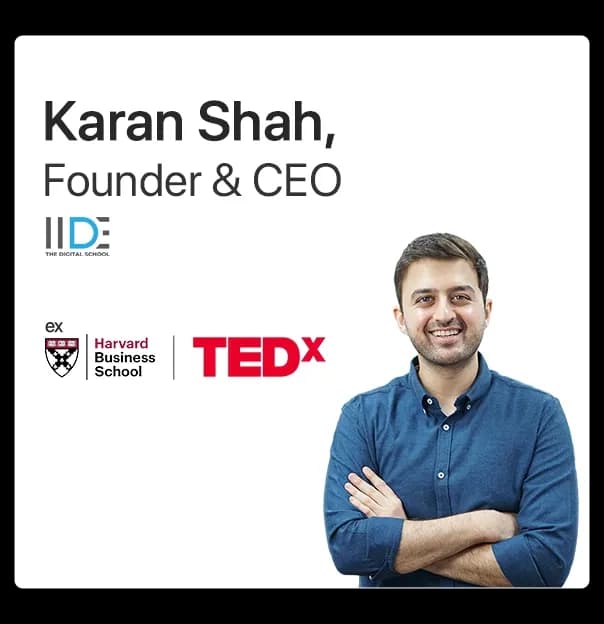
Founder and CEO at IIDE
Karan Shah is the Founder and CEO of IIDE – The Digital School, Asia’s premier digital marketing institute. With over ten years of hands-on experience in the digital marketing industry, Karan has played a pivotal role in empowering thousands of students to forge successful careers in this ever-evolving field.
His vast expertise encompasses various areas such as paid search, social media marketing, programmatic marketing, and much more. Karan's passion for education, teaching, and public speaking led him to establish IIDE, where he offers world-class digital marketing education designed to meet industry standards.
To date, he has trained over 60,000 students and worked with more than 25 corporates, sharing his knowledge through both online and offline platforms. A Harvard Business School alumnus with a specialisation in E-commerce, Karan is also an accomplished Tedx speaker. His industry insights and teaching excellence have earned him a prestigious role as a visiting faculty member at India’s top management institutes, including the Indian Institutes of Management (IIMs).