
Students Centric
Placements Report
Trackable results, real numbers
Reviews
Proven success, real voices
Trainers
Expert-led, Industry-Driven Training
Life at IIDE
Vibrant Spirit student life
Alumni
Successful Journeys, Inspiring Stories
Learning Centre
Webinars
Blogs
Case studies
Live, Interactive Masterclasses
Fresh Insights, quick reads
Real-life, Industry relevant
More
Hire from us
Hire Top Digital Marketing Talent
Work with us
Join Our Team, Make an Impact
Customised Training
Personalised digital marketing training for your company
Refer & earn
Simple, easy rewards
Contact us
Get the answers you need
About us
Know more about IIDE
Explore all course options

FOR FRESH GRADUATES
Post Graduation Program in Digital Marketing & Business Strategy- Ideal for Age: 20–25 Years

Can’t decide? Explore all our
Digital Marketing Courses
COMPARE BOTH OUR PROGRAMSOffline
Offline AI Courses with Dual CertificationsIndustry-Aligned TRACKMost Popular
UG Program in Digital Business & Entrepreneurship- Ideal for 12th Pass out / FY Degree Student

PARTNER PROGRAMS






Can’t decide? Explore all
BBA In Digital Marketing Colleges
Orginally Written by Karan Shah
Updated on Aug 7, 2025
Share on:


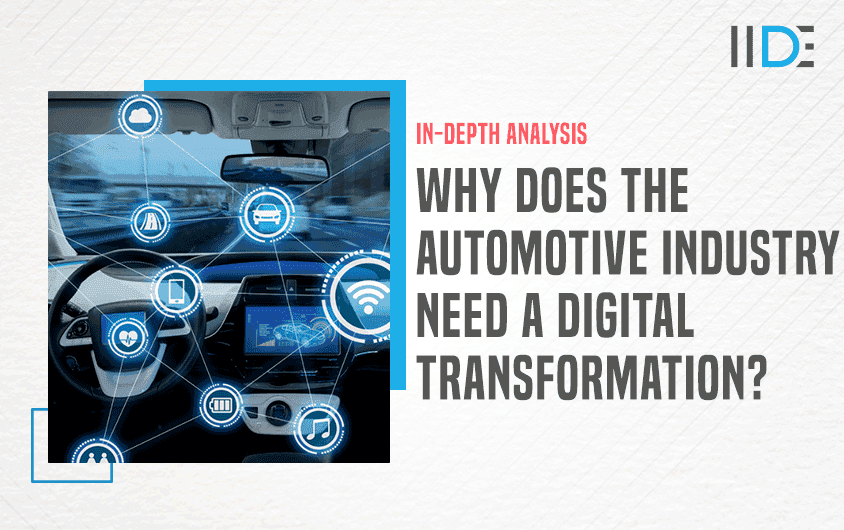
We’ve written this blog about how a digital transformation in the automotive industry has impacted the world as we have come to know it.
It will cover a variety of fascinating topics that will undoubtedly astound you. So be sure to read the entire blog to learn more about the digital transformation in the automotive industry.
We have also discussed how the automotive industry was impacted digitally as a result of Covid -19 and the challenges in the digital transformation of the automotive industry.
Here’s A Recommendation For You: Get yourself and your employees registered for this Free Masterclass on Digital Marketing Basics to start inculcating the adoption of digitalization.
But before moving on let’s take a look at what digital transformation means.
What is a Digital Transformation?
A digital transformation is the upgradation of the existing processes or the introduction of new ways of carrying out business activities using digital technologies that enhance a customer’s experience and leads to higher conversion rates for the company. In simpler terms, digital transformation means redefining business processes in this new digital era.
The four main areas of digital transformation are process, technology, data, and organizational change. Whereas the 3 main components of digital transformation are rebuilding the operations, rebuilding relations with customers, and rebuilding procedures.
Now that we’re clear with what digital transformation entails, let’s learn what a digital transformation in the automotive industry in 2022 looks like.
What does a Digital Transformation in the Automotive Industry look like?
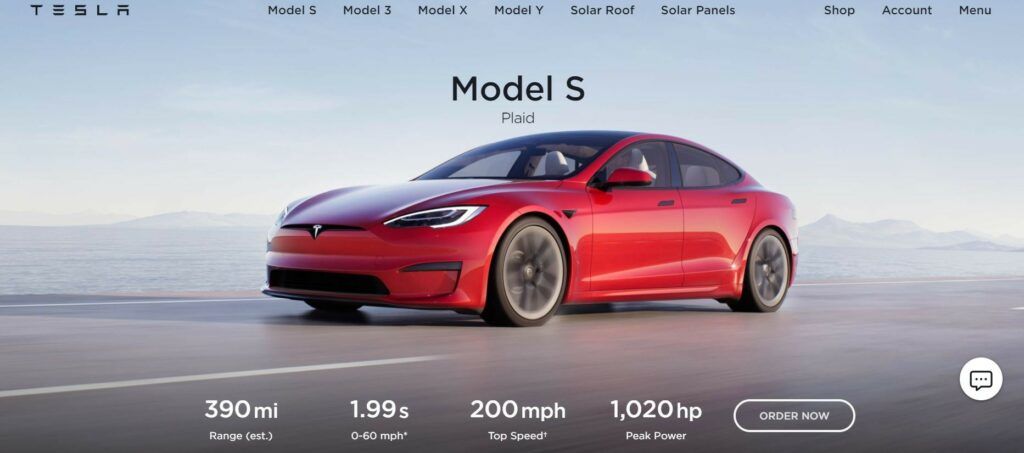
The automotive sector has already embraced digital transformation in its design, manufacturing process, distribution, and finally retail.
Artificial intelligence, according to automotive specialists, will be the future of transportation. As an example, we can see how the Tesla company has included features such as artificial intelligence, solar panels & electric vehicles, to mention a few.
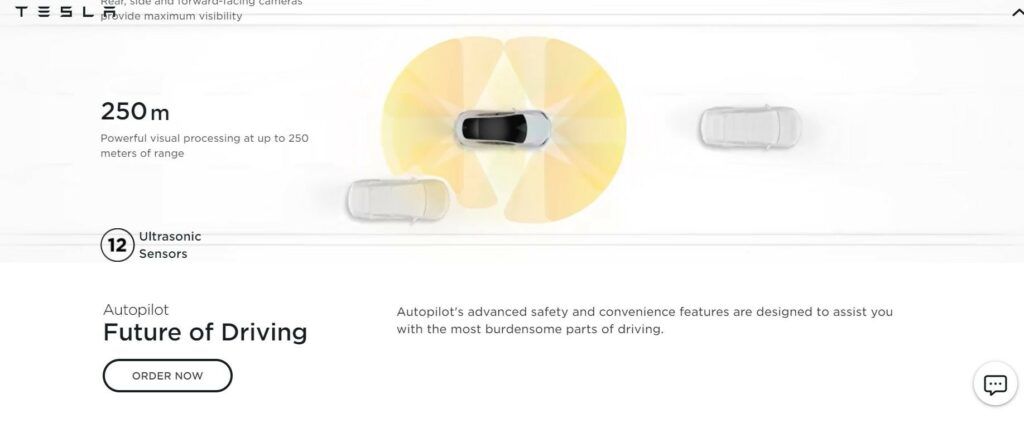
We can take a look below at the autopilot feature in the “Model Y”.
The use of digital technology in improving online customer service is a great example. Such as dealerships using eCommerce as an option to directly sell their products. Be it vehicles, automobile parts, or even accessories.
We can take a look at how Tesla sells a variety of goods, from charging(for their electric cars) to lifestyle products.
These are just a few examples of how digital technology has changed the way Automobile companies have adapted to the change in trends.
In the automotive industry, there are numerous excellent examples of digital transformation, ranging from product innovation, and operational changes to customer-facing changes.
So let’s take a look at how digital transformation has been implemented in the automotive industry with a few points below:
Connectivity:
People can now watch movies, use Google Maps, listen to music with Bluetooth connectivity, and more thanks to connectivity capabilities like Bluetooth and wifi.
These characteristics have piqued the interest of customers and have continued to wow them. Due to the widespread appeal of such amenities, they have now become an integral part of all automobiles.
The Tesla Model S is a wonderful illustration of this. With wonderful features like a browser, streaming services, and a car app that allows you to control the cooling feature, turn the car on and off, and many other capabilities.
Tesla has transformed the way vehicles are created.
IoT Connectivity Tool
IoT Connectivity is defined as a point of connection between all internet of all things ecosystems (IoT). Examples of IoT are sensors, platforms, gateways, and more.
In simple terms, IoT means an interconnection of internet-connected devices that can send and receive information without the need for human intervention.
This could help with something called “predictive maintenance”. With the help of IoT tools implemented in vehicles, this technology collects data from the car and uploads it to the cloud.
Some servers will analyze the data received by the vehicle and determine whether any repairs, such as mechanical or software issues, are required in advance.
This will undoubtedly aid in the decrease of accidents, time lost due to breakdowns, and overall vehicle efficiency.
Purchasing a Car
With Covid -19 having a major impact on companies all around the world, the demand for digital transformation has never been greater.
Buying a car used to be a difficult task, with the salesperson bombarding the consumer with information that confused. Customers were also misinformed, which resulted in them purchasing a vehicle without knowing everything necessary about them.
Thanks to modern digital technologies, buyers may now research their chosen car online before visiting a dealership.
Many people have become more self-aware and knowledgeable as a result of this, allowing them to acquire a vehicle with more information than they had previously.
With digital technologies becoming more important than ever, let’s take a look at the challenges in the digital transformation of the automotive industry.
Also Read: Growth of digital marketing during Covid-19
Need For a Digital Transformation in the Automotive Industry
The world has been swept up by digital technology. The role of digital technology is shifting from being a driver of marginal efficiency to an enabler of innovation and disruption in the present way of doing things, according to leaders in most industries.
Every company has to adapt to the new opportunities arising from the latest developments and trends from the digitalization of business. This includes the automotive industry as well.
What is the importance of digital transformation in the Automotive Industry you may ask?
Digitalization plays a very important role in everything from automotive manufacturing to automotive marketing.
It equips the manufacturers with the necessary technologies and helps them remain flexible and relevant in this modern era.
Here are the 3 reasons why the automotive industry requires a digital transformation:
1. Changing customer expectations
New-age consumers are eager for speed, convenience, and innovation. If a company cannot provide them with its products and services, it is going to lose its business.
With an exponential increase in consumer demand for value-added vehicles, cutting-edge technology, quick service, and loyalty-inducing marketing, the automotive industry is under a lot of pressure to meet changing requirements and preferences while remaining profitable and operational.
This is where digital transformation is important as it allows these companies to meet the change in customers’ expectations.
2. Unprecedented access to global markets
Digital Technology has enabled automobile companies to reach out to consumers across the globe. Physical location is not that huge a barrier anymore.
This means that if an automobile company is ready to transform itself using digital technologies, it can access a lot of untapped markets around the world.
With the help of Search engine marketing techniques, the automotive industry can advertise to people with the help of the geolocation features available with sem. SEM can be used as part of their marketing strategy as it’ll enable them to target people anywhere in the world using region, country, language, search history, and more.

3. Expanding profit pools
As per this survey, by 2020 almost 70% of auto sales in India will be digitally influenced. This shows how important it will be for the auto industry to digitally transform itself if it wants to keep earning high profits.
Digitalization is already having a profound effect on the automobile business, fundamentally changing how manufacturers manufacture and how customers behave.
This is disrupting the competitive dynamics of the auto industry, requiring incumbents to become more agile to stay ahead of the competitors.
The connected traveler, autonomous driving, digitizing the enterprise and ecosystem, and digital marketing will be central to the digitalization of the automotive industry.
Analysis suggests that there will be a $700 Billion opportunity to create value from the digital transformation of the automotive industry, mostly through initiatives such as channel migration to virtual purchases, value-added subscriptions, and next-generation servicing.
The value created for society is likely to be even higher – up to $3.1 trillion – through lower insurance premiums, reduced crash costs, fewer road casualties, and lower carbon emissions.
According to the latest reports, 80% of companies that have undergone digital transformation efforts reported increased profitability, compared to 53% of other companies. This proves that a company that adapts to the changing technology and agrees to go digital is going to benefit a lot.
Now that you know why a digital transformation in the automotive industry is needed, let’s also look at some challenges that it faces.
Challenges of Digitization in the Automotive Industry
The digital transformation of the automotive industry is solely driven by the changes in demand of the consumers. Trends in respect to manufacturing, customer service, marketing, and many more are highly competitive.
The issue of investment faced by a lot of automobile manufacturers is that when it comes to digital transformation, the return on investment is very uncertain.
This makes it harder to get funding as investors and business owners look for development opportunities that yield the highest returns.
The other challenge faced by automotive industries is a lack of customer focus. Compared to in-person dealer experiences that come with showrooms, there is a lack of personal touch with online services.
An automobile is such an industry where attracting and maintaining the focus of customers are one of the biggest challenges faced. Therefore, since it’s harder to maintain personal relationships with customers digitally, another problem arises.
But you can overcome most of these challenges by adopting the right digital transformation tactics.
Here’s how you can do this.
How can you bring A Digital Transformation to the Automotive Industry?
If you’ve read our blog on top digital marketing trends, you’ll know that any industry or company can use a variety of strategies to accomplish digital transformation. You can get started on your own, but you’ll need to employ a professional if you want a more comprehensive or advanced plan.
This is where IIDE comes in. We at IIDE provide comprehensive digital marketing corporate training designed by industry experts to prepare you for a total digital transformation. Find below a brief of our approach:
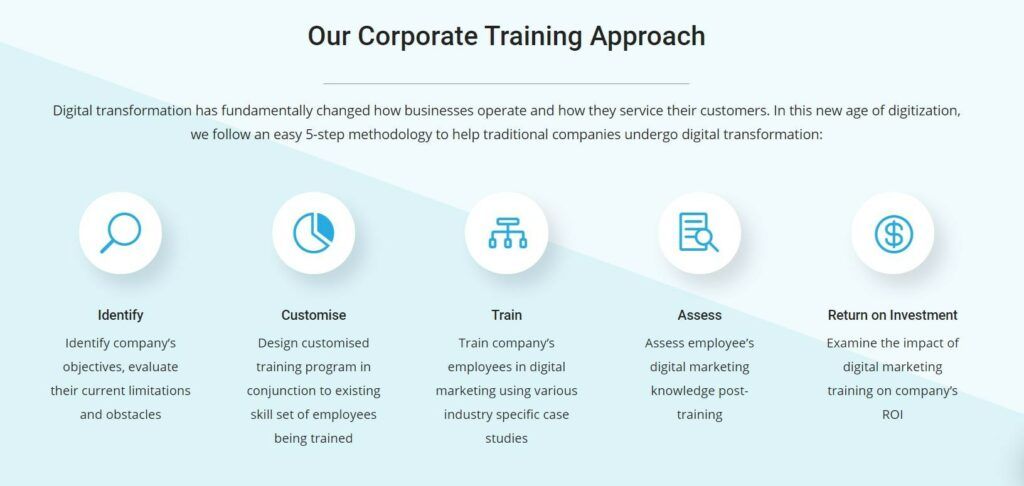
As we’ve learned over the last year, a great Digital Marketing Strategy is the only way for any company to succeed in a digital landscape.
We understand your company’s requirements, and accordingly, bring custom-tailored solutions to the table.
Our corporate training program has assisted organizations such as Volkswagen, Abbott, Asian Paints, L&K Saatchi & Saatchi, Mahindra & Mahindra, Cipla, Pfizer, Publicis, and others in achieving flawless digital transformation.
If you want to digitally transform your business, write to us for a personalized demo today!
We hope that this blog has provided you with a better understanding of the importance and necessity of digital transformation in the automotive industry.
It is imperative that you keep up to date on digital industry knowledge and broaden your learning horizons.
Let us know your thoughts about this in the comments section below. We would love to hear back from you.

Is Digital Marketing the Right Career for You?
Find out in a free 45-min masterclass · Career paths, roles and growth explained · By Karan Shah, Founder & CEO, IIDE

Is Digital Marketing the Right Career for You?
Find out in a free 45-min masterclass · Career paths, roles and growth explained · By Karan Shah, Founder & CEO, IIDE
Want to Know Why 2,50,000+ Students Trust Us?
Dive into the numbers that make us the #1 choice for career success



MBA - Level
Post Graduate in Digital Marketing & Business Strategy

Best For
Fresh Graduates

Mode of Learning
On Campus (Mumbai & Delhi)

Starts from
Nov 27, 2026

Duration
11 Months

Live & Online
Advanced Online Digital Marketing Course
Best For
Working Professionals
Mode of Learning
Online
Starts from
Nov 2, 2026
Duration
4-6 Months

Offline
Top AI Courses to Make You Future Ready!
Best For
AI Enthusiasts
Mode of Learning
2–5 Month Program
Starts from
Nov 24, 2026
Duration
Flexiable

Offline
Undergraduate Program in Digital Business & Entrepreneurship
Best For
12th Passouts
Mode of Learning
On Campus (Mumbai)
Duration
3 Years

Offline
Degree In 2026 ≠ Enough Degree + Digital Skills = Future-Ready
Best For
12th Passouts
Mode of Learning
At IIDE Campus
Duration
3 Years
Recent Post
You May Also Like

Founder and CEO at IIDE
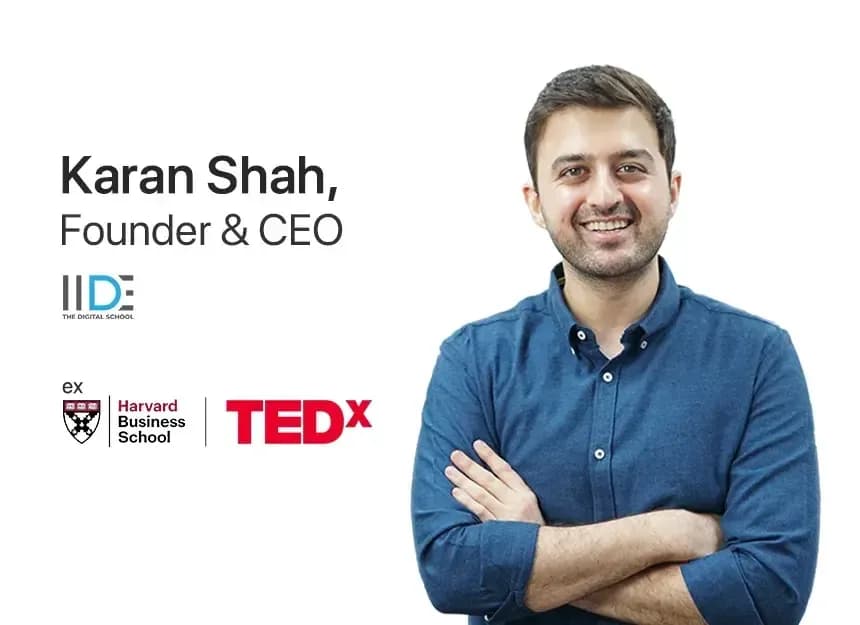
Karan Shah is the Founder and CEO of IIDE – The Digital School, Asia’s premier digital marketing institute. With over ten years of hands-on experience in the digital marketing industry, Karan has played a pivotal role in empowering thousands of students to forge successful careers in this ever-evolving field.
His vast expertise encompasses various areas such as paid search, social media marketing, programmatic marketing, and much more. Karan's passion for education, teaching, and public speaking led him to establish IIDE, where he offers world-class digital marketing education designed to meet industry standards.
To date, he has trained over 60,000 students and worked with more than 25 corporates, sharing his knowledge through both online and offline platforms. A Harvard Business School alumnus with a specialisation in E-commerce, Karan is also an accomplished Tedx speaker. His industry insights and teaching excellence have earned him a prestigious role as a visiting faculty member at India’s top management institutes, including the Indian Institutes of Management (IIMs).