
Students Centric
Placements Report
Trackable results, real numbers
Reviews
Proven success, real voices
Trainers
Expert-led, Industry-Driven Training
Life at IIDE
Vibrant Spirit student life
Alumni
Successful Journeys, Inspiring Stories
Learning Centre
Webinars
Blogs
Case studies
Live, Interactive Masterclasses
Fresh Insights, quick reads
Real-life, Industry relevant
More
Hire from us
Hire Top Digital Marketing Talent
Work with us
Join Our Team, Make an Impact
Customised Training
Personalised digital marketing training for your company
Refer & earn
Simple, easy rewards
Contact us
Get the answers you need
About us
Know more about IIDE
Explore all course options

FOR FRESH GRADUATES
Post Graduation Program in Digital Marketing & Business Strategy- Ideal for Age: 20–25 Years

Can’t decide? Explore all our
Digital Marketing Courses
COMPARE ALL 3 PROGRAMSOnline & Offline
Explore Top AI CoursesIndustry-Aligned TRACKMost Popular
UG Program in Digital Business & Entrepreneurship- Ideal for 12th Pass out / FY Degree Student

PARTNER PROGRAMS







Can’t decide? Explore all
BBA In Digital Marketing Colleges
Orginally Written by Karan Shah
Updated on Dec 11, 2025
Share on:


Dubai has rapidly become the digital capital of the Middle East, with 99% internet penetration and one of the world’s highest smartphone usage rates. The government’s ambitious Digital Economy Strategy 2031 aims to double the contribution of digital industries to GDP.
For businesses, this means one thing: without a strong digital marketing strategy in Dubai, you risk being invisible in a market where global competition is fierce. Among all approaches, social media marketing and SEO-driven content dominate, helping brands reach both Arabic and English-speaking audiences effectively.
Before diving into the article, I’d like to inform you that the research and initial analysis for this piece were conducted by Aparna Mahansaria. She is a current student in IIDE’s PG in Digital Marketing Course (March 2025 Batch).
If you found this helpful, feel free to reach out to Aparna to send a quick note of appreciation for her fantastic research; she’ll appreciate the kudos!
What Does a Digital Marketing Strategy Look Like?
Before diving deeper into the digital marketing strategy, let us first get familiar with the surface. So, do you know what a strategy is? A strategy is a well-planned approach developed to achieve specific goals or objectives.
Similarly, a marketing strategy is a proactive approach by developing a plan of action by converting a business’s resources and using them in the right way to reach the customers and turn them into potential buyers so as to make them buy the business’s products and services, among others.
It includes all the necessary activities that need to be included to achieve business goals. Once the marketing strategy is devised, it is put into action to achieve the desired results.
What is a Digital Marketing Strategy?
A digital marketing strategy involves a set of pre-planned actions designed to create an online presence through the medium of various channels and increase brand awareness. To make it simple to understand, it means the actions taken to achieve the business goals.
Since every business has different goals, the crux is to attain the goals through carefully selected media. This is necessary because if you spend your time and money on a platform where your target audience is not available, your efforts will end up in vain.
Thus, a digital marketing strategy must be carefully devised and take into consideration the objectives, offline channel contribution, target audience, as well as your products and services. But are you wondering why you should spend your time making one?
Why Do You Need a Digital Marketing Strategy in Dubai?
The importance of the digital marketing strategy cannot be emphasised enough. However, if your business lacks one, it may ultimately end in jeopardy. The following are the top three points that will help you in your business if you have a digital marketing strategy:
1. A Well-defined Direction
Having a well-planned strategy will help you understand what your end goal is. This may include increasing brand awareness, promoting products and services, connecting with existing customers, or making new ones.
Not having a strategy will lead you to not be able to evaluate your analytics, waste your resources, fail to attain the goals, and in the end, be directionless. Thus, having a strategy will lead you in the right direction and guide you to your destination.
2. Making the Most Out of Your Money
Whenever a person spends his hard-earned money, he wants to get the most out of it. The same goes for business. In the case of a small business, you may have limited resources, and making the best use of them is what a marketing strategy can help.
Even in the case of large companies, many resources are needed for the execution of the action, and effectively utilising the resources can be done through a well-planned strategy. It will help you drive better results and boost your ROI without wasting money.
3. Understand Your Online Marketplace
To understand the customers and meet their expectations, you must know your online marketplace and your customers. As the dynamics of digital marketing keep changing, a strategy will help you know about the audience, their behaviour, competitors, and most importantly, the digital marketing trends.
If you don’t understand your marketplace, your competitor will win the race. You must have a good understanding of always-on marketing, evaluate your owned, paid, and media, and prioritize the activities to understand and maintain your online marketplace.
How Is Digital Marketing Strategy Different from Digital Marketing Tactics or Campaigns?
Marketing Strategy and Marketing Tactics
A marketing strategy is a plan to attain business goals, whereas a marketing tactic is actions, plans, or activities that aim to promote products or services or accomplish end goals. Simply put, marketing tactics are the way to execute marketing strategies.
Let’s understand it better with the instance. If marketing strategies are your destination then marketing tactics are the path. If the marketing strategy is pizza then the marketing tactic is ”how to get the pizza’’.
Marketing tactics make it easier to accomplish your business goals. It cut down the whole process into small steps to make it easier to attain. Without marketing tactics, it would be difficult to execute the marketing strategy.
Marketing Strategies and Marketing Campaign
A campaign is a set of strategic activities aimed to promote a brand’s products through the medium of various platforms. It is an organized effort to achieve the end goal of the business.
Seems confusing, right? Let’s make it easy to understand. Marketing campaigns execute marketing strategies with the help of marketing tactics. Like if the strategy is the first step, then tactics the second, and campaign the third.
Normally, the tactics used to execute the campaign differ by channel and audience. But if you have an effective and planned campaign, it will give a similar message in a little improvised manner to the various channels.
How Can I Design an Effective Digital Marketing Strategy?
Wondering how you can create an effective digital marketing strategy? We’ve put this together in an easy and detailed way to guide you better.
1. Conduct SWOT Analysis
The best way to start your digital marketing strategies is through a SWOT analysis. SWOT is an analysis conducted to identify and analyze the internal and external strengths, weaknesses, opportunities, and threats of the business. It is a tool to understand what your company is good at and what areas to improve.
Strengths imply what you’re good at or the USP that distinguishes you from your competitors. It may involve the advantage your business offers over the others. To know about your strengths, you may ask yourself questions like what is your USP or what others see as your strengths.
Weaknesses are the internal factors that cause hindrances in the accomplishment of goals. These might be regarded as procedures, resources, people, or others. Questions like what are the areas you could improve or what others see as your weakness, may help to know about your weakness.
Opportunities are the positive chances or external areas that can help in improving your performance. This may include the ever-changing trend or turning your strengths into opportunities.
Threats represent the external factors that can negatively affect your business. It may include supply chain issues, shifts in consumer behavior, or others. Questions like what threats can harm your business or what your competition is doing may help to know more about threats in your business.
2. Build Buyer’s Persona
After you have an insight into the strengths and weaknesses of your business, the next important step is to build a buyer’s persona. Unless you understand your audience, you won’t be able to cater to their needs and demands. A buyer’s persona is a research-built customer profile to understand your audience and to whom you’re marketing your products.
A buyer’s persona can be created from the details available from research, interviews, and surveys. But the most important thing to keep in mind is that it must be based on real data. Any mistakes in collecting the data or if the data is based on assumptions or possibilities may cause deviation in the strategy.
If rightly made, the buyer’s persona can help in understanding the expectations, preferences, and needs of the customer. With that, it must not be forgotten that buyer personas may vary from organisation to organisation. However, it may include details like location, age, income, goals, priorities, and interests, among others.
3. Identify and Understand the Problems
Once you’ve built the buyer’s persona, you’ll get an idea of customer behaviour. Now, you must identify the problems they might be facing as a customer.
Suppose you’re a coaching institute, and perhaps, people are scared about ‘how to study without procrastination’. Then you may write a blog suggesting measures on how to avoid it.
The most important thing is to put yourself in the customer’s position to understand their situation better.
This way, you can provide personalised service to them to solve their problems and build trust. Once the trust is built, it gives a guarantee that the customers will be loyal to your brand and your business.
4. Evaluate the Channels
When reviewing the assets to incorporate into your strategy, you must first bring together all your digital media to have a better picture. One can do this by assessing a business’s current assets, such as owned, earned, and paid media.
Owned media implies channels or assets the business owns and has complete control over it. This may include a website, blog, video channels, podcasts, social media, and others. As a business has complete command over owned media, it can use that accordingly to fit best in its campaign and strategies.
Earned media refers to the media or content you’ve earned. It is the publicity gained through the material written about your business without paid advertising. Unlike owned media, you don’t have any control over earned media. Awards, customer reviews or experience, PR, and testimonials may count under that.
Just like its name, paid media is the content you’ve paid for to catch the customer’s attention. This may include paid advertising, paid social media posts, influencer marketing, or anything is done to increase your brand’s visibility.
Therefore, all three must be included in your strategy to get the maximum result for your efforts. Advertising on Facebook or making shareable content to improve the customer experience can help you make an effective marketing strategy.
5. Incorporate Everything and Understand the Budget
The last step for making an effective digital marketing strategy is to incorporate every data and information you seek out. With that, identify the budget constraints and plan out an effective strategy that can yield good results.
No business wants to exceed the budget or get less-than-expected results after working day in and day out for a strategy. Thus, the strategy must be well planned because, in the end, every marketing strategy depends on the cash flow.
Therefore, a business must think realistically about which strategy will work out and which won’t and spend money accordingly. Also, the marketing tactics and campaigns must be achievable and affordable for the business.
Some Common Digital Marketing Strategies in Dubai Examples
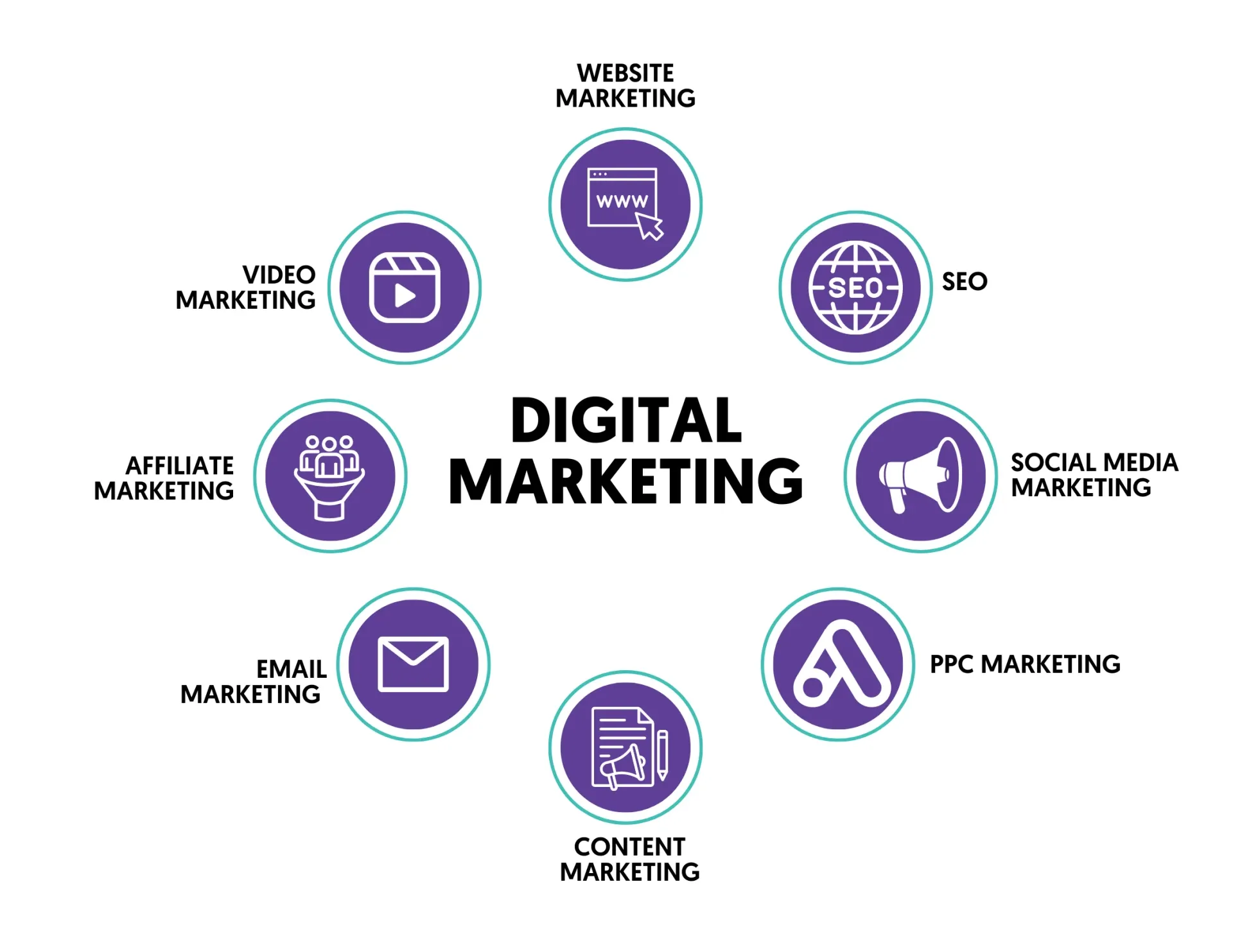
There are many digital marketing tactics that you may adopt in your business. To make it easier for you, we’ve added a few of them here-
(Source: Marketing Charts)
1. Content Marketing
Content marketing has a very important role in driving traffic. It is a practice of creating high-quality content regularly with the help of a content marketing strategy to gain the audience’s attention. With that, it also helps in improving the rank of that content.
People say that content is king and it is true. You must focus on creating evergreen and engaging content. And make sure, to create mobile content because smartphones make up almost half of the global devices.
2. Search Engine Optimisation
SEO implies optimising your content to rank better in the search engine. No matter, what the trend is, SEO will always be important for you if you have a business and online presence. By making the content SEO optimized, it reaches the customers better and at a fast pace.
If you have a big business, you must have hired an SEO expert. This is because an SEO expert has thorough knowledge and experience and will drive better results than an amateur.
3. Social Media Marketing
Social media can be the best place to create brand awareness and drive sales. Social media marketing tactics, if used correctly, can help you connect to the audience directly, no matter which social media platform they are on.
With that, you may also use social media tools like Buzzsumo, Hootsuite, and Buffer to save your time and effort to maximize good results.
4. Email Marketing
Email Marketing is a great tool to generate leads, if effectively utilized. It is one of the most affordable tools and can help you drive conversion as well as sales rates. When opting for compelling content, can shorten your sales cycle.
Sending personalized emails with discounts, coupons, and offers is the most used way to persuade customers to take action. By using an email marketing tool, you just need to upload your customer data, and voila!
5. Display Advertising
Display advertising refers to the placement of ads on various online platforms like social media, search engines, and others. It involves advertising for products or services through images, videos, gifs, and memes among others.
As display advertising yields good results and works in almost every type of business, you must incorporate this into your marketing strategy. With the help of many metrics acquired, you may only spend on those which are yielding good results.
If you want to learn the above strategies then you should consider investing in digital marketing courses in Dubai. Take a look at what our students want to share with you.

Learn Digital Marketing for FREE


Learn Digital Marketing for FREE
Want to Know Why 2,50,000+ Students Trust Us?
Dive into the numbers that make us the #1 choice for career success



MBA - Level
Post Graduate in Digital Marketing & Business Strategy

Best For
Fresh Graduates

Mode of Learning
On Campus (Mumbai & Delhi)

Starts from
Oct 1, 2026

Duration
11 Months

Live & Online
Advanced Online Digital Marketing Course
Best For
Working Professionals
Mode of Learning
Online
Starts from
Aug 7, 2026
Duration
4-6 Months

Online
Professional Certification in AI Strategy
Best For
AI Enthusiasts
Mode of Learning
Online
Starts from
Sep 8, 2026
Duration
5 Months

On Campus
Advanced Certification in Artificial Intelligence
Best For
AI Enthusiasts
Mode of Learning
On Campus (Mumbai)
Starts from
Sep 1, 2026
Duration
3 Months

Online or Offline
Top AI Courses to Make You Future Ready!
Best For
AI Enthusiasts
Mode of Learning
2–5 Month Program
Starts from
Sep 8, 2026
Duration
Flexiable

Offline
Undergraduate Program in Digital Business & Entrepreneurship
Best For
12th Passouts
Mode of Learning
On Campus (Mumbai)
Starts from
Aug 19, 2026
Duration
3 Years

Offline
Degree In 2026 ≠ Enough Degree + Digital Skills = Future-Ready
Best For
12th Passouts
Mode of Learning
At IIDE Campus
Starts from
Aug 6, 2026
Duration
3 Years
Recent Post
You May Also Like

Founder and CEO at IIDE
Karan Shah is the Founder and CEO of IIDE – The Digital School, Asia’s premier digital marketing institute. With over ten years of hands-on experience in the digital marketing industry, Karan has played a pivotal role in empowering thousands of students to forge successful careers in this ever-evolving field.
His vast expertise encompasses various areas such as paid search, social media marketing, programmatic marketing, and much more. Karan's passion for education, teaching, and public speaking led him to establish IIDE, where he offers world-class digital marketing education designed to meet industry standards.
To date, he has trained over 60,000 students and worked with more than 25 corporates, sharing his knowledge through both online and offline platforms. A Harvard Business School alumnus with a specialisation in E-commerce, Karan is also an accomplished Tedx speaker. His industry insights and teaching excellence have earned him a prestigious role as a visiting faculty member at India’s top management institutes, including the Indian Institutes of Management (IIMs).