🚀 Just Launched Our New Undergraduate Program in Digital Business & Entrepreneurship is Here: Explore Now!

Students Centric
Placements Report
Trackable results, real numbers
Reviews
Proven success, real voices
Trainers
Expert-led, Industry-Driven Training
Life at IIDE
Vibrant Spirit student life
Alumni
Successful Journeys, Inspiring Stories
Learning Centre
Webinars
Blogs
Case studies
Live, Interactive Masterclasses
Fresh Insights, quick reads
Real-life, Industry relevant
More
Hire from us
Hire Top Digital Marketing Talent
Work with us
Join Our Team, Make an Impact
Customised Training
Personalised digital marketing training for your company
Refer & earn
Simple, easy rewards
Contact us
Get the answers you need
About us
Know more about IIDE
Explore all course options

FOR FRESH GRADUATES
Post Graduation Program in Digital Marketing & Business Strategy- Ideal for Age: 20–25 Years

Can’t decide? Explore all our
Digital Marketing CoursesTrending

Professional Certification in AI Strategy
- Ideal for AI Enthusiast










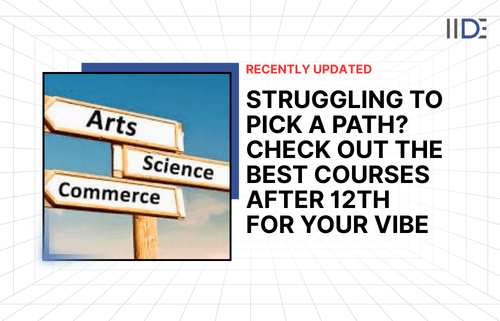
Orginally Written by Kartik Mittal
Updated on Feb 17, 2026
|1,899K+ views
Share on:


In 2026, the landscape for higher education is all about the synergy between technology and human connection.
For those looking to lead the next generation of global brands, Digital Business (salary: ₹6L-₹18L) offers a modern, high-growth path focused on e-commerce, data-driven strategy, and automated marketing. If you are more tech-savvy, Artificial Intelligence (salary: ₹8L-₹25L) stands as the top choice this year, with machine learning and generative AI becoming the engine behind every major industry.
At the same time, the rising global focus on mental health has caused Psychology (salary: ₹5L-₹15L) to see a massive surge in demand. Highly-paid roles are now standard in corporate well-being, clinical therapy, and industrial consultancy.
Choosing the right path after 12th is a huge milestone. It is about more than just picking a college; it is the first real decision you make about who you want to be in the professional world.
The Importance of Making the Right Choice:
In 2026, the world is changing fast. Picking the right course sets the stage for the kind of jobs you can get, the people you will meet, and the money you will start earning. With new fields like AI and Fintech growing so quickly, choosing a course that the world actually needs ensures you won't just have a degree, but a career that is ready for the future.
How it Affects your Future?
The decision you make now will stay with you for a long time. A good choice gives you a strong start and makes it easier to grow as industries change. On the other hand, picking something that doesn't fit you can lead to a lot of stress later on, often making you feel like you have to start all over again after wasting years on the wrong path.
Avoid these Mistakes while Choosing the Right Field
Many students still make the same mistakes every year:
- Following the Hype: Picking a course like Artificial Intelligence just because everyone is talking about it, even if you don't actually like technology or math.
- Doing what friends do: Joining a course just because your best friend is doing it, or because your parents want you to, even if your heart isn't in it.
- Ignoring your strengths: Trying to get into high-paying finance or tech roles when you actually prefer creative work or helping people.
- Looking only at the paycheck: Only caring about the starting salary without checking if that job will still be around or enjoyable in five or ten years.
We have done detailed research on all of these points to help you avoid these traps. We looked at which jobs are growing, what they pay, and which ones are safe for the long run. This guide is built to give you clear answers so you can feel confident and make a smart choice for your life ahead.
Bonus Tip: Still undecided? If you’ve ever wondered how your favorite online brands grow or dreamed of starting your own thing, you don’t need a traditional, boring degree. We recommend IIDE’s Undergraduate Program in Digital Business & Entrepreneurship. It’s the best way to update the real-world digital and business skills that companies actually pay for in 2026, and beyond.
The Bachelor’s Program That Sets You Apart

17 Best Courses After 12th to Consider for Young Apirants in 2026
The transition from school to college is no longer just about picking a stream; it’s about choosing an ecosystem. In 2026, the lines between business, technology, and creativity have blurred. To stay ahead, students are looking for degrees that don't just teach theory, but provide the tools to dominate a global, tech-driven market.
While traditional paths still hold value, the shift toward Digital-First careers has created a new gold standard for undergraduate studies. Leading that charge is a course designed for the enthusiasts of the modern economy:
Digital Business
If you have ever wondered how brands like Amazon, Netflix, or Zomato grow so fast, this is the course that pulls back the curtain. A BBA in Digital Business is a modern, tech-heavy version of the traditional management degree. Instead of just learning old-school office management, you learn how to build, run, and scale businesses in an online-first world. In 2026, where every company is a "digital company," this degree is essentially a shortcut to the most exciting roles in the global economy.
Key Subjects in Digital Business
- Digital Marketing & SEO: Mastering how to make brands visible and popular online.
- E-commerce Management: Learning the ins and outs of selling products through digital platforms.
- Data Analytics for Business: Using numbers and trends to make smart, profitable decisions.
- AI & Automation in Business: Understanding how to use Artificial Intelligence to make business operations faster and smarter.
- Design Thinking (UI/UX): Creating digital experiences that customers actually love to use.
- Entrepreneurship & Startup Strategy: The step-by-step process of launching and funding your own company.
Career Opportunities after Digital Business
- Digital Business Consultant: Helping traditional companies transform into digital powerhouses.
- E-commerce Manager: Leading operations for online marketplaces or D2C (Direct-to-Consumer) brands.
- Performance Marketing Specialist: Managing high-budget ad campaigns to drive sales and growth.
- Product Manager: Overseeing the development of apps or software from start to finish.
- Digital Entrepreneur: Launching and running your own tech-based startup.
Who Should Apply for This Course?
This course is perfect for students who are curious about the internet, love keeping up with digital trends, and have a creative yet logical mind. You don’t need to be a coding genius; you just need to be a digital native who wants to lead. Students from all streams are welcomed in the course.
Fees Range for Digital Business
The fee structure generally falls between ₹1,00,000 to ₹4,00,000 per year, depending on the institution and the level of industry exposure they provide.
Top Colleges Offering BBA/B.Com in Digital Business
- IIDE - The Digital Business School
- K.P.B. Hinduja College of Commerce, Mumbai
- Presidency University, Bangalore
- Jai Hind College, Mumbai
- MIT-WPU, Pune
- KES Shroff College, Mumbai
- Jagdish Sheth School of Management (JAGSoM), Bangalore
Out of these, IIDE is the top choice because their program is co-created with industry leaders and focuses on "learning by doing" rather than just textbooks, even offering a launchpad for your own startup ideas.
IIDE, naam toh suna hoga! Since its establishment in 2016, the institution has rapidly emerged as India's premier digital marketing institute.
IIDE's comprehensive approach to digital marketing education combines cutting-edge curriculum with practical, industry-focused training. The brand's unique vision is to spark a global wave of opportunity by shaping the world's most agile and in-demand digital marketing talent, preparing students not just to meet market needs but to redefine them.
At the undergraduate level, degrees like BBA provide a solid foundation for careers in business and commerce. While these traditional degrees remain popular, the job market today demands specialised, high-demand skills that aren’t always covered in conventional courses.
If you're looking to stay ahead of the crowd, pursuing an additional specialisation can give you a competitive edge.
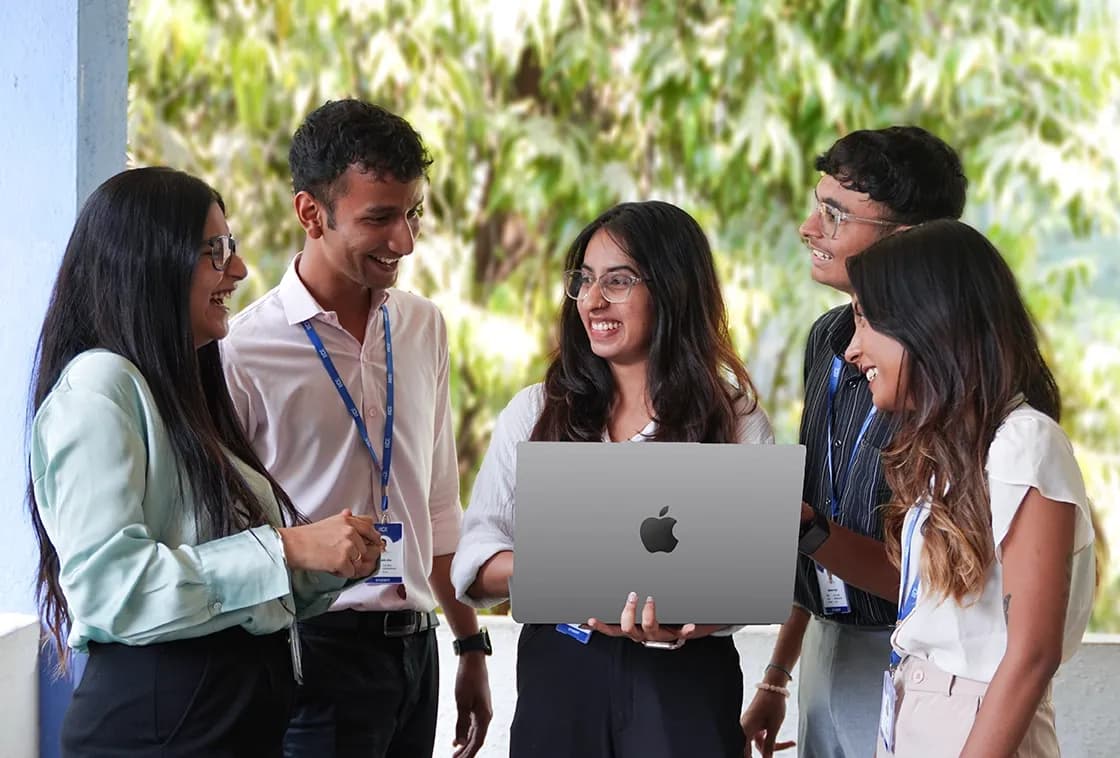
IIDE’s Undergraduate Program in Digital Business & Entrepreneurship is a Mumbai-based, offline program built for students who want more than a conventional college degree.
Designed for future founders and operators, the program prepares students to launch startups, digitise family businesses, or work in fast-growing digital-first companies.
In IIDE’s UG program, learning goes beyond theory. Students work on real business challenges, live projects, and scenario-based case studies under the guidance of industry leaders.
The curriculum is co-created with active founders and CXOs, ensuring graduates build practical, job-ready and venture-ready skills. With in-person mentorship, mandatory internships, global exposure in Dubai, and flagship initiatives like the Launchpad Challenge (₹5 lakh seed funding).
Ready to future-proof your career? Explore IIDE’s UG Program in Digital Business & Entrepreneurship.
Admission Criteria & Eligibility
The eligibility for IIDE's Digital Business requires the 10+2 merit with at least 50%, followed by a simple one on one interview.
Fees Structure
Complete your 3-year UG in Digital Business & Entreprenureship program for ₹3,30,000 on EMI payment plan to suit your budget.
Why Select This College?
IIDE's practical learning with hands-on projects, live brands, capstones, and AI tools gets you job-ready fast. Faculty and placement support are super helpful and knowledgeable, helping build key skills in content, presentations, and client talks for careers or freelancing. The campus setup is warm, and the overall vibe feels positive and welcoming. Check out IIDE now!
Top Career-Defining Arts Courses After 12th for 2026
Gone are the days when choosing Arts meant a limited career path. Today, the Humanities are the engine behind global policy, mental health revolutions, and creative economies.
If you have a passion for understanding people, society, and the power of communication, the Arts stream is no longer just a backup - it’s a power move. From decoding the human mind to shaping international relations, let’s explore the top humanities courses.
1. Psychology
Psychology has transformed into one of the most vital fields in 2026 as the world prioritizes mental health and emotional intelligence. This course involves the scientific study of the human mind and behavior, exploring how people think, feel, and interact. It is no longer just about clinical therapy; psychologists are now essential in corporate boardrooms, sports teams, and tech companies.
Key Subjects in Psychology
- Cognitive Psychology: Studying mental processes like memory, perception, and decision-making.
- Social Psychology: Understanding how people’s thoughts and behaviors are influenced by others.
- Industrial-Organizational Psychology: Applying psychological principles to improve workplace productivity and employee well-being.
- Abnormal Psychology: Exploring mental health disorders and their treatments.
- Developmental Psychology: Studying how humans grow and change throughout their lives.
- Research Methodology: Learning how to conduct scientific studies and analyze behavioral data.
Career Opportunities after Psychology
- Corporate Counselor: Working within companies to manage employee stress and improve work culture.
- Clinical Psychologist: Diagnosing and treating mental health conditions in private or hospital settings.
- User Experience (UX) Researcher: Helping tech companies understand how users think so they can build better apps.
- Child & Educational Psychologist: Supporting students and children in schools and learning centers.
- Criminal Psychologist: Working with law enforcement to understand the motives and behaviors of offenders.
Who Should Apply for Psychology?
If you are a "people person," a good listener, and fascinated by why people do what they do, Psychology is your calling. It requires a high level of empathy and strong analytical skills. This course is open to students from all three streams, making it one of the most inclusive and flexible high-paying options available.
Fees Range for Psychology
The annual fees for a Bachelor’s in Psychology usually range from ₹50,000 to ₹2,50,000 per year, depending on whether the college is government-run or private.
Top Colleges Offering Psychology
- Lady Shri Ram College (LSR), Delhi
- Tata Institute of Social Sciences (TISS), Mumbai
- Jesus and Mary College, Delhi
- Christ University, Bangalore
- Fergusson College, Pune
2. Journalism and Mass Communication
In the age of viral news and digital storytelling, a degree in Journalism and Mass Communication is more relevant than ever. This course is no longer just about newspapers; it covers the entire spectrum of media, including podcasting, digital filmmaking, social media strategy, and public relations. You will learn how to gather information, craft compelling stories, and deliver them to a global audience.
Key Subjects in Journalism and Mass Communication
- Reporting & Editing: The core skills of gathering news and refining it for public consumption.
- Digital Media & New Communication: Mastering social media platforms, blogs, and online news portals.
- Public Relations (PR) & Advertising: Learning how to build brand images and create persuasive campaigns.
- Media Laws & Ethics: Understanding the legal boundaries and moral responsibilities of a journalist.
- Radio & TV Production: Practical training in anchoring, scriptwriting, and behind-the-scenes production.
- Photojournalism: The art of visual storytelling through high-impact photography and videography.
Career Opportunities after Journalism and Mass Communication
- News Anchor/Reporter: Presenting news stories for television channels or digital news outlets.
- Social Media Manager: Leading the digital presence and content strategy for major brands.
- Public Relations Officer: Managing the reputation and media relations for companies or public figures.
- Content Writer/Editor: Creating engaging articles, scripts, and blogs for various media platforms.
- Video Producer/Filmmaker: Directing and producing documentaries, ad films, or digital video content.
Who Should Apply for Journalism and Mass Communication?
If you are curious about the world, love talking to people, and have a flair for writing or creative expression, this is your field. It is a "stream-neutral" course, meaning students from Science, Commerce, and Arts are all welcome. It requires confidence, excellent communication skills, and the ability to work in a fast-paced, ever-changing environment.
Fees Range for Journalism and Mass Communication
Annual fees range from ₹30,000 to ₹1,50,000 in government universities. Premier private media institutes can charge between ₹2,00,000 and ₹5,00,000 per year.
Top Colleges Offering Journalism and Mass Communication
- Indian Institute of Mass Communication (IIMC), New Delhi
- AJK Mass Communication Research Centre (Jamia Millia Islamia), New Delhi
- Symbiosis Institute of Media & Communication (SIMC), Pune
- Xavier Institute of Communications (XIC), Mumbai
- Asian College of Journalism (ACJ), Chennai
3. Sociology
Sociology is the fascinating study of social life, social change, and the social causes and consequences of human behavior. This course allows you to investigate the structure of groups, organizations, and societies, and how people interact within these contexts. In a world grappling with rapid social shifts, a degree in Sociology provides the analytical tools to understand and address complex issues like inequality, urbanization, and cultural dynamics.
Key Subjects in Sociology
- Introduction to Sociology: Understanding the fundamental concepts, theories, and methods of the discipline.
- Social Stratification: Examining the causes and effects of social inequality, class, and caste systems.
- Sociology of India: A deep dive into the specific social structures, religions, and rural-urban dynamics of the Indian subcontinent.
- Research Methodology: Learning qualitative and quantitative techniques to conduct social surveys and field research.
- Gender and Society: Exploring the social construction of gender roles and their impact on social institutions.
- Social Movements: Studying the history and impact of collective actions aimed at social change.
Career Opportunities after Sociology
- Social Researcher: Conducting studies for NGOs, government agencies, or think tanks to influence public policy.
- Human Resources (HR) Specialist: Managing organizational culture and employee relations using social insights.
- Social Worker: Working on the frontline to help communities and individuals navigate social challenges.
- Public Policy Analyst: Evaluating the effectiveness of laws and government programs on society.
- Criminologist: Analyzing the social roots of crime and working within the criminal justice system.
Who Should Apply for Sociology?
If you are someone who constantly asks "why" society functions the way it does and has a deep sense of empathy for diverse human experiences, Sociology is an excellent fit. It is ideal for students with strong observational skills and a passion for social justice. While primarily an Arts course, its research-heavy nature attracts students from all backgrounds who are interested in people and data.
Fees Range for Sociology
In government-funded colleges, annual fees can be as low as ₹5,000 to ₹25,000. Private universities offering specialized BA (Hons) Sociology programs usually charge between ₹50,000 and ₹2,50,000 per year.
Top Colleges Offering Sociology
- Lady Shri Ram College for Women (LSR), New Delhi
- St. Xavier’s College, Mumbai
- Loyola College, Chennai
- Miranda House, New Delhi
- Tata Institute of Social Sciences (TISS), Mumbai
4. Political Science
Political Science is the study of power, governance, and the analysis of political activities, thoughts, and behavior. This course provides a window into how the world is governed, from local municipal bodies to international organizations like the UN. In an era of global political volatility, this degree is essential for those who want to understand the machinery of the state and the ideologies that drive world leaders.
Key Subjects in Political Science
- Political Theory: Exploring the ideas of great thinkers like Plato, Marx, and Gandhi regarding justice and liberty.
- Comparative Politics: Comparing different government systems (Democracies vs. Autocracies) across the globe.
- International Relations (IR): Studying diplomacy, global conflicts, and how nations interact with one another.
- Indian Government & Politics: A detailed study of the Indian Constitution, the executive, and the judiciary.
- Public Administration: Learning the practical side of how government policies are implemented on the ground.
- Global Political Economy: Analyzing the intersection of international politics and world markets.
Career Opportunities after Political Science
- Civil Services (IAS/IFS/IPS): A popular foundation for those aiming to clear the UPSC and join the government.
- Political Analyst: Working for media houses or political parties to interpret election trends and policy shifts.
- Legislative Assistant: Supporting Members of Parliament (MPs) in research and drafting policy documents.
- Diplomat/International Consultant: Representing the country or working with international bodies like the UN or EU.
- Legal Professional: Many Political Science students pursue an LLB to specialize in constitutional or international law.
Who Should Apply for Political Science?
If you enjoy debating current affairs, follow global news religiously, and have a keen interest in leadership and governance, this course is for you. It requires strong analytical writing and the ability to view complex issues from multiple perspectives. It is a foundational course for anyone looking to enter the fields of law, administration, or high-level journalism.
Fees Range for Political Science
Annual fees in public universities range from ₹10,000 to ₹30,000. Private institutions with a focus on Liberal Arts or International Relations may charge between ₹1,50,000 and ₹4,00,000 per year.
Top Colleges Offering Political Science
- Hindu College, New Delhi
- Presidency University, Kolkata
- Ramjas College, New Delhi
- St. Stephen’s College, New Delhi
- Fergusson College, Pune
5. Fine Arts
For those who see the world as a canvas, a Bachelor of Fine Arts (BFA) is the gateway to a professional creative career. Far from being just a hobby, this course is a rigorous exploration of visual and performing arts, blending traditional techniques with modern digital tools. In an age of visual storytelling and digital content, fine artists are the architects of the aesthetics we consume daily, from art galleries to user interfaces.
Key Subjects in Fine Arts
- History of Art: Studying the evolution of artistic movements from ancient civilizations to contemporary times.
- Aesthetics & Art Criticism: Developing a theoretical understanding of beauty, form, and the philosophy of art.
- Drawing & Composition: Mastering the fundamental technical skills of anatomy, perspective, and light.
- Applied Arts & Graphic Design: Learning how to apply artistic principles to commercial branding and digital media.
- Sculpture & Clay Modeling: Working with 3D forms, textures, and various materials like wood, metal, or stone.
- Digital Arts & Animation: Using software to create visual effects, digital illustrations, and motion graphics.
Career Opportunities after Fine Arts
- Professional Artist/Painter: Creating original works for exhibitions, art galleries, and private collectors.
- Art Director: Leading the visual style and creative vision for advertising agencies, films, or magazines.
- Graphic Designer: Designing visual content for brands, websites, and social media platforms.
- Illustrator/Concept Artist: Creating characters and environments for books, video games, and animation studios.
- Art Conservator/Curator: Managing art collections in museums or preserving historical masterpieces.
Who Should Apply for Fine Arts?
If you have a restless creative energy and a passion for visual expression, this is your calling. It requires high levels of patience, an eye for detail, and the discipline to refine your craft over years of practice. While an inherent talent for drawing or creating is a plus, the course is designed to build professional-grade skills for anyone willing to dedicate themselves to the studio.
Fees Range for Fine Arts
Government colleges offer BFA programs at highly subsidized rates, ranging from ₹15,000 to ₹60,000 per year. Premier private design schools and art institutes may charge between ₹1,50,000 and ₹4,50,000 annually.
Top Colleges Offering Fine Arts
- Sir J.J. School of Art, Mumbai
- Faculty of Fine Arts, MSU Baroda
- College of Art (Delhi University), New Delhi
- Kala Bhavana (Visva-Bharati), Santiniketan
- Government College of Fine Arts, Chennai
6. Foreign Languages
In a globalized 2026 economy, language is more than just communication - it is a high-value professional asset. A degree in Foreign Languages (like French, German, Japanese, or Spanish) bridges the gap between nations and opens doors to international careers in diplomacy, tech, and global trade. Learning a new language allows you to "double your world," providing deep cultural insights and making you a bridge between diverse markets.
Key Subjects in Foreign Languages
- Language Proficiency (Levels A1 to C2): Intensive training in reading, writing, listening, and speaking the target language.
- Literature & Philology: Studying the classic and contemporary literary works of the language’s native country.
- Culture & Civilization: Understanding the history, social norms, and political landscape of the regions where the language is spoken.
- Translation & Interpretation: Mastering the art of converting written text or live speech between languages.
- Linguistics & Phonetics: The scientific study of language structure, sounds, and grammar systems.
- Business Communication: Learning specialized vocabulary for corporate environments, law, and international trade.
Career Opportunities after Foreign Languages
- Translator & Interpreter: Working for embassies, multinational corporations (MNCs), or international organizations like the UN.
- Foreign Language Expert: Leading localization and content strategies for global tech companies like Google or Amazon.
- Diplomat/Foreign Service: Representing your country in international relations and global affairs.
- Travel & Tourism Consultant: Managing international tour operations and high-end hospitality services.
- Corporate Trainer: Teaching language and cross-cultural communication to business executives.
Who Should Apply for Foreign Languages?
If you are someone who loves exploring different cultures, enjoys puzzles (which is what learning grammar feels like!), and has a strong memory, this is a perfect match. It is an ideal path for students who want to work globally or travel as part of their profession. It requires persistence, as language mastery is a long-term commitment that goes beyond just memorizing words.
Fees Range for Foreign Languages
Full-time BA (Hons) degrees in government universities range from ₹5,000 to ₹40,000 per year, while specialized private institutes like Max Mueller Bhavan or Alliance Française charge between ₹20,000 and ₹80,000 per semester.
Top Colleges Offering Foreign Languages
- Jawaharlal Nehru University (JNU), New Delhi
- University of Delhi (Arts Faculty), New Delhi
- EFL University (EFLU), Hyderabad
- Banaras Hindu University (BHU), Varanasi
- Symbiosis Institute of Foreign and Indian Languages (SIFIL), Pune
From world-class campuses to a thriving startup ecosystem, exploring courses after 12th in Bangalore has to be your first step toward securing high-impact internships and placements in India's most dynamic job market.
Leading Science & Tech Courses After 12th for 2026
If you’ve spent your school years with a lab coat or a calculator, the future has never looked more exciting. From the microscopic world of pharmacy to the infinite possibilities of Artificial Intelligence, here are the top science paths for the next generation of innovators.
1. Artificial Intelligence
In 2026, Artificial Intelligence has moved beyond being a buzzword to becoming the core engine of the global economy. A course in AI is designed for those who want to build the "brains" behind self-driving cars, smart assistants, and medical diagnostic tools. It combines computer science, advanced mathematics, and data logic to create systems that can learn and solve problems like humans. Enrolling in AI courses gives you the technical edge to lead the 2026 workforce, where AI skills are no longer optional but a high-paying necessity across every industry
Key Subjects in Artificial Intelligence
- Machine Learning (ML): Teaching computers how to learn from data without being explicitly programmed.
- Neural Networks & Deep Learning: Understanding the complex layers that mimic the human brain to process information.
- Natural Language Processing (NLP): How machines understand and communicate using human language.
- Computer Vision: Enabling machines to "see" and interpret visual information from the world.
- AI Ethics & Policy: Navigating the moral and legal challenges of creating intelligent machines.
- Big Data Analytics: Processing massive amounts of information to find patterns and make predictions.
Career Opportunities after Artificial Intelligence
- AI Engineer: Building and deploying AI models for software, apps, or industrial systems.
- Machine Learning Specialist: Focusing on the algorithms that help systems improve automatically over time.
- Data Scientist: Analyzing large datasets to help companies make billion-dollar decisions.
- AI Ethics Consultant: Ensuring that AI systems are fair, unbiased, and safe for society.
- Robotics Engineer: Programming intelligent machines to perform physical tasks.
Who Should Apply for Artificial Intelligence?
This field is ideal for students who have a strong foundation in math and a deep interest in coding. If you enjoy puzzles, logical reasoning, and are curious about how technology "thinks," you will thrive here. It is best suited for Science stream students, though many modern computer application programs now allow students from other streams with a strong logical background to enter this field.
Fees Range for Artificial Intelligence
The fees for a full degree in AI generally range from ₹1,50,000 to ₹5,00,000 per year, depending on the reputation and facilities of the college.
Top Colleges Offering Artificial Intelligence
- IIT Hyderabad, IIT Delhi
- IIIT Hyderabad
- Vellore Institute of Technology (VIT)
- BITS Pilani
- Lovely Professional University (LPU)
2. Architecture
Architecture is the perfect blend of artistic expression and engineering precision. This field is no longer just about designing buildings; it focuses on creating sustainable, smart, and tech-integrated spaces that solve modern urban challenges. A course in Architecture (B.Arch) trains you to visualize structures, understand materials, and master the digital tools used to build the cities of the future. With the global shift toward "Green Buildings" and smart infrastructure, architects are the visionary problem-solvers of the physical world.
Key Subjects in Architecture
- Architectural Design: The core process of conceptualizing and planning functional spaces.
- Building Materials & Construction: Understanding the properties of concrete, steel, and eco-friendly alternatives.
- Sustainable Architecture: Designing energy-efficient buildings that reduce environmental impact.
- Computer-Aided Design (CAD) & BIM: Mastering software like Revit and AutoCAD for 3D modeling.
- Urban Planning: Studying the layout and organization of entire neighborhoods and cities.
- Landscape Architecture: Designing outdoor parks, gardens, and public green spaces.
Career Opportunities after Architecture
- Licensed Architect: Designing residential, commercial, and industrial structures.
- Urban Planner: Working with government bodies to develop city layouts and infrastructure.
- Interior Designer: Specializing in the functional and aesthetic design of indoor environments.
- Conservation Architect: Preserving and restoring historic buildings and cultural sites.
- Sustainable Design Consultant: Advising on eco-friendly construction and energy efficiency.
Who Should Apply for Architecture?
This course is for students who love to draw, build models, and have a strong sense of space and geometry. It requires a lot of patience and long hours of studio work. In India, you typically need to be from the Science stream (PCM) and must qualify for entrance exams like NATA or JEE Main Paper-2 to secure admission into a top-tier college.
Fees Range for Architecture
The annual fees for B.Arch range from ₹1,50,000 to ₹4,00,000 per year, depending on whether the college is a government institute or a premier private university.
Top Colleges Offering Architecture
- IIT Roorkee, IIT Kharagpur
- Sir J. J. College of Architecture, Mumbai
- School of Planning and Architecture (SPA), Delhi
- CEPT University, Ahmedabad
- NIT Calicut
3. Medicine & Pharmacy
Medicine and Pharmacy remain the backbone of society, offering careers that combine high prestige with the noble goal of saving lives. While Medicine (MBBS) focuses on diagnosing and treating patients, Pharmacy (B.Pharm) is the science behind the drugs, focusing on discovery, manufacturing, and safety. These fields have integrated with technology, using AI for drug research and personalized medicine. Whether you want to be at the bedside or in a research lab, these paths offer unmatched job security and global demand.
Key Subjects in Medicine & Pharmacy
- Anatomy & Physiology: The detailed study of the human body and how it functions.
- Pharmacology: Understanding how different chemicals and drugs interact with the body.
- Biochemistry: Exploring the chemical processes within and relating to living organisms.
- Pharmaceutics: The study of turning a new chemical entity into a safe medication.
- Microbiology: Learning about bacteria, viruses, and their role in diseases.
- Pharmaceutical Chemistry: Designing and developing new chemical molecules for medicines.
Career Opportunities after Medicine & Pharmacy
- Specialist Doctor: Practicing in fields like Cardiology, Neurology, or Surgery after MBBS.
- Research Scientist: Working in R&D labs to discover new vaccines and treatments.
- Drug Inspector: A prestigious government role ensuring the quality and safety of medicines.
- Clinical Pharmacist: Working in hospitals to manage patient medication and dosages.
- Pharmacovigilance Associate: Monitoring the safety of drugs after they are released to the market.
Who Should Apply for Medicine & Pharmacy?
These courses are strictly for Science students with a Biology background (PCB). You should apply if you have high mental stamina, a passion for biological sciences, and a genuine desire to work in the healthcare sector. Success in Medicine requires clearing the NEET exam, while Pharmacy has various state-level and university-specific entrance tests.
Fees Range for Medicine & Pharmacy
Pharmacy fees range from ₹80,000 to ₹3,00,000 per year. For Medicine (MBBS), government college fees are very low (₹10k -₹1L), while private colleges can range from ₹10,00,000 to over ₹25,00,000 per year.
Top Colleges Offering Medicine & Pharmacy
- AIIMS, New Delhi (Medicine)
- Jamia Hamdard, New Delhi (Pharmacy)
- Christian Medical College, Vellore (Medicine)
- BITS Pilani (Pharmacy)
- National Institute of Pharmaceutical Education and Research (NIPER), Mohali
4. Nursing
Nursing has evolved into a highly respected and tech-integrated medical profession. Beyond patient care, modern nurses are clinical leaders who manage advanced medical machinery, and coordinate complex treatments. With a global shortage of healthcare professionals, a degree in Nursing (B.Sc Nursing) offers 100% job security and the opportunity to work in top-tier international hospitals.
Key Subjects in Nursing
- Anatomy & Physiology: Detailed study of the human body structure and its vital functions.
- Nutrition & Dietetics: Understanding the role of food and nutrients in patient recovery and health.
- Medical-Surgical Nursing: Learning the specialized care required for adults with various medical conditions.
- Mental Health Nursing: Exploring psychiatric care and the psychological well-being of patients.
- Community Health Nursing: Focusing on public health, disease prevention, and rural healthcare initiatives.
- Pharmacology: Studying medicines, their dosages, and their effects on the human body.
Career Opportunities after Nursing
- Registered Nurse (Staff Nurse): Providing direct clinical care in private or government hospitals.
- Military Nurse: Serving in the Armed Forces Medical Services (AFMS) with high prestige and benefits.
- Nurse Educator: Teaching and training the next generation of healthcare professionals in nursing colleges.
- Industrial Nurse: Managing the health and safety of workers in large corporate or factory setups.
- Nurse Researcher: Working with pharmaceutical companies to study the effectiveness of new treatments.
Who Should Apply for Nursing?
Nursing is perfect for Science students (PCB) who have a strong desire to serve humanity and possess high emotional resilience. It requires physical stamina and the ability to stay calm under pressure. If you are looking for a stable, high-growth career that allows you to make a tangible difference in people's lives every single day, this is the course for you.
Fees Range for Nursing
The annual fees for B.Sc Nursing range from ₹10,000 to ₹30,000 in government colleges. In private institutions, fees typically range from ₹1,00,000 to ₹3,00,000 per year.
Top Colleges Offering Nursing
- All India Institute of Medical Sciences (AIIMS), New Delhi
- Christian Medical College (CMC), Vellore
- Armed Forces Medical College (AFMC), Pune
- Manipal College of Nursing, Manipal
- St. John's Medical College, Bangalore
AI in healthcare is no longer the future, but a life-saving necessity, bridging the gap between massive medical data and the precision care every patient deserves
5. Cyber Security
As our entire lives move online, Cyber Security has become the most critical defense system for the modern world. This course teaches you how to protect sensitive data, networks, and systems from digital attacks and hackers. It is a high-stakes field where you learn the "art of defense," mastering everything from ethical hacking to digital forensics. With global cybercrime on the rise, companies are willing to pay a premium for professionals who can keep their digital assets safe and secure.
Key Subjects in Cyber Security
- Ethical Hacking: Learning how hackers think to better defend against their methods.
- Network Security: Protecting the communication channels and servers of an organization.
- Cryptography: The science of encrypting data so it cannot be read by unauthorized users.
- Digital Forensics: Investigating cybercrimes and recovering data after a security breach.
- Cloud Security: Securing data stored on remote servers like AWS, Google Cloud, or Azure.
- Cyber Laws & Compliance: Understanding the legal rules regarding data privacy and digital safety.
Career Opportunities after Cyber Security
- Ethical Hacker (Penetration Tester): Testing a company's systems to find and fix security gaps.
- Security Architect: Designing and building secure network infrastructures.
- Cyber Forensic Investigator: Working with law enforcement to solve digital crimes.
- Chief Information Security Officer (CISO): Leading the entire security department of a corporation.
- Cloud Security Specialist: Ensuring that data stored in the cloud is unhackable.
Who Should Apply for Cyber Security?
This is a perfect fit for students who are tech-obsessed, enjoy solving complex puzzles, and have a sharp eye for detail. You need to be a continuous learner because hackers are always coming up with new tricks. While it is primarily for Science students, many modern BCA or specialized certification tracks allow students from other streams to enter this high-demand field if they have a strong logical mind.
Fees Range for Cyber Security
Annual fees for specialized B.Tech or B.Sc programs in Cyber Security range from ₹1,50,000 to ₹4,50,000 per year, depending on the lab facilities and industry partnerships.
Top Colleges Offering Cyber Security
- National Forensic Sciences University (NFSU), Gandhinagar
- IIT Kanpur (Specialized Post-Grad and Certification programs)
- Amity University (B.Tech in Cyber Security)
- UPES, Dehradun
- SRM Institute of Science and Technology, Chennai
Start your journey in a city that feels like home; explore courses after 12th in Raipur and grow your dreams in a community that truly cares about your success.
Premier Commerce & Finance Courses After 12th 2026
1. Economics
Economics is often called the "Queen of Social Sciences" because it explains how the world works, from individual choices to global trade. The subject has become a high-tech field, using "Big Data" and behavioral science to predict market shifts and solve societal issues. An Economics course (B.A. or B.Sc.) trains you to think critically, analyze complex data, and understand the policy decisions that shape our lives. It is a prestigious degree that is highly valued in finance, government, and international organizations like the World Bank.
Key Subjects in Economics
- Microeconomics & Macroeconomics: Studying individual markets and the overall national/global economy.
- Econometrics: Using mathematical and statistical methods to test economic theories.
- Development Economics: Analyzing how nations can improve their fiscal health and social welfare.
- Behavioral Economics: Exploring the psychology behind why people make certain financial decisions.
- Public Policy: Learning how government laws and taxes impact the economy and society.
- International Trade: Understanding the exchange of goods and services across global borders.
Career Opportunities after Economics
- Economist: Conducting research and analyzing data for banks, think tanks, or government agencies.
- Data Analyst/Statistician: Turning raw data into actionable insights for tech and finance companies.
- Investment Banker: Managing large-scale financial assets and corporate mergers.
- Policy Analyst: Advising governments and NGOs on social and economic reforms.
- Risk Manager: Assessing financial risks and helping businesses navigate economic uncertainty.
Who Should Apply for Economics?
This course is best suited for students who are curious about current affairs, enjoy working with numbers, and have a sharp analytical mind. While it is an Arts/Social Science subject, many top colleges require you to have had Mathematics in Class 12 to be eligible. It is a great choice for students who want a career that is intellectually stimulating and financially rewarding.
Fees Range for Economics
Government-aided colleges often charge between ₹10,000 and ₹40,000 per year, while premier private universities like Ashoka or Shiv Nadar can range from ₹5,00,000 to ₹10,00,000 per year.
Top Colleges Offering Economics
- Shri Ram College of Commerce, Delhi
- St. Stephen’s College, Delhi
- St. Xavier’s College, Mumbai/Kolkata
- Madras School of Economics, Chennai
- Lady Shri Ram College for Women, Delhi
2. Fintech
Fintech (Financial Technology) is the revolutionary blend of finance and software that has changed how we pay, save, and invest. This course is for those who want to work at the intersection of banking and coding, focusing on digital wallets, stock-trading apps, and blockchain technology. In 2026, traditional banking is being replaced by digital-first solutions, making Fintech one of the fastest-growing and highest-paying sectors in the global economy. It is the future of money.
Key Subjects in Fintech
- Blockchain & Cryptocurrency: Understanding the technology behind Bitcoin and decentralized finance (DeFi).
- Digital Payments & E-Wallets: Learning the mechanics of online transactions and payment gateways.
- Financial Modeling: Using software to predict market trends and company valuations.
- Algorithmic Trading: Programming computers to execute stock trades at lightning speed.
- Data Privacy in Finance: Protecting financial information from fraud and theft.
- RegTech: Exploring how technology helps financial firms follow complex government laws.
Career Opportunities after Fintech
- Blockchain Developer: Creating secure systems for digital currencies and smart contracts.
- Financial App Product Manager: Leading the development of apps like PhonePe, Zerodha, or PayPal.
- Quantitative Analyst (Quants): Using mathematical models to guide investment strategies.
- Risk Manager (Fintech): Identifying and preventing digital financial fraud.
- Fintech Consultant: Helping traditional banks upgrade their technology to stay competitive.
Who Should Apply for Fintech?
If you have an interest in finance but also love technology, this is your dream career. It is ideal for students who are good with numbers and curious about how apps like Google Pay or Robinhood work behind the scenes. This field is very popular among Commerce students who have a background in Math, as well as Science students who want to enter the financial world.
Fees Range for Fintech
Annual fees for specialized Fintech degrees or BBA programs range from ₹1,20,000 to ₹4,00,000 per year, depending on the university's corporate tie-ups.
Top Colleges Offering Fintech
- Indian Institute of Management (IIM)
- S.P. Jain School of Global Management
- NMIMS, Mumbai
- Symbiosis School of Banking and Finance, Pune
3. Business Administration (BBA/BMS)
A Bachelor of Business Administration (BBA) is the typical launchpad for the corporate world. It is designed to provide a 360-degree understanding of how organizations function, from managing people to analyzing market trends. In 2026, BBA programs have evolved to include digital-first strategies and data-driven decision-making, ensuring that graduates are ready to lead in a fast-paced, global business environment.
Key Subjects in Business Administration
- Principles of Management: The fundamental concepts of planning, organizing, and leading an organization.
- Managerial Economics: Applying economic theories to business decision-making and market analysis.
- Business Communication: Mastering professional writing, presentation skills, and corporate etiquette.
- Organizational Behavior: Understanding human psychology and group dynamics within a workplace.
- Marketing Management: Exploring consumer behavior, branding, and modern digital marketing strategies.
- Entrepreneurship & Innovation: Tools and mindsets required to launch startups and scale new ventures.
Career Opportunities after Business Administration
- Marketing Executive: Developing and executing campaigns to build brand presence and drive sales.
- Business Development Associate: Identifying new market opportunities and building strategic partnerships.
- Human Resource (HR) Generalist: Managing recruitment, employee relations, and organizational culture.
- Operations Manager: Ensuring the smooth and efficient day-to-day running of business processes.
- Management Trainee: A high-track entry role in MNCs leading to mid-to-senior leadership positions.
Who Should Apply for Business Administration?
If you are someone with natural leadership qualities, excellent communication skills, and a desire to understand the "big picture" of the corporate world, this course is for you. It is a stream-neutral course, making it highly accessible for students from Arts, Science, and Commerce alike. It requires a proactive attitude and a keen interest in networking and professional development.
Fees Range for Business Administration
In government-affiliated universities, annual fees can range from ₹15,000 to ₹60,000. Private universities and premier management institutes often charge between ₹1,50,000 and ₹5,00,000 per year, depending on the campus and placement record.
Among the diverse courses available today, a BBA in Digital Marketing stands out for students interested in the intersection of business and technology.
Top Colleges Offering Business Administration
- Shaheed Sukhdev College of Business Studies (SSCBS), New Delhi
- IIM Rohtak/Indore
- Anil Surendra Modi School of Commerce (NMIMS), Mumbai
- Symbiosis Centre for Management Studies (SCMS), Pune
- Christ University, Bangalore
4. Accounting & Finance (B.Com A&F)
For those who speak the language of numbers, B.Com in Accounting & Finance is a specialized degree that dives deep into the financial backbone of businesses. Unlike a general commerce degree, this course focuses heavily on the technical aspects of managing money, auditing records, and financial planning. In an era of strict global regulations and complex tax laws, these professionals are the "financial guardians" of any organization.
Key Subjects in Accounting & Finance
- Financial Accounting: Mastering the art of preparing and interpreting financial statements for stakeholders.
- Cost & Management Accounting: Learning how to track and optimize business expenses to improve profitability.
- Direct & Indirect Taxation: A comprehensive study of Income Tax, GST, and corporate tax compliance.
- Auditing: The systematic examination of financial records to ensure accuracy and legal compliance.
- Corporate Finance: Analyzing capital structures, funding sources, and investment strategies for companies.
- Financial Markets & Services: Understanding the mechanics of stock exchanges, mutual funds, and credit agencies.
Career Opportunities after Accounting & Finance
- Financial Analyst: Evaluating investment opportunities and market trends for banks or corporate firms.
- Tax Consultant: Helping individuals and businesses optimize their tax liabilities and stay compliant.
- Investment Banker: Assisting corporations in raising capital through IPOs, mergers, or acquisitions.
- Auditor: Verifying financial statements for transparency as part of an internal team or a "Big Four" firm.
- Wealth Manager: Advising high-net-worth individuals on portfolio diversification and long-term financial goals.
Who Should Apply for Accounting & Finance?
This course is perfect for students who have a high numerical aptitude, attention to detail, and a logical mindset. It is the ideal foundation for those aiming for professional certifications like CA (Chartered Accountancy), CFA (Chartered Financial Analyst), or ACCA. If you enjoy solving puzzles through data and have a disciplined approach to learning, this is your field.
Fees Range for Accounting & Finance
Standard B.Com programs in government colleges range from ₹5,000 to ₹25,000 per year. Specialized Accounting & Finance degrees in private autonomous colleges typically range from ₹50,000 to ₹2,50,000 annually.
Top Colleges Offering Accounting & Finance
- Shri Ram College of Commerce (SRCC), New Delhi
- Loyola College, Chennai
- St. Xavier's College, Mumbai
- Narsee Monjee College of Commerce and Economics, Mumbai
- Hansraj College, New Delhi
5. Banking & Insurance (BBI)
The Bachelor of Banking & Insurance (BBI) is a niche commerce degree designed to cater to the two most stable pillars of the global financial sector. It bridges the gap between academic theory and the practical operations of retail banks and insurance firms. With the digital banking revolution and the rise of insurtech, this course now integrates modern financial technology with traditional management practices.
Key Subjects in Banking & Insurance
- Principles of Banking: Exploring the history, structure, and functions of modern banking systems.
- Insurance Laws & Regulations: Understanding the legal frameworks governing life, health, and general insurance.
- Risk Management: Learning how to identify, assess, and mitigate financial and operational risks.
- Customer Relationship Management (CRM): Strategies for building and maintaining long-term client trust in financial services.
- Digital Banking & Fintech: Adapting to mobile banking, blockchain, and digital payment ecosystems.
- Treasury Management: Managing a bank's liquidity, investments, and foreign exchange risks.
Career Opportunities after Banking & Insurance
- Relationship Manager: Managing a portfolio of high-value bank clients and offering tailored financial products.
- Insurance Underwriter: Assessing risks and determining the terms and premiums of insurance policies.
- Bank PO (Probationary Officer): An entry-level managerial role in public sector banks (requires an entrance exam).
- Credit Analyst: Evaluating the creditworthiness of individuals or businesses applying for loans.
- Claims Manager: Overseeing the verification and settlement process for insurance claims.
Who Should Apply for Banking & Insurance?
If you are looking for a career that offers a blend of financial analysis and client-facing roles, BBI is an excellent choice. It suits students who are meticulous with documentation, have good interpersonal skills, and are interested in the "service" side of finance. It is particularly rewarding for those who value career stability and a clear upward trajectory within large financial institutions.
Fees Range for Banking & Insurance
Annual fees in government-aided colleges are generally between ₹15,000 and ₹40,000. In private universities specializing in finance, the fees can range from ₹80,000 to ₹3,00,000 per year.
Top Colleges Offering Banking & Insurance
- H.R. College of Commerce and Economics, Mumbai
- Jai Hind College, Mumbai
- Symbiosis College of Arts & Commerce, Pune
- Mithibai College, Mumbai
- Goa Institute of Management (for specialized diploma/higher studies)
Level up your hustle in India’s Financial Capital; explore the top BCom colleges in Mumbai and start building your empire right where the big money moves.
Quick Summary: Which Course is Right for You?
Choosing a career is a big deal, but it doesn't have to be confusing. To help you see the big picture, we’ve put together a simple comparison of all the courses mentioned above.
| Course Name | Duration |
Avg. Starting Salary (LPA) |
Focus Areas |
Career Opportunities |
|---|---|---|---|---|
| Psychology | 3 Years | ₹3.5 - ₹6.5 |
Human Behavior, Counseling, Mental Health |
Clinical Psychologist, HR Specialist, Counselor |
| Sociology | 3 Years | ₹3.0 - ₹5.5 |
Social Structures, Research, Urban Studies |
Social Researcher, Policy Analyst, NGO Lead |
| Political Science | 3 Years | ₹4.0 - ₹7.5 |
Governance, IR, Public Administration |
Civil Servant (IAS), Political Analyst, Diplomat |
|
Journalism & Mass Comm |
3 Years | ₹3.5 - ₹6.0 |
Media Production, PR, Digital Content |
News Anchor, Content Strategist, PR Officer |
| Fine Arts | 3–4 Years | ₹3.0 - ₹7.0 |
Visual Expression, Aesthetics, Digital Art |
Art Director, Illustrator, Concept Artist |
| Foreign Languages | 3 Years | ₹4.5 - ₹9.5 |
Translation, Cultural Studies, Linguistics |
Corporate Translator, Global Content Expert |
|
Medicine & Pharmacy |
4–5.5 Years | ₹6.0 - ₹15.0 |
Clinical Care, Drug Research, Healthcare |
Doctor, Medical Researcher, Pharmacist |
| Nursing | 4 Years | ₹3.5 - ₹7.0 |
Patient Care, Clinical Skills, Hospital Admin |
Staff Nurse, Healthcare Administrator |
| Architecture | 5 Years | ₹4.5 - ₹9.0 |
Structural Design, Urban Planning, Sustainability |
Licensed Architect, Interior Designer |
| Artificial Intelligence | 4 Years | ₹8.0 - ₹18.0 |
Machine Learning, Neural Networks, Robotics |
AI Engineer, Data Scientist, ML Specialist |
| Cyber Security | 4 Years | ₹7.5 - ₹16.0 |
Network Defense, Ethical Hacking, Cryptography |
Security Analyst, Ethical Hacker, CISO |
| Business Administration | 3 Years | ₹4.5 - ₹10.0 |
Leadership, Marketing, Operations |
Management Trainee, BD Associate, Manager |
| Accounting & Finance | 3 Years | ₹5.0 - ₹11.0 |
Auditing, Taxation, Financial Planning |
Financial Analyst, Auditor, Wealth Manager |
| Banking & Insurance | 3 Years | ₹4.0 - ₹8.5 |
Risk Management, Retail Banking, CRM |
Relationship Manager, Underwriter, Bank PO |
| Fintech | 3 Years | ₹7.0 - ₹14.0 |
Blockchain, Digital Finance, Financial Tech |
Blockchain Developer, Fintech Consultant |
| Economics | 3 Years | ₹6.0 - ₹12.0 |
Micro/Macro Theory, Finance, Econometrics |
Economist, Financial Consultant, Data Analyst |
Which Specializations need Math?
So, you’ve got Math in your 12th-grade toolkit, but how much do you actually want to use it? Some of these paths are basically Math on steroids, while others just use a little bit of logic to get the job done. This quick breakdown shows you exactly what you're signing up for.
| Course Name | Math Intensity |
|---|---|
| Artificial Intelligence | High |
| Economics | High |
| Cyber Security | High |
| Fintech | High |
| Architecture | High |
| Digital Business | Moderate |
| Management (BBA/BMS) | Moderate |
| Medicine (MBBS) | Moderate |
| Pharmacy | Moderate |
Career Paths That Focus on You instead of Math
Some of the most exciting and highest-paying careers have absolutely nothing to do with solving for complex sums. These paths are built on Human Intelligence - things like how you talk, how you lead, and how you understand the world around you. The following table lists the best courses where your personality and creative thinking do the heavy lifting, not your calculator.
| Course Name | Core Strength Required |
|---|---|
| Psychology | Empathy & Active Listening |
| Journalism & Mass Comm | Storytelling & Confidence |
| Sociology | Analytical Thinking & Observation |
| Political Science | Logic & Debating Skills |
| Fine Arts | Creativity & Manual Dexterity |
| Foreign Languages | Verbal Aptitude & Memory |
| Nursing | Resilience & Compassion |
| Business Administration | Leadership & Persuasion |
Types of Courses after 12th Commerce: Degrees vs. Diplomas
When you're looking at your options after 12th Commerce, you'll generally choose between two main paths: a Bachelor’s Degree or a Diploma Course. While both can lead to great careers, they serve very different purposes depending on how fast you want to start working and how deep you want to go into your studies.
Bachelor’s Degree: The Long-Term Foundation
A Bachelor’s Degree (like B.Com, BBA, BA or BMS) is the most popular choice for a reason. It is typically a 3 to 4-year journey that provides a broad and deep understanding of the subject chosen. Think of a degree as building a "strong foundation" for a house; it covers everything from base of a building to the interiors.
- Why choose it? A degree is highly recognized by top companies and is often a mandatory requirement if you want to pursue higher studies like an MBA, M.Com, or a PhD.
- The Vibe: It’s more academic and well-rounded, giving you the "big picture" of how industries work while also offering the classic college experience, networking opportunities, and campus placements.
Diploma Courses: The Fast-Track to Skills
Diploma courses are much shorter, usually lasting anywhere from 6 months to 2 years. Unlike degrees, diplomas don't spend much time on theory. Instead, they focus on practical, job-specific skills. If you take a Diploma in Digital Marketing or Financial Accounting, you won't be studying the history of economics, but be learning exactly how to run an ad campaign or use accounting software like Tally.
- Why choose it? It’s perfect if you want to enter the workforce quickly or if you’re looking to gain a specific skill to boost your resume alongside a regular degree. They are generally more affordable and highly flexible.
- The Vibe: It’s "hands-on" and focused. It’s for students who prefer "learning by doing" rather than "learning by reading."
Key Differences at a Glance
| Feature | Bachelor’s Degree | Diploma Course |
|---|---|---|
| Duration | 3 - 4 Years | 6 Months - 2 Years |
| Focus | Theoretical + Practical | 100% Skill-Based & Practical |
| Goal |
Long-term career & Higher studies |
Quick entry into the job market |
| Cost | Generally higher | Usually very affordable |
| Higher Education | Gateway to MBA, M.Com, etc. |
May require a degree later for growth |
Trending & Vocational Courses: The Modern Certification Route
If you want to add a "superpower" to your resume while you study, certification and vocational courses are your best friend. In 2026, the job market values skills over syllabus. These courses are laser-focused on specific industries, making you job-ready in months.
1. Digital Marketing & Social Media Management
This is the ultimate modern vocational course. You’ll learn the mechanics of SEO, paid advertising on Meta and Google, and how to build a brand’s presence from scratch. It’s perfect for creative minds who want to work in fast-paced agencies or start their own freelance business.
Master the art of the scroll in the city that never sleeps; join a digital marketing course in Mumbai and get the elite training and agency connections you need to dominate the digital space.
2. Business Accounting & Taxation (BAT)
Designed for commerce students who want to master the "real world" of finance. This course goes beyond textbooks to teach you Tally Prime, GST filing, Income Tax, and Payroll management. It’s a high-demand skill that allows you to step into an accounting role immediately after completion.
3. Data Analytics (Excel, SQL & Power BI)
Data is the new oil, and this course teaches you how to refine it. You will learn how to take massive amounts of information and turn them into clear, visual reports that help businesses make big decisions. It’s a bridge between commerce and tech that offers some of the highest starting salaries for short-term learners.
4. Financial Modelling & Valuation
Commonly pursued by aspiring investment bankers, this certification teaches you how to predict a company's future performance using Excel. You’ll learn to build complex financial models and value a business for mergers or acquisitions. It’s a high-prestige skill that makes your resume stand out to top-tier finance firms.
Choose commerce colleges in Udaipur offering a serene, focused environment where academic excellence meets a legacy of timeless grace.
Wrapping It Up
Choosing a career after 12th isn't about finding the "best" course, it's about finding the right fit for your skills. Whether you thrive on the logic of math-heavy fields like AI or prefer the people-focused nature of Law and Psychology, the 2026 job market values your unique strengths. Use this guide to narrow down your top three interests and consider your "math comfort" before diving in.
Remember, your choice today is just the beginning of your professional journey. If you aren't ready for a 3-year degree, start with a short-term certification to test the waters. Stay curious, keep learning, and choose the path that makes you excited for the future. You’ve got this!
Want to Know Why 2,50,000+ Students Trust Us?
Dive into the numbers that make us the #1 choice for career success


MBA - Level
Post Graduate in Digital Marketing & Business Strategy

Best For
Fresh Graduates

Mode of Learning
On Campus (Mumbai & Delhi)

Starts from
May 29, 2026

Duration
11 Months
Live & Online
Advanced Online Digital Marketing Course
Best For
Working Professionals
Mode of Learning
Online
Starts from
Apr 6, 2026
Duration
4-6 Months

Online
Professional Certification in AI Strategy
Best For
AI Enthusiasts
Mode of Learning
Online
Duration
5 Months
Offline
Undergraduate Program in Digital Business & Entrepreneurship
Best For
12th Passouts
Mode of Learning
On Campus (Mumbai)
Duration
3 Years
Recent Post
Interesting Reads
You May Also Like

Partner & CEO at One Impact and Digital Marketing Trainer
Kartik is a certified digital marketer and an experienced marketing trainer with a strong passion for imparting knowledge in the field of digital marketing. As a marketing leader, he brings expertise in SEO (Search Engine Optimization), ASO (App Store Optimization), Website Development & much more. His curiosity and commitment to staying updated with industry trends have made him a dedicated digital marketing educator.
Kartik's dedication to teaching has led him to train over 55,000 students globally. His students range from engineers, MBA graduates, start-up entrepreneurs, marketing managers, and even those new to the world of digital marketing. His sessions have reached learners across India, Canada, Dubai, the USA, and other parts of the globe.
Kartik is committed to helping students and professionals alike understand the complexities of digital marketing, empowering them to advance their careers and businesses in this dynamic industry. His deep knowledge and practical approach have earned him a reputation as top 1% digital marketing trainer.