Newly Launched: Post Graduation Program in Digital Marketing & Business Strategy.

Students Centric
Placements Report
Trackable results, real numbers
Reviews
Proven success, real voices
Trainers
Expert-led, Industry-Driven Training
Life at IIDE
Vibrant Spirit student life
Alumni
Successful Journeys, Inspiring Stories
Learning Centre
Webinars
Blogs
Case studies
Live, Interactive Masterclasses
Fresh Insights, quick reads
Real-life, Industry relevant
More
Hire from us
Hire Top Digital Marketing Talent
Work with us
Join Our Team, Make an Impact
Customised Training
Personalised digital marketing training for your company
Refer & earn
Simple, easy rewards
Contact us
Get the answers you need
About us
Know more about IIDE
Explore all course options

FOR FRESH GRADUATES
Post Graduation Program in Digital Marketing & Business Strategy- Ideal for Age: 20–25 Years

Can’t decide? Explore all our
Digital Marketing CoursesTrending

Professional Certification in AI Strategy
- Ideal for AI Enthusiast









Orginally Written by Kartik Mittal
Updated on Dec 29, 2025
|6,933K+ views
Share on:
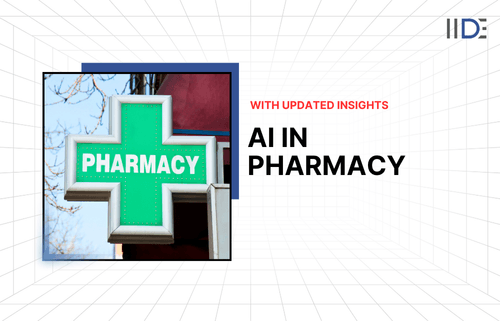
In pharmacies, AI makes daily operations smoother by managing inventory and detecting errors before they happen. Plus, it supports pharmacy education with smart tools and helps keep patients safe by tracking medicine use and predicting side effects. This blend of technology and healthcare is making pharmacy smarter and more efficient for everyone.
By 2025, AI is expected to generate between $350 billion and $410 billion in annual value, revolutionizing how drugs are discovered, developed, and delivered.
AI accelerates drug discovery significantly - reducing the process from about 5-6 years to just one year in some cases, and cutting costs by up to 70% in clinical trials. Companies leveraging AI have seen a 25% faster turnaround in drug development timelines and savings of around $26 billion annually in R&D costs. The market itself is booming, with growth rates forecasted at nearly 43% annually, and the global AI in pharma market projected to reach over $25 billion by 2030, up from around $2.5 billion in 2024.
AI is not just boosting speed and reducing costs; it also enhances the accuracy and safety of new medicines. For example, AI models now predict drug-target interactions and patient responses with over 85% accuracy, helping to tailor treatments to individual patients and improve outcomes. AI-powered tools also streamline regulatory processes by automating documentation and compliance analysis, enabling drugs to reach the market faster and with fewer errors.
Furthermore, AI's impact extends beyond drug discovery. It's revolutionizing supply chain management, manufacturing, marketing, and market access strategies. Leading pharma companies are now adopting generative AI to automate regulatory submissions, improve market predictions, and optimize sales processes - marking a new era of smarter, more efficient healthcare.
Recognising this shift, IIDE - Digital Business School is offering Online AI Course designed for working professionals, entrepreneurs, and freshers who want to master AI skills to accelerate career growth.
IIDE AI course Highlights:
- Hands-on Experience: Work on real-time projects and assignments for every course topic.
- Expert Faculty: Learn from industry veterans with real-world AI experience.
- Scenario-Based Learning: Work on AI projects relevant to your industry to maximise your career prospects.
- Supersessions: Exclusive sessions with CXOs and CMOs covering industry secrets and strategies.
- Industry Certification: Earn a globally recognised certificate to validate your expertise and boost your career.
As AI continues to shape the future of pharma, being well-versed in AI-driven solutions will be a key asset for the next generation of pharma professionals.

Learn Digital Marketing for FREE


Role of Artificial Intelligence in Pharmacy
Artificial intelligence (AI) in the pharmaceutical industry means using smart computer programs and machines to help with medicine discovery, development, and delivery. These AI systems use techniques like machine learning, natural language processing, and automation to analyze huge amounts of data quickly and find useful patterns that humans may miss. This helps solve big problems like the long and costly drug development process and finding the right treatments faster.
For example, AI can predict how well a drug will work or spot possible side effects before testing on humans, making the whole process safer and quicker. A recent industry report shows that AI can shorten drug discovery time by 70% and cut related costs by up to 60%, truly transforming how pharma companies work. Thanks to AI, patients get better, more personalized care, and the pharma industry can meet demand more efficiently.
Practical Applications of AI in Pharmacy and Healthcare
- Drug Repurposing: AI analyzes existing drugs to find new uses for them, speeding up treatment availability for different diseases without starting development from scratch.
- Clinical Trial Optimization: AI helps select the right patient groups for clinical trials by analyzing medical records and genetic data, improving trial success rates and reducing costs.
- Adverse Event Detection: AI monitors patient data and social media for early signs of side effects or adverse drug reactions, enabling quicker responses to potential safety issues.
- Pharmacovigilance: AI automates the collection, processing, and analysis of safety data post-drug launch, making sure medications remain safe over time with fewer manual efforts.
- Regulatory Compliance Automation: AI tools assist in automating documentation, ensuring faster and error-free submissions to regulatory authorities, accelerating drug approvals.
- Supply Chain Transparency and Security: AI tracks and verifies the authenticity of drugs across the supply chain to prevent counterfeiting and ensure safe delivery to patients.
- Market Analysis and Competitive Intelligence: AI scours large datasets, including publications and patent filings, to help companies spot trends, forecast market needs, and stay ahead of competitors.
These applications are helping pharma companies innovate faster, be more agile, and improve patient safety - all while keeping costs under control.
The Growing Impact of AI on Pharmacy and Healthcare
- Efficiency and Speed: AI cuts the drug discovery timeline from 5-6 years to as little as one year, speeding treatments to patients much faster. Clinical trial costs can drop by 70% and timelines shrink by up to 80%, thanks to AI-driven patient selection and trial design.
- Accuracy and Safety: AI models improve drug target prediction with over 85% accuracy, reduce human error in manufacturing through automated quality checks, and enhance patient safety by predicting adverse reactions before trials.
- Profitability and Scalability: AI technologies contribute $350 to $410 billion in annual value to pharma companies by 2025. The AI pharma market is growing at about 43% annually, reaching over $25 billion in 2030 from $2.5 billion in 2024.
- Innovation Boost: Algorithms like AlphaFold predict protein folding with remarkable precision, accelerating the development of drugs for diseases like cancer and Alzheimer's.
- Sustainability: AI optimizes raw material usage and energy consumption in manufacturing, lowering waste and environmental impact.
- Better Patient Care: Personalized medicine powered by AI analyzes genetic and lifestyle data to tailor treatments. AI-driven chatbots improve patient engagement and adherence, leading to better health outcomes.
Discover AI in healthcare, transforming patient diagnosis, treatment personalization, and hospital operations with cutting-edge technology for better outcomes and efficiency.
Real-Life Examples of AI in Pharmacy
Here are 3 real-world examples of pharmaceutical companies effectively leveraging AI:
- AlphaFold by DeepMind (UK): AlphaFold uses AI to predict protein structures with remarkable accuracy, solving a decades-old challenge in biology. This breakthrough accelerates drug discovery by helping researchers understand disease mechanisms quickly, enabling faster development of treatments for conditions like Alzheimer’s and cancer. It shows how AI can dramatically speed up and improve drug design.
- Novartis (Switzerland): Novartis employs AI-driven analytics to monitor manufacturing in real time. Their AI systems detect quality problems early, reducing waste and ensuring consistent production standards. Automating quality control helps Novartis produce safer medicines faster, ensuring patients get reliable treatments every time. This highlights the benefit of AI in optimizing pharma manufacturing.
- Johnson & Johnson (USA): Partnering with IBM Watson Health, J&J uses AI to analyze vast medical datasets and support precision medicine. Their AI-powered surgical robotics venture, Verb Surgical, aims to increase safety and efficiency in minimally invasive surgeries. J&J’s use of AI in drug discovery and clinical development demonstrates how AI can support personalized care and innovation at scale.
These cases reveal how AI is improving drug discovery, manufacturing quality, and personalized healthcare globally, offering valuable lessons on using intelligent technologies to transform pharma operations.
The Road Ahead for AI in the Pharmaceutical Industry
Emerging AI Trends in the Pharmaceutical Industry:
- AI combined with robotics is creating “Labs of the Future” where experiments are designed and run automatically, boosting research speed and precision.
- Generative AI is advancing biologics design, enabling tailored therapies like personalized vaccines and targeted cancer treatments.
- Digital twins - virtual patients or clinical trials are used to simulate drug effects, saving time and reducing trial costs.
- Regulatory bodies are expected to introduce clearer guidelines, making AI tools more accessible and user-friendly for pharma professionals.
- Companies adopting AI report 25% faster drug discovery, 70% reduced trial costs, and notable improvements in marketing effectiveness.
- Despite challenges, firms investing in training, data quality, and compliance find greater AI project success.
Career Opportunities in Pharma AI:
- Roles include data scientists who analyze clinical, genetic, and patient data for enhanced drug development.
- AI strategists design and deploy AI systems for R&D, clinical trials, and manufacturing optimization.
- Automation specialists focus on integrating robotics and AI to streamline pharma operations.
- Experts in digital twin technology create virtual models for safer, efficient trial simulations.
- Growing demand for AI proficiency makes these roles critical for emerging pharma professionals looking to shape the industry’s future.
Ethical Concerns and Risks of AI in Pharmacy
- Job Displacement Risks: Automation may replace routine tasks in drug discovery, manufacturing, and clinical research, potentially affecting 20-30% of pharma jobs. However, it also creates new roles in AI management and data analysis.
- Bias and Fairness Issues: AI systems can inherit biases from historical clinical and demographic data, risking unequal treatment outcomes and misdiagnoses for underrepresented groups.
- Ethical Transparency: AI decisions must be explainable to maintain trust among healthcare providers and patients, avoiding “black box” effects where decision-making lacks clarity.
- Data Privacy & Consent: Large-scale AI applications raise questions about patient data protection, consent protocols, and compliance with data regulations globally.
- Regulatory Compliance Challenges: Pharma firms face evolving regulations for AI usage, requiring robust validation, documentation, and adherence to differing international standards.
- Balancing Automation and Human Oversight: While AI can enhance efficiency, human expertise remains essential to interpret and guide AI outputs responsibly.
- Workforce Reskilling Needs: Transitioning pharma professionals to work alongside AI requires substantial training in digital literacy, ethics, and AI technologies.
Conclusion
The pharmaceutical industry’s transformation through AI is undeniable, having drastically shortened drug development cycles and elevated precision in treatment design. Yet, the real story lies in the continual journey ahead where AI is no longer a tool but a strategic partner that guides decisions, predicts outcomes, and personalizes patient care. This evolution demands that professionals not only embrace these technologies but continuously learn and adapt to emerging AI methodologies.
The future of pharma will belong to those who understand both the power and the responsibility of AI, mastering its use ethically and effectively. By doing so, they will lead the charge in bringing safer, faster, and more affordable medicines to the world, fulfilling the promise of a healthier future fueled by human-AI collaboration.
Want to Know Why 2,50,000+ Students Trust Us?
Dive into the numbers that make us the #1 choice for career success


MBA - Level
Post Graduate in Digital Marketing & Business Strategy

Best For
Fresh Graduates

Mode of Learning
On Campus (Mumbai & Delhi)

Starts from
May 29, 2026

Duration
11 Months
Live & Online
Advanced Online Digital Marketing Course
Best For
Working Professionals
Mode of Learning
Online
Starts from
Apr 6, 2026
Duration
4-6 Months

Online
Professional Certification in AI Strategy
Best For
AI Enthusiasts
Mode of Learning
Online
Duration
5 Months

Offline
Undergraduate Program in Digital Business & Entrepreneurship
Best For
12th Passouts
Mode of Learning
On Campus (Mumbai)
Duration
3 Years
Recent Post
Interesting AI Reads
You May Also Like
AI in pharmacy refers to computer systems that mimic human intelligence to improve drug discovery, personalized medicine, inventory management, and patient care. It analyzes large datasets, predicts drug interactions, helps pharmacists with decision support, and automates routine tasks to improve accuracy and efficiency.
AI accelerates drug discovery by analyzing chemical compounds quickly, predicting their effects, and identifying promising candidates for clinical trials. This reduces time and cost, helping bring new medicines to market faster while improving safety profiles through simulations and data analysis.
Yes, AI uses patient data, including genetics, lifestyle, and medical history, to tailor medication plans. This personalized approach improves drug efficacy, minimizes side effects, and supports pharmacists in choosing the most effective treatments for individual patients.
AI predicts demand based on historical sales, illness trends, and patient profiles, helping pharmacies stock the right medicines. This reduces waste, avoids stockouts, and ensures critical drugs are always available, optimizing supply chains efficiently.
AI tools provide real-time alerts for drug interactions, allergies, and dosage errors by analyzing patient records. This supports pharmacists in making safer and more informed decisions, reducing medication errors and enhancing patient safety.
Key concerns include potential biases in AI algorithms leading to unequal treatment, patient data privacy, transparency in AI decisions, and job displacement. Addressing these requires strict regulatory compliance, ethical AI design, and ongoing monitoring to ensure fairness and security.
AI-powered reminder systems, chatbots, and monitoring tools engage patients with personalized alerts and support, encouraging them to take medications as prescribed, which improves treatment outcomes.
Challenges include data quality and integration, regulatory hurdles, high initial costs, workforce reskilling, and ensuring AI systems are explainable and trustworthy to healthcare professionals and patients.
The future includes advanced AI-driven labs, use of generative AI for novel drug design, digital twins for virtual trials, and expanded roles like AI strategists in pharma. Continuous innovation and ethical adoption will reshape drug discovery, production, and personalized healthcare.


Partner & CEO at One Impact and Digital Marketing Trainer
Kartik is a certified digital marketer and an experienced marketing trainer with a strong passion for imparting knowledge in the field of digital marketing. As a marketing leader, he brings expertise in SEO (Search Engine Optimization), ASO (App Store Optimization), Website Development & much more. His curiosity and commitment to staying updated with industry trends have made him a dedicated digital marketing educator.
Kartik's dedication to teaching has led him to train over 55,000 students globally. His students range from engineers, MBA graduates, start-up entrepreneurs, marketing managers, and even those new to the world of digital marketing. His sessions have reached learners across India, Canada, Dubai, the USA, and other parts of the globe.
Kartik is committed to helping students and professionals alike understand the complexities of digital marketing, empowering them to advance their careers and businesses in this dynamic industry. His deep knowledge and practical approach have earned him a reputation as top 1% digital marketing trainer.