Newly Launched: Post Graduation Program in Digital Marketing & Business Strategy.

Students Centric
Placements Report
Trackable results, real numbers
Reviews
Proven success, real voices
Trainers
Expert-led, Industry-Driven Training
Life at IIDE
Vibrant Spirit student life
Alumni
Successful Journeys, Inspiring Stories
Learning Centre
Webinars
Blogs
Case studies
Live, Interactive Masterclasses
Fresh Insights, quick reads
Real-life, Industry relevant
More
Hire from us
Hire Top Digital Marketing Talent
Work with us
Join Our Team, Make an Impact
Customised Training
Personalised digital marketing training for your company
Refer & earn
Simple, easy rewards
Contact us
Get the answers you need
About us
Know more about IIDE
Explore all course options

FOR FRESH GRADUATES
Post Graduation Program in Digital Marketing & Business Strategy- Ideal for Age: 20–25 Years

Can’t decide? Explore all our
Digital Marketing CoursesTrending

Professional Certification in AI Strategy
- Ideal for AI Enthusiast










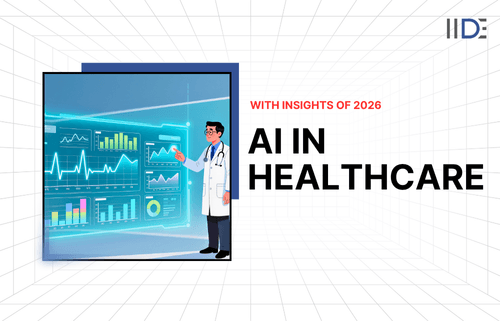
Orginally Written by Kartik Mittal
Updated on Dec 29, 2025
|5,900K+ views
Share on:
AI in healthcare is revolutionizing the industry by enhancing the accuracy of diagnostics, streamlining patient care, and optimizing hospital operations. Real-world applications include AI-powered medical imaging which improves early disease detection, virtual health assistants that support patient engagement, and predictive analytics that anticipate health risks and personalize treatments. Automation is reducing administrative burdens, allowing healthcare professionals to focus more on patient care.
Across pharmaceuticals, AI accelerates drug discovery and precision medicine. With measurable improvements in operational efficiency and patient outcomes, AI is transforming healthcare delivery worldwide, making it more accessible, precise, and sustainable.
Imagine walking into a clinic and finding your doctor reviewing a diagnosis that’s not just based on experience, but also powered by smart algorithms capable of scanning thousands of patient records in seconds. That’s what AI is doing for healthcare, and it’s happening right now - not in some distant future, but in hospitals and startups across India and every major medical center worldwide.
AI isn’t just another buzzword flying around, it’s quietly transforming healthcare with everything from faster drug discoveries to smarter, more accurate scans and personalized patient advice. The numbers speak for themselves. Global investment in AI healthcare is exploding, with forecasts pushing the market past $100 billion by 2030. In India, doctors are teaming up with tech innovators to tackle problems like early cancer detection and improving rural health services.
Here’s the real kicker - those who actually understand how to use AI alongside strategy are leading this shift. Recognising this shift, IIDE - Digital Business School is offering Online AI Course designed for working professionals, entrepreneurs, and freshers who want to master AI skills to accelerate career growth.
IIDE AI course Highlights:
- Hands-on Experience: Work on real-time projects and assignments for every course topic.
- Expert Faculty: Learn from industry veterans with real-world AI experience.
- Scenario-Based Learning: Work on AI projects relevant to your industry to maximise your career prospects.
- Supersessions: Exclusive sessions with CXOs and CMOs covering industry secrets and strategies.
- Industry Certification: Earn a globally recognised certificate to validate your expertise and boost your career.
If you’re curious about AI’s place in healthcare, or considering a career pivot, this is where you want to be - right at that intersection of humanity and technology.
What is AI in Healthcare?
AI in healthcare refers to computer systems and software that can learn from vast sets of medical data, recognize patterns, and help doctors, nurses, and administrators make smarter decisions faster. These intelligent tools don’t just automate routine tasks, they analyze scans with superhuman accuracy, predict which patients might need extra attention, and even make sense of all the written notes and charts that pile up in hospitals every day.
How do they tackle healthcare’s biggest headaches? Machine learning finds hidden links between symptoms and diseases using thousands of clinical records, making diagnoses more reliable and personalized.
Automation streamlines time-intensive chores like scheduling, billing, and forms, letting healthcare staff focus more on patient care than office work.
Natural Language Processing (NLP) helps computers “read” and interpret doctor’s notes and patient histories, cutting down on errors and speeding up care.
Here’s the context - AI adoption in healthcare is at an all-time high, with 63% of industry professionals actively using AI and another 31% piloting new tools as of 2025. Smart technologies are now a go-to for medical imaging, drug research, and workflow automation, and healthcare organizations worldwide are seeing real returns on investment, both in improved patient outcomes and streamlined operations.

Learn Digital Marketing for FREE

AI's Transformative Impact on Healthcare
Predictive Analytics and Forecasting
AI-powered predictive analytics are making life easier for doctors and patients alike. Hospitals now use algorithms to spot which patients are likely to develop complications days or even weeks in advance, helping prevent emergencies before they happen. For instance, AI can flag cases of sepsis in the ICU and help doctors intervene early - sometimes saving lives when minutes matter.
Process Automation and Decision Intelligence
Robotic process automation (RPA) and AI-driven decision tools are taking care of the repetitive work in healthcare - think scheduling, billing, insurance claims, and paperwork. This means medical staff spend less time hunched over administrative tasks and more time caring for patients. Decision intelligence systems also help doctors choose the best course of action by instantly pulling up evidence-based recommendations, so every decision is as informed as possible.
Medical Imaging and Diagnostics
AI has revolutionized medical imaging. Smart algorithms can read and interpret X-rays, MRIs, and other scans faster than humans, often catching disease signs that might have been missed. Some systems now flag early-stage cancer or epilepsy lesions with incredible accuracy, guiding specialists toward quicker, better diagnoses. In India, AI tools are helping radiologists in busy city hospitals and remote clinics alike.
Personalized Medicine and Patient Engagement
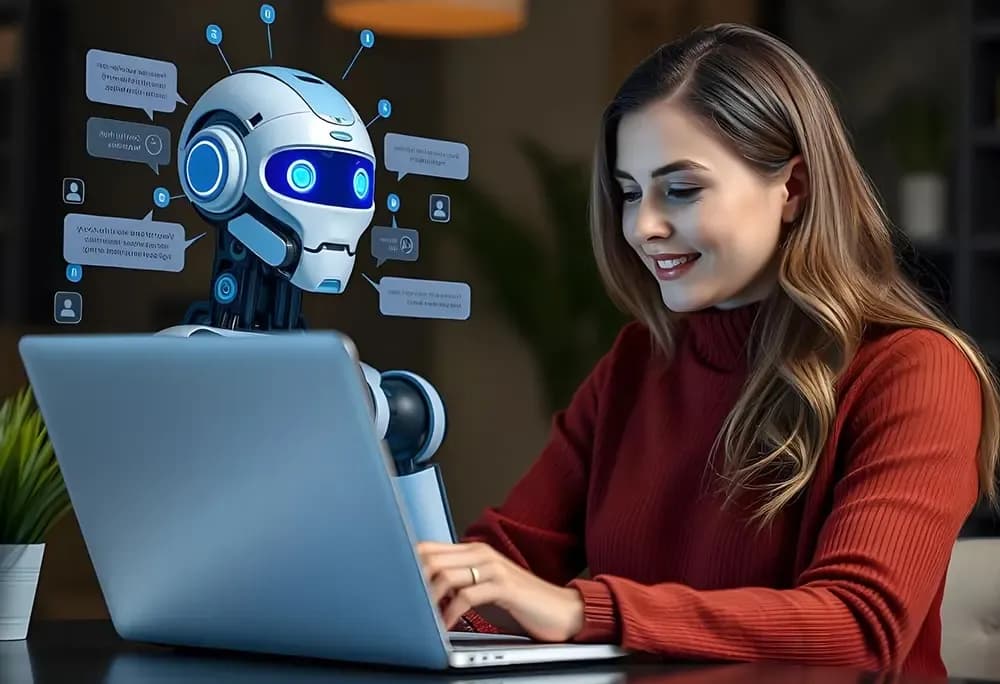
AI doesn’t see every patient as just another case - it can tailor care based on individual health data, lifestyle, and genetics. Personalized medicine powered by AI helps doctors recommend treatments that are most likely to work for each person. Beyond diagnosis, chatbots and virtual assistants answer patient queries 24/7 and guide them on medication reminders or lifestyle changes, improving long-term health outcomes.
Resource Allocation and Sustainability
Keeping hospitals running smoothly is tough, but AI is easing the pressure by forecasting patient admissions, optimizing staff schedules, and managing medical inventories. These systems help stretch limited resources, which is vital in India’s busy public hospitals and global health systems where every minute and rupee counts.
And if you want to dive deep into practical AI skills and actually building smart tools for these real-world problems - IIDE’s AI Course explores how such applications can be turned from ideas to working solutions, using hands-on, real-world datasets. These aren’t just theory, they’re skills you can use to build tomorrow’s health innovations.
Read about how AI in pharmacy is revolutionizing healthcare by speeding up drug discovery to find new medicines faster and personalizing medication to tailor treatments to individual patients.
The Game-Changing Benefits of AI in Healthcare
AI is delivering serious results for the healthcare industry, and not just in theory. Hospitals, clinics, and patients are seeing real-world improvements in how care is delivered and managed every day.
- Efficiency & Productivity: Over 80% of hospitals now use AI to boost efficiency, streamlining everything from patient intake to administrative chores. That means shorter wait times, fewer errors, and medical staff spending more time with patients instead of paperwork.
- Accuracy: AI-driven imaging and diagnostics have increased detection accuracy for diseases like cancer and heart conditions, sometimes outperforming human experts. Early diagnosis means quicker, more targeted treatment - leading to better patient outcomes and fewer complications.
- Cost Savings: AI-powered systems are expected to help the healthcare industry save up to $13 billion by the beginning of 2026, notably by minimizing errors and reducing unnecessary tests and interventions. Chatbots alone are projected to cut global healthcare costs by $3.6 billion this year.
- Speed: Diagnosis and triage processes are getting faster as AI instantly reviews patient data, medical images, and clinical histories. In critical care, these tools can flag high-risk cases in real time, enabling life-saving interventions before emergencies escalate.
- Scalability: AI’s data crunching power means hospitals can handle more patients without sacrificing quality, essential for strained or understaffed health systems. Virtual assistants and automation help manage records and billing for thousands more patients with no drop in service quality.
AI doesn’t just promise a better future for healthcare - it’s creating it right now with more accurate care, leaner operations, and savings for doctors and patients alike.
Notable Examples of AI Shaping Healthcare in 2025
1. K Health (USA) - Virtual Consultations
- Offers millions of Americans AI-driven medical chatbots for instant symptom analysis and virtual doctor appointments.
- Reduces barriers to primary care and speeds up accurate diagnosis - showing how predictive analytics solve real-world access issues.
Insight: Predictive AI in patient-facing apps brings care closer to underserved communities.
2. DeepMind by Google Health (UK) - Advanced Medical Imaging
- Partners with Moorfields Eye Hospital to analyze retinal scans for early disease detection, matching or exceeding top specialist accuracy.
- Supports cancer diagnosis and drug research worldwide, drastically cutting down diagnosis times.
Insight: Specialist AI tools can improve accuracy while making lifesaving diagnostics more widely available.
3. Caption Health (USA) - AI for Ultrasound Imaging
- Empowers clinicians with limited experience to conduct expert-level cardiac ultrasounds, expanding access to critical diagnostics in remote and rural clinics.
- FDA-cleared platform used across U.S. healthcare networks speeds up emergency care where every second counts.
Insight: Automation democratizes high-tech medical diagnostics, boosting healthcare equity in resource-poor regions.
The Future of AI in Healthcare: Emerging Trends and Careers
Emerging Trends
- Generative AI is increasingly used to automate clinical documentation, generate medical reports from patient data, and support drug discovery.
- AI-powered wearables and smart implants transform chronic disease management by continuously monitoring vital signs and predicting flare-ups.
- Ambient AI technologies, such as [translate:voice-activated assistants] and ambient listening, reduce clinician documentation burden, enabling more patient-focused care.
- Personalized medicine evolves by leveraging AI with genetic, lifestyle, and environmental data for precise treatment plans.
- AI integration into telemedicine platforms expands healthcare access, especially in remote and underserved regions.
Career Opportunities
- Rapid AI adoption creates demand for data scientists and analysts skilled in healthcare datasets to extract actionable insights.
- AI strategists and healthcare technology managers lead implementations balancing technological opportunities with clinical needs.
- Automation specialists focusing on clinical workflow transformation become key to improving hospital efficiency.
- AI ethics officers ensuring responsible, transparent, and equitable use of AI in patient care and data management.
- AI software developers building domain-specific tools like diagnostic algorithms, medical chatbots, and telehealth solutions.
- Clinical informatics specialists bridging the gap between healthcare professionals and AI technologies.
- Research scientists advancing machine learning methods tailored for biology, genomics, and drug development.
Challenges and Ethical Concerns of AI in Healthcare
1. Job Displacement
- AI automation may reduce demand for some administrative and diagnostic roles, raising workforce disruption concerns.
- New roles in AI management, oversight, and strategy are emerging, creating demand for reskilling and upskilling.
2. Ethical Issues
- Decision-making transparency is critical; “black-box” AI models with unexplained suggestions undermine trust.
- Over-reliance on AI risks eroding human clinical judgment, especially in complex cases.
- Ensuring fairness and avoiding biases, such as skewed training data underrepresenting vulnerable groups, remains a major challenge.
3. Data Privacy and Security
- Healthcare data sensitivity demands strong privacy measures; breaches can cause significant patient harm and legal issues.
- Strict compliance with regulations like HIPAA and GDPR requires robust governance.
- AI systems increase cybersecurity risks, necessitating advanced safeguards to prevent hacks and misuse.
4. Regulatory and Compliance Complexities
- Rapid AI innovation outpaces clear regulatory frameworks development.
- Scarcity of high-quality, interoperable datasets limits AI effectiveness and generalizability.
- Poorly prepared AI projects can waste resources and erode trust, seen in some high-profile failures.
Conclusion
AI is fundamentally transforming healthcare by enhancing accuracy, efficiency, accessibility, and personalization of care. From predictive analytics and diagnostic imaging to workflow automation and patient engagement, AI tools are reshaping how healthcare providers diagnose, treat, and support patients worldwide. While challenges such as ethical concerns, data privacy, and potential job shifts exist, the benefits of AI in improving patient outcomes and system efficiency are undeniable. As AI continues to evolve, healthcare professionals who understand and can apply AI technologies will be at the forefront of this revolution.
Want to Know Why 2,50,000+ Students Trust Us?
Dive into the numbers that make us the #1 choice for career success


MBA - Level
Post Graduate in Digital Marketing & Business Strategy

Best For
Fresh Graduates

Mode of Learning
On Campus (Mumbai & Delhi)

Starts from
May 29, 2026

Duration
11 Months
Live & Online
Advanced Online Digital Marketing Course
Best For
Working Professionals
Mode of Learning
Online
Starts from
Apr 6, 2026
Duration
4-6 Months
Online
Professional Certification in AI Strategy
Best For
AI Enthusiasts
Mode of Learning
Online
Duration
5 Months
Offline
Undergraduate Program in Digital Business & Entrepreneurship
Best For
12th Passouts
Mode of Learning
On Campus (Mumbai)
Duration
3 Years
Recent Post
Interesting AI Reads
You May Also Like
AI in healthcare refers to using machines and software to mimic human intelligence, helping improve patient diagnosis, treatment, and management.
AI is used to analyze large amounts of clinical data, support diagnoses with precision imaging, automate routine administrative tasks, enable virtual health assistants, and personalize treatment plans based on patient-specific information. It also helps in drug discovery, disease prediction, and chronic disease management through wearable technologies.
Examples include AI-powered imaging systems that detect cancers early, virtual assistants that help patients with appointment booking and symptom checking, robotic surgery aids for precision operations, predictive models for sepsis detection, and AI-driven drug development processes that accelerate new therapies.
Benefits include increased accuracy in diagnosis, faster and more personalized treatments, improved operational efficiency, and lower healthcare costs. Risks involve ethical concerns about bias in AI algorithms, data privacy and security challenges, job displacement fears, and the need for regulatory compliance and transparency to build trust.
Yes, AI tailors treatment plans by analyzing individual patient data to predict the most effective therapies.
AI automates administrative tasks like appointment scheduling, billing, and medical documentation, reducing workload and errors.
While AI improves accuracy and safety, ethical concerns and data privacy need continuous oversight and regulation.
Professionals can build skills by focusing on data science, machine learning, AI ethics, automation, and healthcare industry challenges. Hands-on experience with real-world healthcare datasets and interdisciplinary collaboration enhances understanding and application of AI technologies.
Degrees in computer science, AI, or healthcare management with AI specialization are common pathways to enter this field.


Partner & CEO at One Impact and Digital Marketing Trainer
Kartik is a certified digital marketer and an experienced marketing trainer with a strong passion for imparting knowledge in the field of digital marketing. As a marketing leader, he brings expertise in SEO (Search Engine Optimization), ASO (App Store Optimization), Website Development & much more. His curiosity and commitment to staying updated with industry trends have made him a dedicated digital marketing educator.
Kartik's dedication to teaching has led him to train over 55,000 students globally. His students range from engineers, MBA graduates, start-up entrepreneurs, marketing managers, and even those new to the world of digital marketing. His sessions have reached learners across India, Canada, Dubai, the USA, and other parts of the globe.
Kartik is committed to helping students and professionals alike understand the complexities of digital marketing, empowering them to advance their careers and businesses in this dynamic industry. His deep knowledge and practical approach have earned him a reputation as top 1% digital marketing trainer.