Application Deadline for 3-Year UG Program closes on 31st Aug. Book a Counselling to know more

Students Centric
Placements Report
Trackable results, real numbers
Reviews
Proven success, real voices
Trainers
Expert-led, Industry-Driven Training
Life at IIDE
Vibrant Spirit student life
Alumni
Successful Journeys, Inspiring Stories
Learning Centre
Webinars
Blogs
Case studies
Live, Interactive Masterclasses
Fresh Insights, quick reads
Real-life, Industry relevant
More
Hire from us
Hire Top Digital Marketing Talent
Work with us
Join Our Team, Make an Impact
Customised Training
Personalised digital marketing training for your company
Refer & earn
Simple, easy rewards
Contact us
Get the answers you need
About us
Know more about IIDE
Explore all course options

FOR FRESH GRADUATES
Post Graduation Program in Digital Marketing & Business Strategy- Ideal for Age: 20–25 Years

Can’t decide? Explore all our
Digital Marketing Courses
COMPARE ALL 3 PROGRAMSOnline & Offline
Explore Top AI CoursesIndustry-Aligned TRACKMost Popular
UG Program in Digital Business & Entrepreneurship- Ideal for 12th Pass out / FY Degree Student

PARTNER PROGRAMS







Can’t decide? Explore all
BBA In Digital Marketing Colleges
Orginally Written by Aditya Shastri
Updated on Dec 12, 2025
Share on:


Founded over 150 years ago, the Tata Group is one of India's most respected and diversified conglomerates, spanning a range of industries from steel to software, tea to Tata Motors. But how does such a legacy brand stay relevant in 2026?
Let’s break down the SWOT analysis of Tata Group to understand what keeps it strong, where it struggles, and what it needs to look out for. A must-read for every business student and entrepreneur aiming to learn from legacy brand strategies.
About Tata Group
With a presence in more than 100 countries and over 29 publicly listed enterprises, the Tata Group is more than just a brand. It’s a symbol of India’s industrial ambition. Established by Jamsetji Tata in 1868, it pioneered India’s industrial revolution and continues to dominate with brands like Tata Steel, Tata Motors, Tata Consultancy Services (TCS), Titan, and Tata Power. Its tagline “Leadership with Trust” is reflective of its century-old legacy.
| Attribute | Information |
|---|---|
| Company Name | Tata Group |
| Founded Year | 1868 |
| Website URL | www.tata.com |
| Industries Served | Steel, Automotive, IT, Consumer Goods, Telecom |
| Geographic Areas Served | Global, 100+ countries |
| Revenue (2025) | $140 Billion |
| Net Income (2025) | $8 Billion |
| Employees (2025) | 950000 |
| Main Competitors | Reliance, Adani Group, Mahindra Group |

Is Digital Marketing the Right Career for You?
Find out in a free 45-min masterclass · Career paths, roles and growth explained · By Karan Shah, Founder & CEO, IIDE

Is Digital Marketing the Right Career for You?
Find out in a free 45-min masterclass · Career paths, roles and growth explained · By Karan Shah, Founder & CEO, IIDE
SWOT Analysis of Tata Group
1. Tata Group's Strengths - What Powers the Giant
Unmatched Brand Legacy and Trust:
- With a 155-year legacy, Tata is one of the most trusted brands in India and globally.
- Tata’s name alone adds a layer of integrity and value in any market it enters.
Diversified Business Portfolio:
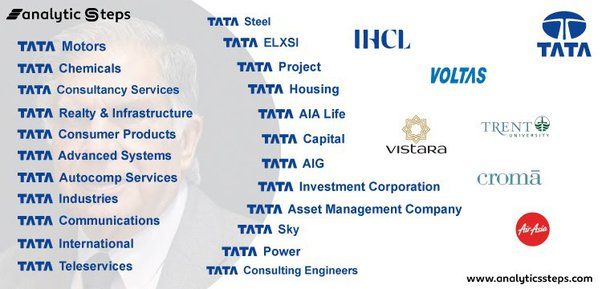
- From steel to software, Tata operates in 10+ key industries.
- This spread cushions it against economic shocks in any one sector.
- For instance, when Tata Steel faces market dips, TCS and Titan help keep group profits stable.
TCS: The Group’s Crown Jewel:
- Tata Consultancy Services (TCS) remains one of the most valuable IT firms in the world.
- It generated over 70% of Tata Sons’ total profits in 2024 and has clients like Citibank, British Airways, and Google.
Global Footprint through Acquisitions:
- Iconic buys like Jaguar Land Rover (UK), Tetley (UK), and Corus Steel (Netherlands) have helped Tata go global while strengthening its product mix.
Strong Leadership in Sustainability:
- Tata Power is investing heavily in solar and wind; Tata Steel is ranked among the top 10 global sustainable steelmakers, making the group ESG-ready.
Innovation and R&D Culture:
- Tata Elxsi, Tata Motors, and even Tata Neu (its digital super app) showcase the group’s pivot to AI, electric mobility, and tech integration.
SWOT analysis of TCS sheds light on how a leading Tata subsidiary leverages IT dominance and global scale, offering useful parallels for Tata Group’s tech-driven strengths.
2. Tata Group's Weaknesses - What’s Holding It Back
High Dependence on TCS for Profitability:
- While TCS is a strength, it’s also a vulnerability.
- The group’s financial health is heavily reliant on this one business vertical, which exposes Tata to IT sector fluctuations.
Underperformance in Telecom & Retail:
- Ventures like Tata Docomo and Tata Teleservices failed to gain traction, resulting in major financial setbacks.
- Similarly, Tata Neu hasn’t yet rivalled Amazon or Reliance Digital.
Volatility in Steel and Auto Divisions:
- Tata Steel and Tata Motors are cyclical businesses.
- Their performance dips with changes in commodity prices, regulatory policies, or global recessions.
Slower Pace in FMCG Growth:
- Despite launching Tata Sampann and Himalayan water, Tata Consumer Products has yet to match the scale and visibility of ITC or HUL.
Complex Integration from Acquisitions:
- Managing Air India’s turnaround, for instance, has been costly and time-consuming.
- Mergers often take years to generate ROI, creating operational delays.
Capital-Heavy Operations:
- Large infrastructure projects (power, steel, auto) require massive capital infusions, which can strain cash flow and reduce agility in a fast-paced market.
Tata Group’s Opportunities: Paths to Future Growth
Electric Vehicles Boom:
- With over 70% share in India’s EV market, Tata Motors is set to ride the wave.
- The Nexon EV and upcoming Punch EV are expected to dominate the budget and mid-range EV segments.
Digital Expansion with Tata Neu:
- With the rise of unified super apps, Tata Neu is Tata’s response to Reliance's Jio and Amazon’s dominance.
- It connects BigBasket, Croma, 1mg, Air India, and more under one ecosystem.
Reviving India’s Aviation Industry:
- Post the Air India acquisition and merger with Vistara, and Tata could become India’s largest airline operator, bringing pricing power and brand leverage in aviation.
Expanding in Tier 2 and Rural Markets:
- Brands like Tata Salt, Tata Tea, and affordable vehicles like Tata Tiago are well-positioned to capture the aspirations of emerging India.
Green Energy Investments:
- Tata Power’s plan to add 10 GW of solar and wind by 2030 aligns with national climate goals and global investor sentiment on ESG.
Strategic Global Collaborations:
- Partnerships with Airbus (defence), Microsoft (cloud), and BlackRock (infra) are opening up high-margin and future-ready sectors for the group.
Tata Group’s Threats: Challenges on the Horizon
Aggressive Rivals - Reliance & Adani:
- These conglomerates are fast expanding across Tata-dominated sectors such as EVs, retail, and energy, often with more capital and faster execution.
Geopolitical Uncertainty & Global Slowdowns:
- Tata’s global exposure (especially TCS and JLR) makes it vulnerable to recessions, protectionism, and currency fluctuations in markets like the US, UK, and EU.
Consumer Behaviour Shifts:
- The Gen Z cohort prefers fast, digital-first, and purpose-driven brands. Tata must adapt their communication and UX to stay relevant.
Cybersecurity & Compliance Risks:
- Tata’s growing tech stack (TCS, Tata Neu) also brings vulnerabilities.
- A single data breach can damage years of brand equity and trust.
Tighter Environmental Regulations:
- With industries like steel and power facing stricter emission laws, Tata must invest heavily in green upgrades or risk penalties and loss of licenses.
Supply Chain & Logistics Disruptions:
- From chip shortages affecting EVs to international freight delays for steel, Tata’s global value chains remain exposed to ongoing volatility.
SWOT analysis of Tata Steel explores how legacy reputation and global spread shape its positioning, which reflects the broader industrial core of Tata Group.
SWOT Summary Table - Tata Group

IIDE Student Takeaway, Conclusion & Recommendations
Tata Group’s SWOT analysis reveals the company’s significant global trust and market leadership as key strengths, which remain crucial to its competitive edge. However, its sprawling business portfolio and heavy reliance on the Indian market present operational complexities that hinder agility and rapid innovation.
Despite these challenges, Tata has substantial opportunities, particularly in electric vehicles (EVs) and renewable energy, areas that align well with global ESG trends in 2026.
Core Tension:
The core tension for Tata lies in balancing its legacy strengths, such as brand trust and market leadership, with the need to innovate rapidly in tech-driven sectors. While its dominance in traditional sectors like steel and automotive remains strong, its reliance on Indian markets limits its global adaptability.
Additionally, competitors like Reliance and Adani are diversifying quickly, adding pressure on Tata to maintain its market leadership and innovation capabilities.
Actionable Recommendations:
Accelerate EV Adoption: Tata should prioritise the adoption of electric vehicle technologies and expand its renewable energy portfolio to capitalise on the global shift toward sustainable energy and transportation solutions.
Focus on Digital Services: Invest in cloud computing and digital services to enhance its tech offerings and address its current tech lag.
Strategic Acquisitions and Partnerships: Form partnerships or acquisitions in tech-driven sectors to boost innovation and expand its capabilities, particularly in AI and automation.
Diversify Supply Chains: Proactively diversify supply chain geographies to mitigate geopolitical risks and disruptions, especially affecting Tata Motors and Tata Steel.
Future Outlook:
Tata Group’s future in 2026 looks promising, provided it navigates its weaknesses and external threats effectively. By expanding globally beyond traditional Indian markets, embracing technology-driven growth, and prioritising sustainability, Tata can maintain its global leadership.
For business students and entrepreneurs, Tata’s strategic approach exemplifies the importance of leveraging legacy strengths while adapting to modern challenges.
Its success will rely on agility, risk management, and a commitment to continuous innovation.
Want to Know Why 5,00,000+ Students Trust Us?
Dive into the numbers that make us the #1 choice for career success



MBA - Level
Post Graduate in Digital Marketing & Business Strategy

Best For
Fresh Graduates

Mode of Learning
On Campus (Mumbai & Delhi)

Starts from
Oct 1, 2026

Duration
11 Months

Live & Online
Advanced Online Digital Marketing Course
Best For
Working Professionals
Mode of Learning
Online
Starts from
Sep 4, 2026
Duration
4-6 Months

Online
Professional Certification in AI Strategy
Best For
AI Enthusiasts
Mode of Learning
Online
Starts from
Sep 8, 2026
Duration
5 Months

Online or Offline
Top AI Courses to Make You Future Ready!
Best For
AI Enthusiasts
Mode of Learning
2–5 Month Program
Starts from
Sep 8, 2026
Duration
Flexiable

On Campus
Advanced Certification in Artificial Intelligence
Best For
AI Enthusiasts
Mode of Learning
On Campus (Mumbai)
Starts from
Sep 1, 2026
Duration
3 Months
Offline
Undergraduate Program in Digital Business & Entrepreneurship
Best For
12th Passouts
Mode of Learning
On Campus (Mumbai)
Starts from
Aug 19, 2026
Duration
3 Years
Offline
Degree In 2026 ≠ Enough Degree + Digital Skills = Future-Ready
Best For
12th Passouts
Mode of Learning
At IIDE Campus
Starts from
Aug 19, 2026
Duration
3 Years
Recent Post
The Tata Group is one of India's largest and most respected conglomerates, known for its diverse presence in industries like steel, automobiles, IT, telecommunications, hospitality, and consumer products. It owns iconic companies like Tata Steel, Tata Motors, TCS, and Taj Hotels.
As of 2025, the chairman of Tata Sons, the holding company of the Tata Group, is Natarajan Chandrasekaran, who has held the position since 2017.
Major companies under the Tata Group include:
- Tata Consultancy Services (TCS) - IT services
- Tata Motors - Automobiles
- Tata Steel - Steel manufacturing
- Tata Power - Energy
- Tata Consumer Products - Beverages and food
- Titan Company - Watches and jewellery
- Tata Communications - Telecom
No, the Tata Group has a global footprint, operating in more than 100 countries across six continents. It owns international brands like Jaguar Land Rover (UK) and Tetley Tea (UK), and has numerous overseas ventures through TCS, Tata Steel Europe, and more.
The Tata Group stands out for its strong ethical values, corporate governance, and commitment to philanthropy. Over 60% of Tata Sons' ownership is held by charitable trusts, like the Tata Trusts, which invest heavily in education, health, and rural development across India.
Tata Group has a wide range of companies under its umbrella, including:
- Tata Steel
- Tata Motors
- Tata Consultancy Services
- Tata Power
- Tata Chemicals
- Tata Global Beverages
- Taj Hotels
- Tata Capital
- Tata Communications
- Tata Digital
Yes, Tata Group operates in over 100 countries, with key international operations in sectors like steel (Tata Steel), automotive (Jaguar Land Rover), IT services (TCS), telecommunications, and hospitality. It has a significant presence in the UK, the US, Europe, and several emerging markets.
The Tata Group is deeply committed to corporate social responsibility (CSR). It has contributed to areas such as education, healthcare, rural development, infrastructure, and environmental conservation through its various philanthropic initiatives, often spearheaded by the Tata Trusts.
Tata Group’s impact in the UK is most notable through its acquisition of Jaguar Land Rover, which is one of the UK's largest automotive companies. Tata Steel also has a strong presence in the UK through its steel manufacturing plants, contributing to employment and the industrial economy.

Lead Trainer & Business Development Head at IIDE
Aditya Shastri leads the Business Development segment at IIDE and is a seasoned Content Marketing expert. With over a decade of experience, Aditya has trained more than 20,000 students and professionals in digital marketing, collaborating with prestigious institutions and corporations such as Jet Airways, Godrej Professionals, Pfizer, Mahindra Group, Publicis Worldwide, and many others. His ability to simplify complex marketing concepts, combined with his engaging teaching style, has earned him widespread admiration from students and professionals alike.
Aditya has spearheaded IIDE’s B2B growth, forging partnerships with over 40 higher education institutions across India to upskill students in digital marketing and business skills. As a visiting faculty member at top institutions like IIT Bhilai, Mithibai College, Amity University, and SRCC, he continues to influence the next generation of marketers.
Apart from his marketing expertise, Aditya is also a spiritual speaker, often traveling internationally to share insights on spirituality. His unique blend of digital marketing proficiency and spiritual wisdom makes him a highly respected figure in both fields.