
Students Centric
Placements Report
Trackable results, real numbers
Reviews
Proven success, real voices
Trainers
Expert-led, Industry-Driven Training
Life at IIDE
Vibrant Spirit student life
Alumni
Successful Journeys, Inspiring Stories
Learning Centre
Webinars
Blogs
Case studies
Live, Interactive Masterclasses
Fresh Insights, quick reads
Real-life, Industry relevant
More
Hire from us
Hire Top Digital Marketing Talent
Work with us
Join Our Team, Make an Impact
Customised Training
Personalised digital marketing training for your company
Refer & earn
Simple, easy rewards
Contact us
Get the answers you need
About us
Know more about IIDE
Explore all course options

FOR FRESH GRADUATES
Post Graduation Program in Digital Marketing & Business Strategy- Ideal for Age: 20–25 Years

Can’t decide? Explore all our
Digital Marketing Courses
COMPARE BOTH OUR PROGRAMSOffline
Explore Top AI CoursesIndustry-Aligned TRACKMost Popular
UG Program in Digital Business & Entrepreneurship- Ideal for 12th Pass out / FY Degree Student

PARTNER PROGRAMS





Can’t decide? Explore all
BBA In Digital Marketing Colleges
Orginally Written by Aditya Shastri
Updated on Oct 15, 2025
Share on:


In 2025, Revlon remains a recognisable name in cosmetics, though it faces serious headwinds. Why does Revlon still matter today? Because its century-old brand, global footprint, and product heritage give it a fighting chance.
In this blog, you’ll see how Revlon’s strengths, weaknesses, opportunities, and threats shape its path forward. You’ll gain insights you can apply to other beauty brands or your own business strategies.
Before diving into the article, I would like to inform you that the research and initial analysis for this piece were conducted by Saumya Singh. She is a current student in IIDE's PG in Digital Marketing, March Batch 2025.
If you found this helpful, feel free to reach out to her to send a quick note of appreciation for her fantastic research. She will appreciate the kudos!
About Revlon
- Founded: March 1, 1932, in New York City by Charles & Joseph Revson and chemist Charles Lachman
- Global reach: Products sold in approximately 150 countries
- Recent turning point: In 2022, Revlon filed for Chapter 11 bankruptcy to reorganize massive debts; it emerged in 2023 under restructuring.
- Slogan / Positioning: While Revlon doesn’t currently promote a universally recognised slogan globally, its historic brand identity emphasised “color, boldness, and beauty for all.”

Is Digital Marketing the Right Career for You?
Find out in a free 45-min masterclass · Career paths, roles and growth explained · By Karan Shah, Founder & CEO, IIDE

Is Digital Marketing the Right Career for You?
Find out in a free 45-min masterclass · Career paths, roles and growth explained · By Karan Shah, Founder & CEO, IIDE
Applying the SWOT Framework to Revlon
SWOT - Strengths, Weaknesses, Opportunities, and Threats, serves as a strategic lens for evaluating Revlon’s brand drivers, operational challenges, market prospects, and risk factors as the company navigates 2025 and beyond.
Strategic Importance of SWOT Analysis in 2025
- The beauty and cosmetics sector is marked by intense competition and rapid transformation, with trends such as clean beauty, indie brands, and direct-to-consumer models reshaping the landscape.
- Revlon’s established legacy offers brand equity, but also presents challenges in agility and adaptation, making strategic evolution essential for continued relevance.
- A clear understanding of internal strengths and weaknesses enables Revlon to reinforce successful initiatives and address areas requiring improvement.
- Proactive assessment of external opportunities and threats empowers Revlon to refine its product portfolio, market approach, and long-term strategy.
- In an environment of economic volatility and evolving regulations - including stricter ingredient standards and sustainability requirements - SWOT analysis is vital for informed decision-making.
SWOT Analysis of Revlon
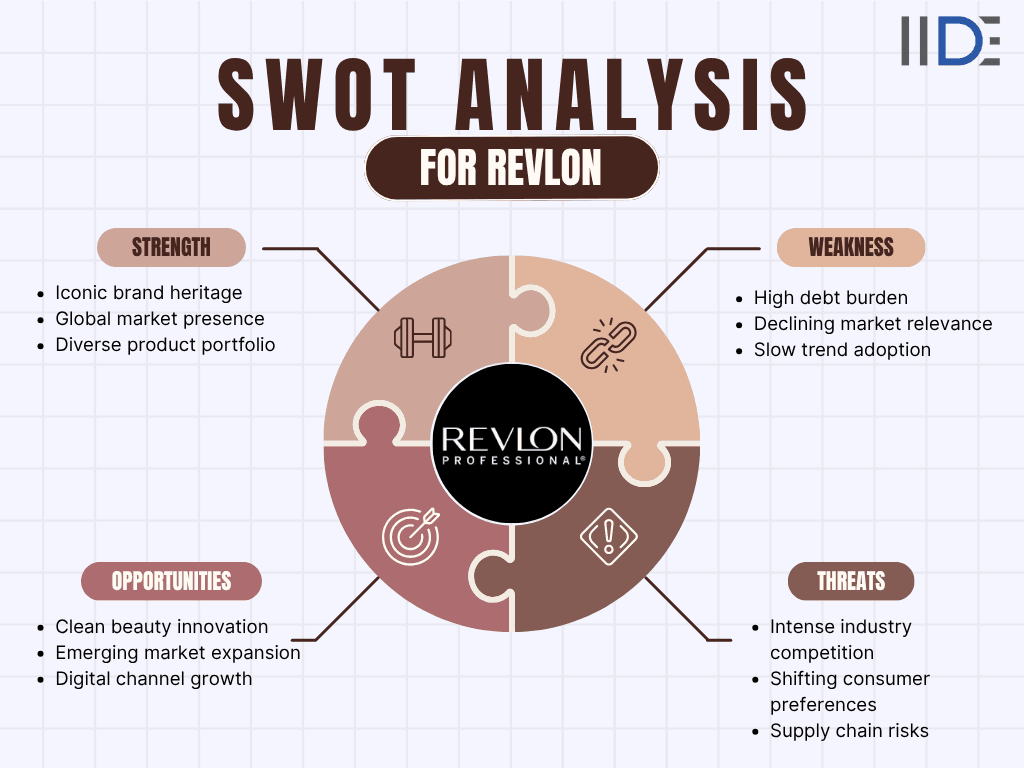
The SWOT Analysis of Revlon highlights the brand’s current position in the global beauty and cosmetics market as of 2025. It provides a comprehensive look at the company’s internal strengths and weaknesses, as well as the external opportunities and threats shaping its future.
Strengths of Revlon: How the Beauty Icon Wins in 2025
Revlon has firmly established itself as a leading brand in the global cosmetics and beauty market, thanks to its strong brand heritage, diverse product portfolio, and extensive distribution network. Let’s explore how Revlon’s strengths position it for continued success in 2025.
1. Brand Heritage & Recognition
- Over a century-long presence in the beauty industry, creating high consumer trust and loyalty.
- Iconic products like Super Lustrous Lipstick and nail polishes are household staples worldwide.
- Positive brand perception reinforced through celebrity endorsements and global marketing campaigns.
- Consistent consumer recall across generations strengthens market relevance and credibility.
2. Market Leadership & Global Presence
- Operates in approximately 150 countries, reaching diverse consumer markets.
- Strong retail and e-commerce networks ensure products are widely accessible.
- Competes with global giants like L’Oréal and Estée Lauder while maintaining a recognizable market position.
3. Diverse Product Portfolio
- Offers products across makeup, skincare, haircare, and fragrances, catering to multiple beauty segments.
- Signature lines and seasonal collections appeal to different demographics and trends.
- Reduces dependency on any single product category while enabling innovation.
4. Dealer/Distributor Ecosystem & Training Programs
- Robust dealer network ensures widespread product availability.
- Investments in channel partner training enhance customer experience.
- Trained partners provide accurate product guidance, increasing brand loyalty.
5. Product Quality & Positioning
- Known for rich colors, smooth textures, and long-lasting formulas.
- Customer satisfaction with makeup setting and finish reinforces brand trust.
- Strong positioning differentiates Revlon from competitors in a crowded market.
Weaknesses of Revlon: Challenges in a Shifting Market
While Revlon remains a globally recognized beauty brand, several internal weaknesses must be addressed to stay competitive in 2025. These challenges are crucial for understanding the brand’s vulnerability and planning for future growth.
1. Heavy Debt Burden / Financial Instability
- Revlon carries billions in long-term debt, which has impacted its financial flexibility.
- Debt obligations limit investments in innovation, marketing, and expansion.
- Financial instability increases vulnerability to economic downturns and market disruptions.
2. Declining Market Share and Relevance
- Revlon’s dominance has weakened compared to agile indie and digitally native competitors.
- Slower adoption of trends such as clean beauty reduces appeal to younger consumers.
- Declining market share impacts profitability and long-term growth potential.
3. Insufficient Innovation / Lag in Clean Beauty
- Limited focus on organic, cruelty-free, or sustainable formulations compared to competitors.
- Slow product innovation leaves the brand behind in emerging beauty trends.
4. Brand Perception as “Dated”
- Marketing and product positioning may seem antiquated to Gen Z audiences.
- Weak social media engagement further reduces relevance among younger consumers.
5. Vulnerability to Competitive Pressures
- Rival brands like L’Oréal, Estée Lauder, and niche indie companies exert pressure on pricing and market share.
- Emerging trends and fast-moving competitors highlight the need for strategic adaptation.
For a broader perspective on how leading beauty retailers navigate similar challenges and opportunities, explore the SWOT analysis of Sephora. Explore how another industry giant approaches innovation, competition, and evolving consumer trends alongside Revlon.
Opportunities for Revlon: Embracing the Future of Beauty Trends
Revlon has numerous opportunities to explore in 2025, particularly as global consumer preferences and beauty trends evolve. Leveraging these trends can help Revlon expand its reach, engage younger audiences, and drive future growth.
1. Clean & Sustainable Beauty
- A major opportunity for Revlon lies in innovating products with organic, cruelty-free, and sustainable formulations.
- With consumers increasingly demanding transparency and environmentally friendly products, Revlon can launch new skincare, makeup, and haircare lines that meet these expectations.
- Examples include refillable packaging, natural ingredient ranges, and eco-conscious product launches that align with the growing sustainability movement.
2. Emerging Markets Expansion
- While Revlon has a global presence, its growth potential in India, Southeast Asia, Latin America, and Africa remains significant.
- Targeting these high-growth markets with localized product offerings and campaigns can strengthen market penetration and revenue.
3. Digital & D2C Channels
- With Gen Z and Millennial consumers favoring online shopping and social commerce, Revlon can boost its direct-to-consumer channels.
- Enhanced e-commerce platforms, social media campaigns, and influencer partnerships can drive engagement and sales.
4. Male Grooming & Niche Segments
- Expanding into men’s skincare, grooming, and niche beauty segments provides untapped revenue opportunities.
- Tailored product lines and marketing strategies can attract new consumer bases and diversify revenue streams.
Threats to Revlon: Navigating Industry Challenges in 2025
Revlon faces several external threats that could impact its growth, market share, and brand reputation. Understanding these threats helps the company strategize effectively and safeguard its position in the competitive beauty industry.
1. Intense Competition
- Global giants like L’Oréal, Estée Lauder, and Coty challenge Revlon across makeup, skincare, and haircare segments.
- Agile indie and digitally native brands capture younger consumers, reducing Revlon’s market share.
- Competing brands often innovate faster in clean beauty and niche product lines.
2. Shifting Consumer Preferences
- Rising demand for sustainable, cruelty-free, and organic products threatens legacy beauty brands.
- Revlon’s traditional formulations may appear less appealing to Gen Z and conscious consumers.
- Failure to adapt quickly could reduce brand relevance and loyalty.
3. Supply Chain & Inflation Pressures
- Fluctuating costs of raw materials and logistics disrupt production and margins.
- Currency volatility and global trade challenges increase operational risks.
4. Regulatory & Compliance Risks
- Stricter ingredient, safety, and labeling regulations in key markets can limit product offerings.
- Environmental laws and sustainability mandates may require costly adjustments.
5. Economic & Geopolitical Risks
- Global economic downturns may reduce discretionary spending on cosmetics.
- Geopolitical tensions and trade barriers can affect Revlon’s global distribution efficiency.
IIDE Student Takeaway, Conclusion & Recommendations
Revlon’s SWOT analysis highlights a brand with enduring strengths but facing critical challenges in a rapidly evolving beauty industry. Its brand heritage, global presence, diverse portfolio, and loyal consumer base provide substantial leverage in the competitive cosmetics market.
Core Tension: While Revlon’s legacy and recognition secure its current relevance, the shift toward clean, sustainable, and digitally-driven beauty poses a challenge to its traditional offerings and slower innovation.
Future Outlook: To sustain growth, Revlon must adapt to emerging consumer trends, invest in digital and direct-to-consumer channels, and innovate in sustainable and niche beauty segments while maintaining brand equity.
Recommendations for Revlon’s Growth in 2025
1. Clean & Sustainable Innovation:
Revlon should accelerate the development of product lines featuring organic, cruelty-free, and eco-friendly formulations. By prioritizing clean beauty and transparent ingredient sourcing, the brand can capture the loyalty of Gen Z and environmentally conscious consumers, while also aligning with global sustainability trends and regulatory expectations.
2. Digital & D2C Expansion:
Strengthening Revlon’s digital presence is essential. Investing in robust e-commerce platforms, social commerce initiatives, and influencer partnerships will help boost customer engagement and drive online sales. Direct-to-consumer (D2C) strategies can also provide valuable consumer insights and foster deeper brand relationships in a crowded beauty market.
3. Emerging Market Focus:
Revlon should target high-growth regions such as India, Southeast Asia, and Latin America, where rising disposable incomes and evolving beauty preferences present significant opportunities. Tailoring products and marketing strategies to local cultures and trends will help expand the brand’s reach and diversify revenue streams.
4. Male Grooming & Niche Segments:
Expanding into male grooming and other under-served niche categories can open new avenues for growth. By introducing specialized offerings - such as men’s skincare, haircare, and targeted beauty solutions. Revlon can tap into emerging markets and further diversify its product portfolio for long-term resilience.
Conlusion
By leveraging its core strengths such as brand heritage, innovation, and a broad product portfolio while actively adapting to evolving consumer preferences and embracing digital transformation, Revlon is well-positioned to revive growth and secure its relevance in the global beauty market for 2025 and beyond.
The company’s renewed focus on revitalizing core brands, expanding e-commerce and direct-to-consumer channels, and optimizing distribution networks will help it reach new audiences and respond to shifting market dynamics.
Strategic investments in clean beauty, sustainable packaging, and digital marketing, along with targeted expansion in high-growth regions, will further strengthen Revlon’s competitive edge.
By executing these initiatives with discipline and agility, Revlon can not only overcome current challenges but also build a foundation for long-term, sustainable success in the ever-evolving beauty industry.
Want to Know Why 2,50,000+ Students Trust Us?
Dive into the numbers that make us the #1 choice for career success



MBA - Level
Post Graduate in Digital Marketing & Business Strategy

Best For
Fresh Graduates

Mode of Learning
On Campus (Mumbai & Delhi)

Starts from
Oct 1, 2026

Duration
11 Months

Live & Online
Advanced Online Digital Marketing Course
Best For
Working Professionals
Mode of Learning
Online
Starts from
-
Duration
4-6 Months

Offline
Top AI Courses to Make You Future Ready!
Best For
AI Enthusiasts
Mode of Learning
2–5 Month Program
Starts from
Sep 29, 2026
Duration
Flexiable

On Campus
Advanced Certification in Artificial Intelligence
Best For
AI Enthusiasts
Mode of Learning
On Campus (Mumbai)
Starts from
Sep 29, 2026
Duration
3 Months
Offline
Undergraduate Program in Digital Business & Entrepreneurship
Best For
12th Passouts
Mode of Learning
On Campus (Mumbai)
Starts from
-
Duration
3 Years

Offline
Degree In 2026 ≠ Enough Degree + Digital Skills = Future-Ready
Best For
12th Passouts
Mode of Learning
At IIDE Campus
Starts from
-
Duration
3 Years
Recent Post

Lead Trainer & Business Development Head at IIDE
Aditya Shastri leads the Business Development segment at IIDE and is a seasoned Content Marketing expert. With over a decade of experience, Aditya has trained more than 20,000 students and professionals in digital marketing, collaborating with prestigious institutions and corporations such as Jet Airways, Godrej Professionals, Pfizer, Mahindra Group, Publicis Worldwide, and many others. His ability to simplify complex marketing concepts, combined with his engaging teaching style, has earned him widespread admiration from students and professionals alike.
Aditya has spearheaded IIDE’s B2B growth, forging partnerships with over 40 higher education institutions across India to upskill students in digital marketing and business skills. As a visiting faculty member at top institutions like IIT Bhilai, Mithibai College, Amity University, and SRCC, he continues to influence the next generation of marketers.
Apart from his marketing expertise, Aditya is also a spiritual speaker, often traveling internationally to share insights on spirituality. His unique blend of digital marketing proficiency and spiritual wisdom makes him a highly respected figure in both fields.