
Students Centric
Placements Report
Trackable results, real numbers
Reviews
Proven success, real voices
Trainers
Expert-led, Industry-Driven Training
Life at IIDE
Vibrant Spirit student life
Alumni
Successful Journeys, Inspiring Stories
Learning Centre
Webinars
Blogs
Case studies
Live, Interactive Masterclasses
Fresh Insights, quick reads
Real-life, Industry relevant
More
Hire from us
Hire Top Digital Marketing Talent
Work with us
Join Our Team, Make an Impact
Customised Training
Personalised digital marketing training for your company
Refer & earn
Simple, easy rewards
Contact us
Get the answers you need
About us
Know more about IIDE
Explore all course options

FOR FRESH GRADUATES
Post Graduation Program in Digital Marketing & Business Strategy- Ideal for Age: 20–25 Years

Can’t decide? Explore all our
Digital Marketing Courses
COMPARE ALL 3 PROGRAMSOnline & Offline
Explore Top AI CoursesIndustry-Aligned TRACKMost Popular
UG Program in Digital Business & Entrepreneurship- Ideal for 12th Pass out / FY Degree Student

PARTNER PROGRAMS







Can’t decide? Explore all
BBA In Digital Marketing Colleges
Orginally Written by Aditya Shastri
Updated on Jan 19, 2026
Share on:


Patagonia, founded in 1973 by Yvon Chouinard, is a global leader in sustainable outdoor apparel, known for its high-quality products and deep commitment to environmental activism.
Serving millions of eco-conscious customers worldwide, it has redefined how businesses combine profit with purpose. In 2026, Patagonia continues to lead in sustainability innovation and circular fashion.
How does it maintain its competitive edge amid increasing market competition and evolving consumer expectations? This analysis offers entrepreneurs and business students key insights into Patagonia’s strategic positioning and growth opportunities in 2026.
Before moving forward, I would like to inform that the research and analysis of this content is done by Arnav Pathak, who is a student of IIDE's Online Digital Marketing Course, May Batch 2025. If you find this content interesting, reach out to Arnav to appreciate his hardwork - he will be over the moon.
About Patagonia
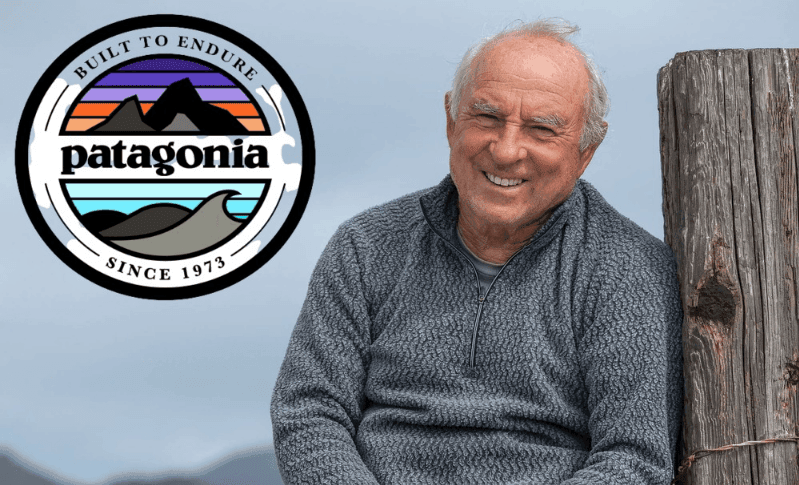
(Yvon Chouinard – Founder of Patagonia, Source: IIDE Creator Room)
Founded in 1973 by rock climber Yvon Chouinard, Patagonia Inc. has evolved from a small maker of climbing gear into a $3 billion outdoor apparel powerhouse. Headquartered in Ventura, California, the company operates under the bold motto "We're in business to save our home planet", a statement that captures its unconventional approach to business.
In September 2022, Chouinard transferred 98% of the company's shares to the Holdfast Collective, a nonprofit dedicated to environmental protection, ensuring that Earth became the brand's sole shareholder.
Patagonia's commitment extends beyond rhetoric; the company has donated over $240 million to grassroots environmental organisations since 1985 through its "1% for the Planet" initiative. Over the years, Patagonia has earned both commercial success and global respect for proving that businesses can be profitable and purpose-driven at the same time.
Overview Table
| Category | Details |
|---|---|
| Official Company Name | Patagonia, Inc. |
| Founded Year | 1973 |
| Founder | Yvon Chouinard |
| Headquarters | Ventura, California, USA |
| Website | www.patagonia.com |
| Industries Served |
Outdoor Apparel, Footwear, Gear, Camping Food |
| Geographic Areas |
Global presence in 10+ countries; strongest in North America and Europe |
| Revenue (FY 2025) | Approximately $1.5 billion |
| Net Profit | ~$100 million annually |
| Employees | 3,600+ worldwide |
| Ownership Structure |
Holdfast Collective (98% nonvoting shares), Patagonia Purpose Trust (2% voting shares) |
| Main Competitors |
The North Face, Arc'teryx, Columbia Sportswear, Marmot, REI, Mountain Hardwear |

Learn Digital Marketing for FREE

SWOT Analysis of Patagonia
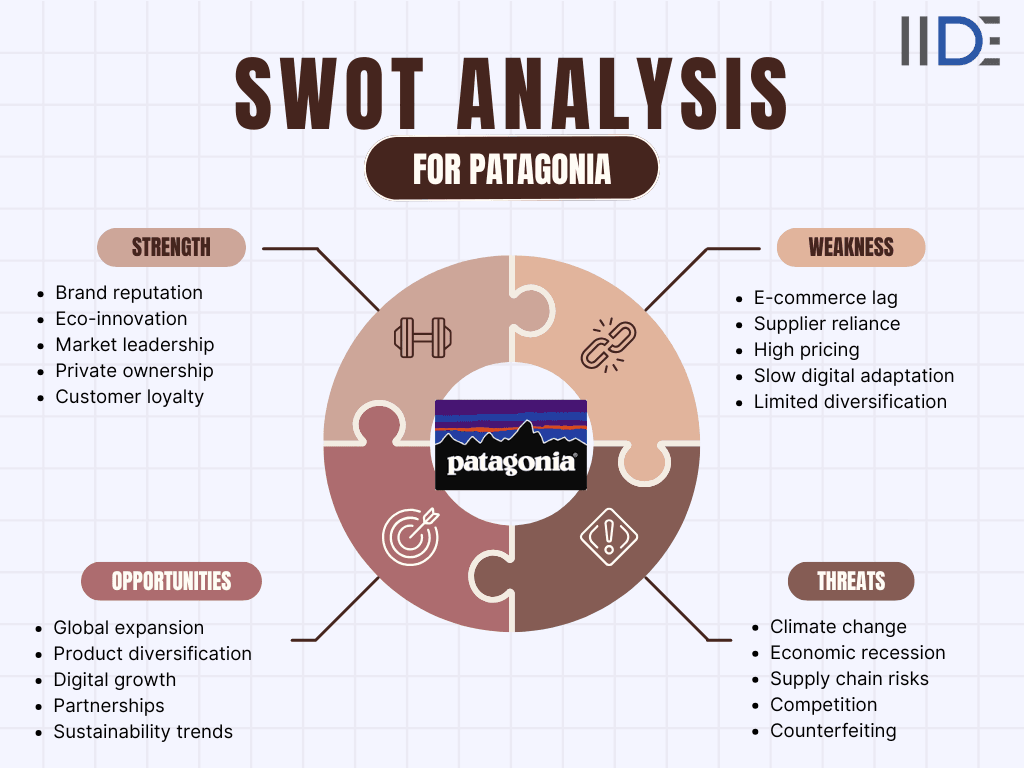
A SWOT Analysis examines a company’s strengths, weaknesses, opportunities, and threats. This framework helps us understand Patagonia’s market position and future growth potential.
1. Patagonia’s Strength
- Sustainability Leadership: Patagonia is a pioneer in using recycled fabrics, organic cotton, and eco-friendly production methods.
- Strong Brand Identity: Customers associate Patagonia with environmental activism and ethical values.
- Private Ownership: Being privately held gives Patagonia more freedom to align business with values.
- Unique Marketing: Known for bold campaigns like “Don’t Buy This Jacket”, Patagonia builds trust and loyalty.
- Community Contribution: Donates millions annually to grassroots environmental groups.
- Global Recognition: Its name is synonymous with sustainable outdoor fashion.
- Social Media Influence: Over 4M+ followers on Instagram, building strong eco-conscious communities online.
2. Patagonia’s Weakness
- High Price Point: Premium eco-friendly production raises costs, making products less accessible to mass consumers.
- Limited Store Presence: Only a few dozen retail stores worldwide compared to competitors with global networks.
- E-Commerce Gap: Slow adoption of third-party e-commerce platforms limits global digital reach.
- Over-Reliance on U.S. Market: A large share of revenue comes from North America.
- Limited Advertising: Patagonia avoids heavy advertising, which sometimes limits brand visibility.Supply Chain
- Dependence: Relies heavily on Asian suppliers, making it vulnerable to disruptions.
3. Patagonia’s Opportunities
- Expansion of Global Stores: More retail outlets across Asia, Europe, and South America.
- E-Commerce Growth: Optimizing online platforms can boost accessibility worldwide.
- Product Line Diversification: Expand into athleisure, everyday wear, and eco-friendly accessories.
- Second-Hand & Circular Fashion: Rising demand for resale and sustainable fashion gives Patagonia an edge.
- Partnerships & Collaborations: Working with global NGOs or eco-startups to strengthen brand purpose.
4. Patagonia’s Threats
- Tough Competition: Brands like The North Face and Columbia offer similar products at varying price points.
- Economic Slowdowns: Premium pricing can make Patagonia vulnerable during recessions.
- Climate Dependency: Reliance on natural materials like wool makes production sensitive to environmental shifts.
- Retail Decline: Global preference for online shopping challenges Patagonia’s traditional store model.
- Geopolitical Risks: Trade disputes and supply chain disruptions in Asia may impact operations.
SWOT Analysis of Patagonia
IIDE Student Takeaway, Recommendations & Conclusion
Patagonia’s 2026 SWOT analysis reveals a brand with unmatched environmental credibility and a loyal customer base, but also facing challenges in digital transformation and supply chain resilience. The core strategic tension is balancing rapid growth with unwavering commitment to sustainability.
Recommendations:
- Accelerate e-commerce investment to capture digital-first consumers.
- Diversify product lines to include everyday and urban wear.
- Strengthen partnerships with sustainable suppliers and brands.
- Expand into emerging markets with localised marketing.
- Invest in circular economy initiatives and repair services.
Future Outlook:
Patagonia must prioritise innovation, digital agility, and supply chain transparency to maintain its leadership. By deepening its commitment to sustainability and embracing new technologies, Patagonia can continue to inspire and lead the global movement for responsible business.
Conclusion
Patagonia’s 2026 SWOT analysis reveals a brand deeply committed to environmental sustainability and social responsibility, which fuels its strong market position and loyal customer base.
The company’s strengths lie in innovative, high-quality products and a purpose-driven business model, but it faces challenges such as rising competition, supply chain vulnerabilities, and premium pricing limiting accessibility.
By leveraging opportunities like global expansion, technological innovation, and circular economy models, Patagonia can continue to grow sustainably.
In the years ahead, Patagonia’s ability to innovate while staying true to its environmental mission will determine its dominance in the outdoor retail industry.
Want to Know Why 5,00,000+ Students Trust Us?
Dive into the numbers that make us the #1 choice for career success



MBA - Level
Post Graduate in Digital Marketing & Business Strategy

Best For
Fresh Graduates

Mode of Learning
On Campus (Mumbai & Delhi)

Starts from
Jul 31, 2026

Duration
11 Months

Live & Online
Advanced Online Digital Marketing Course
Best For
Working Professionals
Mode of Learning
Online
Starts from
Aug 7, 2026
Duration
4-6 Months

Online
Professional Certification in AI Strategy
Best For
AI Enthusiasts
Mode of Learning
Online
Starts from
Sep 8, 2026
Duration
5 Months

On Campus
Advanced Certification in Artificial Intelligence
Best For
AI Enthusiasts
Mode of Learning
On Campus (Mumbai)
Starts from
Aug 31, 2026
Duration
3 Months

Online or Offline
Top AI Courses to Make You Future Ready!
Best For
AI Enthusiasts
Mode of Learning
2–5 Month Program
Starts from
Sep 8, 2026
Duration
Flexiable
Offline
Undergraduate Program in Digital Business & Entrepreneurship
Best For
12th Passouts
Mode of Learning
On Campus (Mumbai)
Starts from
Aug 19, 2026
Duration
3 Years
Offline
Degree In 2026 ≠ Enough Degree + Digital Skills = Future-Ready
Best For
12th Passouts
Mode of Learning
At IIDE Campus
Starts from
Aug 6, 2026
Duration
3 Years
Recent Post

Lead Trainer & Business Development Head at IIDE
Aditya Shastri leads the Business Development segment at IIDE and is a seasoned Content Marketing expert. With over a decade of experience, Aditya has trained more than 20,000 students and professionals in digital marketing, collaborating with prestigious institutions and corporations such as Jet Airways, Godrej Professionals, Pfizer, Mahindra Group, Publicis Worldwide, and many others. His ability to simplify complex marketing concepts, combined with his engaging teaching style, has earned him widespread admiration from students and professionals alike.
Aditya has spearheaded IIDE’s B2B growth, forging partnerships with over 40 higher education institutions across India to upskill students in digital marketing and business skills. As a visiting faculty member at top institutions like IIT Bhilai, Mithibai College, Amity University, and SRCC, he continues to influence the next generation of marketers.
Apart from his marketing expertise, Aditya is also a spiritual speaker, often traveling internationally to share insights on spirituality. His unique blend of digital marketing proficiency and spiritual wisdom makes him a highly respected figure in both fields.