Application Deadline for 3-Year UG Program closes on 31st Aug. Book a Counselling to know more

Students Centric
Placements Report
Trackable results, real numbers
Reviews
Proven success, real voices
Trainers
Expert-led, Industry-Driven Training
Life at IIDE
Vibrant Spirit student life
Alumni
Successful Journeys, Inspiring Stories
Learning Centre
Webinars
Blogs
Case studies
Live, Interactive Masterclasses
Fresh Insights, quick reads
Real-life, Industry relevant
More
Hire from us
Hire Top Digital Marketing Talent
Work with us
Join Our Team, Make an Impact
Customised Training
Personalised digital marketing training for your company
Refer & earn
Simple, easy rewards
Contact us
Get the answers you need
About us
Know more about IIDE
Explore all course options

FOR FRESH GRADUATES
Post Graduation Program in Digital Marketing & Business Strategy- Ideal for Age: 20–25 Years

Can’t decide? Explore all our
Digital Marketing Courses
COMPARE ALL 3 PROGRAMSOnline & Offline
Explore Top AI CoursesIndustry-Aligned TRACKMost Popular
UG Program in Digital Business & Entrepreneurship- Ideal for 12th Pass out / FY Degree Student

PARTNER PROGRAMS







Can’t decide? Explore all
BBA In Digital Marketing Colleges
Orginally Written by Aditya Shastri
Updated on Dec 12, 2025
Share on:


Founded in 1995, eBay is a pioneer in the e-commerce space, facilitating millions of peer-to-peer and B2C transactions worldwide. As of 2026, eBay operates in 190+ countries and serves over 134 million active buyers. But how has this iconic brand maintained relevance amidst growing competition and digital transformation? This SWOT analysis examines the strategies, risks, and opportunities that will shape eBay’s future, essential reading for marketing students and entrepreneurs alike.
About Maruti Suzuki
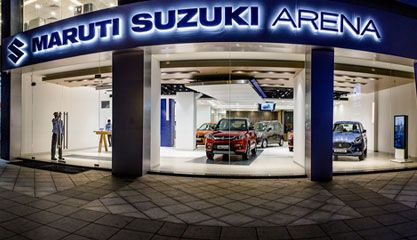
Founded in 1981, Maruti Suzuki is India’s largest passenger vehicle brand, known for its affordability and mass-market appeal. Its slogan, "Way of Life", reflects the brand’s promise of everyday reliability for the average consumer. In 2026, it continues to dominate Indian roads, holding approximately a 45% market share. SWOT - Strengths, Weaknesses, Opportunities, and Threats offers valuable insights into the brand’s strategic direction and plans.
Overview Table
| Parameter | Details |
|---|---|
| Official Company Name | Maruti Suzuki India Limited |
| Founded Year | 1981 |
| Website URL | https://www.marutisuzuki.com |
| Industries Served | Automotive, Mobility Solutions |
| Geographic Areas Served | India, Asia-Pacific, Africa, Latin America |
| Revenue (FY 2024–25) | ₹1.49 lakh crore (approx.) |
| Net Income (FY 2024–25) | ₹11,960 crore |
| Employees | Over 35,000 |
| Main Competitors | Tata Motors, Hyundai, Mahindra, Kia |

Is Digital Marketing the Right Career for You?
Find out in a free 45-min masterclass · Career paths, roles and growth explained · By Karan Shah, Founder & CEO, IIDE

Is Digital Marketing the Right Career for You?
Find out in a free 45-min masterclass · Career paths, roles and growth explained · By Karan Shah, Founder & CEO, IIDE
SWOT Analysis of Maruti Suzuki
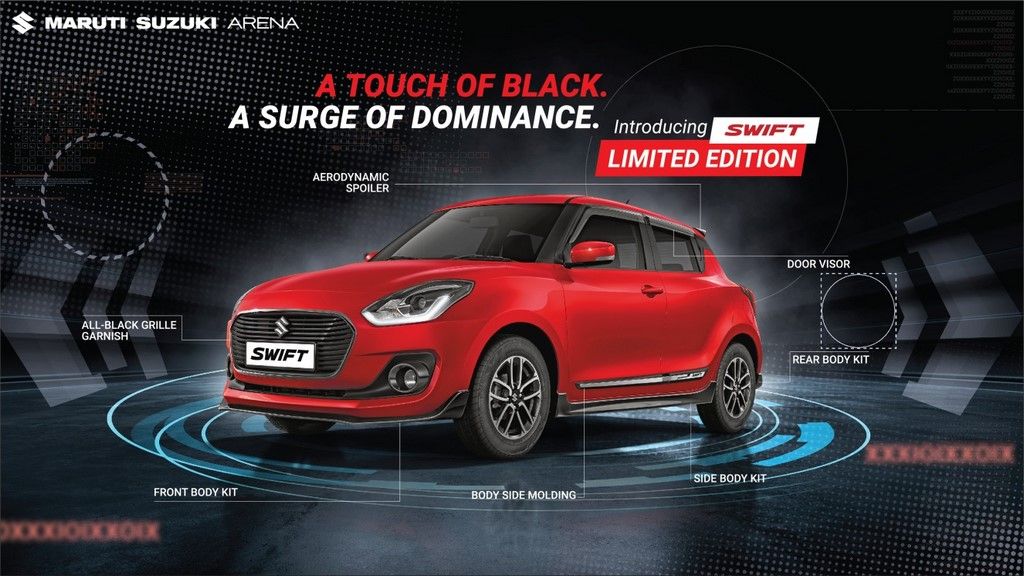
Brand Strength: Maruti Suzuki’s Superpowers in 2026
Market Leadership:
- Maruti Suzuki holds a dominant ~45% market share in India’s passenger vehicle market, making it a leader in affordability and accessibility within the country’s auto sector.
Extensive Sales & Service Network:
- With 2,987 Arena outlets, 495 Nexa outlets, and 4,964+ service points, Maruti has established an unmatched presence across India, ensuring wide-reaching customer touchpoints.
Cost Efficiency & Manufacturing Excellence:
- Maruti Suzuki’s highly cost-efficient manufacturing model and a vast vendor network enable it to keep operational costs low while maintaining affordability for consumers.
Innovation & Production Capacity:
- The company’s ₹18,000 crore investment in the Kharkhoda plant is set to double its production capacity, ensuring it can meet growing demand in the future.
Strong Brand Recall:
- Maruti Suzuki has consistently maintained high brand recall and enjoys best-in-class resale value, securing customer trust and loyalty over decades.
Global Presence & Exports:
- Maruti Suzuki leads Indian car exports, capturing ~50% of India’s auto exports in Q1 FY2025, positioning itself as a dominant player in emerging markets.
Brand Weakness: Maruti Suzuki’s Struggles in 2026
Delayed EV Entry:
- While competitors like Tata and Hyundai have been quick to enter the electric vehicle (EV) space, Maruti Suzuki’s entry with the e-Vitara in 2025 comes late, potentially delaying its competitive edge in the growing EV market.
Safety Concerns:
- Several Maruti Suzuki models score poorly in safety tests, with some receiving 0-2 stars in Global NCAP ratings, creating a reputational concern for the brand’s commitment to safety.
Product Quality Gaps:
- The interior quality of Maruti Suzuki vehicles is perceived to be lagging behind competitors like Hyundai and Tata, particularly in the premium segments, affecting its appeal to aspirational buyers.
Union Challenges:
- Past labour issues, such as the 2012 Manesar incident, still haunt Maruti Suzuki, affecting its labour relations and operations in some areas.
Limited International Presence:
- Despite its dominance in India, Maruti Suzuki’s international presence, particularly in developed regions, remains weak compared to global competitors, limiting its global revenue potential.
SWOT analysis of Tata Motors offers a look at how innovation and global collaborations influence its domestic competitiveness.
Brand Opportunities: Future Moves for Maruti Suzuki
EV Market Growth:
- The launch of the e-Vitara in 2025 is part of Maruti Suzuki's aggressive push into the electric vehicle market.
- With an investment of ₹10,440 crore, the brand aims to capitalise on the increasing demand for EVs and hybrid vehicles.
Rural & Aspirational Segments:
- Maruti Suzuki is tapping into India’s rural and aspirational segments by developing new affordable models that cater to emerging income groups, ensuring market penetration in underserved regions.
Hybrid & CNG Market Expansion:
- With the growing demand for CNG and hybrid vehicles, Maruti Suzuki is positioned to expand its offerings in these segments, aligning with India’s evolving fuel preferences.
Subscription & Leasing Models:
- Maruti Suzuki is exploring app-based subscription, leasing, and finance models to attract younger, urban consumers looking for more flexible car ownership solutions.
Strategic Partnerships:
- The collaboration with Toyota for hybrid and EV platforms strengthens Maruti Suzuki's product development capabilities, allowing for shared technologies and expanded market opportunities.
Exports and New Markets:
- The brand aims to expand its export capacities and production capabilities with a target of producing 4 million units annually by 2030, broadening its reach into new global markets.
SWOT analysis of Honda brings in a global automaker's view on how R&D and technology drive automotive resilience.
Brand Threats: Challenges in a Competitive Arena
Intensified Competition in SUV and EV Segments:
- Maruti Suzuki faces fierce competition from Tata, Hyundai, and new EV entrants in the SUV and EV markets, impacting its market share in the premium and electric vehicle segments.
Regulatory Compliance Pressure:
- The introduction of stricter Bharat NCAP and BS VI Phase 2 safety and emission standards is increasing compliance costs, impacting profitability and requiring significant investment in vehicle upgrades.
Rising Input Costs:
- A 16% hike in input costs is compressing Maruti Suzuki’s margins, making it difficult to maintain competitive pricing while protecting profit margins.
Shrinking Entry-Level Market:
- The shrinking demand in the entry-level car market, which dropped to ~25,000 units in FY25, threatens Maruti Suzuki’s traditional base of mass-market buyers.
Geopolitical and Supply Chain Volatility:
- Ongoing global volatility and trade risks affect Maruti Suzuki's supply chain, which could disrupt production schedules and impact inventory availability.
SWOT analysis of Mahindra and Mahindra reflects how rural market expertise and product range influence its positioning.
Buyers Persona:

Rahul Patel
Mumbai, Maharashtra
Occupation: Financial Analyst
Age: 29 years
Motivation
Interest & Hobbies
Pain Points
Social Media Presence
Summary Table – SWOT of Maruti Suzuki
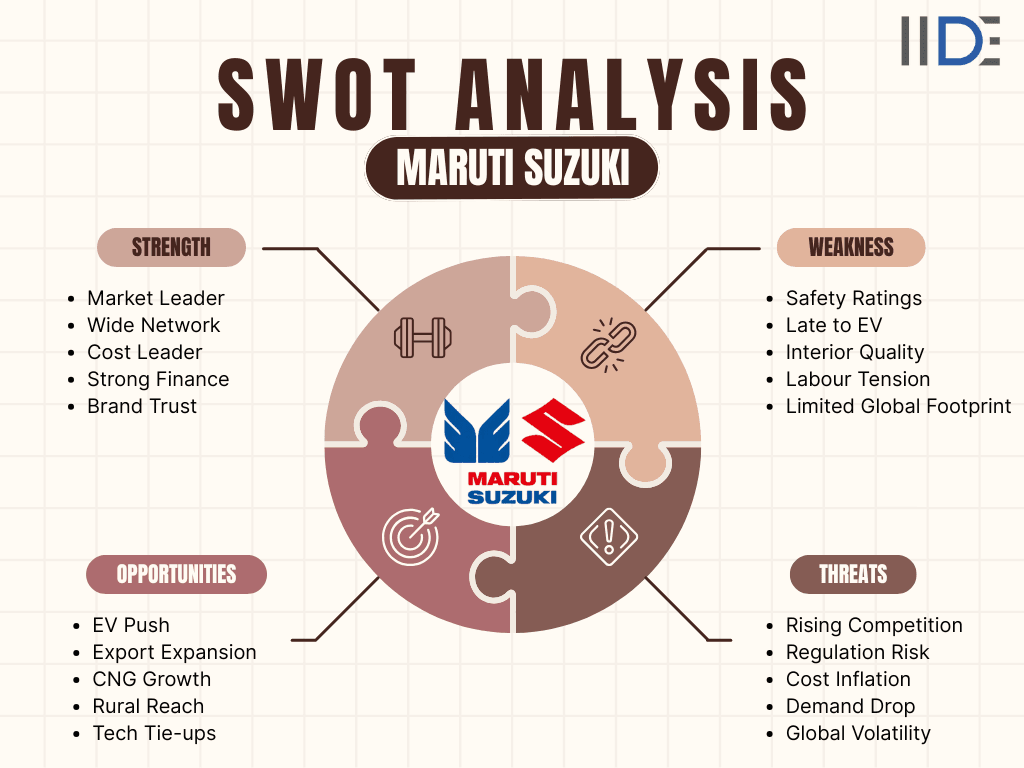
IIDE Student Takeaway, Conclusion & Recommendations
Maruti Suzuki continues to dominate India’s auto sector with its 45% market share, cost-efficiency, and an extensive after-sales network. However, as the automotive landscape evolves, the brand faces critical challenges: safety compliance, delayed EV transition, and rising premium consumer expectations. The 2025 launch of the e-Vitara marks a pivotal step into the EV space, but Maruti must act swiftly to match competitors, especially Tata, which holds a first-mover advantage.
The core tension for Maruti Suzuki lies in balancing its mass-market legacy with future demands. While its strength in tier-2 and tier-3 markets has been its core, to stay relevant, Maruti must expand its offerings to include electrified, safer, and aspirational vehicles. A strategic shift is necessary to appeal to both traditional buyers and the new wave of conscious, tech-driven consumers.
Strategic Recommendations:
- Accelerate EV Launches: Following the launch of the e-Vitara, Maruti must introduce additional EV models by 2026–27 to compete with the likes of Tata and Hyundai.
- Upgrade Safety Features: Prioritise 5-star crash ratings and improve safety compliance across all models to regain trust, especially in premium segments.
- Expand Premium Offerings: Introduce premium variants in Nexa, incorporating cabin upgrades, superior safety features, and design enhancements.
- Leverage Global Exports: Utilise Suzuki’s global EV strategy to increase export volumes, positioning Maruti as a leading international player in the EV market.
- Resolve Labour Issues: Address long-standing labour tensions with transparent agreements and long-term worker relations to stabilise operations.
Conclusion:
Maruti Suzuki’s sheer scale provides a solid foundation, but its ability to innovate and adapt will determine its future. With accelerated EV adoption, product updates, and a focus on rural markets and exports, Maruti can continue to defend its leadership position.
Its success will depend on how quickly it navigates its traditional strengths while transitioning into an electrified, safety-conscious, and premium-focused brand. The next decade will test whether Maruti Suzuki can lead the future of India’s auto industry or risk falling behind in a rapidly changing market.
Want to Know Why 5,00,000+ Students Trust Us?
Dive into the numbers that make us the #1 choice for career success


MBA - Level
Post Graduate in Digital Marketing & Business Strategy

Best For
Fresh Graduates

Mode of Learning
On Campus (Mumbai & Delhi)

Starts from
Oct 1, 2026

Duration
11 Months

Live & Online
Advanced Online Digital Marketing Course
Best For
Working Professionals
Mode of Learning
Online
Starts from
Sep 4, 2026
Duration
4-6 Months

Online
Professional Certification in AI Strategy
Best For
AI Enthusiasts
Mode of Learning
Online
Starts from
Sep 8, 2026
Duration
5 Months

Online or Offline
Top AI Courses to Make You Future Ready!
Best For
AI Enthusiasts
Mode of Learning
2–5 Month Program
Starts from
Sep 8, 2026
Duration
Flexiable

On Campus
Advanced Certification in Artificial Intelligence
Best For
AI Enthusiasts
Mode of Learning
On Campus (Mumbai)
Starts from
Sep 1, 2026
Duration
3 Months
Offline
Undergraduate Program in Digital Business & Entrepreneurship
Best For
12th Passouts
Mode of Learning
On Campus (Mumbai)
Starts from
Aug 19, 2026
Duration
3 Years
Offline
Degree In 2026 ≠ Enough Degree + Digital Skills = Future-Ready
Best For
12th Passouts
Mode of Learning
At IIDE Campus
Starts from
Aug 19, 2026
Duration
3 Years
Recent Post
Yes, Maruti Suzuki exports vehicles to various countries, primarily in the Middle East, Africa, and Southeast Asia. While Maruti Suzuki’s primary market is India, it also has a presence in global markets through its parent company, Suzuki Motor Corporation.
Yes, Maruti Suzuki has a recycling program that ensures the responsible disposal and recycling of used automotive parts, including batteries, tires, and oils.
Yes, Maruti Suzuki offers roadside assistance services for its customers. This includes services like flat tire assistance, battery jump-start, and towing services, available through its authorised service network.
Yes, many Maruti Suzuki cars have undergone crash testing and meet Indian safety regulations. The company also focuses on improving the safety features in its vehicles, including the introduction of new safety technologies.

Lead Trainer & Business Development Head at IIDE
Aditya Shastri leads the Business Development segment at IIDE and is a seasoned Content Marketing expert. With over a decade of experience, Aditya has trained more than 20,000 students and professionals in digital marketing, collaborating with prestigious institutions and corporations such as Jet Airways, Godrej Professionals, Pfizer, Mahindra Group, Publicis Worldwide, and many others. His ability to simplify complex marketing concepts, combined with his engaging teaching style, has earned him widespread admiration from students and professionals alike.
Aditya has spearheaded IIDE’s B2B growth, forging partnerships with over 40 higher education institutions across India to upskill students in digital marketing and business skills. As a visiting faculty member at top institutions like IIT Bhilai, Mithibai College, Amity University, and SRCC, he continues to influence the next generation of marketers.
Apart from his marketing expertise, Aditya is also a spiritual speaker, often traveling internationally to share insights on spirituality. His unique blend of digital marketing proficiency and spiritual wisdom makes him a highly respected figure in both fields.