Application Deadline for 3-Year UG Program closes on 31st Aug. Book a Counselling to know more

Students Centric
Placements Report
Trackable results, real numbers
Reviews
Proven success, real voices
Trainers
Expert-led, Industry-Driven Training
Life at IIDE
Vibrant Spirit student life
Alumni
Successful Journeys, Inspiring Stories
Learning Centre
Webinars
Blogs
Case studies
Live, Interactive Masterclasses
Fresh Insights, quick reads
Real-life, Industry relevant
More
Hire from us
Hire Top Digital Marketing Talent
Work with us
Join Our Team, Make an Impact
Customised Training
Personalised digital marketing training for your company
Refer & earn
Simple, easy rewards
Contact us
Get the answers you need
About us
Know more about IIDE
Explore all course options

FOR FRESH GRADUATES
Post Graduation Program in Digital Marketing & Business Strategy- Ideal for Age: 20–25 Years

Can’t decide? Explore all our
Digital Marketing Courses
COMPARE ALL 3 PROGRAMSOnline & Offline
Explore Top AI CoursesIndustry-Aligned TRACKMost Popular
UG Program in Digital Business & Entrepreneurship- Ideal for 12th Pass out / FY Degree Student

PARTNER PROGRAMS







Can’t decide? Explore all
BBA In Digital Marketing Colleges
Orginally Written by Aditya Shastri
Updated on Dec 11, 2025
Share on:


McDonald's business model is built on a global network of franchises, customer-centric services, and continuous innovation. This strategy allows them to offer affordable meals while maintaining healthy profit margins. McDonald's achieves this by optimising supply chains, leveraging technology, and expanding globally. It uses economies of scale and efficient operations to streamline its processes. But what’s the secret behind its market dominance? McDonald's global reach drives rapid expansion and increased revenue.
In this blog, we decode McDonald's revenue model and strategy, shedding light on how it has achieved global success.
About McDonald's
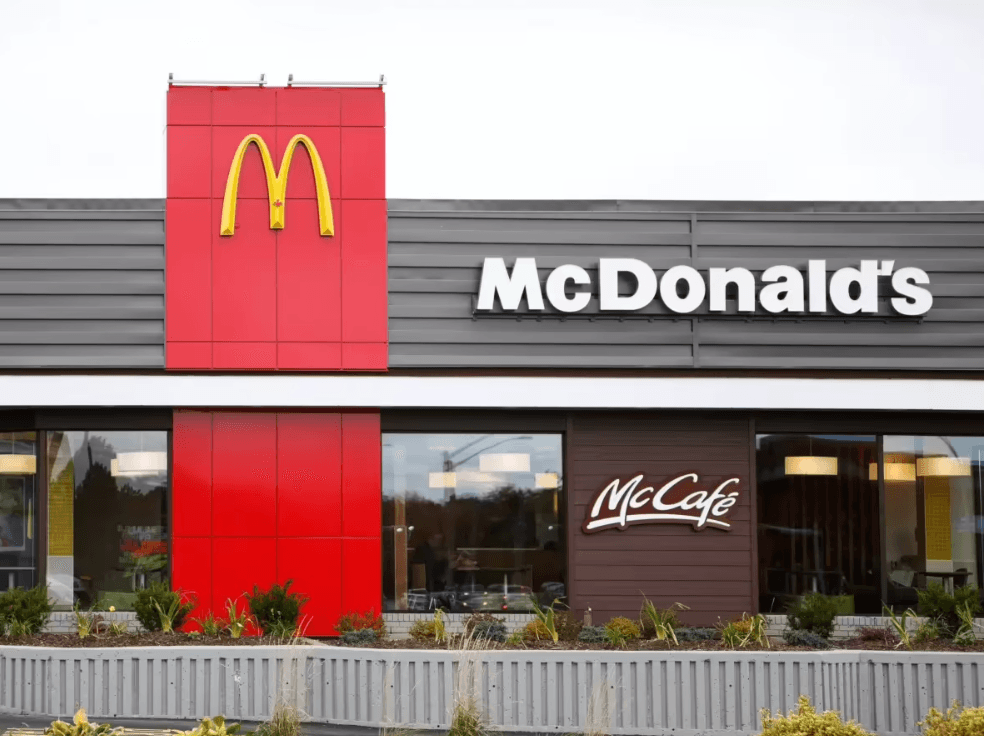
McDonald's was founded by Ray Kroc in 1955 in Des Plaines, Illinois, to bring quick and consistent fast food to the masses. The brand's unique selling proposition lies in its combination of affordable, high-quality meals and an efficient franchising model that facilitated rapid global expansion. By 2025, McDonald's will generate over $150 billion in systemwide sales and operate in over 100 countries, with a workforce of 2.5 million employees worldwide.
McDonald's ethos is rooted in innovation, community, and accessibility. The company prioritises affordability, speed, and consistency, ensuring a positive and reliable experience for customers at every touchpoint. Through technological advancements like the McDonald's App, self-order kiosks, and loyalty programs, McDonald’s continues to adapt to changing consumer preferences while maintaining its legacy.
As a customer, McDonald's experience is focused on convenience, offering quick service, a broad menu selection, and consistent quality. The brand’s secret to success lies in its franchising model and ability to stay relevant through constant innovation while delivering a seamless, customer-centric experience globally.
Summary Table
| Feature | Details |
|---|---|
| Founded | 1955 |
| Founder | Ray Kroc |
| Headquarters | Chicago, Illinois |
| Industry | Fast Food |
| Revenue (2023) | $130 billion in Systemwide sales |
| Presence | Over 100 countries |
| Employees | 2 million+ |
| Popular for | Fast food, burgers, fries |

Is Digital Marketing the Right Career for You?
Find out in a free 45-min masterclass · Career paths, roles and growth explained · By Karan Shah, Founder & CEO, IIDE

Is Digital Marketing the Right Career for You?
Find out in a free 45-min masterclass · Career paths, roles and growth explained · By Karan Shah, Founder & CEO, IIDE
How does McDonald's make money?
Revenue Stream Breakdown:
Product Sales (e.g., food and beverages):
- McDonald's generates significant revenue from the sale of products like burgers, fries, beverages, and breakfast items at its company-operated restaurants.
- Contribution: Approximately 60% of total revenue.
Franchise Fees (e.g., royalties, rent):
- McDonald's earns revenue from franchisees who pay an initial franchise fee and ongoing royalty payments (typically 4% of gross sales). Additionally, franchisees pay rent based on the sales of their location, contributing to McDonald's income.
- Contribution: Around 30% of total revenue.
Advertising Revenue:
- McDonald's collects advertising revenue from franchisees who contribute to the national advertising fund, typically about 4% of gross sales. This fund is used for global advertising campaigns and sponsorships.
- Contribution: Part of Services & Advertising Revenue, approximately 10% of total revenue.
Services (e.g., delivery, mobile app-based orders, drive-thru):
- McDonald's earns additional revenue from delivery services, mobile app orders, and drive-thru services, catering to growing customer demand for convenience and digital engagement.
- Contribution: Around 10% of total revenue.
Revenue Contribution:
- Product Sales: 60% of total revenue, primarily from food and beverages.
- Franchise Fees: 30% of total revenue, from franchisee payments (royalties and rent).
- Services & Advertising Revenue: 10% of total revenue, from advertising contributions and delivery services.
Pricing Strategy:
- McDonald's follows a Value-Based Pricing strategy.
- The brand offers affordable meals to appeal to a wide demographic, while maintaining a balance between quality and price.
- This pricing model enables McDonald's to remain competitive in the fast-food industry while ensuring healthy profit margins.
- By combining affordable pricing with efficient operations and a strong franchising model, McDonald's successfully caters to a large customer base globally, securing its market dominance.
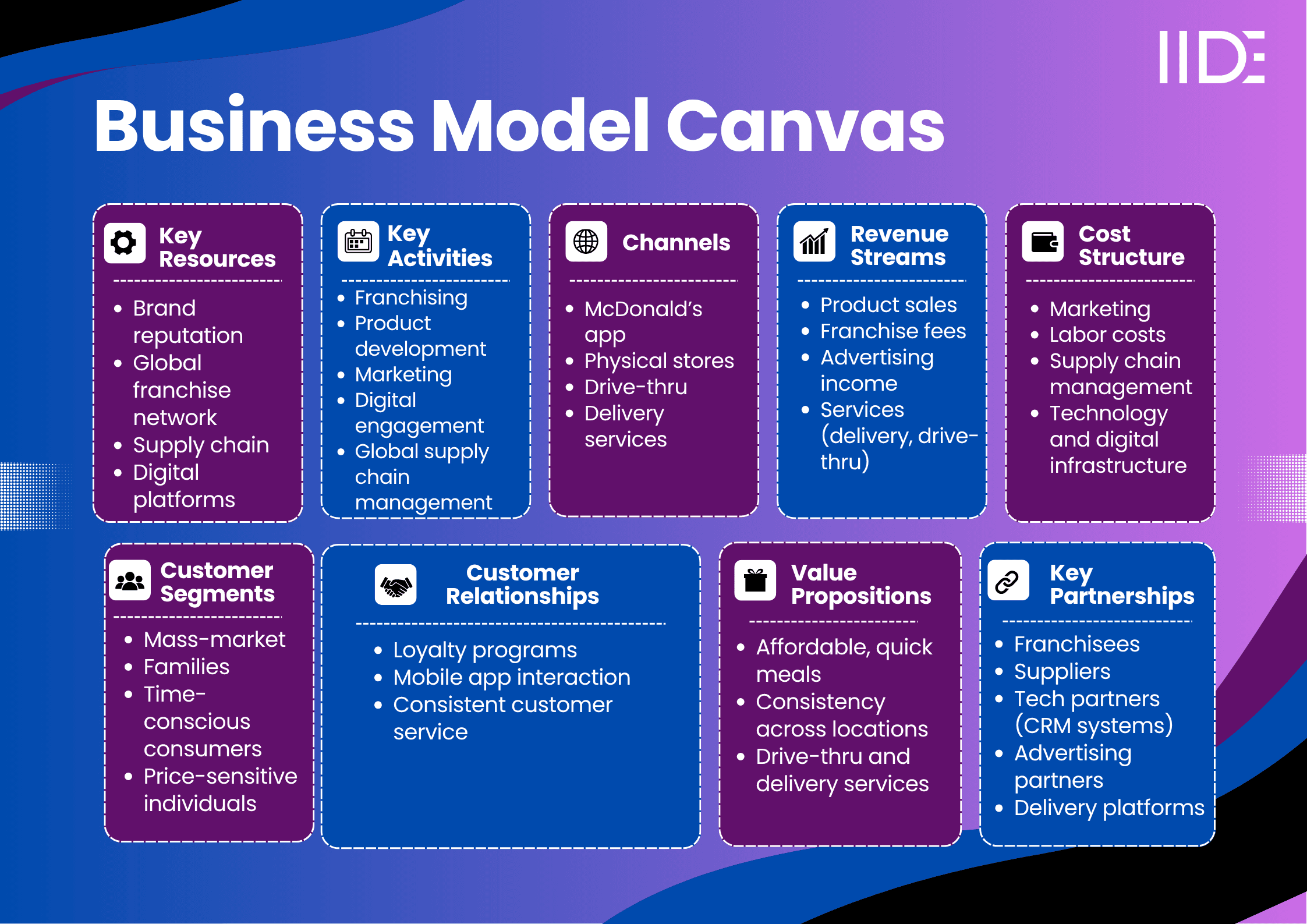
McDonald's Business Model Canvas
McDonald's Value Proposition
McDonald’s delivers fast, affordable meals with an emphasis on consistency and quality.
The brand’s value proposition is centred around its ability to provide a reliable and consistent experience across its global locations, offering customers the same taste and service every time.
McDonald’s addresses key customer pain points, such as convenience, by providing quick service, affordable prices, and easy accessibility through drive-thru, delivery, and mobile app options.
The emotional benefits include a sense of nostalgia and familiarity, with McDonald’s serving as a global brand that customers can trust.
Additionally, its functional benefits, speed, convenience, and consistency are key drivers.
McDonald’s competitive advantage lies in its vast franchise network, economies of scale, and its ability to innovate through seasonal menu items and local adaptations, which differentiate it from other fast-food chains.
McDonald's Revenue Model
McDonald's revenue is driven by Product Sales, including burgers, fries, and beverages, which contribute 60% of its total income.
Franchise Fees account for 30% of revenue, including royalties and rent from its vast network of franchisees.
Additional income comes from Advertising Revenue and Services such as delivery and drive-thru, making up 10%.
This diversified revenue stream helps McDonald’s maintain strong financial stability.
McDonald's Cost Structure
McDonald's major expenses include supply chain management, marketing, and labour costs.
To optimise costs, McDonald’s employs automation in operations and bulk production to achieve economies of scale.
Partnering with third-party delivery services helps reduce operational expenses.
Despite rising logistical and food costs, McDonald’s keeps costs low through efficient supply chain management, driving healthy margins and supporting its global expansion.
McDonald's Customer Segment
McDonald’s primarily targets middle-income consumers, with a broad B2C model that appeals to families, time-sensitive individuals, and value-conscious customers.
Its core demographic spans across various age groups, from children to adults, with a focus on price-sensitive individuals.
McDonald’s also caters to digital-first users through mobile app-based orders and delivery services.
Customers are motivated by affordability, convenience, and consistency, making McDonald’s a popular choice for fast, quality meals.
Distribution Channels of McDonald's
McDonald’s uses a hybrid model of distribution, combining physical stores and digital channels.
Its physical stores include company-operated restaurants and franchise locations, with a strong presence in global markets.
McDonald's operates through an e-commerce platform via its mobile app for digital orders and delivery.
The brand embraces Omnichannel strategies, offering drive-thru, in-store service, and delivery.
Additionally, McDonald’s has implemented innovative solutions, like Ready on Arrival technology, which streamlines the customer experience across key markets.
McDonald's Key Partnerships
McDonald’s partners with global suppliers for ingredients and food production, franchisees for store operations, and tech partners for CRM systems and app development.
It also collaborates with third-party delivery platforms like UberEats and DoorDash to extend its service reach.
McDonald’s further engages with NGOs and charitable organisations like Ronald McDonald House Charities to promote community initiatives.
These partnerships help McDonald’s enhance operational efficiency, reach a wider customer base, and support its community-driven values.
Want to Know Why 5,00,000+ Students Trust Us?
Dive into the numbers that make us the #1 choice for career success


MBA - Level
Post Graduate in Digital Marketing & Business Strategy

Best For
Fresh Graduates

Mode of Learning
On Campus (Mumbai & Delhi)

Starts from
Oct 1, 2026

Duration
11 Months

Live & Online
Advanced Online Digital Marketing Course
Best For
Working Professionals
Mode of Learning
Online
Starts from
Sep 4, 2026
Duration
4-6 Months

Online
Professional Certification in AI Strategy
Best For
AI Enthusiasts
Mode of Learning
Online
Starts from
Sep 8, 2026
Duration
5 Months

Online or Offline
Top AI Courses to Make You Future Ready!
Best For
AI Enthusiasts
Mode of Learning
2–5 Month Program
Starts from
Sep 8, 2026
Duration
Flexiable

On Campus
Advanced Certification in Artificial Intelligence
Best For
AI Enthusiasts
Mode of Learning
On Campus (Mumbai)
Starts from
Sep 1, 2026
Duration
3 Months
Offline
Degree In 2026 ≠ Enough Degree + Digital Skills = Future-Ready
Best For
12th Passouts
Mode of Learning
At IIDE Campus
Starts from
Aug 31, 2026
Duration
3 Years
Offline
Undergraduate Program in Digital Business & Entrepreneurship
Best For
12th Passouts
Mode of Learning
On Campus (Mumbai)
Starts from
Aug 31, 2026
Duration
3 Years
Recent Post
McDonald's business model relies on a combination of company-owned and franchised restaurants, generating revenue through sales, franchise fees, and real estate.
McDonald's makes money through sales from its restaurants, franchise fees, royalties, and rent from franchisees.
McDonald's main products include burgers, fries, chicken items, salads, breakfast items, beverages, and desserts.
McDonald's top competitors include Burger King, KFC, Wendy's, Subway, and Starbucks.
McDonald's uses technology such as digital ordering kiosks, mobile apps, and data analytics to enhance customer experience and operational efficiency.
McDonald's target audience includes children, teenagers, adults, and families, appealing to a wide demographic with its diverse menu and value offerings.
McDonald's holds around 21% of the global fast-food market share.
McDonald's CSR initiatives include sustainability efforts, community support through Ronald McDonald House Charities, and employee welfare programs.
McDonald's franchise model involves franchising its brand to independent operators who pay fees and royalties, ensuring consistent quality and operational standards.
McDonald's markets its products through a mix of traditional advertising, digital marketing, promotions, and collaborations with other brands.

Lead Trainer & Business Development Head at IIDE
Aditya Shastri leads the Business Development segment at IIDE and is a seasoned Content Marketing expert. With over a decade of experience, Aditya has trained more than 20,000 students and professionals in digital marketing, collaborating with prestigious institutions and corporations such as Jet Airways, Godrej Professionals, Pfizer, Mahindra Group, Publicis Worldwide, and many others. His ability to simplify complex marketing concepts, combined with his engaging teaching style, has earned him widespread admiration from students and professionals alike.
Aditya has spearheaded IIDE’s B2B growth, forging partnerships with over 40 higher education institutions across India to upskill students in digital marketing and business skills. As a visiting faculty member at top institutions like IIT Bhilai, Mithibai College, Amity University, and SRCC, he continues to influence the next generation of marketers.
Apart from his marketing expertise, Aditya is also a spiritual speaker, often traveling internationally to share insights on spirituality. His unique blend of digital marketing proficiency and spiritual wisdom makes him a highly respected figure in both fields.