Application Deadline for 3-Year UG Program closes on 31st Aug. Book a Counselling to know more

Students Centric
Placements Report
Trackable results, real numbers
Reviews
Proven success, real voices
Trainers
Expert-led, Industry-Driven Training
Life at IIDE
Vibrant Spirit student life
Alumni
Successful Journeys, Inspiring Stories
Learning Centre
Webinars
Blogs
Case studies
Live, Interactive Masterclasses
Fresh Insights, quick reads
Real-life, Industry relevant
More
Hire from us
Hire Top Digital Marketing Talent
Work with us
Join Our Team, Make an Impact
Customised Training
Personalised digital marketing training for your company
Refer & earn
Simple, easy rewards
Contact us
Get the answers you need
About us
Know more about IIDE
Explore all course options

FOR FRESH GRADUATES
Post Graduation Program in Digital Marketing & Business Strategy- Ideal for Age: 20–25 Years

Can’t decide? Explore all our
Digital Marketing Courses
COMPARE ALL 3 PROGRAMSOnline & Offline
Explore Top AI CoursesIndustry-Aligned TRACKMost Popular
UG Program in Digital Business & Entrepreneurship- Ideal for 12th Pass out / FY Degree Student

PARTNER PROGRAMS






Can’t decide? Explore all
BBA In Digital Marketing Colleges
Orginally Written by Aditya Shastri
Updated on Dec 12, 2025
Share on:


Microsoft’s marketing strategy focuses on promoting its AI and cloud offerings through AI-driven advertising, LinkedIn thought leadership, and product showcases such as Azure and Copilot. The company also restructures its sales and solutions teams to better align with AI and cloud services.
The main objectives are to accelerate AI adoption, build enterprise trust, and deliver measurable productivity gains, positioning Microsoft as a global leader in digital transformation.
The initial analysis and research foundation for this article were conducted by Jinelle Lobo, a current student in the IIDE’s Post-Graduation in Digital Marketing & Strategy Course (March 2025 Batch).
Her contribution was invaluable. If you found this information insightful, please feel free to reach out to Jinelle to share your appreciation!
About Microsoft
Microsoft, founded in 1975, is now one of the world’s biggest tech companies. Its mission is to help everyone and every business do more.
Today, it focuses on AI and cloud, offering a connected ecosystem with Windows, Azure, Microsoft 365, Copilot, and Xbox.
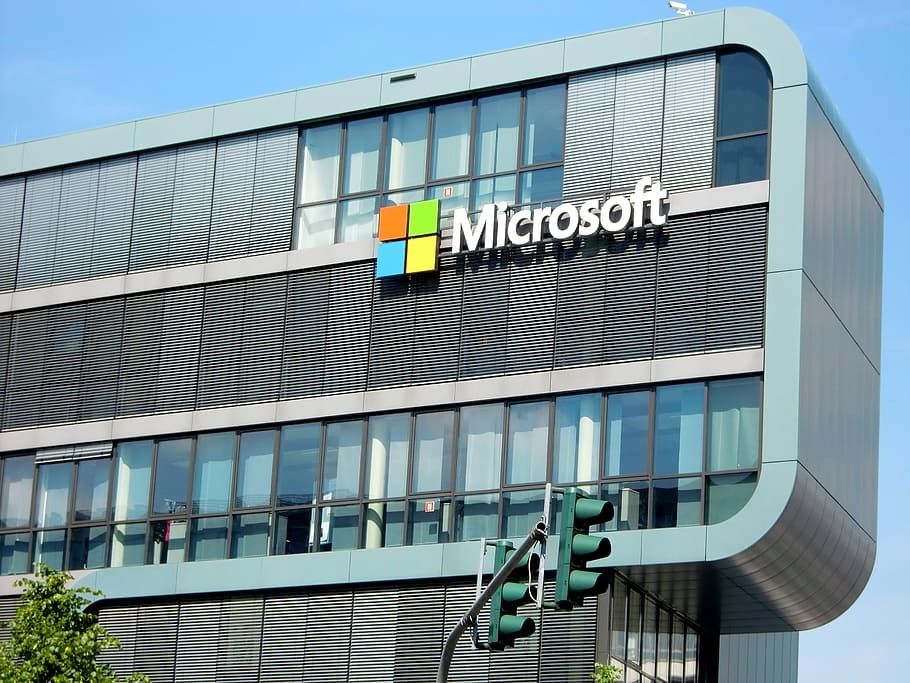
Trusted by businesses for its robust infrastructure and seamless integration, Microsoft has expanded beyond Windows and Office to lead in cloud services, AI, gaming, developer tools, accessibility, and sustainability.
This case study examines Microsoft’s 2025 marketing strategy, objectives, target audience, and key growth tactics.

Is Digital Marketing the Right Career for You?
Find out in a free 45-min masterclass · Career paths, roles and growth explained · By Karan Shah, Founder & CEO, IIDE

Is Digital Marketing the Right Career for You?
Find out in a free 45-min masterclass · Career paths, roles and growth explained · By Karan Shah, Founder & CEO, IIDE
Marketing Objective or Business Challenge:
In 2025, Microsoft’s primary marketing objective is to accelerate the adoption of AI and cloud technologies while building enterprise trust.
Its most significant challenge is intense competition from Amazon, Google, and Apple, along with cybersecurity risks and regulatory scrutiny, which put pressure on growth and require careful strategy to maintain leadership.
Marketing Channels Used by Microsoft
In 2025, Microsoft will use a multifaceted marketing strategy to promote its AI and cloud offerings globally.
The company combines digital marketing, partner enablement, and direct engagement to reach enterprises and consumers alike, aiming to drive adoption, build trust, and demonstrate productivity benefits.
1. Microsoft x OpenAI Collaboration:
- Microsoft and ChatGPT’s creator, OpenAI, are updating their partnership. OpenAI is planning to change how it works to grow bigger and possibly become a public company you can invest in.
- Microsoft still uses ChatGPT’s technology in products like Microsoft Office to make them smarter. Both companies are working on new ways to team up better and stay leaders in the fast-changing world of artificial intelligence.
2. Digital & Content Marketing
- B2B Thought Leadership: LinkedIn, whitepapers, webinars, and case studies educate and influence enterprise decision-makers.
- AI-Driven Advertising: Microsoft Ads across Bing, Edge, and MSN fuel growth, with search and news ad revenue increasing by ~21% YoY in 2025 (ppc.land).
3. Partner & Ecosystem Enablement
- Co-Marketing with OEMs: Collaborates with Surface, Windows, and other hardware manufacturers for bundled offerings.
- Global Cloud Distribution: Works with telecoms, system integrators, and service providers to expand reach and accessibility (microsoft.com).
Microsoft’s 2025 marketing strategy leverages digital marketing, partner enablement, and direct engagement channels to accelerate AI and cloud adoption, strengthen enterprise trust, and demonstrate measurable productivity gains.
These channels work together to reinforce Microsoft’s leadership in digital transformation.
Microsoft Marketing Strategy Breakdown
Digital Marketing
- SEO & SEM: Focused on integrating AI-driven tools in Microsoft Ads across Bing, Edge, and MSN, leading to a 21% YoY growth in search and news ad revenue in 2025.
- AI-Driven Advertising: Ads on Bing and Edge enhanced by AI, driving higher engagement and visibility.
- AI Integration in Search: Microsoft’s ad revenue growth is attributed to better integration of AI into its search engine and advertising tools.
Content Strategy
- Thought Leadership: Microsoft invests heavily in B2B content via LinkedIn, whitepapers, webinars, and case studies to influence enterprise decision-makers.
- Educational Content: Videos and articles focusing on AI adoption, cloud productivity, and sustainability.
- Webinars & Case Studies: Content aimed at educating potential clients on the benefits of their cloud and AI platforms.
Influencer Partnerships or Brand Partnerships
- Microsoft x OpenAI Collaboration: Continuation of the successful partnership with OpenAI, using ChatGPT technology across Microsoft products like Microsoft Office.
- OEM Co-Marketing: Partnership with hardware manufacturers, such as Surface and other OEMs, for bundled offerings that promote both software and hardware integrations.
Social Media Marketing
- LinkedIn: Used as the primary platform for B2B thought leadership, product education, and enterprise engagement.
- YouTube & Twitter/X: Engage both consumer and business audiences through educational content and product showcases. YouTube specifically drives over 53% of social traffic.
- Facebook & Instagram: Support for community building and product education, complementing LinkedIn for a complete social media strategy.
Influencer Marketing
- Celebrity Endorsements: Partnerships with major influencers like Katrina Kaif and Karan Johar, focusing on positioning products such as Microsoft 365 as part of trendy, productive lifestyles.
- Product Showcase Campaigns: Influencers and industry experts demonstrate how Microsoft’s AI and cloud services can revolutionise businesses, with campaigns like #MicrosoftAI and #ProductivityWithMicrosoft.
App Marketing or Push Notifications
- Personalised Push Notifications: Microsoft uses tailored push notifications to re-engage users with product recommendations, promotions, and reminders.
- App Integration: Promotes Microsoft’s mobile and desktop apps via notifications, ensuring cross-platform engagement.
- Promotional Alerts: Frequent alerts to notify users about new features, upcoming product releases, and special discounts.
Email Marketing
- Product Recommendations: Personalised email campaigns based on users' browsing or purchase history, featuring new products like Copilot and updates on Azure and Microsoft 365.
- Abandoned Cart Reminders: Uses targeted emails to encourage customers to complete their purchase, leveraging AI to suggest relevant products.
- Customer Retention: Tailored offers and product updates to increase brand loyalty, sent through regular email campaigns.
Media Mix (Performance vs Organic)
- Performance Marketing: Heavy use of paid media like Google Ads, Bing Ads, and display advertising across various platforms to drive immediate traffic and sales.
- Organic Growth: Focus on SEO, LinkedIn content, and organic social media strategies, contributing to 46% of traffic in 2025.
- AI-Enhanced Organic Reach: AI tools help drive traffic by optimising content visibility across various search engines, contributing to organic rankings.
Messaging and Tone of Voice
- Witty & Engaging: Microsoft’s tone is modern, clever, and appeals to a younger demographic, particularly in its consumer-facing products like Windows and Xbox.
- Authoritative: On B2B platforms, the tone shifts to more professional, conveying Microsoft’s expertise in cloud services, cybersecurity, and AI.
- Purpose-Driven Messaging: Aligns with Microsoft’s mission of empowering businesses with AI and sustainability, positioning itself as a socially responsible and innovative brand.
Channel Choices
- LinkedIn vs YouTube vs TV:
- LinkedIn: Primary platform for B2B thought leadership, product education, and enterprise solutions.
- YouTube: Focuses on educational content and product tutorials, with a 53.4% contribution to social traffic.
- TV: Traditional advertising on TV helps target markets with limited online access, enhancing Microsoft’s broad reach.
- Bing & MSN: Leveraged for AI-powered ads and integrated search results, increasing visibility and conversion rates in targeted markets.
Campaign Examples
- #KaranVsPeyush: Humorous campaign blending product education and entertainment, leveraging the celebrity appeal of Karan Johar and Peyush Bansal.
- First Frame Free: A campaign designed to introduce consumers to Microsoft’s AI tools with a free introductory offer, aiming to build brand loyalty and promote its subscription models.
This multi-channel, integrated marketing approach has enabled Microsoft to solidify its position as a leader in the AI, cloud, and enterprise software space, building trust and engagement across global markets.
What Worked & Why
In 2025, Microsoft reported strong financial results, with revenue reaching $76.4 billion, a 18% increase from the previous year, and net income rising 24%.
The biggest growth came from the Intelligent Cloud segment, where Azure jumped 39% to over $75 billion annually, driven by AI workloads.
Microsoft 365 Commercial Cloud grew 18%, thanks to record Copilot adoption, while advertising revenue rose 21% with AI improvements in Bing and Edge.
Other parts of the business also did well, with Windows and Devices up 3% and Xbox services up 13%, highlighting the strength of Microsoft’s subscription-focused model.
What Didn't Work & Why
Microsoft faces key challenges, including low-growth Surface hardware, Bing’s limited search share, and heavy AI infrastructure costs that pressure margins.
Additionally, rising privacy, ethical, and antitrust scrutiny poses risks to enterprise trust and long-term stability.
IIDE Student Recommendations: Key Areas for Brand Improvement
Expand Keyword Strategy:
- Mix enterprise & consumer keywords.
- Use action-focused phrases: “boost productivity with AI.”
- Target trending searches like “AI adoption 2025” or “Copilot productivity tips.”
- Use long-tail keywords for niche searches.
- Include local & global keywords based on campaigns.
Seamless Mobile & Cross-Device Integration:
- Microsoft could enhance its mobile offerings by integrating AI and cloud tools to work seamlessly on smartphones and tablets.
- The goal is to enable users to access productivity tools seamlessly, with smooth performance and a unified experience across all devices.
Consumer-Centric AI Integration
- Build AI features directly into consumer products (browsers, OS, gaming consoles) for daily convenience.
- Examples: AI summarising content, automating tasks, or providing personal recommendations.
AI-Powered Marketplaces & Developer Ecosystem
- Enable developers and businesses to easily deploy AI apps or plug-ins on Microsoft platforms.
- Encourages third-party innovation and ecosystem growth.
Purpose-driven initiatives
- Such initiatives in sustainability and ethical AI will build enterprise trust and secure regulated markets.
- Uses renewable energy in its data centres and offices worldwide.
- Helps secure regulated markets, as governments are more likely to partner with companies that adhere to ethical AI and sustainability standards.
Hardware and omnichannel strategies
- Make hardware a gateway for AI and cloud services, enabling users to access tools, apps, and cloud storage effortlessly.
- They should connect devices to the digital ecosystem, supported by a global partner network for localised cloud and AI deployments.
Want to Know Why 5,00,000+ Students Trust Us?
Dive into the numbers that make us the #1 choice for career success



MBA - Level
Post Graduate in Digital Marketing & Business Strategy

Best For
Fresh Graduates

Mode of Learning
On Campus (Mumbai & Delhi)

Starts from
Oct 1, 2026

Duration
11 Months

Live & Online
Advanced Online Digital Marketing Course
Best For
Working Professionals
Mode of Learning
Online
Starts from
Sep 4, 2026
Duration
4-6 Months

Online
Professional Certification in AI Strategy
Best For
AI Enthusiasts
Mode of Learning
Online
Starts from
Sep 8, 2026
Duration
5 Months

Online or Offline
Top AI Courses to Make You Future Ready!
Best For
AI Enthusiasts
Mode of Learning
2–5 Month Program
Starts from
Sep 8, 2026
Duration
Flexiable

On Campus
Advanced Certification in Artificial Intelligence
Best For
AI Enthusiasts
Mode of Learning
On Campus (Mumbai)
Starts from
Sep 1, 2026
Duration
3 Months
Offline
Degree In 2026 ≠ Enough Degree + Digital Skills = Future-Ready
Best For
12th Passouts
Mode of Learning
At IIDE Campus
Starts from
Aug 31, 2026
Duration
3 Years
Offline
Undergraduate Program in Digital Business & Entrepreneurship
Best For
12th Passouts
Mode of Learning
On Campus (Mumbai)
Starts from
Aug 31, 2026
Duration
3 Years
Recent Post

Lead Trainer & Business Development Head at IIDE
Aditya Shastri leads the Business Development segment at IIDE and is a seasoned Content Marketing expert. With over a decade of experience, Aditya has trained more than 20,000 students and professionals in digital marketing, collaborating with prestigious institutions and corporations such as Jet Airways, Godrej Professionals, Pfizer, Mahindra Group, Publicis Worldwide, and many others. His ability to simplify complex marketing concepts, combined with his engaging teaching style, has earned him widespread admiration from students and professionals alike.
Aditya has spearheaded IIDE’s B2B growth, forging partnerships with over 40 higher education institutions across India to upskill students in digital marketing and business skills. As a visiting faculty member at top institutions like IIT Bhilai, Mithibai College, Amity University, and SRCC, he continues to influence the next generation of marketers.
Apart from his marketing expertise, Aditya is also a spiritual speaker, often traveling internationally to share insights on spirituality. His unique blend of digital marketing proficiency and spiritual wisdom makes him a highly respected figure in both fields.