
Students Centric
Placements Report
Trackable results, real numbers
Reviews
Proven success, real voices
Trainers
Expert-led, Industry-Driven Training
Life at IIDE
Vibrant Spirit student life
Alumni
Successful Journeys, Inspiring Stories
Learning Centre
Webinars
Blogs
Case studies
Live, Interactive Masterclasses
Fresh Insights, quick reads
Real-life, Industry relevant
More
Hire from us
Hire Top Digital Marketing Talent
Work with us
Join Our Team, Make an Impact
Customised Training
Personalised digital marketing training for your company
Refer & earn
Simple, easy rewards
Contact us
Get the answers you need
About us
Know more about IIDE
Explore all course options

FOR FRESH GRADUATES
Post Graduation Program in Digital Marketing & Business Strategy- Ideal for Age: 20–25 Years

Can’t decide? Explore all our
Digital Marketing Courses
COMPARE ALL 3 PROGRAMSOnline & Offline
Explore Top AI CoursesIndustry-Aligned TRACKMost Popular
UG Program in Digital Business & Entrepreneurship- Ideal for 12th Pass out / FY Degree Student

PARTNER PROGRAMS







Can’t decide? Explore all
BBA In Digital Marketing Colleges
Orginally Written by Aditya Shastri
Updated on Dec 11, 2025
Share on:


Domino’s marketing strategy uses hyper-local SEO, influencer marketing, Google Ads, Facebook Ads & an omnichannel delivery presence to connect with customers and boost brand visibility. It also focuses on educating customers about app-led ordering, quick delivery, and value deals, positioning Domino’s as a technology-led pizza brand that solves for convenience.
Before diving into the marketing strategy of Domino’s, I’d like to inform you that the research and initial analysis for this piece were conducted by Arundhati Mane. She is a current student in IIDE's PG in Digital Marketing course (December 2025 Batch).
If you found this case study on Aretto’s marketing strategy, feel free to reach out to Arundhati to send a quick note of appreciation for her fantastic research - she’ll appreciate the kudos!
About Dominos
Domino’s is a global pizza brand that operates its own stores and franchises worldwide. It is a recognised leader in the quick-service restaurant (QSR) sector and has established itself as a pizza delivery innovator in India and beyond.
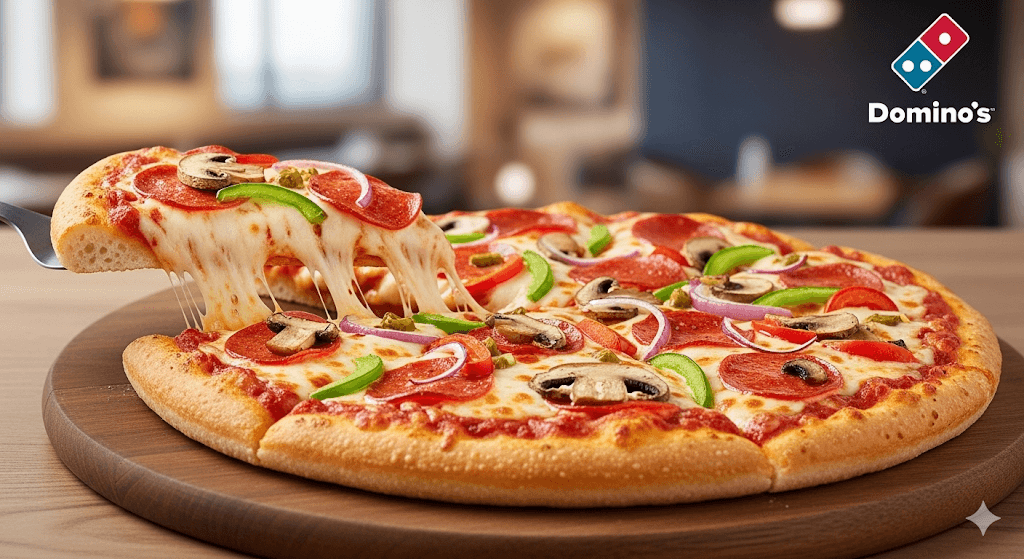
Founded in 1960 in the United States, Domino’s opened its first Indian store in 1996 in New Delhi. By 2025, they will have expanded to over 2,100 outlets in India, making them the largest pizza chain in the country. They are known for quick service, delivery innovations, and value.

Learn Digital Marketing for FREE

Marketing Objective or Business Challenge
Domino’s set a clear goal. Lead food delivery by acting like a tech company first and a pizza company second. The brand needed to turn ordering and delivery into a fast, frictionless experience and build loyalty through convenience.
Key challenges included shifting perception to a technology-led brand, scaling app adoption, and meeting a strict speed promise. Domino’s invested in digital ordering, its mobile app, website UX, and the Pizza Tracker to deliver a seamless journey from click to door.
In India, price sensitivity added pressure. Rather than frequent price hikes, Domino’s held prices steady for more than 15 quarters and relied on promotions and value deals to defend market share in a crowded QSR market.
The objective was twofold. Win on customer experience through technology and maintain affordability to drive repeat orders and long-term growth.
Buyers Persona:

Aisha Sharma
Metropolitan Cities
Occupation: Working Professional
Age: 25 – 38 years old
Motivation
- Seeking quick, hassle-free meal solutions after work.
- Maximizing leisure time instead of cooking.
- Finding affordable, shareable options for group hangouts and late-night cravings.
Interest & Hobbies
- Enjoy trying out new pizza flavors, combos, and limited-time offers.
- Engaged in food review communities and Zomato/Swiggy ratings.
- Loves exploring food delivery apps and discounts.
- Follows trends in food-tech, quick commerce, and meme culture around food.
Pain Points
- Lack of time to cook meals after long work hours.
- Craving convenience without compromising on taste.
- Gets frustrated with slow delivery or complex ordering flows.
- Wants value-for-money meal options that fit into a monthly budget.
Social Media Presence
- Instagram (Stories, Reels of food hacks & reviews)
- YouTube (Food vlogs, quick recipe creators)
- Twitter (for trending memes and food deals)
Marketing Channels Used by Domino's
Domino's runs a strong digital marketing strategy that combines performance marketing, local SEO, social media engagement, and a powerful omnichannel sales presence.
On the digital side, they invest in:
- SEO and SEM to dominate search results for high-intent keywords like "pizza near me" and meet immediate demand.
- Personalised ads on social media platforms like Instagram and YouTube target users based on their past orders and behaviour.
- Connected TV (CTV) and OTT advertising on platforms like Hotstar to reach audiences during streaming.
To encourage customer retention, Domino's uses email and push notifications with personalised offers based on factors like location, time, and weather.
They also maintain brand awareness through traditional media, particularly with impactful television commercials airing during major sporting events like the IPL.
For sales, Domino's focuses on a direct-to-consumer (D2C) model via its leading mobile app and website while also partnering with third-party aggregators like Swiggy and Zomato. Their extensive offline presence through franchise stores continues to serve both delivery and takeaway orders.
Check out our Pizza Hut Marketing Strategy breakdown for more industry insights.
Domino’s Marketing Strategy Breakdown
1. The Mobile App: The Core of the Ecosystem
The Domino's app is more than just a sales channel; it is the heart of their digital marketing strategy and customer experience.
The app's success comes from:
- A smooth user experience
- Exclusive in-app features and offers
- Strong data collection for personalisation
The app effectively ties together all parts of their strategy. App Store Optimisation (ASO) drives discovery, features like the Pizza Tracker and one-click reordering build loyalty, and push notifications deliver personalised deals directly to users. It turns a customer's smartphone into a reliable channel for Domino’s sales.
2. Content Marketing & SEO
Domino’s marketing strategy prioritises local SEO and a seamless user experience to attract ready-to-order customers.
They optimise their site and app for keywords related to immediate food needs. Some of the keywords they excel in include:
- pizza near me
- Food delivery is open now
- late-night food delivery
They also use smart App Store Optimisation (ASO), ensuring their app ranks high for "pizza" and "food delivery" searches.
On the technical side, they lead in page speed and mobile optimisation to ensure a smooth ordering experience. Their focus on voice search optimisation allows for easy ordering through assistants like Google Assistant and Alexa.
3. Google Ads & Performance Marketing
To target high-intent audiences, Domino’s employs a complete mix of:
- Local Google Search and Display Ads
- Performance Max Campaigns showcasing offers from nearby stores
- YouTube Ads are aimed at viewers based on location and food interests
Their AI-driven, data-supported method allows them to personalise ads in real-time. For instance, they can automatically show ads featuring vegetarian options to users who have previously ordered vegetarian pizzas, making their campaigns effective.
4. Social Media & Influencer Marketing
To build brand loyalty and engagement, Domino's implements a diverse social media strategy:
- Instagram and YouTube for visually appealing content and targeted video ads
- Local Influencer Campaigns
- Moment Marketing
They combine brand messaging with humour and pop culture. From memes to partnerships with local food bloggers, Domino’s makes its global brand feel like a neighbourhood favourite.
Results & Impact
Domino’s digital-first marketing strategy successfully aligned with its objectives of convenience, accessibility, and customer loyalty:
- Faster & Easier Ordering: The focus on the mobile app and website led to a surge in direct orders, with features like Pizza Tracker and one-click reordering driving repeat usage.
- Higher Visibility & Reach: Investments in hyper-local SEO and SEM campaigns ensured Domino’s dominated search results for “pizza near me,” boosting organic discovery and new customer acquisition.
- Stronger Brand Engagement: Social media campaigns across Instagram, Facebook, and YouTube, combined with influencer collaborations, created relatable, shareable content that strengthened Domino’s brand connection with younger audiences.
- Seamless Delivery Ecosystem: Partnerships with Swiggy and Zomato extended Domino’s reach to new customers, complementing its own delivery fleet and supporting rapid expansion into tier 2 and 3 cities.
- Customer Retention: Personalised push notifications, loyalty rewards, and targeted CRM campaigns improved repeat purchases, directly contributing to sustained sales growth.
What Worked & Why
Domino’s digital-first focus paid off through its mobile app personalisation, which boosted loyalty via features like Pizza Tracker and reordering. At the same time, hyper-local SEO and SEM ensured top visibility for “pizza near me.”
Engaging content on social media and influencer campaigns built strong brand connections, and the blend of its own fleet with Swiggy/Zomato expanded reach across metros and smaller cities, reinforcing Domino’s promise of convenience and accessibility.
What Didn’t Work & Why
Challenges emerged where strategy met execution, premium pricing limited traction in tier 2 and 3 cities, and delivery strain during peak demand sometimes broke the seamless experience.
On the product side, Domino’s lacked menu differentiation compared to local QSRs, while heavy reliance on discount-led engagement drove orders but risked long-term margins and diluted value perception.
IIDE Student Recommendations: Key Areas for Brand Improvement
1. Balance Discounts with Value Communication
- Domino’s has really made a name for itself by going all-in on discounts and deals, but there’s a catch: this strategy might lead customers to see the brand mainly as a low-cost option.
- To keep its brand strong in the long run, Domino’s needs to strike a balance between promotions and campaigns that showcase value beyond just price.
- For example, marketing efforts could highlight the quality of ingredients, exciting new menu items, freshness, and the stories behind sourcing and preparation.
- This approach would help craft a more compelling brand story that resonates emotionally with customers, rather than just relying on discounts.
- Additionally, by positioning itself not only as affordable but also as a provider of top-notch quality, Domino’s can build trust with the growing middle-class consumers who are ready to invest in better dining experiences.
2. Expand Menu Innovation for Tier 2 & 3 Cities
- While Domino’s has firmly established its presence in metropolitan areas, its future growth hinges on making deeper inroads into tier 2 and tier 3 cities, where local quick-service restaurants and eateries are tough competitors.
- To win over these markets, Domino’s should introduce affordable, locally inspired pizzas and sides that cater to regional tastes.
- For instance, trying out flavours inspired by local cuisines, such as paneer makhani or Chettinad toppings, at budget-friendly prices could attract cost-conscious customers while making Domino’s feel more in tune with the local culture.
- Additionally, offering bundled value meals for families could draw in households that view pizza as a special treat rather than a regular meal.
3. Strengthen Operational Efficiency During Peaks
- During peak times, such as festivals, weekends, and major sporting events like the IPL, Domino’s often finds it challenging to uphold its promise of delivering in “30 minutes or less.”
- To tackle this issue, the brand should consider investing in AI-powered demand forecasting to better predict order surges, streamline delivery staff schedules, and effectively manage workloads between its own fleets and delivery partners like Swiggy and Zomato.
- Enhancing last-mile operations with electric vehicle fleets, establishing dark kitchens in high-demand areas, and forming cloud kitchen partnerships would also contribute to maintaining speed and quality.
- Keeping operational efficiency in check is crucial for upholding the brand promise of convenience that Domino’s is known for.
4. Differentiate Through Health & Sustainability
- Consumer preferences are quickly evolving towards healthier and more responsible options.
- Domino’s has the opportunity to shine by launching a health-focused menu featuring choices like whole wheat or multigrain crusts, vegan cheese, fresh salads, and low-calorie drinks.
- To make an even bigger impact, the brand should connect these menu updates with sustainability efforts, such as eco-friendly packaging, carbon-neutral deliveries using electric vehicles, and collaborations with local farmers for sourcing ingredients.
- Being transparent about these initiatives can attract health-conscious urban millennials and Gen Z, who prioritise both wellness and sustainability.
- This kind of differentiation will help Domino’s stand out from competitors like Pizza Hut, which has been slower to embrace health-oriented messaging.
5. Enhance Omnichannel Consistency
- While Domino’s app and delivery service shine with their sleek design, the in-store experience sometimes falls short compared to competitors like Pizza Hut, which is often perceived as offering a more upscale dining experience.
- To bridge this gap, Domino’s should prioritise standardising and elevating its dine-in and takeaway services to align with its digital promise of convenience and quality.
- This could involve enhancing the store's ambience, ensuring comfortable seating, improving service quality, and maintaining high hygiene standards.
- By investing in consistent in-store branding and comprehensive staff training, Domino’s can guarantee that customers enjoy the same dependable experience, whether they’re ordering online, through the app, or visiting a physical location.
6. Leverage Corporate Discounts & Partnerships
- There’s a fantastic growth opportunity in expanding corporate discounts and forming institutional partnerships.
- Domino’s could team up with large companies, IT parks, and coworking spaces to provide bulk order packages, corporate lunch deals, and subscription-based discounts for employees.
- This strategy not only boosts recurring revenue but also fosters brand recognition among working professionals, particularly in urban areas where corporate dining is a daily necessity.
- By crafting a tailored B2B offering, Domino’s can move beyond individual orders and tap into larger, more reliable revenue streams.
Want to Know Why 5,00,000+ Students Trust Us?
Dive into the numbers that make us the #1 choice for career success



MBA - Level
Post Graduate in Digital Marketing & Business Strategy

Best For
Fresh Graduates

Mode of Learning
On Campus (Mumbai & Delhi)

Starts from
Jul 31, 2026

Duration
11 Months

Live & Online
Advanced Online Digital Marketing Course
Best For
Working Professionals
Mode of Learning
Online
Starts from
Aug 7, 2026
Duration
4-6 Months

Online
Professional Certification in AI Strategy
Best For
AI Enthusiasts
Mode of Learning
Online
Starts from
Jul 28, 2026
Duration
5 Months

Online or Offline
Top AI Courses to Make You Future Ready!
Best For
AI Enthusiasts
Mode of Learning
2–5 Month Program
Starts from
Jul 28, 2026
Duration
Flexiable

On Campus
Advanced Certification in Artificial Intelligence
Best For
AI Enthusiasts
Mode of Learning
On Campus (Mumbai)
Starts from
Aug 31, 2026
Duration
3 Months

Offline
Undergraduate Program in Digital Business & Entrepreneurship
Best For
12th Passouts
Mode of Learning
On Campus (Mumbai)
Starts from
Aug 19, 2026
Duration
3 Years

Offline
Degree In 2026 ≠ Enough Degree + Digital Skills = Future-Ready
Best For
12th Passouts
Mode of Learning
At IIDE Campus
Starts from
Aug 6, 2026
Duration
3 Years
Recent Post

Lead Trainer & Business Development Head at IIDE
Aditya Shastri leads the Business Development segment at IIDE and is a seasoned Content Marketing expert. With over a decade of experience, Aditya has trained more than 20,000 students and professionals in digital marketing, collaborating with prestigious institutions and corporations such as Jet Airways, Godrej Professionals, Pfizer, Mahindra Group, Publicis Worldwide, and many others. His ability to simplify complex marketing concepts, combined with his engaging teaching style, has earned him widespread admiration from students and professionals alike.
Aditya has spearheaded IIDE’s B2B growth, forging partnerships with over 40 higher education institutions across India to upskill students in digital marketing and business skills. As a visiting faculty member at top institutions like IIT Bhilai, Mithibai College, Amity University, and SRCC, he continues to influence the next generation of marketers.
Apart from his marketing expertise, Aditya is also a spiritual speaker, often traveling internationally to share insights on spirituality. His unique blend of digital marketing proficiency and spiritual wisdom makes him a highly respected figure in both fields.