
Students Centric
Placements Report
Trackable results, real numbers
Reviews
Proven success, real voices
Trainers
Expert-led, Industry-Driven Training
Life at IIDE
Vibrant Spirit student life
Alumni
Successful Journeys, Inspiring Stories
Learning Centre
Webinars
Blogs
Case studies
Live, Interactive Masterclasses
Fresh Insights, quick reads
Real-life, Industry relevant
More
Hire from us
Hire Top Digital Marketing Talent
Work with us
Join Our Team, Make an Impact
Customised Training
Personalised digital marketing training for your company
Refer & earn
Simple, easy rewards
Contact us
Get the answers you need
About us
Know more about IIDE
Explore all course options

FOR FRESH GRADUATES
Post Graduation Program in Digital Marketing & Business Strategy- Ideal for Age: 20–25 Years

Can’t decide? Explore all our
Digital Marketing Courses
FOR STUDENTSOn-campus
Advanced Certification in AI
FOR WORKING PROFESSIONALSOnline
Professional Certification in AI StrategyIndustry-Aligned TRACKMost Popular
UG Program in Digital Business & Entrepreneurship- Ideal for 12th Pass out / FY Degree Student

PARTNER PROGRAMS





Can’t decide? Explore all
BBA In Digital Marketing Colleges
Orginally Written by Aditya Shastri
Updated on Aug 9, 2025
Share on:


About Meru Cabs

Meru cabs are the most trusted brand in India for providing cab service to customers as well as corporates. The company provides its services across the top 4 cities of India with a fleet of 5000 taxis.
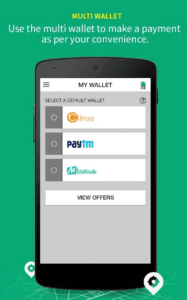
The company also provides an app through which users can confirm their registration and choose where they want to go using GPS.
Meru Cab also focuses on personal rides through their app named “Meru Outstation”, which provides its services for weekends, business, outings, etc., and covers over 7000+ destinations across 100 cities.
The company also provides its services in a business called ‘Meru-biz’, which provides end-to-end mobility of resources in a structured and reliable tech-driven environment. It provides a smooth, smart, and cost-effective travel system that can be customized as per the organization’s needs or budget. Enabling access to all company rides, costs per individual, and setting up rules and regulations for all these features on one platform.
Meru’s fleet scopes from hatchbacks, sedans, and premium sedans, to SUVs and electric vehicles (EVGO).
Without any further ado, Let’s jump to our prominent part that is the Business Model of Meru Cabs.
Business Model of Meru Cabs
As you know, Meru Cab owns 12% of the market share as compared to Ola. Ola has 80% of the market share both in the customer and corporate sectors, but it mainly focuses on customers and less on businesses, which creates an advantage for Meru cabs to operate in this section.
So in this business model of Meru Cab, we are going to understand the following points.
- The driver deposits Rs 10,000.
- Meru purchases the car and gives it to the driver. The driver is not an employee of Meru
- Meru trains the driver on soft skills. The basic qualification for the driver is a minimum of three years of experience on the city roads, with a basic knowledge of reading addresses in English.
- The fuel cost has to be carried out by the driver.
- The maintenance of the car is borne by Meru.
- Meru helps their drivers by providing bookings through their call centres.
- The driver is free to take passengers if he doesn’t receive any calls from the call centre.
- The driver is assigned a ride from the call centre by tracking his presence through the GPS navigation system, and hence he can not ignore the call centre’s trip assignment.
- In return, the driver provides Rs. 1000-1200 per day to Meru.
(Be aware that this is a per-day charge rather than a per-call charge, which means that even if the driver does not receive a call from Meru on a given day, he is still required to pay Rs. 650-900 as rent for using the car.)
- Whatever the driver earns above these 1000-1200 rupees is his income.
So, this was a brief introduction to the business model of Meru Cabs. Now, let’s quickly move on to the competitor’s comparison table.
OLA VS MERU
| MERU | OLA |
| Meru Cabs were founded by Mr Neeraj Gupta. | Ola cabs were founded by Mr Bhavish Aggrawal. |
| Meru cab has 12% of the market share. | Ola cab has 80% of the market share. |
| Meru is a company that is more call-centre based as it assigns the specific customer to the driver. | Ola is the company that executes most of its orders through apps as it doesn’t assign specific customers. |
| Meru operates on a single app providing different services like Meru biz, Meru outstation, etc. | Ola operates through their main app as well as other apps such as Ola Wallet, Ola Food Delivery, and so on. |
| Meru cabs provide a car to its driver where the driver makes a deposit and then this driver is assigned to carry out the destination given to them. | Ola cabs operate differently in that they don’t own any cars, but they provide a platform for those who are already experienced in this field. |
| Meru Cab mainly focuses on the B2B business as it’s their main source of revenue, and it’s mainly corporate-centric as they provide a different array of services to corporate businesses. | Ola cab is customer-centric as it provides most of its services to customers who can try to select different types of vehicles as per their needs. |
Meru cabs have started taking registration through its app, but still, it takes most of the registration from the call centre. | Ola cabs operate and provide their bookings through the app only. |
In the next segment of the business model of Meru Cabs, we have a comprehensive SWOT Analysis of Meru Cabs.
Swot Analysis on Meru Cabs
Strengths of Meru Cabs –
- The first company to establish cab services across the country was
- High awareness as a taxi operator.
- Presence across many cities in India.
- Meru cab drivers are well trained about safety and security issues as well as well-versed with communication skills.
- Meru car was one of the first companies to start metered radio cabs.
- Available for 24×7 e-bill service.
- MeruCab still has control over various airports.
- Meru cabs are business-friendly as they provide the overall cost of transportation and solutions to reduce the cost as well.
- Serves our 2 million customers and is recognized with multiple awards.
- Meu has a call centre for services or any emergencies.
- Meru has tamper-proof digital cab meters, integrated with a GPS tracker to ensure
- Every fare is tracked.
- Meru Cab keeps their cabs clean and tidy.
Weaknesses of Meru Cabs
- In Meru’s business model, the cabs are owned by the company, so the company is responsible for the maintenance of the cars, which indirectly increases its expenses.
- The sudden surge in competition would lead to lower margins (lower profitability) and lower market share.
- Meru cab still carries out their registration on call-centre booking.
- Meru does not provide non a/c cabs.
- It becomes difficult for the user to contact the company if there is any server breakdown.
Opportunities for Meru Cabs
- The unorganized market in India is huge, approximately 90%, and hence the potential is high.
- Increasing internet penetration and up-gradation of technology can lead to an increase in leads.
- Increasing disposable income.
- The shifting of consumers towards convenience creates huge demand.
- They should try different techniques of operating the cab, like, instead of giving them the car, providing the services to the one who owns the car.
- The company should try to operate more through the app Also, they should try to make the app interface more user-friendly.
- Meru Cab should not only focus on metro cities but also tier-2 cities.
- Meru cab should think about the strategic partnership, which will help the company to increase its market share.
- Meru Cab also provides AAS (Assured Airport Services).
Threats for Meru Cabs
- Rising competition.
- Because Uber and Ola are massive corporations, they can afford to invest heavily in R&D.
- The presence of a large number of national players.
- Customer preference changes daily, so it is hard to keep the customers satisfied every time.
- The future is unclear as the government imposes lots of regulations.
- OLA has a major market share which includes 80% of the customer base.
The revenue model or the money-making process of Meru Cabs is firmly evaluated and profit-oriented. Let’s go through them in detail analysis in the upcoming section of the business model of Meru Cabs.
Money Making Process of Meru Cabs
Revenue generated from the Cabs
Meru Cabs has fixed an appropriate amount of pay from the drivers to the company regularly. They need to pay approx 1000 to 1200 rupees per day. So, it ultimately states that each car on the road facilitates them with some revenue consistently. Any money earned over Rs. 1200 / day goes to the driver. Meru, on the other hand, provides a certain minimum number of trips. However, Meru sets the rates per kilometre travelled.
Advertisements
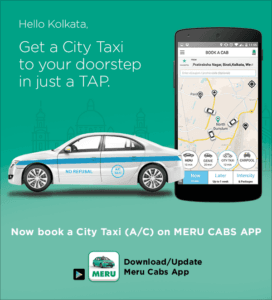
Everyone requires publicity, Meru Cabs initiated a very innovative project in which HG collaborated with various brands and promised them to publicize their advertisements on their car. These advertisements pay the drivers a total sum of 1000 rupees. These advertisements are run for a specific amount of time. By this, the drivers are encouraged to bring more revenue.
Ever wondered how these cabs are allocated to various customers, within seconds? Let’s understand that together.
Allocation of Cabs
The heart of the business model of Meru Cabs lies in the centralised command centre, the drivers in the vicinity receives a message to arrive at a certain pickup location with a specific pick up time and board the ride. They maintain a keen record of the time they’re free along.
Lately, they’ve introduced a GPS tracking system for Cabs to deliver accurate information and show the visibility of the cabs in the App.
To cover all the locations across the city, always be an essential element for them. They ensure that the drivers are spread across the city and no particular area goes without a free cab for a long duration of time. This centralized system tracks all the cabs and thus do not take any chance to affect the business.
As we are now close to the end of the business model of Meru Cabs, we’ve analysed certain major challenges for them. Let’s study them.
Challenges to Meru Cabs
There’s no doubt that Meru has been a success story till now, but what hurts the most is the company’s No-holiday Policy. The drivers have to work every single day, in case of sickness or family emergency they still need to pay the permanent amount fixed by the company.
In India, working every day is not a problem from a driver’s perspective as they are already used to it but it hurts them financially when they need to take urgent leaves. The company is now facing direct competition with Ola Cabs, Mega Cabs, Uber, etc.

Learn Digital Marketing for FREE


Want to Know Why 2,50,000+ Students Trust Us?
Dive into the numbers that make us the #1 choice for career success



MBA - Level
Post Graduate in Digital Marketing & Business Strategy

Best For
Fresh Graduates

Mode of Learning
On Campus (Mumbai & Delhi)

Starts from
Jul 31, 2026

Duration
11 Months

Live & Online
Advanced Online Digital Marketing Course
Best For
Working Professionals
Mode of Learning
Online
Starts from
Jul 3, 2026
Duration
4-6 Months

Online
Professional Certification in AI Strategy
Best For
AI Enthusiasts
Mode of Learning
Online
Starts from
Jul 28, 2026
Duration
5 Months

On Campus
Advanced Certification in Artificial Intelligence
Best For
AI Enthusiasts
Mode of Learning
On Campus (Mumbai)
Starts from
Jul 27, 2026
Duration
3 Months

Offline
Undergraduate Program in Digital Business & Entrepreneurship
Best For
12th Passouts
Mode of Learning
On Campus (Mumbai)
Starts from
Aug 1, 2026
Duration
3 Years
Offline
Undergraduate Program in Digital Business & Entrepreneurship
Best For
12th Passouts
Mode of Learning
On Campus (Mumbai)
Starts from
Aug 1, 2026
Duration
3 Years
Recent Post

Lead Trainer & Business Development Head at IIDE
Aditya Shastri leads the Business Development segment at IIDE and is a seasoned Content Marketing expert. With over a decade of experience, Aditya has trained more than 20,000 students and professionals in digital marketing, collaborating with prestigious institutions and corporations such as Jet Airways, Godrej Professionals, Pfizer, Mahindra Group, Publicis Worldwide, and many others. His ability to simplify complex marketing concepts, combined with his engaging teaching style, has earned him widespread admiration from students and professionals alike.
Aditya has spearheaded IIDE’s B2B growth, forging partnerships with over 40 higher education institutions across India to upskill students in digital marketing and business skills. As a visiting faculty member at top institutions like IIT Bhilai, Mithibai College, Amity University, and SRCC, he continues to influence the next generation of marketers.
Apart from his marketing expertise, Aditya is also a spiritual speaker, often traveling internationally to share insights on spirituality. His unique blend of digital marketing proficiency and spiritual wisdom makes him a highly respected figure in both fields.