
Students Centric
Placements Report
Trackable results, real numbers
Reviews
Proven success, real voices
Trainers
Expert-led, Industry-Driven Training
Life at IIDE
Vibrant Spirit student life
Alumni
Successful Journeys, Inspiring Stories
Learning Centre
Webinars
Blogs
Case studies
Live, Interactive Masterclasses
Fresh Insights, quick reads
Real-life, Industry relevant
More
Hire from us
Hire Top Digital Marketing Talent
Work with us
Join Our Team, Make an Impact
Customised Training
Personalised digital marketing training for your company
Refer & earn
Simple, easy rewards
Contact us
Get the answers you need
About us
Know more about IIDE
Explore all course options

FOR FRESH GRADUATES
Post Graduation Program in Digital Marketing & Business Strategy- Ideal for Age: 20–25 Years

Can’t decide? Explore all our
Digital Marketing Courses
COMPARE BOTH OUR PROGRAMSOffline
Offline AI Courses with Dual CertificationsIndustry-Aligned TRACKMost Popular
UG Program in Digital Business & Entrepreneurship- Ideal for 12th Pass out / FY Degree Student

PARTNER PROGRAMS






Can’t decide? Explore all
BBA In Digital Marketing Colleges

Orginally Written by Kartik Mittal
Updated on Jun 10, 2026
|9,297K+ views
Share on:


The best commerce courses after 12th for girls cover Chartered Accountancy (CA) and Company Secretary (CS) for professional certifications, while BBA and B.Com offer broader traditional management degrees. Trending and emerging courses like Digital Marketing and Actuarial Science promise a strong career in 2026.
But what do these investments really give in return? While the fees of these courses range between ₹20,000 and ₹3 lakh yearly, the ROI you can expect is between ₹6 lakh and ₹12 lakh if you are just starting in the market.
Why Choosing the Right Course After 12th Commerce Matters for Girls?
Pursuing commerce courses after 12th for girls, your decision not just defines what you've earned. It also shapes your confidence, earning potential, and long‑term career options.
The right courses after 12th commerce for girls can open doors to dignified roles, strong placement records, and adjustable work settings.
With more women entering CA, CS, BBA, and digital‑driven fields, pursuing a career that aligns with your personality, risk potential, and lifestyle is more important today than it ever was.
How the Job Market Has Changed for Commerce Graduates in 2026?
The 2026 commerce schools combine traditional finance roles with technical paths like digital marketing, analytics, and fintech, creating fresh career options after 12th commerce for girls. Many companies now prioritise skills gained from professional courses, such as CA, CMA, and CS. However, the management degrees like BBA and B.Com still hold a strong value.
Gender pay gaps remain, but in several commerce‑aligned roles, especially in data‑driven and consulting‑style jobs, the gap is narrowing. Women are increasingly securing equal or near‑equal packages in audit, compliance, and digital‑business roles compared to men with similar experience.
Women in commerce today are seeing better starting wages and faster progression when they pair qualifications with practical skills. Work‑life balance also varies by course:
- CA offers high pay but often long, demanding hours, especially in Big 4 firms.
- BBA and B.Com with digital specialisations tend to offer more structured 9‑to‑6 roles and better flexibility.
- CS and CMA enjoy strong salaries and relatively stable workloads.
For safety, many commerce programs now come with strong online or hybrid options. This makes it easier for girls studying away from home to manage commute, safety, and family responsibilities while still pursuing leading high‑growth careers.
As per the fresh data, recent management‑cohort reports show that women make up around half or more of several top‑ranked programs. Roughly 50-60% of women are in selective IIM and equivalent B‑school cohorts.
Common Mistakes to Avoid When Picking a Course
Many girls follow the course trends without evaluating their own strengths, leading to mismatched choices. Common mistakes include:
- Choosing only based on popularity (CA, BBA, or CS) without checking if the workload, exam pattern, and daily routine suit your temperament.
- Ignoring the salary vs effort ratio and ending up in a course that demands long hours and high stress without matching your tolerance.
- Overlooking placement records and NIRF/UGC‑approved college quality, which can make a big difference in internship and job opportunities.
- Skipping short‑term or easy courses after 12th in commerce, like free or affordable certificate programs, can build skills without a huge investment.
To avoid these pitfalls, clearly decide whether you want a professional certification (CA/CS/CMA), a degree (B.Com/BBA), or a skill‑based creative path (digital marketing, data analytics) before confirming your final destination.
How to Use This Guide
This guide is designed to help you quickly compare the top courses after 12th commerce for girls based on important factors like average fees, salaries, and job options. You’ll see each commerce course and degree broken down by job opportunities, math required or not, and earning potential, so you can pick the right commerce course for your goals.
Admissions Closing Soon: Bachelor's in Digital Business!

Admissions Closing Soon: Bachelor's in Digital Business!
Top Courses After 12th Commerce for Girls with Duration, Fees & Eligibility in 2026
In this section, you’ll see the top commerce courses after 12th, with clear details on duration, fees, and eligibility for each path. It covers both professional courses and mainstream degrees, along with emerging options.
Use this table to compare how long each program takes, how much it costs, and what 12th‑commerce eligibility you need before finalising your niche.
| Course name | Course Duration | Course Fees | Eligibility |
|---|---|---|---|
| Digital Business | 3 years | ₹1-30 lakh total | 12th pass any stream with 50-60% |
| Chartered Accountancy | 3-5 years | ₹2-3 lakh total | 12th commerce pass with 50% |
| Company Secretary | 2-3 years | ₹1.5-2.5 lakh total |
12th commerce pass with 50-55% |
|
Bachelor of Business Administration |
3 years | ₹3-8 lakh total | 12th pass any stream with 50-55% |
| Bachelor of Commerce | 3 years | ₹1-4 lakh total | 12th commerce pass 45-50% |
| Bachelor of Legislative Law | 5 years | ₹3-10 lakh total | 45-50% in any stream |
| Cost and Management Accounting | 2-3 years | ₹1.5-2.5 lakh total | 12th commerce pass with 50% |
| Actuarial Science | 3-4 years | ₹2-6 lakh total | 12th pass in commerce or science |
| Digital Marketing | 3-12 months | ₹50,000-₹2 lakh | 12th pass in any stream |
| Bachelor of Computer Applications | 3 years | ₹2-7 lakh total | 12th pass in commerce and science |
| Bachelor of Design | 4 years | ₹4-12 lakh | 12th pass in any stream |
| Bachelor of Economics | 3 years | ₹1-3 lakh total | 12th pass in commerce and science |
| BBA in International Business | 3 years | ₹1-24 lakh total |
12th pass with 50% in any stream with relevant entrance exams |
| Bachelor of Event Management | 3 Years | ₹9 lakh total |
12th pass with 50% in any stream with relevant entrance exams |
Top Professional & Degree Courses
1. Digital Business
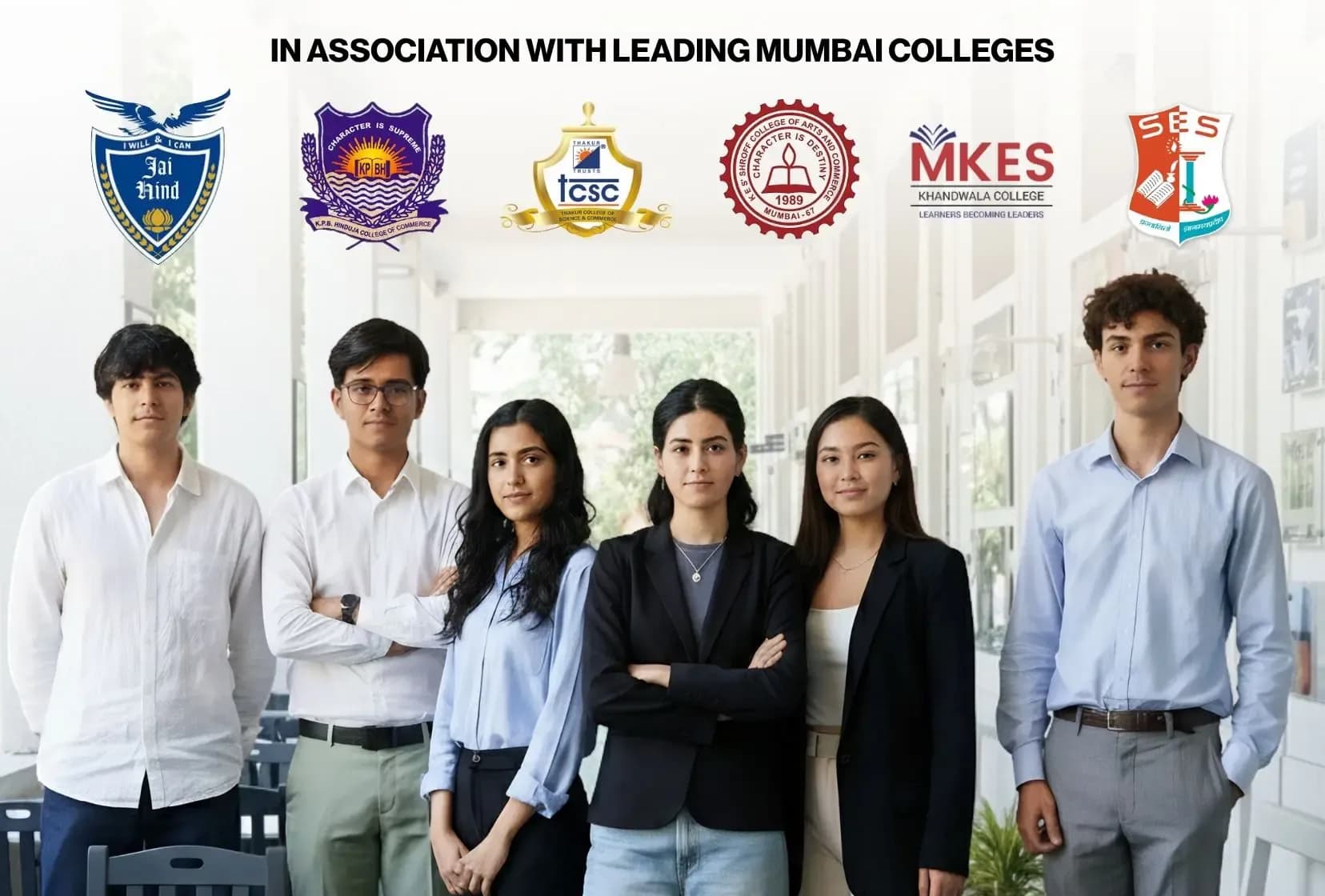
A Digital Business degree is a 3-year undergraduate program that builds a strong foundation in business management. It can be pursued under a B.Com or a BBA degree. This course includes practical skills in digital marketing, e-commerce, data analytics, and online strategy. Designed for the rapidly growing and changing digital economy, the course prepares learners to manage, grow, and lead businesses. It is one of the most future-ready courses a commerce student can pursue after Class 12.
Key Subjects in BBA in Digital Business
| Subject Area | Topics Covered |
|---|---|
| Business Fundamentals |
Management Principles, Business Communication, Organisational Behaviour |
| Digital Marketing |
SEO, Social Media Marketing, Content Marketing, Email Marketing |
| E-Commerce |
Online Business Models, E-Commerce Operations, Digital Payments |
| Data & Analytics |
Business Statistics, Web Analytics, Google Analytics, Data-Driven Decision Making |
| Finance & Accounting |
Financial Literacy, Basics of Accounting, Financial Reporting |
| Entrepreneurship |
Startup Strategy, Innovation Management, Business Planning |
| Technology & Tools |
MS Office, CRM Tools, Marketing Automation, AI in Business |
| Consumer & Market Research |
Consumer Behaviour, Market Research, Competitor Analysis |
Job Opportunities after BBA in Digital Business
Graduates of BBA in Digital Business can pursue careers as Digital Marketing Managers, SEO & Content Strategists, Social Media Managers, E-Commerce Managers, Business Analysts, Digital Business Consultants, or even launch their own startups and digital ventures.
Fees Range for BBA in Digital Business
The total fee for a BBA in Digital Business typically ranges between ₹1,00,000 and ₹30,00,000, depending on the institution, location, and course structure.
Top Colleges Offering BBA in Digital Business
- IIDE - The Digital Business School (Mumbai)
- JAIN University (Bangalore)
- Thakur College of Arts, Science & Commerce (Mumbai)
- Amity University (Noida)
- KES Shroff College of Arts, Science & Commerce (Mumbai)
- Jai Hind College (Mumbai)
- KPB Hinduja College (Mumbai)
Our Recommended Institute
From all the colleges mentioned above, IIDE stands out as the top choice for students looking to pursue a degree in digital business after the 12th, and here's why:
IIDE's Undergraduate Program in Digital Business & Entrepreneurship is a Mumbai-based, offline program for students who want more than a traditional degree. Built for future founders and operators, it prepares students to launch startups, digitise family businesses, or thrive in digital-first companies.
Learning goes beyond theory, where students work on real business challenges, live projects, and case studies guided by industry leaders. The curriculum is designed in coordination with active founders and CXOs.
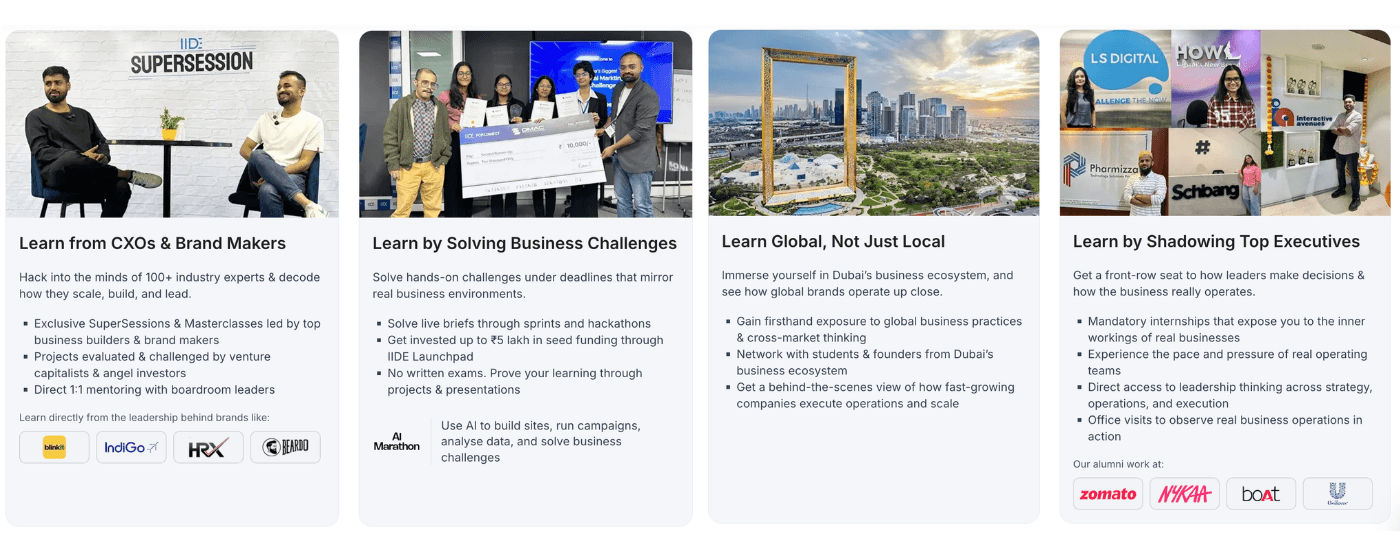
The fees for IIDE's Undergraduate in Digital Business & Entrepreneurship Program are ₹3,30,000 per year. It is a valuable investment for students looking to build a strong career in digital business.
Students who passed their 12th Standard from any board with a 50% score or above can apply. The admission process involves an online application and a personal interview for shortlisted candidates.
2. Chartered Accountancy (CA)
CA is one of the most respected and sought-after professional career in India. It is regulated by the Institute of Chartered Accountants of India (ICAI). The students have to cross three levels of Foundation, Intermediate, and Final, followed by a mandatory 3-year articleship. It typically takes around 4.5 to 5 years to complete after Class 12.
Key Subjects in Chartered Accountancy
| Level | Subjects |
|---|---|
| CA Foundation |
Principles of Accounting, Business Laws, Business Mathematics, Business Economics |
| CA Intermediate |
Advanced Accounting, Corporate Laws, Taxation, Cost & Management Accounting, Auditing, Financial Management |
| CA Final |
Financial Reporting, Strategic Financial Management, Advanced Auditing, Corporate & Economic Laws, Risk Management, International Taxation |
| Articleship (Practical Training) |
Hands-on experience in audit, taxation, finance, and compliance under a practising CA |
Job Opportunities after Chartered Accountancy
A Chartered Accountant student can look forward to becoming an Auditor, Tax Consultant, Financial Analyst, CFO (Chief Financial Officer), Investment Banker, Forensic Accountant, Management Consultant, Internal Auditor, and Finance Manager.
Fee Range for CA
The total ICAI registration and exam fees across all three levels of the CA course range between ₹30,000 and ₹80,000. And the CA coaching classes can cost anywhere between ₹50,000 and ₹2,50,000 per level, depending on the institute.
Top Colleges Offering CA Preparation
- ICAI (Institute of Chartered Accountants of India) (Recommended)
- Shri Ram College of Commerce (SRCC), Delhi
- Narsee Monjee College of Commerce & Economics, Mumbai
- Loyola College, Chennai
- St. Xavier's College, Mumbai & Kolkata
- Christ University, Bangalore
- VSI (Vidya Sagar Institute), Jaipur
- JK Shah Classes (Multiple Cities)
- Swapnil Patni Classes, Pune
- Wisdom Academy, Mumbai
Recommended Institute
There's really no better place to start than ICAI itself for the CA studies. As the official body that conducts and regulates the entire CA qualification in India, ICAI provides structured study material, mock tests, and registered coaching through its own network of branches across the country.
3. Company Secretary (CS)
Company Secretary (CS) is a professional course after 12th commerce that trains you in corporate law, compliance, governance, and secretarial practices for companies and listed entities. It has three levels: Foundation, Executive, and Professional, and takes around 3 to 4 years to complete. It's a great pick for students who are interested in the legal and regulatory side of running a business.
Key Subjects in Company Secretary (CS)
| Level | Subjects |
|---|---|
| CSEET (Entry Test) |
Business Communication, Legal Aptitude & Logical Reasoning, Economic & Business Environment, Current Affairs |
| CS Executive - Module I |
Jurisprudence & General Laws, Company Law, Setting up of Business Entities, Corporate & Management Accounting |
| CS Executive - Module II |
Tax Laws, Economic & Commercial Laws, Securities Laws, Financial & Strategic Management |
| CS Professional |
Corporate Governance, Drafting & Pleadings, Corporate Restructuring & Insolvency, Secretarial Audit & Compliance, Advanced Tax Laws, Risk Management |
Job Opportunities after CS
After CS, you can work as a Company Secretary, compliance officer, corporate‑governance specialist, or legal‑advisor in listed companies, MNCs, and corporate‑law firms.
Fee Range for Company Secretary
The total ICSI registration and exam fees across all three levels of the CS course range between ₹35,000 and ₹45,000. While the coaching fees can cost anywhere between ₹50,000 and ₹1,50,000.
Top Colleges Offering Company Secretary Preparation
- ICSI (Institute of Company Secretaries of India), New Delhi
- CS Nitesh Kumar Jaiswal Classes, New Delhi
- Unique Academy for Commerce, Pune
- IGP Institute, Online/Pan India
- Gyan Sagar Classes, New Delhi
- JK Shah Classes, Multiple locations
- Navkar Institute, Ahmedabad
- Bhagya Achievers, Hyderabad
- iProledge Academy, Bangalore
- Wisdom Academy, Mumbai
Recommended Institute
For CS, ICSI is the best institute to look forward to. It is a legal body that runs, regulates, and certifies the entire Company Secretary profession in India. Registering directly with ICSI gives you access to official study material, past papers, mock tests, and chapter-wise guidance.
4. Bachelor of Business Administration (BBA)
Bachelor of Business Administration (BBA) is a degree course after 12th commerce that builds management, marketing, and business skills needed in today's business world. The course covers essential subjects, giving students a strong foundation in how businesses work. It's one of the most popular undergraduate choices for commerce students who want to step into the corporate world early or want to pursue an MBA.
Key Subjects in BBA
| Subject Area | Topics Covered |
|---|---|
| Management Fundamentals |
Principles of Management, Organisational Behaviour, Business Communication |
| Marketing |
Marketing Management, Consumer Behaviour, Brand Management, Digital Marketing |
| Finance & Accounting |
Financial Accounting, Business Mathematics, Financial Management |
| Human Resource Management |
HR Planning, Recruitment & Selection, Training & Development, Labour Laws |
| Economics |
Micro & Macroeconomics, Business Environment, International Economics |
| Operations & Strategy |
Operations Management, Strategic Management, Supply Chain Basics |
| Entrepreneurship |
Business Planning, Innovation Management, Startup Fundamentals |
| Research & Analytics |
Business Research Methods, Data Interpretation, Decision Making |
Job Opportunities after a BBA
After BBA, you can work in marketing, sales, HR, operations, or digital‑business roles in startups, corporates, and service‑sector companies.
Fees Range for BBA
BBA course fees in India typically range between ₹3,00,000 and ₹8,00,000 in total, depending on whether you choose a government or private college.
Top Colleges Offering BBA
- Shaheed Sukhdev College of Business Studies (SSCBS), New Delhi (Recommended)
- Christ University, Bangalore
- NMIMS (Narsee Monjee Institute of Management Studies), Mumbai
- Symbiosis Centre for Management Studies (SCMS), Pune
- Loyola College, Chennai
- St. Xavier's College, Mumbai
- Amity University, Noida
- UPES (University of Petroleum & Energy Studies), Dehradun
- TAPMI (T.A. Pai Management Institute), Bangalore
- HR College of Commerce & Economics, Mumbai
Recommended College
Shaheed Sukhdev College of Business Studies consistently ranks first for the BBA degree in India. It offers quality education at one of the lowest fee structures among all top BBA colleges in the country. It is a part of Delhi University, which means students get strong academic credibility, a wide alumni network, and wonderful placement opportunities with top recruiters across industries.
5. Bachelor of Commerce (B.Com)
Bachelor of Commerce (B.Com) is one of the most widely pursued courses by commerce students in India, and works really well as a base for further qualifications like CA, CS, MBA, or MCom. If you want to keep your options open while building solid commerce knowledge, B.Com is a safe and smart choice.
Key Subjects in Bachelor of Commerce
| Subject Area | Topics Covered |
|---|---|
| Accounting |
Financial Accounting, Advanced Accounting, Cost Accounting |
| Economics |
Micro & Macroeconomics, Business Economics, Indian Economic Development |
| Taxation | Income Tax, GST, Indirect Taxation |
| Business Law |
Company Law, Contract Law, Business Regulatory Framework |
| Finance |
Financial Management, Banking & Insurance, Financial Markets |
| Management |
Principles of Management, Human Resources Management, Organisational Behaviour |
| Marketing |
Marketing Management, Consumer Behaviour, E- Commerce Basics |
| Statistics & Mathematics |
Business Statistics, Business Mathematics, Quantitative Techniques |
Job Opportunities after B.Com
After B.Com, you can work as an accountant, tax assistant, bank clerk, or finance‑executive, or continue with CA/CS/CMA or digital‑marketing courses.
Fee Range for Bachelor of Commerce (B.Com)
B.Com fees in India can range from as low as ₹1,00,000 to ₹4,00,000 in total, making it one of the most affordable undergraduate degrees in the country.
Recommended College
Shri Ram College of Commerce is consistently ranked as the best B.Com college in India. No other college can match the academic force at SRCC. The faculty is excellent, and the alumni network includes some of the most prominent names in Indian business and finance. Getting into SRCC is competitive, but if you make it, you get to enjoy top placements, higher studies, and professional networks that are rare to find anywhere else in the country.
Explore our curated list of the best commerce colleges in Mumbai to find the right fit for your academic and career goals.
6. Bachelor of Legislative Law
Bachelor of Legislative Law is a 5-year integrated degree course after 12th commerce that teaches commerce with core legal subjects like constitutional law, corporate law, taxation law, and contract law. It prepares you for a career in litigation, corporate law, or even civil services. For commerce students who are drawn to the legal and regulatory side of things, this one is the best path you can take.
Key Subjects in Bachelor of Legislative Law
| Year | Subjects Covered |
|---|---|
| Year 1 |
Law of Contract, Constitutional Law, Legal Methods, Political Science, English |
| Year 2 |
Law of Torts, Criminal Law, Family Law, Sociology, Economics |
| Year 3 |
Corporate Law, Administrative Law, Property Law, Labour Laws, History |
| Year 4 |
Company Law, Taxation Law, Environmental Law, Criminology, Jurisprudence |
| Year 5 |
International Law, Intellectual Property Rights, Arbitration & ADR, Legal Drafting, Moot Court Practice |
Job Opportunities after LLB
After LLB, you can work as a corporate‑lawyer, litigation lawyer, legal‑advisor, or compliance officer in firms, corporations, or government bodies.
Fee Range for Bachelor of Legislative Law (LLB)
You can expect LLB fees to be between ₹3,00,000 and ₹10,00,000 in total at top colleges in India.
Top Colleges Offering Bachelor of Legislative Law (LLB)
- National Law School of India University (NLSIU), Bangalore
- National Law University (NLU), Delhi
- NALSAR University of Law, Hyderabad
- Symbiosis Law School, Pune
- Government Law College, Mumbai
- Faculty of Law, Delhi University, New Delhi
- ILS Law College, Pune
- Christ University School of Law, Bangalore
- Amity Law School, Noida
- Jindal Global Law School, Sonipat
Recommended College
NLSIU Bangalore is ranked as the number one law school in India by the NIRF rankings. It's widely considered the standard legal education in the country. If you crack the competition, you get to share the class with some of India's finest legal minds. The placement record, faculty quality, and alumni network at NLSIU can not be matched across all law schools in India.
7. Cost and Management Accounting (CMA)
CMA is a professional qualification offered by the Institute of Cost Accountants of India (ICMAI). The course trains you in cost accounting, financial management, strategic planning, and business decision-making. The aspirants need to go through three rounds of Foundation, Intermediate, and Final. This takes around 3 to 4 years to complete, depending on your pace and exam attempts. It's a solid choice for commerce students who want a career in finance and accounting without going the CA route.
Key Subjects in Cost and Management Accounting
| Level | Subjects |
|---|---|
| CMA Foundation |
Fundamentals of Accounting, Business Laws, Business Economics, Business Mathematics & Statistics |
| CMA Intermediate - Group I |
Financial Accounting, Cost Accounting, Direct & Indirect Taxation, Corporate Laws & Ethics |
| CMA Intermediate - Group II |
Operations Management, Strategic Management, Financial Management, Cost & Management Accounting |
| CMA Final - Group I |
Corporate Financial Reporting, Strategic Cost Management, Strategic Financial Management, Direct Tax Laws |
| CMA Final - Group II |
Corporate Laws & Compliance, Risk Management, Indirect Tax Laws & Practice, Performance Management |
Job opportunities after CMA
After CMA, you can work as a cost‑accountant, management‑accountant, internal‑auditor, or finance‑controller in corporates and manufacturing units.
Fee Range for CMA
The total ICMAI registration and exam fees across all three levels range between ₹67,000 and ₹1,20,000. While the coaching fee costs between ₹1,50,000 and ₹2,50,000 lakh total.
Top Institutes Offering CMA
- ICMAI (Institute of Cost Accountants of India), New Delhi (Recommended)
- VSI (Vidya Sagar Institute), Jaipur
- Imarticus Learning, Mumbai & Bangalore
- JK Shah Classes, Mumbai & Ahmedabad
- ArivuPro Academy, Chennai & Bangalore
- Navkar Institute, Ahmedabad
- Shree Guru Kripa Institute, Delhi
- Wisdom Academy, Mumbai
- EduPristine, Pan India
- CARAJACLASSES, Online/Pan India
Recommended College
For CMA, registering directly with ICMAI is the most reliable. It is the only statutory body in India authorised to award the CMA designation, and provides the official study material, conducts exams twice a year (June and December). Pairing ICMAI's official study resources with a good coaching institute gives you the strongest possible preparation.
8. Actuarial Science
Actuarial Science is a specialised field teaching aspirants to assess and manage risk in the insurance, banking, and pension sectors. It's one of the highest-paying career paths in finance and is perfect for commerce students who are very strong in numbers and enjoy analytical problem-solving. The course is offered at the undergraduate level as a BSc or BCom, and professional certification is done through the Institute of Actuaries of India (IAI).
Key Subjects in Actuarial Science
| Subject Area | Topics Covered |
|---|---|
| Mathematics & Statistics |
Calculus, Probability Theory, Statistical Inference, Mathematical Modelling |
| Financial Mathematics |
Time Value of Money, Interest Theory, Financial Economics |
| Actuarial Mathematics | Life Contingencies, Survival Models, Mortality Tables |
| Risk Management |
Risk Assessment, Risk Modelling, Enterprise Risk Management |
| Insurance & Pensions |
Life Insurance, General Insurance, Pension Fund Management |
| Economics & Finance |
Micro & Macroeconomics, Financial Markets, Investment Theory |
| Data Science & Computing |
Statistical Programming, Data Analysis, Actuarial Software Tools |
| Accounting & Business |
Corporate Finance, Business Strategy, Financial Reporting |
Job Opportunities after Actuarial Science
After Actuarial Science, you can work as an actuary, risk‑analyst, or data modeller in insurance companies, banks, consulting firms, and multinational corporations.
Fee Range for Actuarial Science
Actuarial Science course fees in India typically range between ₹2,00,000 and ₹6,00,000 in total, depending on the college and level of the program you choose.
Top Colleges Offering Actuarial Science
- Institute of Actuaries of India (IAI), Mumbai
- Amity University, Noida
- Christ University, Bangalore
- University of Mumbai, Mumbai
- Aligarh Muslim University, Aligarh
- Symbiosis School of Economics, Pune
- University of Mysore, Mysore
- UPES (University of Petroleum & Energy Studies), Dehradun
- Manipal Academy of Higher Education, Manipal
- BHU (Banaras Hindu University), Varanasi
Recommended College
For Actuarial Science, the Institute of Actuaries of India is the only statutory body in the country authorised to certify actuaries. This makes it the most credible and direct path into the profession. Registering with IAI and clearing the ACET exam gives you official student membership and prepares you for the professional actuarial capability that employers actually recognise. You can pursue a BSc or BCom in Actuarial Science from a college alongside your IAI exams.
Top Creative & Technology Courses
1. Digital Marketing
Digital Marketing is one of the fastest-growing and most flexible course options for students after Class 12th commerce. It is available as a diploma, certification, or degree program, based on how deep you want to go. The course teaches you how to promote brands, products, and businesses online using various tools. It's a great pick for students who are creative, enjoy the internet, and want to build real skills that are in demand across every industry today.
Key Subjects in Digital Marketing
| Subject Area | Topics Covered |
|---|---|
| SEO (Search Engine Optimisation) |
Keyword Research, On-Page & Off-Page SEO, Link Building, Technical SEO |
| Social Media Marketing |
Instagram, LinkedIn, YouTube & Facebook Strategy, Content Planning, Community Management |
| Performance Marketing |
Google Ads, Meta Ads, PPC Campaigns, Ad Targeting & Optimisation |
| Content Marketing |
Blogging, Video Marketing, Copywriting, Content Strategy |
| Email Marketing |
List Building, Campaign Creation, Segmentation, Marketing Automation |
| Web Analytics |
Google Analytics (GA4), Data Interpretation, Reporting & Insights |
| E-Commerce Marketing |
Marketplace Strategy, D2C Campaigns, Amazon & Flipkart Marketing |
| AI in Marketing |
AI Tools for Ads & Content, Prompt Writing, Workflow Automation |
Job Opportunities after Digital Marketing
After a digital‑marketing course, you can work as a social‑media executive, SEO specialist, content marketer, or performance‑marketing specialist in agencies, startups, and corporates.
Fees Range for Digital Marketing
Digital Marketing course fees in India range from as low as ₹50,000 to ₹2,00,000 in total for a diploma or degree-level program, depending on the institute and duration.
Top Institutes Offering Digital Marketing
- IIDE (Indian Institute of Digital Education), Mumbai & Delhi
- Kraftshala, New Delhi
- Digital Vidya, Pan India
- NIIT, Pan India
- UpGrad (in partnership with MICA), Online
- Simplilearn, Online/Pan India
- New Delhi YMCA, New Delhi
- Chandigarh University, Chandigarh
- Christ University, Bangalore
- NMIMS, Mumbai
Recommended Institute
When it comes to Digital Marketing education in India, IIDE is the most well-known choice. The curriculum is regularly updated by industry professionals, the learning is hands-on with live projects and real brands, and the placement support is among the strongest in the country, with a 93% placement rate. Whether you want to work at an agency, join a brand, or go freelance, IIDE gives you the skills, portfolio, and network to climb the digital ladder.
2. Bachelor of Computer Applications (BCA)
BCA is a 3-year undergraduate program that teaches you the fundamentals of computer science, software development, programming, and IT systems. It's open to students from all streams after Class 12, making it one of the most accessible tech courses out there. This program can be a great alternative to engineering for those who want to build a career in IT without doing a B.Tech. If you're comfortable with computers, enjoy problem-solving, and want to enter the tech industry quickly, BCA can be a stepping stone for you.
Key Subjects in BCA
| Subject Area | Topics Covered |
|---|---|
| Programming |
C, C++, Java, Python - logic building, coding fundamentals, application development |
| Data Structures & Algorithms |
Arrays, Linked Lists, Trees, Sorting & Searching Algorithms |
| Database Management (DBMS) |
SQL, Database Design, Relational Models, Data Storage |
| Operating Systems |
Windows, Linux, Process Management, Memory Management |
| Computer Networks |
Network Protocols, TCP/IP, LAN/WAN, Network Security Basics |
| Web Development | HTML, CSS, JavaScript, PHP, Responsive Design |
| Software Engineering |
SDLC, Agile Methodology, Software Testing, Project Management |
| Emerging Technologies |
Cloud Computing, AI & ML Basics, Cybersecurity, Mobile App Development |
Job Opportunities after BCA
After BCA, you can work as a software developer, junior web developer, or IT‑support analyst in tech companies, IT‑firms, and service‑sector organisations.
Fee Range for BCA
BCA fees in India range between ₹2,00,000 and ₹7,00,000 in total, with government colleges being significantly more affordable than private universities.
Top Colleges Offering BCA
- Christ University, Bangalore
- Symbiosis Institute of Computer Studies & Research (SICSR), Pune
- Loyola College, Chennai
- St. Xavier's College, Mumbai
- Amity University, Noida
- UPES (University of Petroleum & Energy Studies), Dehradun
- Manipal Academy of Higher Education, Manipal
- Presidency College, Bangalore
- Galgotias University, Greater Noida
- Chandigarh University, Chandigarh
Recommended College
Christ University is consistently regarded as one of the best BCA colleges in India. Its reputation in the tech and IT space is well-earned. The BCA program here is highly structured, industry-aligned, and supported by strong placement drives with top IT companies. The learning environment is practical. Students graduate not just with theoretical knowledge but with real project experience that makes them stand out in the job market.
From Shri Ram College of Commerce to Lady Shri Ram, discover the best commerce colleges in Delhi that top students swear by.
3. Bachelor of Design (B.Des)
Bachelor of Design is a 4-year undergraduate program for students who want to build a career in the creative and design industry. The course is available in specialisations like Fashion Design, Graphic Design, Product Design, Interior Design, Animation, UI/UX, and more. You get to choose a path that genuinely matches your interests. It's one of the best options for commerce students who are visually creative and want a career that has art with business.
Key Subjects in Bachelor of Design
| Subject Area | Topics Covered |
|---|---|
| Design Fundamentals |
Elements & Principles of Design, Visual Communication, Design Thinking |
| Drawing & Illustration |
Sketching, Technical Drawing, Digital Illustration, Concept Visualisation |
| Typography & Graphic Design |
Type Design, Layout, Brand Identity, Print & Digital Media |
| Material & Product Studies |
Material Science, Manufacturing Processes, Product Development |
| Fashion & Textile Design |
Fabric Studies, Pattern Making, Garment Construction, Trend Forecasting |
| UI/UX & Interaction Design |
User Research, Wireframing, Prototyping, Human-Centred Design |
| History & Theory of Design |
History of Art & Design, Design Movements, Cultural Studies |
| Specialisation Studio |
Portfolio Development, Live Projects, Industry Internships |
Job Opportunities after the Bachelor of Design
After B.Des, you can work as a graphic designer, UI/UX designer, brand designer, or art director in design studios, advertising agencies, and product‑centric companies.
Fee Range for Bachelor of Design (B.Des)
B.Des course fees in India range between ₹4 Lakh and ₹12 Lakh for the full course duration. Though government design institutes are considerably more affordable.
Top Colleges Offering Bachelor of Design
- National Institute of Design (NID), Ahmedabad (Recommended)
- National Institute of Fashion Technology (NIFT), Pan India
- Pearl Academy, Mumbai & New Delhi
- Srishti Manipal Institute of Art, Design & Technology, Bangalore
- MIT Institute of Design, Pune
- Symbiosis Institute of Design, Pune
- World University of Design, Sonipat
- Amity School of Fashion Technology, Noida
- JD Institute of Fashion Technology, Mumbai
- UPES School of Design, Dehradun
Recommended College
The National Institute of Design is considered the standard institute for design education in India. Established in 1961 and supported by the Government of India, NID Ahmedabad offers one of the industry-respected design programs in the country. The institute emphasises research, craft, and real-world application. Its alumni are among the most recognised designers across fashion, product, graphic, and digital design, both in India and internationally.
Specialised Courses
1. Bachelor of Economics (B.Economics)
Bachelor of Economics (B.Economics) is a specialised course after 12th commerce that studies how markets, governments, and societies make choices under scarcity. The course covers both theory and real-world application from microeconomics and macroeconomics to econometrics, public policy, and financial markets. It's a great choice for commerce students who enjoy analysing data, understanding market behaviour, and want a career in finance, research, banking, or policy-making.
Key Subjects in Bachelor of Economics
| Subject Area | Topics Covered |
|---|---|
| Microeconomics |
Consumer Behaviour, Market Structures, Price Theory, Demand & Supply |
| Macroeconomics |
National Income, Inflation, Monetary & Fiscal Policy, Economic Growth |
| Econometrics |
Statistical Methods, Regression Analysis, Data Modelling, Economic Forecasting |
| International Economics |
International Trade, Foreign Exchange, Balance of Payments, Global Markets |
| Public Economics |
Public Finance, Government Expenditure, Taxation Policy, Welfare Economics |
| Development Economics |
Indian Economy, Economic Planning, Poverty & Inequality, Human Development |
| Financial Economics |
Financial Markets, Investment Theory, Risk & Return, Capital Markets |
| Mathematics & Statistics |
Mathematical Economics, Probability, Business Statistics, Quantitative Analysis |
Job opportunities after a Bachelor of Economics
After B.Economics, you can work as a research analyst, data analyst, policy assistant, or banking‑associate in banks, research firms, government bodies, and consulting companies.
Fee Range for Bachelor of Economics
Fees for a Bachelor of Economics in India range between ₹1,00,000 and ₹3,00,000 in total, with government colleges being significantly more affordable than private institutions.
Top Colleges Offering Bachelor of Economics
- Delhi School of Economics (DSE), University of Delhi, New Delhi
- Lady Shri Ram College (LSR), New Delhi
- St. Stephen's College, New Delhi
- Presidency College, Kolkata
- Loyola College, Chennai
- Christ University, Bangalore
- Symbiosis School of Economics, Pune
- Ashoka University, Sonipat
- Miranda House, New Delhi
- St. Xavier's College, Mumbai
Recommended College
DSE is known as the most prestigious institution for economics education in India. It has produced some of the country's most famous economists, policymakers, and academics, like Ashwani Mahajan and Ravi Batra. The quality of faculty, depth of curriculum, and peer network at DSE are hard to find anywhere else in the country. If you're serious about economics as a long-term career, DSE is the standard college to go to.
With world-class institutions and strong industry ties, the best commerce colleges in Bangalore offer more than just a degree - real opportunities. Check them out.
2. International Business
International Business is a 3-year undergraduate program that teaches you how businesses operate across borders. It's a great choice for commerce students who are curious about how the global economy works and want to build a career that looks at the overseas market. The course is offered under a BBA or BCom specialisation and gives you a strong base to pursue an MBA in International Business.
Key Subjects in International Business
| Subject Area | Topics Covered |
|---|---|
| Microeconomics |
Consumer Behaviour, Market Structures, Price Theory, Demand & Supply |
| Macroeconomics |
National Income, Inflation, Monetary & Fiscal Policy, Economic Growth |
| Econometrics |
Statistical Methods, Regression Analysis, Data Modelling, Economic Forecasting |
| International Economics |
International Trade, Foreign Exchange, Balance of Payments, Global Markets |
| Public Economics |
Public Finance, Government Expenditure, Taxation Policy, Welfare Economics |
| Development Economics |
Indian Economy, Economic Planning, Poverty & Inequality, Human Development |
| Financial Economics |
Financial Markets, Investment Theory, Risk & Return, Capital Markets |
| Mathematics & Statistics |
Mathematical Economics, Probability, Business Statistics, Quantitative Analysis |
Job Opportunities After International Business
Become an Export Manager, International Business Development Manager, Global Marketing Executive, Foreign Trade Analyst, International Finance Manager, Cross-Border E-Commerce Manager, or a Diplomat post an International Business degree.
Fee Range for International Business
Fees for a BBA in International Business typically range between ₹1,00,000 and ₹24,00,000 for the entire course, depending on whether the college is private or government-aided.
Top Colleges Offering International Business
- Indian Institute of Foreign Trade (IIFT), New Delhi
- Symbiosis Institute of International Business (SIIB), Pune
- Amity University, Noida
- Christ University, Bangalore
- UPES (University of Petroleum & Energy Studies), Dehradun
- Chandigarh University, Chandigarh
- Jain University, Bangalore
- LPU (Lovely Professional University), Phagwara
- NMIMS, Mumbai
- D.Y. Patil University, Mumbai
Recommended College
The Indian Institute of Foreign Trade is India's most specialised and prestigious institution for international business education. It's literally built only around this subject. IIFT's curriculum goes pretty deep into global trade, foreign policy, and international finance more than any other institution in the country. Its industry connections with exporters, MNCs, and government trade bodies give students big real-world exposure. If international business is the path you want to take, IIFT is the standard institution to go with.
3. Event Management
Event Management is a 3-year undergraduate program that teaches you how to plan, organise, and execute events. From corporate conferences and product launches to weddings, concerts, and large-scale exhibitions. It's a course that mixes creativity with management, covering everything from budgeting and logistics to marketing and client handling. If you're someone who loves bringing ideas to life, works well under pressure, and enjoys working with people, Event Management can lead to an exciting career.
Key Subjects in Event Management
| Subject Area | Topics Covered |
|---|---|
| Event Planning & Design |
Concept Development, Theme Creation, Event Structuring, Venue Selection |
| Event Marketing & PR |
Promotional Strategy, Sponsorship Management, Public Relations, Social Media Marketing |
| Budgeting & Finance |
Financial Planning, Cost Estimation, Budget Management, ROI Analysis |
| Logistics & Operations |
Vendor Management, Supply Chain, On-Ground Coordination, Risk Management |
| Hospitality Management |
Guest Relations, Catering Management, Accommodation Coordination |
| Legal & Compliance |
Event Permits, Insurance, Contracts & Agreements, Safety Regulations |
| Technology in Events |
Event Management Software, Virtual & Hybrid Events, Live Streaming Tools |
| Communication & Soft Skills |
Client Management, Team Leadership, Presentation Skills, Negotiation |
Job Opportunities after Event Management
You can work as an Event Manager, Wedding Planner, Corporate Event Coordinator, Exhibition Organiser, Venue Manager, PR Executive, Sponsorship Manager, Entertainment Manager, Logistics Coordinator, or Entrepreneur.
Fee Range for Event Management
Event Management course fees in India cost roughly ₹9,00,000 for the entire program, depending on the institute, course level, and city.
Top Colleges Offering Event Management
- NIEM (National Institute of Event Management), Mumbai
- Whistling Woods International, Mumbai
- Amity University, Noida
- Pearl Academy, New Delhi & Mumbai
- MIT World Peace University, Pune
- Symbiosis Centre for Distance Learning (SCDL), Pune
- AAFT (Asian Academy of Film & Television), Noida
- Vedatya Institute, Gurgaon
- Chandigarh University, Chandigarh
- Christ University, Bangalore
Recommended College
NIEM is India's first and most dedicated institute for Event Management education. Its curriculum is practical, the faculty comes with real industry experience, and students get hands-on exposure through live events and industry tie-ups. Honestly, going to an institute that lives and breathes events every day makes a real difference.
Job Opportunities for Girls After 12th Commerce
After 12th commerce, girls can enter a variety of well‑paying roles depending on the course they choose. Below is a 2026‑style snapshot of jobs after 12th commerce for girls with approximate starting salaries in India:
| Job role | Typical course | Key skills required | Starting salary |
|---|---|---|---|
| Accountant | B.Com, CA Foundation |
Bookkeeping, Tally, or Excel, basic tax awareness |
₹2.5-4.5 LPA |
| Tax Associate/Tax Assistant |
B.Com, CA Foundation, Diploma in Taxation |
Basic GST, income‑tax, MS Excel |
₹3-5 LPA |
| Bank Clerk/Banking Officer |
B.Com, BBA, or graduation + banking exam |
Communication, basic maths, aptitude |
₹3-5.5 LPA (clerk), ₹5–8 LPA (PO‑level after degree) |
| Corporate Secretary Trainee |
Company Secretary (CS) Foundation/Executive |
Corporate law basics, documentation, compliance |
₹4-6 LPA |
| Audit/Accounts Trainee | CA articleship/pursuing CA |
Accounting, auditing basics, attention to detail |
₹4-7 LPA during articleship; ₹8-12 LPA after qualification |
| Financial Analyst |
B.Com, BBA, B.Economics + data skills |
Excel, basic financial analysis, data interpretation |
₹3.5-6 LPA |
| Digital Marketing Executive |
Digital marketing course, Digital Business course |
SEO, social media, Google Ads, content basics |
₹3-6 LPA (junior roles), ₹6-10 LPA for mid‑level roles |
| Content Marketer/Social Media Executive |
Digital Marketing |
Content writing, social‑media planning, basic design |
₹2.8-5 LPA |
| HR Executive/HR Assistant | BBA, B.Com, B.Economics |
Communication, organisational skills, basic HR understanding |
₹3-5 LPA |
| Data Analyst |
B.Com, BBA, B.Economics with Excel/SQL basics |
Excel, data cleaning, basic analytics |
₹3.5-6 LPA |
| Junior Business Analyst | BBA, B.Com, B.Economics |
Problem‑solving, basic financial understanding |
₹4-7 LPA |
|
Legal Assistant/Law Clerk (with LLB path) |
5‑year LLB after 12th commerce |
Research, drafting, attention to detail |
₹4-7 LPA during initial years |
|
UI/UX or Graphic Designer |
B.Design, short design course |
Creativity, design tools (Figma/Photoshop) | ₹3-7 LPA |
|
Global Marketing Executive |
BBA in International Business, BCom in International Business |
Cross-Cultural Communication, Foreign Trade Policy, Global Marketing, |
₹3.5- ₹7 LPA |
|
Event Manager |
Bachelor of Event Management |
Event Planning, Marketing, Client Handling |
₹2.5- ₹5 LPA |
Government Job Options for Girls
Government jobs are a popular and stable choice for many girls, offering structured work hours, job security, and strong social benefits. In 2026, a large share of new government recruits in clerical, administrative, and finance roles comes from the commerce and arts streams.
For example, recent recruitment drives for banking clerks and SSC CGL staff show that women often make up 40-55% of selected candidates, reflecting increased participation and better performance in exams.
Commerce‑educated girls commonly enter roles such as Bank Clerk, Accountant, Income Tax Assistant, Railway/SSC clerical staff, and various state‑civil‑service posts. These are the career routes where basic maths, logical reasoning, and language skills are more important than advanced technical knowledge.
Choose a government job if:
- You prefer stable income and long‑term job security over rapid but volatile career growth.
- You value fixed working hours and predictable workloads, which can help balance study and family life.
- You want access to strong social benefits like a pension, medical cover, housing, and transport facilities.
- You are comfortable working in public‑sector settings (banks, railways, tax offices, government departments).
- You want to reduce financial risk in the early career years while still building experience.
Private Job Options for Girls
Private‑sector jobs for girls after doing commerce have grown rapidly, especially in finance, marketing, IT, and e‑commerce. In 2026, women form a significant share of entry‑level roles in banking, BPO/KPO, marketing agencies, e‑commerce, and digital‑marketing firms. This ranges from 35-50% of fresh‑hire cohorts in organised‑sector companies.
Private roles such as Customer Service Executive, Data Entry Operator, Junior Accountant, Sales Executive, Digital Marketing Executive, HR Assistant, and Junior Business Analyst are especially common for commerce‑stream girls.
Many companies run campus‑recruitment drives and internship programmes specifically for B.Com, BBA, and digital‑marketing graduates, giving women an early‑career entry into high‑growth sectors.
Choose a private job if:
- You want faster salary growth and frequent increments based on performance and skills.
- You enjoy dynamic, fast‑paced work environments such as marketing agencies, startups, or e‑commerce.
- You want early exposure to digital tools, data, and soft skills (communication, client handling).
- You are open to shift‑based or hybrid work models.
- You plan to build a career in finance, digital marketing, IT, or management where private‑sector experience is highly valuable.
For young women in E-Commerce, before you launch your next campaign, brush up on these proven e-commerce marketing tips to maximise your ROI.
Scholarships & Financial Aid for Girls After 12th Commerce
Key options for scholarships include central schemes like the AICTE Pragati Scholarship and the National Scholarship Portal, along with merit‑based and girl‑focused aid from top commerce‑friendly colleges across India.
For many girls, commerce courses after 12th can come with a financial burden. However, the scholarships and financial aid schemes can significantly reduce the load. This section explains how girls can access government scholarships, state programmes, and institute‑specific scholarships for commerce courses after 12th.
Government Scholarships
AICTE Pragati Scholarship - This is one of the most popular government schemes for girls pursuing technical and professional courses, including management and technology‑linked programmes. It provides assistance for tuition fees to eligible girl students in approved institutes, with priority given to economically weaker sections.
National Scholarship Portal (NSP) - The NSP offers a single window for multiple central and state scholarships for girls, including those studying in commerce, management, and professional courses after 12th. Students can apply online for schemes like Post Matric Scholarships for SC/ST/OBC girls, merit‑cum‑means scholarships, and state‑specific girl‑education grants.
State‑level schemes - Many state governments run state‑specific scholarships for girls after 12th, such as:
- Merit‑cum‑means scholarships for girls from low‑income families.
- Reservation‑linked schemes for SC/ST/OBC and minority‑community girls.
- Vocational and skill‑course scholarships for digital‑marketing, accounting, and BCA‑type courses.
These often cover tuition fees, books, and sometimes hostel and transport support for girls pursuing commerce courses.
Institute‑Specific Scholarships (Top Colleges for Commerce)
Below is a simplified table of the top colleges of India providing commerce‑linked courses and girls‑oriented or general scholarships as per 2026
| Institute name | Scholarship name/type |
Approx. Amount (per year or total) |
Basic criteria |
|---|---|---|---|
| SRCC, Delhi University |
Merit‑based scholarships + minority quota support |
Around ₹20,000 - ₹1,00,000 |
High 12th commerce percentage; reserved‑category or merit‑based |
|
Lady Shri Ram College, Delhi University |
Merit‑based scholarships + girl‑education support |
Around ₹30,000 - ₹1,00,000 |
Excellent 12th scores; girls only, some reserved‑quota focus |
|
Shaheed Sukhdev College of Business Studies, Delhi University |
Merit‑based fee‑waiver/ scholarship |
Partial to full tuition‑fee waiver |
High 12th commerce scores (often 90%+) |
|
Christ University, Bengaluru |
Merit‑based and need‑based scholarships |
Typically ₹50,000- ₹1,50,000 |
Strong 12th performance + income‑proof for need‑based schemes |
|
Symbiosis Centre for Management Studies, Pune |
Merit‑based scholarships for BBA/UG |
Up to ₹1-2 lakh over the course duration |
Excellent 12th scores and entrance‑test performance |
|
Narsee Monjee College of Commerce & Economics, Mumbai |
Merit‑based scholarships | Around ₹30,000-₹1,00,000 |
High 12th commerce percentage; some schemes for B.Com only |
| Loyola College, Chennai |
Merit‑based and minority‑group scholarships |
Around ₹20,000-₹1,00,000 |
Strong 12th scores; reserved‑category or need‑based |
|
St. Xavier’s College, Mumbai/Kolkata |
Merit‑based scholarships | Around ₹30,000-₹1,00,000 |
High 12th-grade commerce scores and overall merit |
| IIMs |
Merit‑based and fee‑waiver schemes |
Full or partial tuition‑fee waivers |
Top entrance‑exam ranks and sometimes BPL/SC/ ST/OBC criteria |
Conclusion
Choosing the right commerce course after 12th keeps the potential to shape your career, income, and confidence as a young girl stepping into the professional world. I have extracted and put down the best commerce courses which will prove to be fruitful in 2026 and in the coming years.
Whether you’re aiming for a high‑salary job, stable government opportunities, or creative and tech‑driven roles, the way is to match your strengths and goals with the right program. With the right choice, your base can become powerful for a secure, satisfying, and high‑growth career. Lots of luck to you!
Want to Know Why 5,00,000+ Students Trust Us?
Dive into the numbers that make us the #1 choice for career success


MBA - Level
Post Graduate in Digital Marketing & Business Strategy

Best For
Fresh Graduates

Mode of Learning
On Campus (Mumbai & Delhi)

Starts from
Nov 27, 2026

Duration
11 Months

Live & Online
Advanced Online Digital Marketing Course
Best For
Working Professionals
Mode of Learning
Online
Starts from
Nov 2, 2026
Duration
4-6 Months

Offline
Top AI Courses to Make You Future Ready!
Best For
AI Enthusiasts
Mode of Learning
2–5 Month Program
Starts from
-
Duration
Flexiable
Offline
Undergraduate Program in Digital Business & Entrepreneurship
Best For
12th Passouts
Mode of Learning
On Campus (Mumbai)
Duration
3 Years
Offline
Degree In 2026 ≠ Enough Degree + Digital Skills = Future-Ready
Best For
12th Passouts
Mode of Learning
At IIDE Campus
Duration
3 Years
Recent Post
Interesting Reads
You May Also Like
Girls without maths can confidently choose Digital Business, BBA, Digital Marketing, Bachelor of Design, or LLB. These courses rely more on logical thinking, communication, and analytical skills than advanced maths, making them highly accessible and rewarding.
In 2026, the most promising paths include Digital Marketing, CA, CS, Financial Analysis, Data Analytics, and E-commerce Management. Roles in compliance, fintech, and content marketing are also seeing strong female representation with competitive salaries and flexible work options.
Top platforms include IIDE for digital marketing, ICAI's online portal for CA foundation, ICSI for CS, Coursera and edX for business and economics, and Udemy for skill-based certifications. Many offer EMI options and placement support, making them girl-friendly and budget-conscious choices.
Digital Marketing courses from IIDE, BBA programs from top B-schools, CA articleship under ICAI, and Data Analytics certifications from Coursera and LinkedIn Learning actively include internship components. Many also have dedicated placement cells that connect girls with real industry opportunities.
CA, BBA from top-ranked colleges, CS, and Digital Marketing courses consistently show strong placement records for girls. Institutes like SRCC, Christ University, and Symbiosis have dedicated placement drives where women candidates are actively recruited by corporates and MNCs.
Some of the most affordable options include Diploma in Digital Marketing, Diploma in Taxation, Diploma in Business Management, and Diploma in Banking & Finance. Government polytechnic institutes and online platforms like Coursera and NIELIT offer these at minimal costs, sometimes even free.

Partner & CEO at One Impact and Digital Marketing Trainer
Kartik is a certified digital marketer and an experienced marketing trainer with a strong passion for imparting knowledge in the field of digital marketing. As a marketing leader, he brings expertise in SEO (Search Engine Optimization), ASO (App Store Optimization), Website Development & much more. His curiosity and commitment to staying updated with industry trends have made him a dedicated digital marketing educator.
Kartik's dedication to teaching has led him to train over 55,000 students globally. His students range from engineers, MBA graduates, start-up entrepreneurs, marketing managers, and even those new to the world of digital marketing. His sessions have reached learners across India, Canada, Dubai, the USA, and other parts of the globe.
Kartik is committed to helping students and professionals alike understand the complexities of digital marketing, empowering them to advance their careers and businesses in this dynamic industry. His deep knowledge and practical approach have earned him a reputation as top 1% digital marketing trainer.