
Students Centric
Placements Report
Trackable results, real numbers
Reviews
Proven success, real voices
Trainers
Expert-led, Industry-Driven Training
Life at IIDE
Vibrant Spirit student life
Alumni
Successful Journeys, Inspiring Stories
Learning Centre
Webinars
Blogs
Case studies
Live, Interactive Masterclasses
Fresh Insights, quick reads
Real-life, Industry relevant
More
Hire from us
Hire Top Digital Marketing Talent
Work with us
Join Our Team, Make an Impact
Customised Training
Personalised digital marketing training for your company
Refer & earn
Simple, easy rewards
Contact us
Get the answers you need
About us
Know more about IIDE
Explore all course options

FOR FRESH GRADUATES
Post Graduation Program in Digital Marketing & Business Strategy- Ideal for Age: 20–25 Years

Can’t decide? Explore all our
Digital Marketing Courses
COMPARE BOTH OUR PROGRAMSOffline
Offline AI Courses with Dual CertificationsIndustry-Aligned TRACKMost Popular
UG Program in Digital Business & Entrepreneurship- Ideal for 12th Pass out / FY Degree Student

PARTNER PROGRAMS






Can’t decide? Explore all
BBA In Digital Marketing Colleges
Orginally Written by Aditya Shastri
Updated on Feb 15, 2026
Share on:


The Amul marketing strategy campaign has always been more than advertising it’s how the brand stays part of everyday Indian conversations.
While Amul enjoys immense trust and its iconic “Taste of India” image, its key challenge today is remaining relevant to younger, digital-first consumers while competing with global FMCG brands without losing its farmer-first, local identity.
The objective is to build emotional loyalty, stay affordable and accessible, keep cultural relevance alive through the Amul Girl, and continue driving market share by blending topical ads, mass media, and digital storytelling.
Before diving into the marketing strategy of Amul, I’d like to inform you that the research and initial analysis for this piece were conducted by Vallabhi Gujrati.
She is a current student in IIDE’s Post Graduate Program Digital Marketing (May 2025 Batch). If you found this helpful, feel free to reach out to Vallabhi Gujrati to send a quick note of appreciation for her fantastic research. She’ll appreciate the kudos
So, Let’s start with what Amul as a company is all about.
About Amul
Anand Milk Union Limited, popularly known as Amul is a cooperative society based in Anand, Gujarat in India. The company was started with the motive of providing welfare to the farmers and in the process, it went on to establish itself as one of the most successful brands in India.
Amul was established in 1946 not merely as a brand but as a movement too. A movement that gave the farmers of Gujarat the courage to Dream, Hope, and Live. It was founded with the purpose to stop the exploitation done by the middlemen “Pestonjee Edulji” who marketed Polson butter.
Dr. Verghese Kurein, who is known as the “Milkman of India”, was responsible for turning India from a milk-deficient country to the largest producer of milk in the world today in which Amul has played a key role.
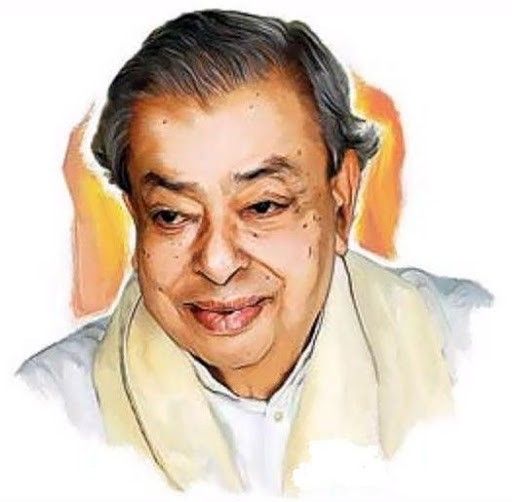
He left his government job and decided to join Tribhuvandas Patel and Morarji Desai who were trying to unite the farmers and form a cooperative movement against exploitation.
They hence started the Milk Cooperative movement “Kaira District Cooperative Milk Producers Union Ltd”, which was later renamed “Amul”.
Currently, Amul is still a cooperative company run under the guidance of RS Sodhi, who is the Managing Director (MD) of the company. Today, Amul is managed by the Gujarat Cooperative Milk Marketing Federation (GCMMF) and is owned by more than 3.6 million milk producers across India.
The company operates in the FMCG sector and has rich expertise in the dairy segment of the industry.
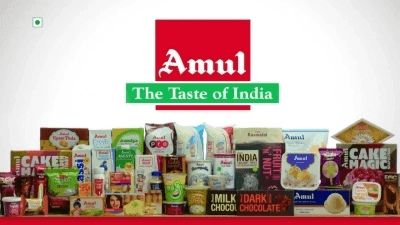
It has earned a lot of respect and recognition across the world by making its presence in the global dairy trade.
Now that you know about Amul as a company, let us now understand Amul’s business model popularly known as “The Amul Model”.
The Amul Model
This model aims to provide ‘value for money to the customers and protect the interests of farmers simultaneously’.
The Amul Model is a three-tiered structure that is implemented in its dairy production:
- Amul acts as a direct link between milk producers and consumers that removes the middlemen which help them offer products at affordable prices.
- Farmers (milk producers) control procurement, processing, and marketing.
- Run by Professional Management
With this model, Amul has made a significant impact in the market along with taking care of the farmers and also providing value-for-money services to its customers.
Let us now understand Amul’s target audience in the next section.
While the advertising is iconic, the brand’s success is rooted in its robust product distribution and pricing; you can Explore the 4Ps of Amul to see how they manage such a vast inventory.
Marketing Objective or Business Challenge
When you look at Amul, the objective isn’t to build awareness that’s already there. The real goal is to stay relevant in a market that’s changing fast.
Consumers today, especially younger and urban ones, are more digital, more experimental, and more open to private and premium dairy brands. So, the first objective is to evolve how Amul communicates, without changing what the brand stands for.
At the same time, you want to protect Amul’s biggest strengths: affordability, trust, and its farmer-first cooperative model. This means continuing to serve mass households while also finding smarter ways to talk about value-added and premium products like cheese, ice cream, and health-focused dairy.
Another key objective for Amul is to move beyond being just a daily habit and build a deeper emotional and digital connection with consumers. The idea is to make sure people don’t drift towards newer brands just because they look trendier or louder.
At the same time, Amul faces significant business challenges in India primarily from intensifying competition, shifting consumer trends towards veganism, and logistical hurdles in managing a vast, perishable product supply chain.

Is Digital Marketing the Right Career for You?
Find out in a free 45-min masterclass · Career paths, roles and growth explained · By Karan Shah, Founder & CEO, IIDE

Is Digital Marketing the Right Career for You?
Find out in a free 45-min masterclass · Career paths, roles and growth explained · By Karan Shah, Founder & CEO, IIDE
Amul’s Marketing Campaigns and Strategy
The Story of the Amul Girl, India's Longest-Running Ad Icon
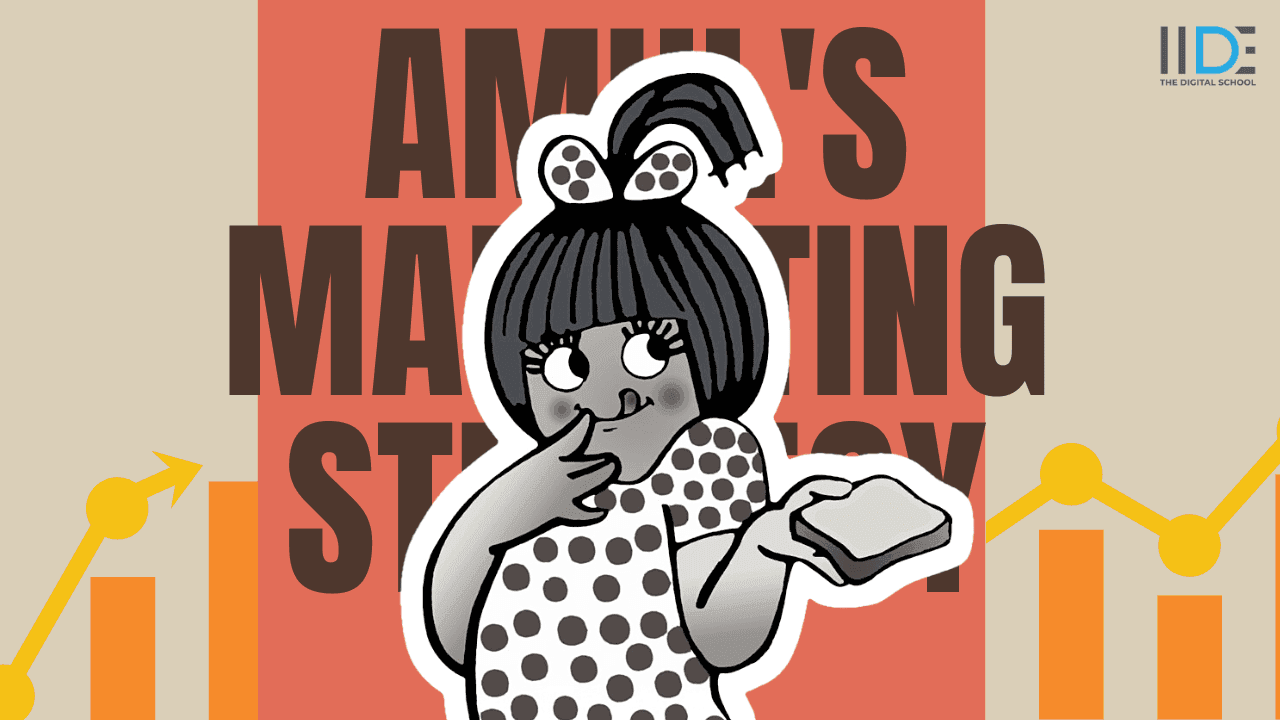
This hand-drawn mascot in her polka-dot frock delivers topical humor on politics, sports, Bollywood, and social issues producing 250+ creatives yearly at under 1% ad spend. From newspapers and hoardings to Instagram Reels.
She embeds Amul in India's daily conversations, driving emotional loyalty without hard-selling.
Amul's marketing blends iconic offline campaigns with strategic digital adaptation, staying culturally relevant across generations. The cornerstone remains The Amul Girl, launched in 1966 as a witty response to rival Polson butter ads.

Amul Butter Girl’s first-ever ad copy released in 1967
Here are some of the best advertisements of Amul Butter Girl,


Amul’s mascot strategy has worked out very well offline but lets us now check how is it working on the digital fronts.
Amul’s Digital Marketing Strategy
Amul has evolved from TV dominance to balanced digital presence, adapting Amul Girl wit for Gen Z while leveraging SEO recipes and omnichannel reach.
But before that let’s have a look at its social media presence from the below table.
| Social Media Overview | ||
 |
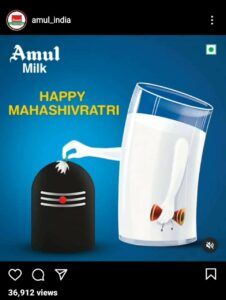 |
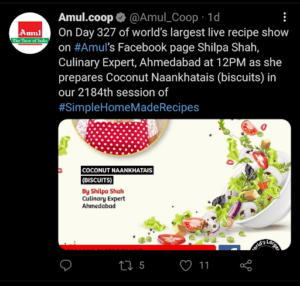 |
| 20M+ followers on Facebook | 8M+Followers on Instagram | 1M+ Followers on Twitter |
1. Amul onFacebook & Instagram
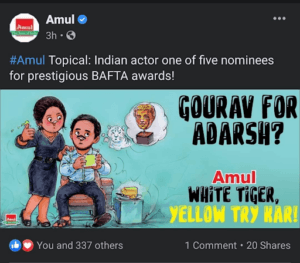
Amul posts digital Amul Girl creatives on trending topics, festivals, and product launches.
The #amulrecipes series (300+ videos) showcases butter-paneer dishes, earning lakhs of views and positioning Amul as a cooking essential.
2. Amul on Twitter
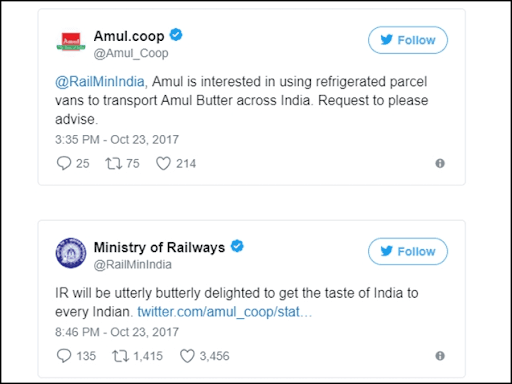
On Twitter, Amul has a massive fan base of over 335K followers given that Twitter is a very different platform when compared to other social media platforms.
On various occasions, Amul posts fun graphics featuring the Amul Butter Girl. Many people connect with those graphics and retweet them to show how they feel about the latest happenings in the world.
Twitter is a great platform for a brand to engage with its customers. Taking advantage of this, Amul tries to conduct interactive activities like contests and giveaways.
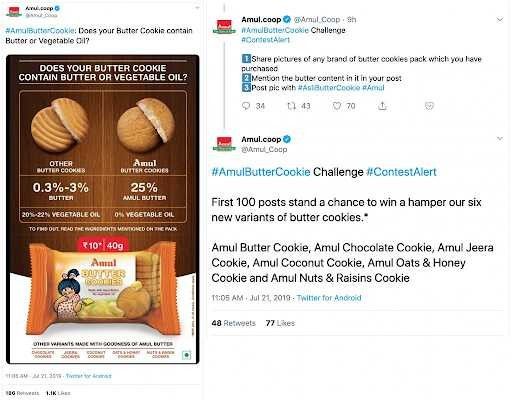
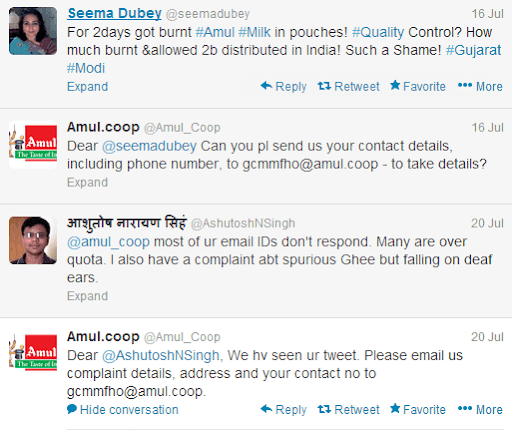
A lot of people also use Twitter to express their grievances for a service or a product. Amul makes sure that it replies to tweets of customers complaining about its products.
Unlike many brands that ignore or delete the negative posts of their customers, Amul takes the opinions of its customers very seriously and makes an effort to resolve their customers’ problems on Twitter even in the presence of thousands of people.
To truly understand how this cooperative thrives without middlemen, you should read the Amul business model for a deep dive into its three-tier structure.
3. Amul on Youtube
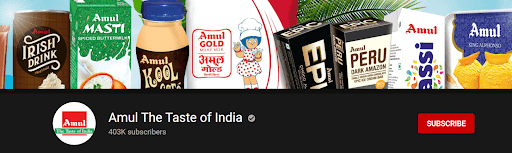
- Beyond TV reposts, YouTube hosts #amulrecipes (700+ episodes, 750M+ views total) featuring chefs using Amul products.
- Festival specials and brand films reinforce "Taste of India.
Key 2025-26 Digital Wins
- FY25 revenue: ₹90,000 Cr (12% YoY growth), targeting ₹1 lakh Cr in FY26
- Selective influencer collabs with food creators for authentic recipes
- SEO-optimized content ranks for "butter recipes," "paneer dishes"
- Omnichannel: Kiranas + online (BigBasket, Blinkit) converts recall to sales
Buyers Persona:

Priya & Arjun
Mumbai
Occupation: Homemakers, Kids, Youth & Health Conscious
Age: 5-50 Years old
Motivation
- Looking for affordable and trustworthy dairy products for daily household consumption
- Preference for brands that ensure consistent quality and food safety
- Emotional trust in Indian, farmer-backed brands
Interest & Hobbies
- Cooking and preparing home meals for family
- Following current affairs, sports, and cultural events
- Watching television, news channels, and digital content
- Interest in food, recipes, and health-related topics
Pain Points
- Rising prices of daily essentials
- Concerns about milk quality, adulteration, and hygiene
- Confusion caused by too many private and premium dairy brands
- Limited trust in new or unfamiliar food brands
Social Media Presence
- YouTube
Marketing Channels Used by Amul
Amul follows a well-balanced marketing strategy that combines iconic topical advertising, mass media dominance, and an increasingly strong digital presence.
The idea isn’t to chase trends blindly, but to stay relevant across generations while protecting the trust the brand has built over decades.
Topical Advertising (Amul Girl)
Amul uses witty, real-time creatives to comment on current events, making the brand feel culturally present without directly selling.
This keeps Amul top-of-mind across generations.
Print, Outdoor & Television
Newspaper ads, hoardings, and TV commercials help Amul maintain massive reach across urban, semi-urban, and rural India, especially for product launches and mass awareness.
Social Media Marketing
Platforms like Instagram, Facebook, and X are used to extend the Amul Girl campaign digitally and engage younger audiences through timely, relatable content.
Content Marketing & SEO
Amul creates recipe-based and utility-driven content that naturally ranks on search engines, helping the brand stay discoverable during everyday cooking and food-related searches.
Influencer Marketing
The brand collaborates selectively with food creators and home chefs who showcase real product usage, reinforcing trust rather than pushing promotional messaging.
Performance & Paid Media
Amul uses paid ads strategically during seasonal peaks and new launches, focusing more on visibility and recall than aggressive conversions.
Omnichannel Sales Presence
With availability across kirana stores, supermarkets, Amul parlours, and online platforms.
Amul ensures that strong marketing recall easily converts into purchase.
Overall Channel Approach
Amul balances legacy media with digital touchpoints, using consistency, cultural relevance, and distribution strength to sustain long-term brand leadership.
Amul Marketing Strategy Breakdown
1. Content Marketing & SEO
If you think about it, Amul doesn’t “push” content the way modern D2C brands do. It earns attention.
That’s where content and SEO quietly do their job.
Amul publishes
- Recipe-based content
- Cooking tips using Amul products
- Festival and seasonal food content
- Educational dairy-related content
These pieces naturally rank for high-intent searches like
- Butter recipes
- Paneer dishes
- Cheese-based snacks
- Indian dessert ideas
Instead of aggressive keyword stuffing, Amul focuses on useful, evergreen content. This keeps the brand discoverable on Google while reinforcing daily usage occasions. SEO here supports long-term brand recall, not quick conversions.
2. Topical Advertising (The Amul Girl Campaign)
This is where Amul truly stands apart.
You don’t just see an Amul ad. You experience it as part of the news cycle.
Through the Amul Girl campaign, the brand comments on
- Political developments
- Sports victories and losses
- Social conversations
- Pop culture moments
These creatives appear across
- Newspaper ads
- Outdoor hoardings
- Instagram, X (Twitter), and Facebook
What makes this work is timing and tone. The ads are quick, witty, and never offensive.
They don’t scream “buy butter,” yet they make you smile and remember Amul. That’s how Amul turns advertising into a cultural habit.
3. Social Media & Digital Marketing
On digital platforms, Amul adapts its traditional strength for modern audiences.
You’ll mostly see
- Digital versions of Amul Girl creatives
- Real-time posts reacting to trending topics
- Festival-based content
Product-focused posts for launches like ice creams, chocolates, or beverages
Platforms used include
- X (Twitter)
- YouTube (for brand films and product ads)
Instead of chasing virality through influencers every week, Amul relies on consistency and familiarity. This works especially well with Indian audiences.
Amul’s dominance in the North is often challenged by its biggest rival; you can check Mother Dairy’s SWOT analysis to see how they compete for the same audience.
4. Influencer Marketing (Selective & Purpose-Driven)
Amul doesn’t go heavy on influencer marketing. And that’s intentional.
When it does collaborate, it’s usually with
- Food bloggers
- Home chefs
- Nutrition-focused creators
These creators showcase
- Recipes using Amul products
- Daily-use scenarios
- Taste and quality comparisons
The focus isn't to glamour. It’s trust and relatability, which aligns perfectly with Amul’s brand image.
5. Performance Marketing & Paid Media
Unlike new-age FMCG or D2C brands, Amul’s performance marketing is selective.
Paid ads are mainly used for
- New product launches
- Seasonal demand (summers, festivals)
- Awareness-driven campaigns
You won’t see Amul aggressively chasing ROAS. Instead, paid media supports visibility while distribution does the heavy lifting.
6. Omnichannel Presence & Sales Strategy
Here’s where Amul’s biggest advantage kicks in.
Amul products are available across
- Kirana stores
- Supermarkets
- Amul parlours
- Modern trade
- Online grocery platforms
So the moment an ad catches your attention online or offline, the product is already within reach.
This tight link between marketing visibility and distribution is what converts recall into actual sales.
7. Rock-Solid Brand Messaging: "The Taste of India"
You know, Amul has never once confused its customers. And that consistency is absolutely key.
Their famous tagline, "The Taste of India," isn't just a catchy phrase. It’s a promise that reinforces:
- Trust
- Familiarity
- A sense of National Pride
Every single campaign they run, whether it's for milk or ice cream, reinforces the idea of affordability, honesty, and quality.
That kind of consistency isn't boring. It’s what builds deep, long-term loyalty.
Results & Impact
The marketing strategy of Amul has delivered remarkable results.
- The Gujarat Cooperative Milk Marketing Federation (GCMMF), which markets Amul products, projects a record ₹1 lakh crore revenue in FY26.
- This follows strong growth from prior years.
- Amul’s cooperative network of over 36 lakh farmers procures around 300–350 lakh litres of milk every single day.
- This supports production for milk, butter, cheese, ice cream, and more.
- The #amulrecipes campaign included 300+ videos. It earned high engagement and boosted subscribers over 400,000, with many videos getting lakhs of views.
- Amul ranks among the top 10 dairy processors globally. This reflects its massive scale and competitiveness on the world stage.
- For the 2025-26 fiscal year, Amul aims to hit the huge milestone of ₹1 lakh crore in revenue. This is powered by strong consumer demand and ongoing product growth.
Amul’s products from milk and ghee to ice creams and paneer remain everyday staples in millions of Indian homes. Its strong branding and cooperative model help consumers feel connected and confident about quality and trust.
Beyond numbers, Amul has achieved something rare: intergenerational brand loyalty.
What Worked & Why
What really worked for Amul is how naturally it became a part of people’s lives. The Amul Girl and her witty takes on current events make people smile and talk about the brand, so it never feels outdated or boring.
At the same time, Amul has kept its look and tone the same for years.
This makes it instantly recognizable and easy to trust. Its ads often tap into family moments, nostalgia, and everyday comfort, creating an emotional bond rather than just pushing a product.
On top of that, Amul is affordable and available almost everywhere, whether you’re in a city or a small town, so it’s always within reach.
By smartly expanding from butter to ice cream, chocolates, and more, Amul keeps up with changing tastes without losing its core identity.
Simply put, Amul works because it feels familiar, reliable, and close to people. It doesn’t try too hard to impress.
It just connects, and that’s why it works.
What Didn’t Work & Why
Although Amul is a dominant and highly trusted brand, some areas have not worked as effectively in recent years.
The brand has been relatively slow in adopting digital-first marketing formats such as influencer collaborations, short-form videos, and trend-led content that resonate strongly with Gen Z and urban consumers.
Its long-standing value-for-money image, while a major strength, has also made it difficult to build a strong premium or lifestyle perception for products like cheese and ice cream.
Additionally, Amul’s cooperative structure, though beneficial for scale and trust, can slow decision-making and experimentation.
The brand has also been cautious in entering emerging segments like plant-based or specialised health products, leading to missed opportunities.
Lastly, delayed or limited engagement with online feedback has occasionally reduced its connection with digital-native audiences.
Want to Know Why 50,00,00+ Students Trust Us?
Dive into the numbers that make us the #1 choice for career success



MBA - Level
Post Graduate in Digital Marketing & Business Strategy

Best For
Fresh Graduates

Mode of Learning
On Campus (Mumbai & Delhi)

Starts from
Nov 27, 2026

Duration
11 Months

Live & Online
Advanced Online Digital Marketing Course
Best For
Working Professionals
Mode of Learning
Online
Starts from
Nov 2, 2026
Duration
4-6 Months

Offline
Top AI Courses to Make You Future Ready!
Best For
AI Enthusiasts
Mode of Learning
2–5 Month Program
Starts from
-
Duration
Flexiable

Offline
Undergraduate Program in Digital Business & Entrepreneurship
Best For
12th Passouts
Mode of Learning
On Campus (Mumbai)
Duration
3 Years

Offline
Degree In 2026 ≠ Enough Degree + Digital Skills = Future-Ready
Best For
12th Passouts
Mode of Learning
At IIDE Campus
Duration
3 Years
Recent Post
You May Also Like

Lead Trainer & Business Development Head at IIDE
Aditya Shastri leads the Business Development segment at IIDE and is a seasoned Content Marketing expert. With over a decade of experience, Aditya has trained more than 20,000 students and professionals in digital marketing, collaborating with prestigious institutions and corporations such as Jet Airways, Godrej Professionals, Pfizer, Mahindra Group, Publicis Worldwide, and many others. His ability to simplify complex marketing concepts, combined with his engaging teaching style, has earned him widespread admiration from students and professionals alike.
Aditya has spearheaded IIDE’s B2B growth, forging partnerships with over 40 higher education institutions across India to upskill students in digital marketing and business skills. As a visiting faculty member at top institutions like IIT Bhilai, Mithibai College, Amity University, and SRCC, he continues to influence the next generation of marketers.
Apart from his marketing expertise, Aditya is also a spiritual speaker, often traveling internationally to share insights on spirituality. His unique blend of digital marketing proficiency and spiritual wisdom makes him a highly respected figure in both fields.