Decode the top digital careers of 2026 with our founder in a LIVE online session. Register Now.

Students Centric
Placements Report
Trackable results, real numbers
Reviews
Proven success, real voices
Trainers
Expert-led, Industry-Driven Training
Life at IIDE
Vibrant Spirit student life
Alumni
Successful Journeys, Inspiring Stories
Learning Centre
Webinars
Blogs
Case studies
Live, Interactive Masterclasses
Fresh Insights, quick reads
Real-life, Industry relevant
More
Hire from us
Hire Top Digital Marketing Talent
Work with us
Join Our Team, Make an Impact
Customised Training
Personalised digital marketing training for your company
Refer & earn
Simple, easy rewars
Contact us
Get the answers you need
About us
Know more about IIDE
Explore all course options


Trending

Professional Certification in AI Strategy
- Ideal for AI Enthusiast


Updated on Dec 12, 2025
Share on:


Zara, a renowned global fashion retailer, has positioned itself as a leader in fast fashion with a focus on quick turnaround and trendy designs. But how does this brand stand in 2025 amidst a competitive retail landscape? What strategies does Zara need to adopt to maintain its growth? This analysis will help business students and entrepreneurs understand Zara’s market position and potential future moves.
About Zara
Founded in 1975 by Amancio Ortega and Rosalía Mera, Zara is the flagship brand of Inditex, the world’s largest fashion retailer.
Known for its fast fashion model, Zara delivers high-quality, trendy designs at affordable prices. The brand’s slogan, "Love Fashion," captures its core mission of offering stylish clothing to the mass market while staying at the forefront of fashion trends.

Learn Digital Marketing for FREE

SWOT Analysis of Zara
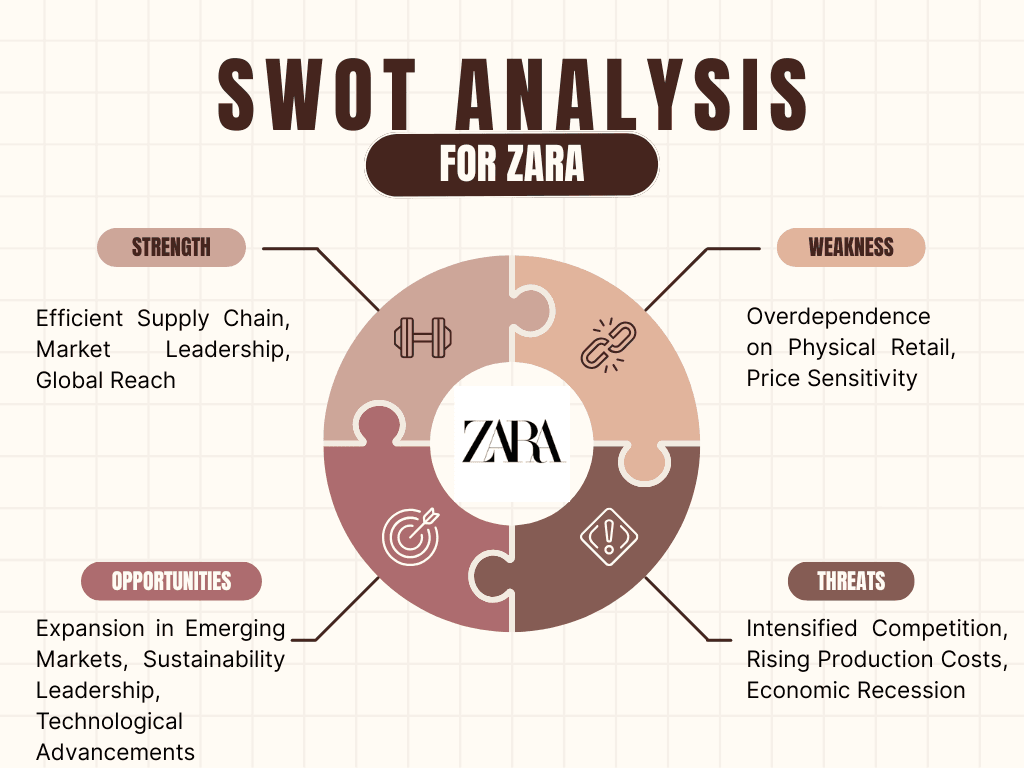
1. Zara’s Strengths in 2025
- Market Leadership:
Zara’s business model allows it to lead the fast-fashion industry. With a quick turnaround time from design to production, it stays ahead of the trends and ensures its customers always have access to the latest styles.
- Brand Recognition:
From its iconic store layouts to its bold marketing, Zara is a name recognised worldwide. Its simple yet stylish designs have made it a favourite for fashion-conscious consumers who want high-quality clothing without the high prices.
- Efficient Supply Chain:
Zara's supply chain is legendary. By using an in-house production model, Zara can take an idea from the runway and have it in stores in just a few weeks. This speed to market is one of its greatest strengths, keeping its shelves stocked with the latest trends at all times.
- Global Reach:
With over 2,000 stores spread across the globe and a booming online presence, Zara isn’t confined by geography. Whether you're in New York, Tokyo, or Buenos Aires, Zara has a store or an online platform catering to your fashion needs.
- Sustainability Efforts:
As consumers become more eco-conscious, Zara is making strides towards a more sustainable future. With collections made from organic cotton and a commitment to becoming carbon-neutral by 2040, Zara is starting to embrace sustainability in a big way.
2. Zara’s Struggles in 2025
- Overdependence on Physical Retail:
While Zara has made substantial strides in e-commerce, a large chunk of its revenue still comes from its physical stores. In an era where online shopping is becoming the norm, this dependency on physical retail could be a vulnerability, especially with shifting shopping habits post-pandemic.
- Price Sensitivity:
Zara’s products, while affordable compared to luxury brands, can still be out of reach for consumers in lower-income markets. As the competition in fast fashion heats up, this could limit Zara’s potential to tap into emerging economies.
- Labour and Ethical Concerns:
Zara has faced criticism over the years regarding its labour practices, particularly in developing countries. Despite efforts to address these concerns, any further issues in this area could significantly damage its reputation and customer trust.
- High Dependency on Europe:
A substantial portion of Zara's revenue still comes from European markets. This heavy reliance on a single region exposes the brand to risks associated with economic instability or regulatory changes in Europe.
3. Zara’s Future Potential
- Expansion in Emerging Markets:
The fast-growing middle class in countries like India, China, and Brazil presents a huge opportunity for Zara. As disposable incomes rise in these regions, more consumers are looking for affordable yet fashionable clothing, making Zara’s business model perfectly suited to meet this demand.
- Sustainability Leadership:
As more consumers prioritise eco-friendly products, Zara has an opportunity to become a leader in sustainable fashion. Expanding its sustainable offerings and increasing transparency in its supply chain could give Zara an edge in an increasingly eco-conscious market.
- Technological Integration:
The future of fashion lies in technology. Zara can further strengthen its position by adopting AI and machine learning for inventory management, predictive analytics for customer preferences, and offering personalised shopping experiences online.
- E-Commerce Growth:
With the rise of online shopping, Zara has a huge opportunity to expand its digital presence. By focusing on omnichannel strategies and improving its logistics, Zara could attract younger, tech-savvy customers who prioritise convenience over in-store shopping.
- Influencer and Celebrity Collaborations:
Zara can continue to leverage influencer and celebrity partnerships to increase brand visibility, especially among younger generations who are heavily influenced by social media trends.
4. Zara’s Challenges in 2025
- Intensified Competition:
The fast fashion industry is highly competitive, with brands like H&M, Uniqlo, and Primark continually upping the ante. Zara must continuously innovate to stay ahead of these competitors.
- Rising Production Costs:
As the global supply chain faces challenges, including rising costs for raw materials and transportation, Zara may find it difficult to maintain its affordable pricing structure without sacrificing profit margins.
- Counterfeit Products:
Zara’s success has made it a target for counterfeiters. Counterfeit products not only harm the brand’s revenue but also tarnish its reputation for quality.
- Economic Recession:
Zara’s reliance on global markets means it is highly susceptible to economic recessions, particularly in the U.S. and Europe. Economic slowdowns could lead to reduced consumer spending on non-essential items like fashion.
- Regulatory Pressures:
Increasingly stringent regulations regarding environmental standards and labour practices could impact Zara’s operations, particularly in certain regions where its manufacturing processes may need to adapt to new laws.
Zara's SWOT Analysis Summed Up
The Final Thought
Zara’s ability to capture fashion trends quickly and its efficient supply chain have established it as a leader in the fast-fashion industry. However, with challenges like market saturation, ethical concerns, and increasing competition, Zara must continue to adapt. Entrepreneurs and business students can learn valuable lessons from Zara’s operations, especially in terms of supply chain efficiency and rapid market adaptation.
Moving forward, Zara should focus on expanding its digital footprint and embracing sustainable practices to remain relevant in an increasingly eco-conscious world. With strategic adjustments, Zara can continue to thrive in 2025 and beyond.
Want to Know Why 2,50,000+ Students Trust Us?
Dive into the numbers that make us the #1 choice for career success


MBA - Level
Post Graduate in Digital Marketing & Strategy

Best For
Fresh Graduates

Mode of Learning
On Campus (Mumbai & Delhi)

Starts from
Jan 5, 2026

Duration
11 Months
Live & Online
Advanced Online Digital Marketing Course
Best For
Working Professionals
Mode of Learning
Online
Starts from
Dec 19, 2025
Duration
4-6 Months

Online
Professional Certification in AI Strategy
Best For
AI Enthusiasts
Mode of Learning
Online
Duration
5 Months

Offline
Undergraduate Program in Digital Business & Entrepreneurship
Best For
12th Passouts
Mode of Learning
On Campus (Mumbai)
Duration
3 Years
Recent Post
In India, Zara operates through a joint venture between Tata's Trent and Inditex. Trent Limited is the retail arm of Tata Group that runs Zara stores in India through the joint venture with Inditex.
Zara is headquartered in Arteijo, Spain. It is part of Inditex, one of the largest distribution groups in the world.
Zara has made strides toward sustainability, with initiatives such as using eco-friendly materials and aiming to reduce its carbon footprint. The company has a sustainability plan that includes goals for eco-efficient stores, recycling, and using more sustainable fabrics.
Zara does not have a formal loyalty program like other retailers. However, Zara’s app and website offer exclusive updates, early access to sales, and personalised notifications for registered users.
Zara releases new collections frequently, with clothing lines being updated every two to three weeks. This fast-paced approach ensures customers always have access to the latest trends.

Aditya Shastri
Lead Trainer & Business Development Head at IIDE
Aditya Shastri leads the Business Development segment at IIDE and is a seasoned Content Marketing expert. With over a decade of experience, Aditya has trained more than 20,000 students and professionals in digital marketing, collaborating with prestigious institutions and corporations such as Jet Airways, Godrej Professionals, Pfizer, Mahindra Group, Publicis Worldwide, and many others. His ability to simplify complex marketing concepts, combined with his engaging teaching style, has earned him widespread admiration from students and professionals alike.
Aditya has spearheaded IIDE’s B2B growth, forging partnerships with over 40 higher education institutions across India to upskill students in digital marketing and business skills. As a visiting faculty member at top institutions like IIT Bhilai, Mithibai College, Amity University, and SRCC, he continues to influence the next generation of marketers.
Apart from his marketing expertise, Aditya is also a spiritual speaker, often traveling internationally to share insights on spirituality. His unique blend of digital marketing proficiency and spiritual wisdom makes him a highly respected figure in both fields.