
Students Centric
Placements Report
Trackable results, real numbers
Reviews
Proven success, real voices
Trainers
Expert-led, Industry-Driven Training
Life at IIDE
Vibrant Spirit student life
Alumni
Successful Journeys, Inspiring Stories
Learning Centre
Webinars
Blogs
Case studies
Live, Interactive Masterclasses
Fresh Insights, quick reads
Real-life, Industry relevant
More
Hire from us
Hire Top Digital Marketing Talent
Work with us
Join Our Team, Make an Impact
Customised Training
Personalised digital marketing training for your company
Refer & earn
Simple, easy rewards
Contact us
Get the answers you need
About us
Know more about IIDE
Explore all course options

FOR FRESH GRADUATES
Post Graduation Program in Digital Marketing & Business Strategy- Ideal for Age: 20–25 Years

Can’t decide? Explore all our
Digital Marketing Courses
COMPARE BOTH OUR PROGRAMSOffline
Offline AI Courses with Dual CertificationsIndustry-Aligned TRACKMost Popular
UG Program in Digital Business & Entrepreneurship- Ideal for 12th Pass out / FY Degree Student

PARTNER PROGRAMS






Can’t decide? Explore all
BBA In Digital Marketing Colleges
Orginally Written by Aditya Shastri
Updated on Jan 7, 2026
Share on:


One of the biggest integrated shipping and logistics firms in the world, A.P. Moller-Maersk (Maersk) offers container shipping, ports and terminals, logistics, and freight services in more than 130 countries. In 2024-25, Maersk had one of its finest financial results yet.
We analyse Maersk's strengths, potential weaknesses, future prospects, and risks in this blog.
Whether you’re an entrepreneur, business student or logistics enthusiast – this SWOT will help you understand how Maersk is positioned in a fast-changing global trade landscape.
Before we dive in, I’d like to share that the research and initial analysis for this article were conducted by Priyal Lodha, a current student of IIDE’s Advanced Certification in Digital Marketing (ACDM) June Batch 2025.
If you find this blog valuable, feel free to reach out to Priyal Lodha with your appreciation - she’ll be thrilled to receive your feedback!
About Maersk
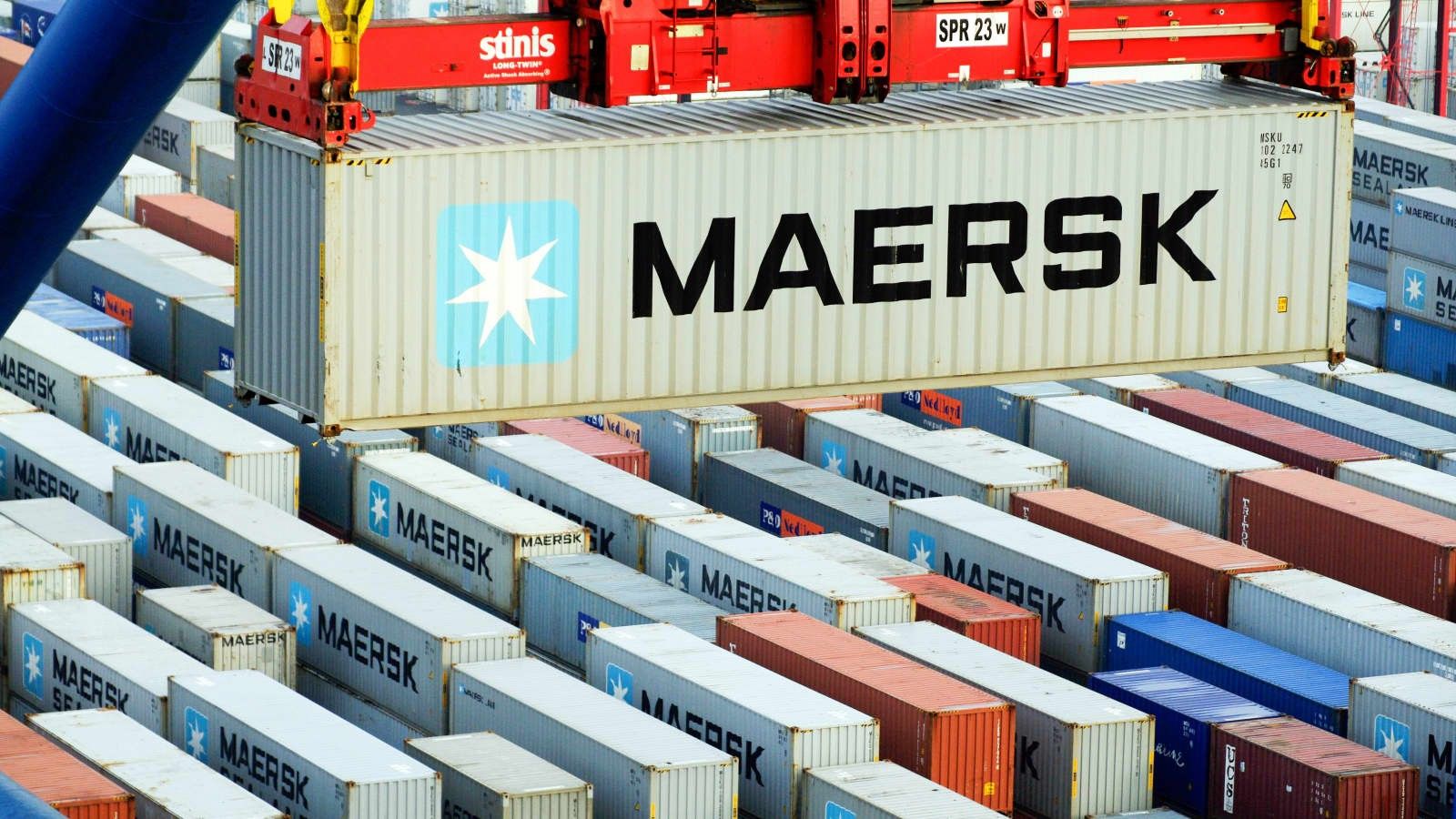
Founded in 1904 and headquartered in Copenhagen, Maersk has expanded from a shipping line into a global logistics integrator offering ocean shipping, ports, air freight, warehousing and supply chain services.
As of 2024–25, it employs roughly 108,160 people and operates in 130+ countries. In 2024, Maersk recorded US$55.5 billion in revenue - marking one of its strongest financial years, supported by increased container demand and elevated freight rates.
Overview Table
| Parameter | Details |
|---|---|
| Official Company Name | A.P. Moller-Maersk A/S |
| Founded Year | 1904 |
| Website URL | www.maersk.com |
| Industries Served | Shipping, Logistics, Ports, Terminals |
| Geographic Areas Served | 130+ countries |
| Revenue (2024) | US$55.5 billion |
| Net Income | Not specified in latest data |
| Employees | 100,000+ |
| Main Competitors | MSC, COSCO, CMA CGM, Hapag-Lloyd |

Is Digital Marketing the Right Career for You?
Find out in a free 45-min masterclass · Career paths, roles and growth explained · By Karan Shah, Founder & CEO, IIDE

Is Digital Marketing the Right Career for You?
Find out in a free 45-min masterclass · Career paths, roles and growth explained · By Karan Shah, Founder & CEO, IIDE
Why SWOT Analysis Matters Now
Evolving global trade dynamics: As economies recover and shift post-pandemic, shipping demands and trade patterns are changing. Maersk’s 2024 performance shows resilience, but 2025 promises further uncertainty - especially with volatile freight rates and global supply-chain disruptions.
Shift from traditional shipping to integrated logistics: Maersk isn’t just a container carrier anymore. It’s positioning itself as a full-fledged logistics & supply chain integrator - from warehousing and air freight to end-to-end solutions. This shift could redefine competition and growth.
Environmental & regulatory pressures: With global focus on sustainability rising, shipping companies face stricter regulations and demand for cleaner operations. Maersk’s green initiatives aim to set standards - but also require substantial investments.
Renewed competition & shifting alliances: The global shipping landscape is reconfiguring with new alliances and rivalries - making now a critical moment to assess where Maersk stands vs competitors.
SWOT Analysis of Maersk
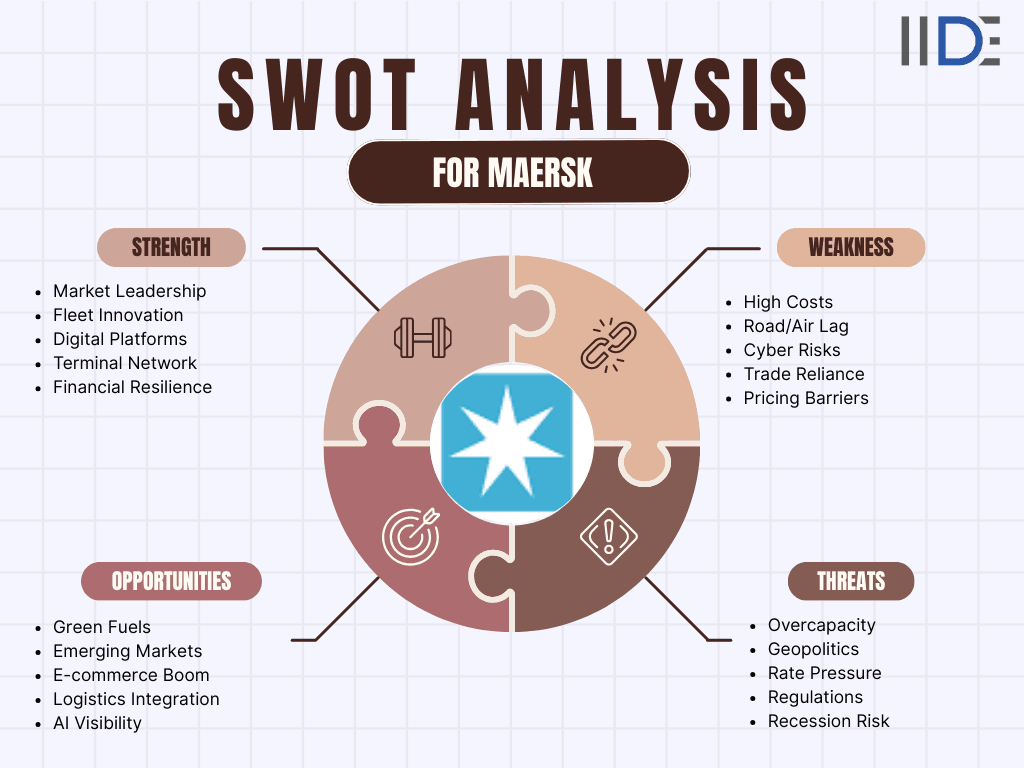
Maersk’s Strengths: Global Shipping Powerhouse in 2026
- Strong financial stability: With US$55.5 billion in revenue and US$6.5 billion in EBIT, 2024 was Maersk's third-best year.
- Huge worldwide reach: Operates in more than 130 nations, employs more than 100,000 people, and has a diverse portfolio that includes air freight, shipping, ports, logistics, and warehousing.
- Resilient performance: Despite global economic concerns, growth was achieved throughout the ocean, terminals, and logistics.
- Astute strategic changes: In 2025, the new Gemini Cooperation was formed with Hapag-Lloyd, demonstrating flexibility and a renewed focus on the market.
- Strong sustainability focus: Heavy investments in green fuels and net-zero ambitions position Maersk as a future-ready logistics leader.
Maersk’s Weaknesses: Struggles in a Volatile Market
- High dependence on global trade cycles: Profitability is highly sensitive to freight rates, trade demand and fuel price fluctuations.
- Capital-intensive business model: Large investments in fleets, terminals, and green vessels can strain liquidity during downturns.
- Exposure to geopolitical and macro risks: Trade wars, route disruptions, fuel volatility and global instability can directly impact operations.
- Rising competition and overcapacity: Aggressive competitors and excess shipping capacity can push freight rates down and squeeze margins.
Maersk’s Opportunities: Future Growth Horizons
- Rising demand for integrated logistics: Growing need for end-to-end supply chain solutions positions Maersk to expand beyond ocean shipping.
- Sustainability advantage: Stricter green regulations create opportunities for Maersk’s investments in low-emission vessels and fuels.
- Gemini Cooperation benefits: The Hapag-Lloyd alliance can improve network reliability, efficiency and competitiveness.
- Diversification potential: Growth in air freight, warehousing, inland logistics and digital services can reduce ocean dependence.
- Emerging market expansion: Shifting post-Covid trade routes across Asia, Africa and Latin America offer strong long-term growth corridors.
Maersk’s Threats: External Headwinds
- Intense global competition: Major rivals like MSC, CMA CGM, COSCO and Hapag-Lloyd continue expanding, increasing price pressure.
- Freight-rate volatility & overcapacity: Excess vessel supply can push down rates and reduce profitability.
- Geopolitical & economic instability: Trade conflicts, route disruptions, fuel volatility and recessions can sharply impact demand.
- Rising regulatory costs: Stricter emission rules and carbon taxes require heavy investment in cleaner vessels.
- Shifting supply chains: Near-shoring and alternative transport routes may reduce long-haul container shipping demand over time.
SWOT Analysis of Maersk
IIDE Student Takeaway, Conclusion & Recommendations
Maersk's SWOT reveals a dominant player leveraging 17% market share, innovative green fleets, and digital tools for integrated logistics strength, yet hampered by cost pressures, non-ocean gaps, and external shocks like overcapacity.
Core tension: Balancing aggressive decarbonization investments against freight rate volatility in 2026.
Recommendations:
- Accelerate road/air acquisitions to match ocean profitability, targeting 20% segment growth via targeted M&A.
- Deploy AI for dynamic pricing/rerouting, mitigating Red Sea-like disruptions by 15% cost savings.
- Partner with methanol producers for supply security, locking 50% green fuel needs pre-2030.
- Expand Asia-Pacific terminals, capturing 25% trade growth with localized ESG compliance.
- Launch Gen Z-focused e-commerce platforms, integrating blockchain for 30% faster last-mile tracking.
Prioritizing these positions Maersk to exceed net-zero goals while sustaining leadership through 2030, turning sustainability from cost to revenue driver amid trade resurgence.
Want to Know Why 5,00,000+ Students Trust Us?
Dive into the numbers that make us the #1 choice for career success


MBA - Level
Post Graduate in Digital Marketing & Business Strategy

Best For
Fresh Graduates

Mode of Learning
On Campus (Mumbai & Delhi)

Starts from
Nov 27, 2026

Duration
11 Months

Live & Online
Advanced Online Digital Marketing Course
Best For
Working Professionals
Mode of Learning
Online
Starts from
Nov 2, 2026
Duration
4-6 Months

Offline
Top AI Courses to Make You Future Ready!
Best For
AI Enthusiasts
Mode of Learning
2–5 Month Program
Starts from
-
Duration
Flexiable
Offline
Undergraduate Program in Digital Business & Entrepreneurship
Best For
12th Passouts
Mode of Learning
On Campus (Mumbai)
Duration
3 Years
Offline
Degree In 2026 ≠ Enough Degree + Digital Skills = Future-Ready
Best For
12th Passouts
Mode of Learning
At IIDE Campus
Duration
3 Years
Recent Post

Lead Trainer & Business Development Head at IIDE
Aditya Shastri leads the Business Development segment at IIDE and is a seasoned Content Marketing expert. With over a decade of experience, Aditya has trained more than 20,000 students and professionals in digital marketing, collaborating with prestigious institutions and corporations such as Jet Airways, Godrej Professionals, Pfizer, Mahindra Group, Publicis Worldwide, and many others. His ability to simplify complex marketing concepts, combined with his engaging teaching style, has earned him widespread admiration from students and professionals alike.
Aditya has spearheaded IIDE’s B2B growth, forging partnerships with over 40 higher education institutions across India to upskill students in digital marketing and business skills. As a visiting faculty member at top institutions like IIT Bhilai, Mithibai College, Amity University, and SRCC, he continues to influence the next generation of marketers.
Apart from his marketing expertise, Aditya is also a spiritual speaker, often traveling internationally to share insights on spirituality. His unique blend of digital marketing proficiency and spiritual wisdom makes him a highly respected figure in both fields.