
Students Centric
Placements Report
Trackable results, real numbers
Reviews
Proven success, real voices
Trainers
Expert-led, Industry-Driven Training
Life at IIDE
Vibrant Spirit student life
Alumni
Successful Journeys, Inspiring Stories
Learning Centre
Webinars
Blogs
Case studies
Live, Interactive Masterclasses
Fresh Insights, quick reads
Real-life, Industry relevant
More
Hire from us
Hire Top Digital Marketing Talent
Work with us
Join Our Team, Make an Impact
Customised Training
Personalised digital marketing training for your company
Refer & earn
Simple, easy rewards
Contact us
Get the answers you need
About us
Know more about IIDE
Explore all course options

FOR FRESH GRADUATES
Post Graduation Program in Digital Marketing & Business Strategy- Ideal for Age: 20–25 Years

Can’t decide? Explore all our
Digital Marketing Courses
COMPARE BOTH OUR PROGRAMSOffline
Offline AI Courses with Dual CertificationsIndustry-Aligned TRACKMost Popular
UG Program in Digital Business & Entrepreneurship- Ideal for 12th Pass out / FY Degree Student

PARTNER PROGRAMS






Can’t decide? Explore all
BBA In Digital Marketing Colleges
Orginally Written by Aditya Shastri
Updated on May 22, 2026
Share on:


Land Rover, a 75-year-old British luxury SUV brand, remains a dominant force in 2026. But what keeps it ahead in the most disruptive period the automotive industry has ever seen?
This analysis breaks down Land Rover's strengths in heritage and Tata's financial backing, weaknesses in reliability and EV delays, opportunities in Range Rover Electric and India's luxury boom, and threats from Chinese EV brands rewriting buyer expectations.
Entrepreneurs and business students will learn how legacy brands reinvent under pressure. Understanding these insights can help you apply similar strategies to your own business or career.
Before diving in, the research and initial analysis for this piece were conducted by Oshin Saxena, a current student in IIDE's Online Digital Marketing Course, November Batch 2025.
If you find the article interesting feel free to connect with Oshin Saxena and send a note of appreciation for the fantastic research work.
About Land Rover
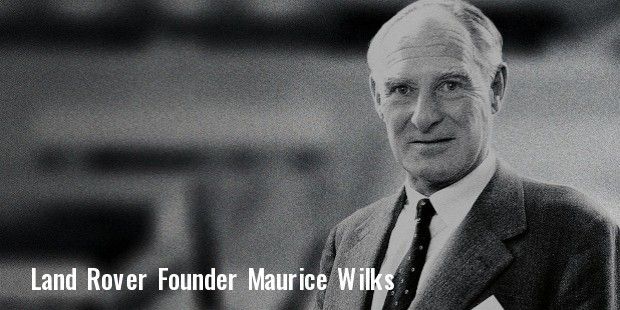
Land Rover is a British luxury automotive marque that has been engineering iconic four-wheel-drive SUVs since 1948, when chief designer Maurice Wilks unveiled the original Series I at the Amsterdam Motor Show.
Its current model families include the Range Rover, Range Rover Sport, Defender, Discovery, and Discovery Sport.
Since 2008, Land Rover has operated under the Jaguar Land Rover (JLR) Automotive plc umbrella, which is wholly owned by India's Tata Motors. JLR has repositioned itself as a House of Brands, with Range Rover, Defender, Discovery, and Jaguar each treated as standalone luxury houses.
The strategy is working: in FY24/25, JLR posted £29 billion in revenue, achieved a profit before tax of £2.5 billion (its best result in a decade), and hit its net-debt-zero target ahead of schedule.
Land Rover's tagline "Above and Beyond" captures the dual identity that makes it genuinely unusual. It is equal parts capable workhorse and rolling palace, and that positioning is harder to replicate than it looks.
Quick Stats about Land Rover :
| Feature | Details |
|---|---|
| Founder | Maurice Wilks |
| Year Founded | 1948 |
| Headquarters | Whitley, Coventry, England |
| Parent Company | Jaguar Land Rover (JLR), owned by Tata Motors since 2008 |
| Global Reach | 120+ countries |
| FY24/25 Revenue | £29.0 billion |
| FY24/25 Profit Before Tax | £2.5 billion (highest in a decade) |
| Best-Selling Model | Defender (115,404 units in FY25) |
| Tagline | Above and Beyond |
| Net-Zero Target | Carbon net-zero by 2039 |
What Does SWOT Stand For in Land Rover's Context?
SWOT stands for Strengths, Weaknesses, Opportunities, and Threats. For Land Rover in 2026, this framework is particularly valuable because the brand sits at a genuine strategic inflection point.
Its traditional strengths are colliding head-on with new realities: the EV transition, heightened cyber risk, US tariff volatility, and a fast-moving Chinese luxury market that is no longer playing catch-up.
That kind of multi-front pressure is not unique to Land Rover. Tata Motors, the parent company behind JLR, is navigating its own version of this challenge across markets and business verticals.
Why a SWOT Analysis of Land Rover Matters in 2026
The luxury SUV market is being rewritten in real time. US tariffs, AI-driven retail, the accelerating EV shift, and a new generation of buyers who think differently about ownership and sustainability are changing the competitive rules faster than most legacy brands can respond.
Here is why this analysis is especially timely:
- Competitive Landscape: Land Rover competes on three distinct fronts: German legacy rivals (BMW, Mercedes-Benz, Porsche), luxury EV-only entrants (Lucid, Rivian), and surging Chinese brands (NIO, Yangwang, Zeekr) that are now genuinely threatening in the upper luxury tier.
- Customer Preferences: Younger buyers are demanding sustainability credentials and digital-first ownership experiences; PHEV retail growth of 21.7% YoY in FY25 shows progress, but the bar keeps rising every quarter.
- Technology Investment: Connected services, over-the-air updates, and AI-driven personalisation are now table stakes; JLR's Reimagine strategy commits £18 billion over five years to close that gap
- Regulation: ZEV mandates in the UK, EU, and key US states are shaping product roadmaps and penalising ICE-heavy lineups.
- Cyber Risk: The September 2025 ransomware attack, classified as the costliest cyber incident in UK industrial history, shut down JLR's three UK plants for over five weeks and rattled investor confidence.

Is Digital Marketing the Right Career for You?
Find out in a free 45-min masterclass · Career paths, roles and growth explained · By Karan Shah, Founder & CEO, IIDE

Is Digital Marketing the Right Career for You?
Find out in a free 45-min masterclass · Career paths, roles and growth explained · By Karan Shah, Founder & CEO, IIDE
SWOT Analysis of Land Rover 2026
A thorough SWOT analysis of Land Rover reveals how a 75-year-old British icon is using heritage, Tata Motors' financial muscle, and a bold electrification strategy to defend its luxury SUV throne through the most disruptive period in its history.
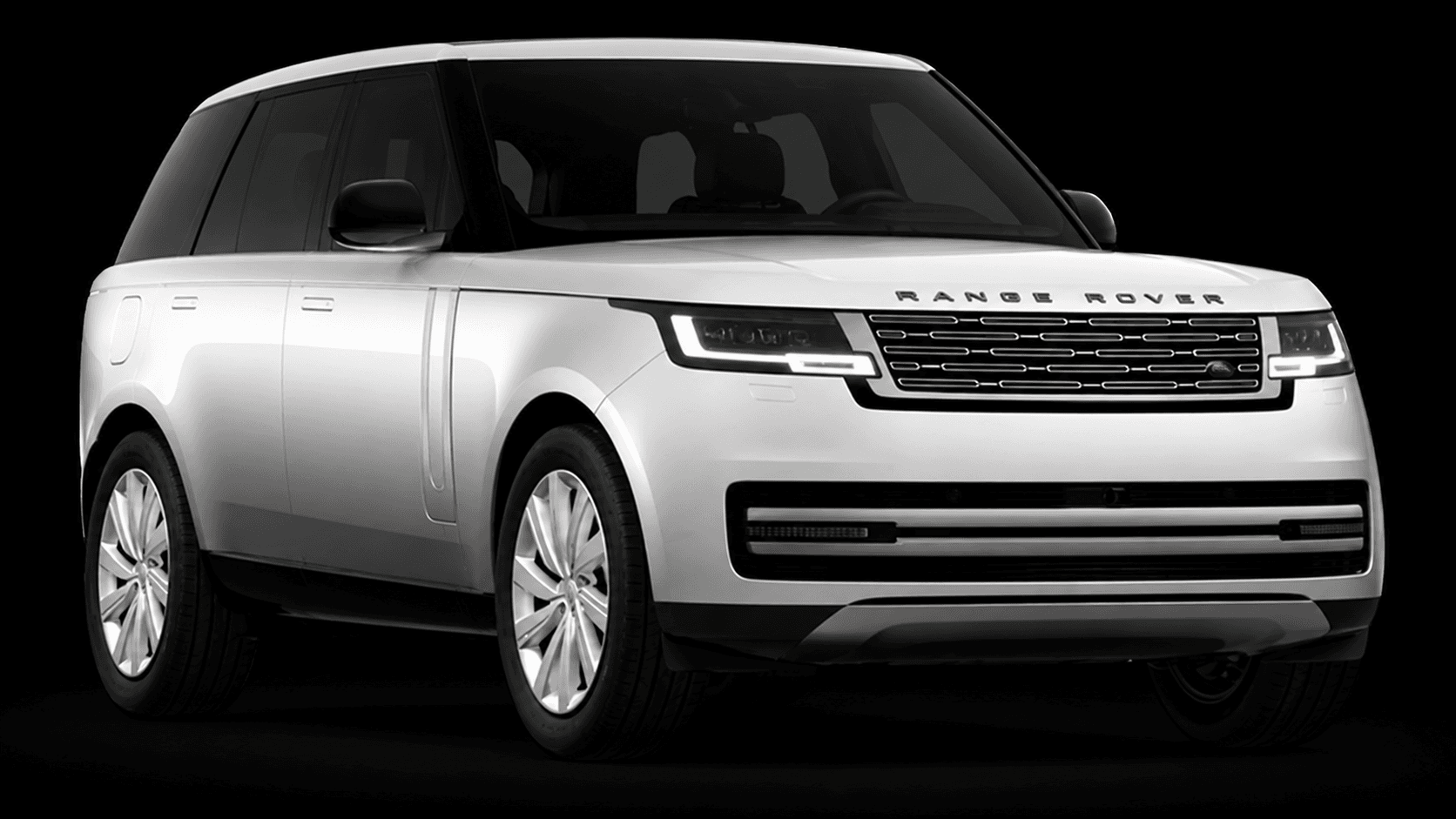
Strengths of Land Rover: How a 75-Year-Old British Icon Still Leads
Land Rover's strengths are the compounding assets it has built since 1948: brand heritage, proven all-terrain capability, financial backing, and a product mix that generates strong margins in the luxury segment.
Iconic British Heritage and Cultural Authority:
- Few automotive brands carry the cultural weight Land Rover does.
- From Bond films and royal processions to the Queen's Royal Warrant in 2025, the brand has a symbolic authority that money cannot buy.
- Range Rover entered Interbrand's Top 100 Best Global Brands list in 2024, cementing its status as a genuine luxury brand rather than simply a premium vehicle manufacturer.
Tata Motors' Financial and Strategic Backing:
- Tata's capital, R&D resources, and global supply chain give JLR a scale advantage no independent luxury carmaker could replicate.
- With a record £2.5 billion profit before tax in FY25 and £3.8 billion invested annually in product development, JLR is funding the EV transition without sacrificing current profitability.
The SWOT Analysis of Tata Motors puts the group's broader strategic position into context and helps explain the financial and operational decisions that directly shape how Land Rover is being run today.
Defender Franchise at Record Sales:
- JLR sold 115,404 Defenders globally in FY25, making it the brand's best-selling nameplate by a wide margin.
- Range Rover Sport followed at 79,862 units, up 19.7% year-on-year.
- The hero trio of Range Rover, Range Rover Sport, and Defender now accounts for approximately 70% of total wholesales, generating disproportionate revenue and margin contribution.
Unmatched All-Terrain Capability:
- Terrain Response 2, twin-chamber air suspension, and a class-leading 33.5-inch wading depth keep Land Rover's capability claims genuinely credible rather than purely marketing.
- This matters because it creates a defensible technical moat that luxury EV entrants and even German rivals have struggled to replicate.
Strong PHEV Momentum as an EV Bridge:
- PHEV retail sales jumped 21.7% year-on-year across JLR in FY25, with Range Rover-branded PHEVs surging 38.2%.
- This demonstrates that the customer base is actively moving toward electrification, giving Land Rover a commercially valuable bridge to the full-BEV era while Range Rover Electric ramps up.
House of Brands Strategy:
- Repositioning Range Rover, Defender, Discovery, and Jaguar as distinct luxury houses with their own identities, price architectures, and customer profiles mirrors how LVMH and Richemont manage multi-brand luxury portfolios.
- It sharpens pricing power and reduces the risk of brand dilution across segments.
Weaknesses of Land Rover: The Cracks Beneath the Polish
For all its heritage, Land Rover carries long-standing weaknesses that competitors actively exploit in dealer showrooms and online forums. In 2026, the gap between what the brand promises and what it sometimes delivers is more visible than ever.
Persistent Reliability Reputation:
- Land Rover consistently ranks near the bottom of major reliability surveys including Consumer Reports and J.D. Power.
- Older Discovery 3, Discovery 4, and Range Rover models have well-documented issues with air suspension, oil leaks, and electronics.
- The JLR Reimagine plan has prioritised quality, but the perception problem persists and actively costs sales at the consideration stage.
High Total Cost of Ownership:
- Range Rovers appear regularly on "most expensive to maintain" lists, with average annual maintenance costs ranging from $600 to over $4,000 after the warranty period ends.
- This creates friction in secondary market demand and makes younger, first-time luxury buyers hesitant.
Heavy Reliance on Three Hero Models:
- Approximately 70% of Land Rover's wholesales are concentrated in the Range Rover, Range Rover Sport, and Defender.
- Sister models including the Discovery, Velar, and Evoque are underperforming and struggling to find clear positioning in a crowded premium SUV market.
EV Lag Relative to German Rivals:
- Mercedes-Benz, BMW, Porsche, and Audi are all selling pure-electric luxury SUVs at meaningful scale right now.
- Range Rover Electric has suffered multiple delays and is now expected as a 2027 model year vehicle.
- Every month of delay allows German and Chinese rivals to accumulate software maturity, charging infrastructure data, and customer loyalty that Land Rover will need to fight hard to displace.
BMW is perhaps the clearest example of what that head start actually looks like in practice. The SWOT Analysis of BMW lays out how Munich has built its electric SUV ecosystem over years, and why catching up is a much harder problem than simply launching a competitive vehicle.
Cyber Resilience Gaps Exposed:
- The September 2025 ransomware attack revealed that JLR's IT and operational systems were not as resilient as the brand's premium positioning would imply.
- Plants in the UK, Slovakia, China, Brazil, and India were all impacted, and the five-week production halt caused significant revenue loss and reputational damage that is still being quantified.
Falling China Sales:
- China was a critical high-growth market for Land Rover for most of the 2010s. That dynamic has reversed sharply.
- The rise of domestic luxury EV brands including Yangwang, NIO, and Li Auto is eroding Land Rover's position in a market where software experience and localised features have become the primary purchase drivers.
Opportunities for Land Rover: Where the Next Decade Lives
Land Rover's opportunity set in 2026 is genuinely compelling. The brand sits at the intersection of trends including luxury electrification, India's premium boom, sustainability storytelling, and lifestyle-driven marketing that align directly with its identity.
Range Rover Electric: The Most Pre-Validated Luxury EV Launch in Years:
- With over 65,000 prospects on the waitlist before pricing was even announced, Range Rover Electric enters the market with extraordinary demand signal.
- Its 800V architecture, 117 kWh in-house battery, and proprietary ThermAssist thermal management system signal real engineering ambition rather than a badge-engineered platform play.
- If execution matches expectation, this launch could reframe Land Rover's entire EV narrative overnight.
India's Luxury SUV Boom:
- India is one of the fastest-growing luxury car markets in the world, and JLR benefits from a structural home-field advantage as a Tata company.
- Local CKD assembly, the recent Range Rover SV Masara launch tailored specifically for Indian buyers, and deep Tata Group distribution relationships give Land Rover advantages that BMW, Mercedes-Benz, and Audi simply cannot replicate in this market.
That home-field advantage is something German rivals are still working to crack. The SWOT Analysis of Mercedes-Benz highlights exactly why matching JLR's structural position in India is not something you can engineer from Stuttgart overnight.
Freelander Revival via the Chery JV:
- The licensing deal with Chery Jaguar Land Rover to revive the Freelander nameplate as an EV-only line specifically for the Chinese market is a smart capital-light strategy.
- It allows JLR to recapture lost Chinese ground through a locally manufactured, locally priced product without overcommitting JLR's own production capacity or engineering resources.
Sustainability Leadership as a Premium Story:
- JLR's net-zero by 2039 commitment, its recycled aluminium trials with Novelis (up to 85% recycled content), and the JLR Circularity Lab are substantive sustainability actions.
- Positioned correctly, sustainability becomes a premium differentiator rather than a compliance cost, particularly with Gen Z and millennial buyers who actively research environmental credentials before purchasing.
Defender as a Lifestyle Brand with its Own Revenue Lines:
- The OCTA Black Edition, Trophy Edition, partnerships with Oasis Live 25, and the Dakar 2026 rally entry are expanding Defender far beyond vehicle sales.
- Apparel collaborations, outdoor gear partnerships, and curated experiential programmes create new high-margin revenue streams and brand touchpoints that traditional carmakers struggle to monetise.
AI-Driven Retail and Ownership Experiences:
- Generative AI in the configurator, predictive maintenance alerts, voice-driven cabin AI, and personalised CRM can meaningfully improve the ownership experience while also attacking Land Rover's well-known customer service weaknesses.
- This is low-hanging fruit with measurable ROI in NPS, retention, and service revenue.
Threats to Land Rover: External Risks That Could Reshape the Brand
Some of Land Rover's most serious threats in 2026 have nothing to do with the cars themselves. Geopolitics, cybersecurity, tightening emissions regulation, and a luxury market being aggressively redefined by Chinese players and shifting Gen Z attitudes toward ownership all pose real strategic risk.
US Tariff Volatility:
- The April 2025 tariff increase to 27.5% on imported vehicles dealt a severe blow to JLR's North American profitability.
- While the May 2025 US-UK trade deal reduced the rate to 10%, the damage was already visible: Q1 FY26 revenue fell 9.2% year-on-year and profit before tax dropped 49.4%.
- The ongoing unpredictability of US trade policy makes margin forecasting genuinely difficult.
Cybersecurity Threats at an Industrial Scale:
- The September 2025 attack attributed to the Scattered Lapsus$ Hunters group was classified as the costliest cyber event in UK industrial history.
- The Bank of England cited it as a key drag on UK Q3 GDP.
- For a luxury brand, operational disruption on that scale damages not just financials but the trust and exclusivity customers pay a premium for.
Intensifying German Competition on Electrification:
- The BMW X5, Mercedes-Benz GLE, Porsche Cayenne, and Audi Q7 are all advancing their electric and hybrid powertrains at a faster pace than Land Rover's current ICE and PHEV-heavy mix.
- The EV credibility gap will close only when Range Rover Electric is in customers' hands and generating real-world performance data.
Chinese Luxury EV Disruption:
- The Yangwang U8, NIO ES8, Li Auto L9, and Zeekr 9X are no longer future threats.
- They are current competitors reshaping luxury SUV expectations with aggressive pricing, superior software experiences, and feature density that outpaces most legacy brands.
Macroeconomic and FX Risk:
- Luxury vehicles are textbook discretionary purchases.
- A global recession, continued pound weakness against the dollar, or a sharp downturn in the Indian or Middle Eastern markets (two of Land Rover's highest-growth regions) could quickly reverse FY25's record profitability.
- Q1 FY26 data already shows this vulnerability is real.
Tightening ZEV Mandates and Emissions Regulation:
- UK and EU zero-emission vehicle mandates and US state-level regulations increasingly penalise ICE-heavy product mixes.
- Land Rover's slower BEV transition relative to competitors raises its compliance risk and potential penalty exposure, particularly in markets where ZEV quotas are already in force.
Summary Table - SWOT of Range Rover
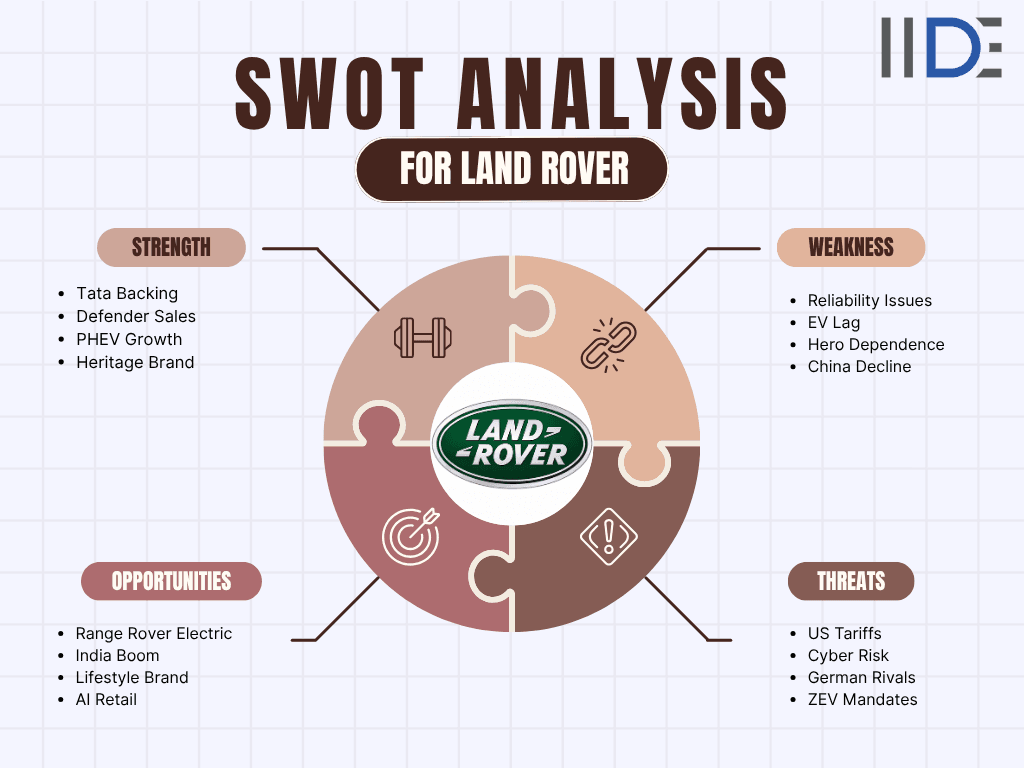
IIDE Student Takeaway, Recommendations & Conclusion for Land Rover in 2026 and Beyond
Core Tension: Land Rover is a heritage-driven, ICE-heavy luxury brand trying to transform itself into a software-defined, electric, sustainable luxury brand without losing the off-road soul that defines its identity. Very few legacy automakers face a harder or more specific version of this challenge.
Future Outlook: If Range Rover Electric launches on time and performs well, JLR could strengthen its position among luxury EV brands. Further delays may benefit German and Chinese rivals. Until then, resilience, cybersecurity, and PHEV growth remain key to 2030.
Recommendations:
- Start the EV Narrative Before Launch: The 65,000-plus waitlist is a content goldmine. Behind-the-scenes engineering videos, battery explainers, and influencer preview drives should be running now, not at the launch window.
- Double Down on India: India is structurally advantaged for JLR as a Tata company. Indian-language YouTube content, Tier 2 city dealership outreach, and Tata-ecosystem co-marketing can unlock volume growth at minimal incremental cost before German rivals catch up.
- Build Defender as a Lifestyle Brand: The Defender has the cultural permission to grow beyond a vehicle nameplate. Apparel collabs, outdoor gear partnerships, and creator-led expeditions drive vehicle pull-through while generating high-margin merchandise revenue.
- Turn Cybersecurity into a Trust Asset: The 2025 incident does not have to remain a liability. Transparency reports, GDPR-exceeding data protections, and a trust-first narrative can convert a perceived weakness into a genuine luxury differentiator for privacy-conscious affluent buyers.
- Deploy AI Across the Ownership Journey: Generative AI in configurators, predictive maintenance alerts, in-cabin voice AI, and personalised CRM directly attack Land Rover's customer service gaps while improving retention and generating valuable product development data.
- Take Heritage to Gen Z in Their Formats: Short-form vertical video, reimagined archival content, and creator-led road trips carry 75 years of heritage into formats younger buyers actually consume, without making the brand feel like a museum piece.
Land Rover in 2026 is not a brand in decline. It is a brand in transition, and there is a significant difference.
A record £2.5 billion profit, 65,000 Range Rover Electric prospects on a waitlist, and a Defender franchise at all-time highs are not the numbers of a brand losing its footing.
They are the numbers of a brand that has earned the right to compete in the electric era, but has not yet proven it can win there.
Tata Motors' financial backing, unmatched all-terrain capability, and British cultural authority give Land Rover a foundation most legacy automakers would trade everything for.
Yet persistent reliability concerns, a delayed EV flagship, and a ransomware attack that shut down UK plants for five weeks are warnings the brand cannot afford to ignore.
Range Rover Electric, India's luxury boom, and the Defender as a global lifestyle brand represent three genuine growth engines for the decade ahead. Chinese luxury EVs are not coming. They are already here, and they are moving fast.
Everything now comes down to execution, because Above and Beyond is not just a tagline. In 2026 and beyond, it is the standard Land Rover must hold itself to.
Want to Know Why 2,50,000+ Students Trust Us?
Dive into the numbers that make us the #1 choice for career success



MBA - Level
Post Graduate in Digital Marketing & Business Strategy

Best For
Fresh Graduates

Mode of Learning
On Campus (Mumbai & Delhi)

Starts from
Nov 27, 2026

Duration
11 Months

Live & Online
Advanced Online Digital Marketing Course
Best For
Working Professionals
Mode of Learning
Online
Starts from
Nov 2, 2026
Duration
4-6 Months

Offline
Top AI Courses to Make You Future Ready!
Best For
AI Enthusiasts
Mode of Learning
2–5 Month Program
Starts from
Nov 24, 2026
Duration
Flexiable

Offline
Undergraduate Program in Digital Business & Entrepreneurship
Best For
12th Passouts
Mode of Learning
On Campus (Mumbai)
Duration
3 Years
Offline
Degree In 2026 ≠ Enough Degree + Digital Skills = Future-Ready
Best For
12th Passouts
Mode of Learning
At IIDE Campus
Duration
3 Years
Recent Post
You May Also Like
Land Rover's 75+ years of British heritage, Royal Warrant, unmatched all-terrain capability, and a loyal global fanbase place it firmly in the luxury SUV segment.
Its proprietary Terrain Response 2 system and iconic model lineup including Range Rover, Defender, and Discovery deliver a combination of off-road performance and luxury unmatched by competitors.
Range Rover Electric is Land Rover's upcoming BEV flagship with an 800V architecture and 117 kWh battery, backed by 65,000+ waitlist registrations, set to redefine the brand's EV identity.
Tata Motors has owned JLR since 2008. Its backing enabled £3.8 billion in annual R&D investment and a £2.5 billion profit before tax in FY25, giving Land Rover strong financial stability.
Mercedes-Benz GLE/GLS, BMW X5/X7, Porsche Cayenne, Audi Q7, and Volvo XC90 are Land Rover's closest rivals in the premium and luxury SUV space.

Lead Trainer & Business Development Head at IIDE
Aditya Shastri leads the Business Development segment at IIDE and is a seasoned Content Marketing expert. With over a decade of experience, Aditya has trained more than 20,000 students and professionals in digital marketing, collaborating with prestigious institutions and corporations such as Jet Airways, Godrej Professionals, Pfizer, Mahindra Group, Publicis Worldwide, and many others. His ability to simplify complex marketing concepts, combined with his engaging teaching style, has earned him widespread admiration from students and professionals alike.
Aditya has spearheaded IIDE’s B2B growth, forging partnerships with over 40 higher education institutions across India to upskill students in digital marketing and business skills. As a visiting faculty member at top institutions like IIT Bhilai, Mithibai College, Amity University, and SRCC, he continues to influence the next generation of marketers.
Apart from his marketing expertise, Aditya is also a spiritual speaker, often traveling internationally to share insights on spirituality. His unique blend of digital marketing proficiency and spiritual wisdom makes him a highly respected figure in both fields.