
Students Centric
Placements Report
Trackable results, real numbers
Reviews
Proven success, real voices
Trainers
Expert-led, Industry-Driven Training
Life at IIDE
Vibrant Spirit student life
Alumni
Successful Journeys, Inspiring Stories
Learning Centre
Webinars
Blogs
Case studies
Live, Interactive Masterclasses
Fresh Insights, quick reads
Real-life, Industry relevant
More
Hire from us
Hire Top Digital Marketing Talent
Work with us
Join Our Team, Make an Impact
Customised Training
Personalised digital marketing training for your company
Refer & earn
Simple, easy rewards
Contact us
Get the answers you need
About us
Know more about IIDE
Explore all course options

FOR FRESH GRADUATES
Post Graduation Program in Digital Marketing & Business Strategy- Ideal for Age: 20–25 Years

Can’t decide? Explore all our
Digital Marketing Courses
COMPARE BOTH OUR PROGRAMSOffline
Offline AI Courses with Dual CertificationsIndustry-Aligned TRACKMost Popular
UG Program in Digital Business & Entrepreneurship- Ideal for 12th Pass out / FY Degree Student

PARTNER PROGRAMS






Can’t decide? Explore all
BBA In Digital Marketing Colleges
Orginally Written by Aditya Shastri
Updated on Aug 9, 2025
Share on:


About DMart
DMart is a chain of supermarkets run and managed by Avenue Supermarts Limited, established in the year 2002. Initially, DMart started as a single store in the year 2000 with the aim of providing the lowest-priced goods to consumers among its competitive peers.
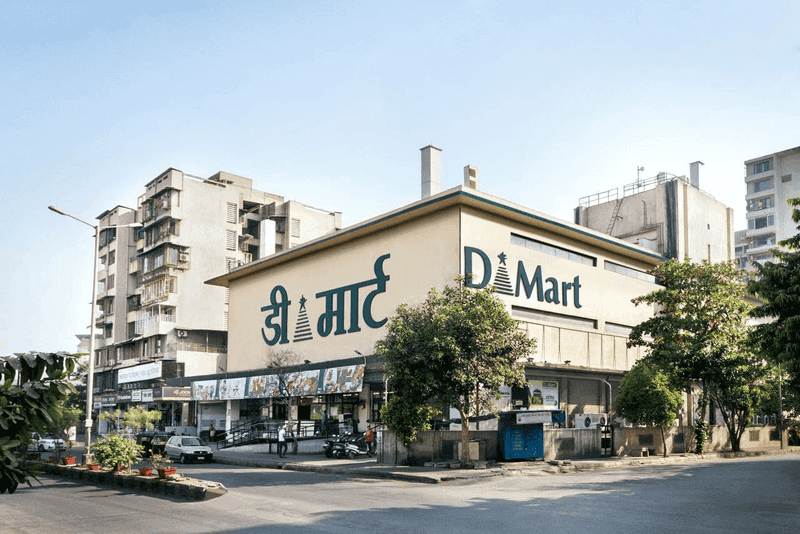
Since then it went onto expanding its footprints, providing its customers with an exceptional shopping experience, confident that they can rely on the quality of its offerings at such discounted prices.
It is owned by Radhakishan Damani who is also one of India’s most respected investors and it is headquartered in Mumbai, Maharashtra.
Today, DMart has become synonymous with the word “Supermarket” and is also regarded as the “Walmart of India” as it offers a wide range of product categories right from groceries to clothes as well as manufacturing and producing some of the products under its brand name.
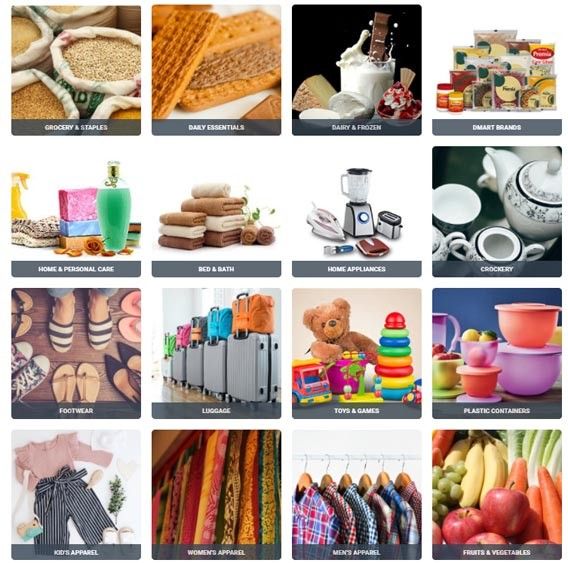
Category Offerings of DMart
DMart is a listed on the NSE and BSE stock exchanges under the name of ‘Avenue Supermarts’ and is valued at around 1.95 Lakh Crores. It also has five subsidiaries to its name that work towards the smooth functioning of DMart and Avenue Supermarts Limited entity as a whole.
Now that we know about DMart as a company, let us now go through the company’s marketing mix model in detail to get an overall understanding of its offerings.
Marketing Mix of DMart
A marketing mix is a model that a company uses to get its products and services noticed by the right people at the right time. This model is based on pillars of 4Ps: Product, Price, Place and Promotion. It forms the conceptual core of an overall marketing strategy.
So let us go through the marketing mix model of DMart by looking at the parameters of Product, Price, Place and Promotion in the coming section.
Product Strategy of DMart
Talking about the product strategy of Dmart, as previously said, it offers a wide range of products, the company has segmented its wide range of products into three categories, i.e. Food, Non-foods, and General Merchandise and Apparel.
- Under its Foods Category – It offers groceries, staples, processed foods, dairy, frozen products, beverages & confectionery, and fruits & vegetables that contribute close to 52 percent in revenues
- Under its Non-foods Category – It offers home care products, personal care products, toiletries, and other over-the-counter products that contribute close to 21 percent in revenues
- Under its General Merchandise and Apparel Category – It offers bed & bath, toys & games, crockery, plastic goods, garments, footwear, utensils, and home appliances that contribute close to 29 percent in revenues
DMart also sells a variety of products under its own name through brand names such as D Mart Minimax, D Mart Premia, D Homes, and Dutch Harbour.
Price Strategy of DMart
DMart deeply discounts its merchandise and offers products at less than competitive prices. Thanks to this strategy, it has succeeded in creating an image as a low-cost retailer and has attracted customers who are price-sensitive.
The company prides itself on being able to provide affordable prices to its customers regardless of whether they live in urban areas or rural areas.
Its pricing is usually less than the Maximum Retail Price (MRP) except for vegetables, fruits, and medicines. During festival seasons, these low prices make customers buy products in bulk quantities which results in a huge volume of sales.
The pricing strategy of Dmart is the major reason why its supermarket chain has been one of the most successfully operated entities in the country
Place & Distribution Strategy of DMart
DMart is the fastest-growing supermarket retail brand in India. As of 2020, DMart has about 214 stores present in about 11 states and 1 union territory and is constantly expanding its stores’ footprints.
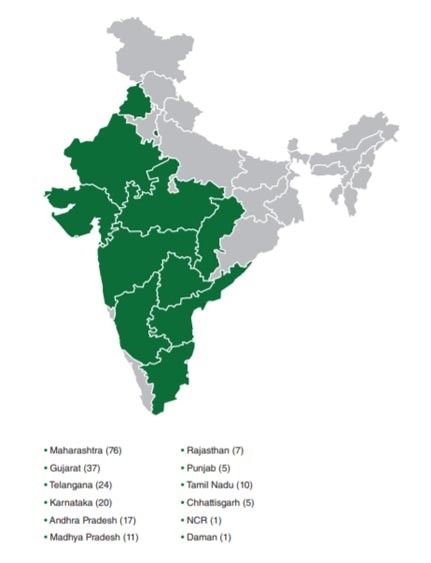
DMart stores are present in a major part of India which includes a presence in cities like Ahmedabad, Hyderabad, Banglore, Chennai, Mumbai etc.
All of its stores are strategically placed this helps the company to gain a competitive advantage as easy accessibility attracts customers and also leads to proper transportation facilities for logistics and operations-related functioning which is very important for survival during uneven times and to accelerated growth of the business during the normal times.
It also offers online ordering & delivery as well as takeaway service under its DMart Ready vertical.
Promotion Strategy of DMart
DMart, being the largest multi-brand in India, has been maintaining its positioning as a supermarket offering products at lower prices.
They offer various coupons to reward the customers and employees and thus boost their sales in the market. Coupons are also allotted to the customers when they meet certain standards of bulk purchases.
For instance, during the festive seasons, they offer 15% off on sweets and various other products. It also offers goods at 50% off or at one plus one free offer.
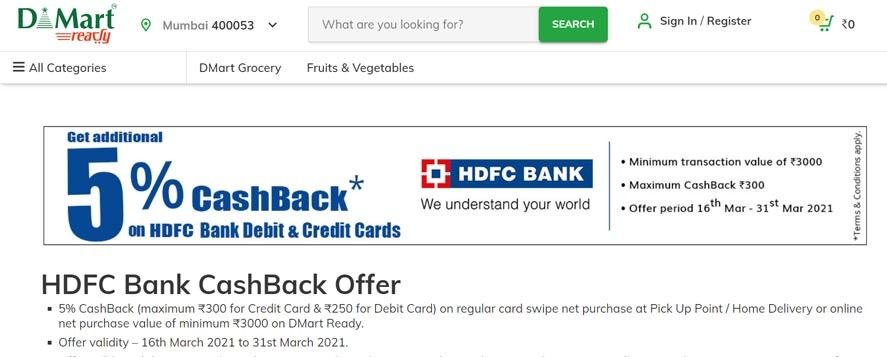
The company however doesn’t engage in aggressive marketing promotion but chooses to promote itself through Newspaper Ads and Outdoor Ads. It also recently collaborated with HDFC Bank and offered additional discounts on payments done with HDFC Cards.
This is how DMart lines up on the parameters of the marketing mix model. Let us now go through its marketing strategy in the coming section.
Marketing Strategy of DMart
In the ever-changing world of retail, where competition is intense and customer preferences constantly evolve, DMart has established itself as a leader. By prioritizing exceptional value, a smooth customer experience, and efficient operations, DMart has revolutionized the Indian retail landscape. The following points will help us understand the winning marketing strategy of DMart, exploring the key factors that have propelled its remarkable success.
Customer Satisfaction:
DMart has established itself as a leader by prioritizing customer delight, actively exceeding expectations, and creating positive memories throughout the shopping experience.DMart prioritizes a shopping experience that is effortless and convenient. This includes readily available and knowledgeable staff, well-organized and easy-to-navigate stores, and swift checkout processes, both in-person and online.
Streamlined Operations:
DMart maintains a simple and streamlined approach to store decor, focusing on functionality rather than elaborate design elements. This cost-effective strategy allows them to allocate resources towards product variety and affordability.
Strategic Asset Acquisition:
DMart prioritizes owning its retail properties rather than leasing them. This long-term marketing strategy of DMart eliminates ongoing rental expenses, contributing significantly to their overall profitability.
Expansion Strategy:
DMart didn’t rush into rapid expansion. They started small, which allowed them to carefully manage their supply chain and keep a close eye on their inventory. This strong foundation enabled them to gradually open stores in new cities without taking on excessive debt. This cautious approach contributed to their financial stability and long-term success.
Marketing Campigns of DMart
Better School, Brighter Futures! – A CSR Activity Campaign of DMart
DMart is a company committed to supporting its employees and communities through socially responsible business practices. Through this, DMart aims to make a positive impact on the lives of those who work for it, as well as the people around them
Through this campaign, it has launched an excellence program at various schools in and around Mumbai that helps students understand things better and aims at creating an ecosystem that allows students to benefit from better education, mentoring, research facilities as well as networking opportunities.

Promotion via Low-Cost Advertising Mediums
DMart uses both visuals and print advertisements to promote its name. The visual component consists of hoardings that are displayed in major locations of stores announcing specific product offers.
It also uses newspaper ads that contain information about sales and coupons. These ads utilize pictures of different products along with descriptions that explain why shoppers should buy them.
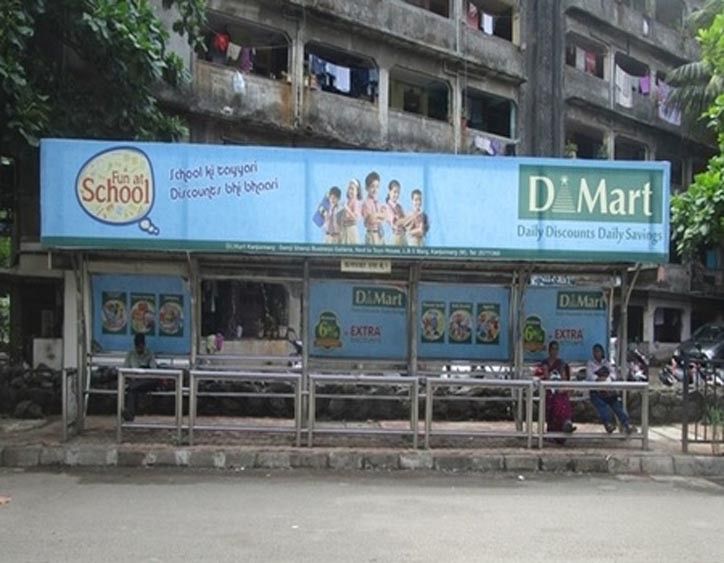
Outdoor Ads of DMart
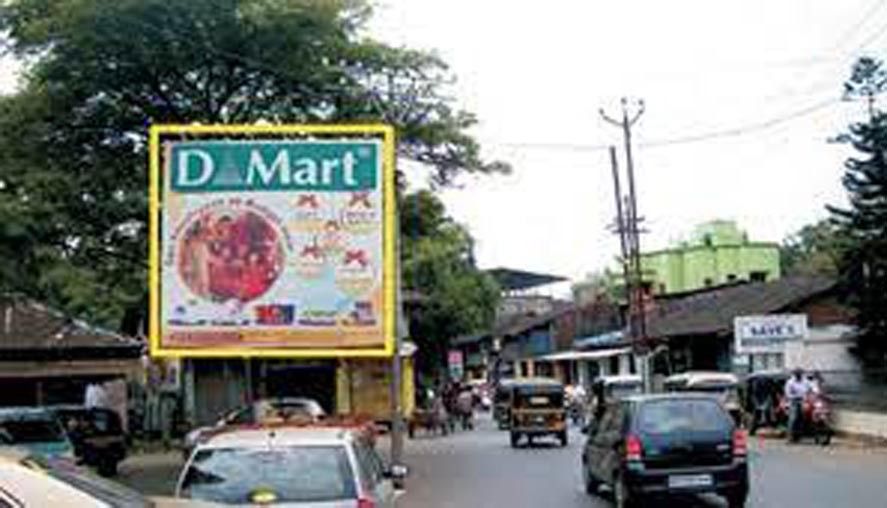
Outdoor Ads of DMart
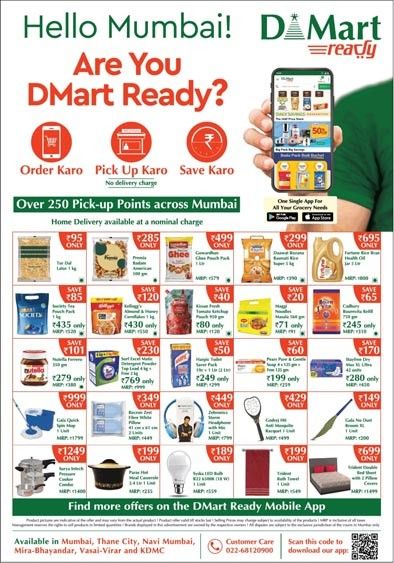
Newspaper Ads of DMart
Now that we know that DMart focuses more on CSR activities rather than regular marketing campaigns, let us go through its overall digital presence in the coming section.
Captivated by our blog? Do you want to ditch the outdated learning methods and embrace a transformative approach to your career? Unleash your potential in the dynamic digital marketing landscape with our Post Graduation in Digital Marketing program and gain the skills to thrive in this ever-evolving dynamic field.
Now, let us continue with our research.
Digital Presence of DMart
Although DMart has one of the strongest offline presence among all major retailers, the retail giant has avoided creating a digital footprint because it doesn’t believe it needs one.
Today, digitalization has become a necessary component for any successful brick-and-mortar or e-commerce store and Dmart moving forward should embrace the idea of digitalization as part of its overall strategy for growth.
However, the company has taken various steps to improve on digital fronts such as installing a chatbot on Facebook Messenger and launching DMart Ready but it has a long way to go.
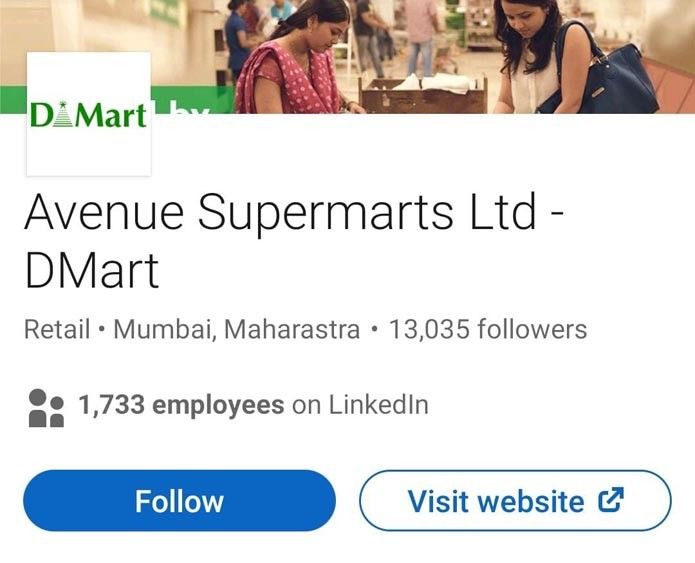
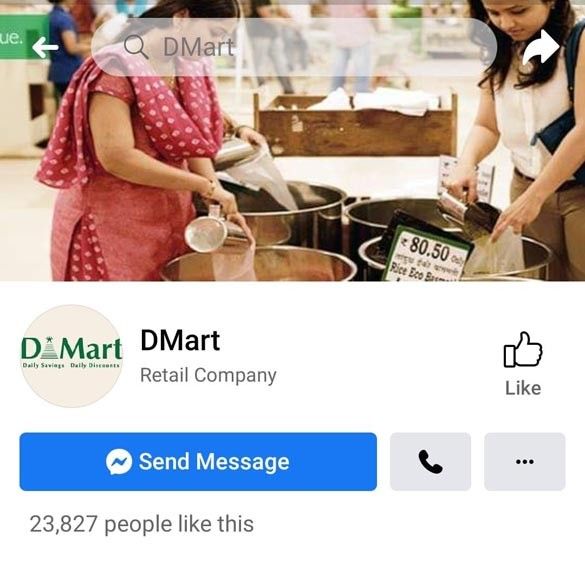
DMart uses Facebook just to inform and clarify doubts of customers which is great but this translates to underutilization of social media. It is not present on Instagram and Twitter which is a major drawback and should work on having a healthy presence on these platforms.
Now that we have talked about its competitors, let us now run through DMart’s competitors in the coming section.
Competitor Analysis of DMart
DMart faces competition from various players in the Indian retail market. Here are some of its top competitors:
The Indian retail segment is one of the fastest-growing and least tapped segments. Overall, the retail market is highly unorganized, and as we know that India is a developing country and the youngest country, it is observed that the retail segment is something that can become the next big thing.
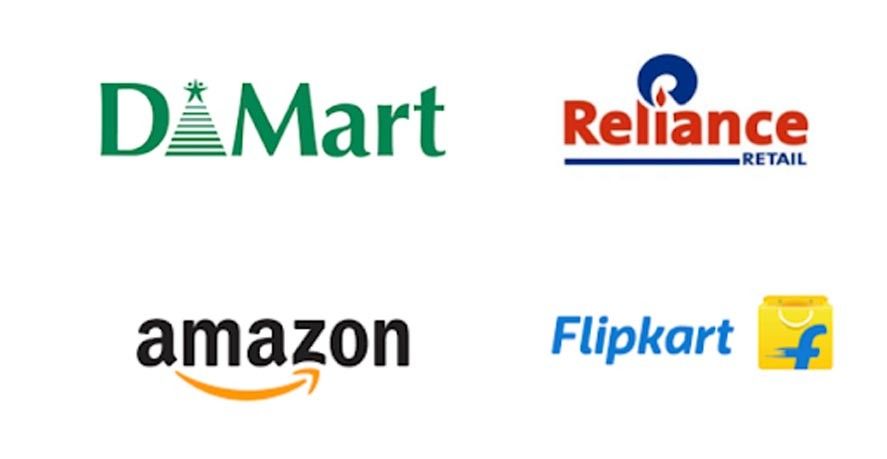
Reliance Retail is a major player in the Indian retail space, Reliance Retail operates various chains like Reliance Fresh, Reliance Mart, and JioMart, directly competing with DMart in terms of product range, pricing, and store presence.
Big Bazaar owned by Future Retail Limited, Big Bazaar offers a wide variety of groceries, household essentials, and apparel, posing a significant challenge to DMart in the hypermarket segment.
Online Grocery Player companies like Bigbasket, Blinkit, and ZeptoNow have gained significant traction in online grocery delivery, offering convenience and potentially impacting DMart’s customer base, especially in urban areas.
Recently, Tata announced their arrival in the retail segment with the acquisition of Big Basket. Whereas Flipkart and Grofers are all focusing on the penetration of the grocery segment.
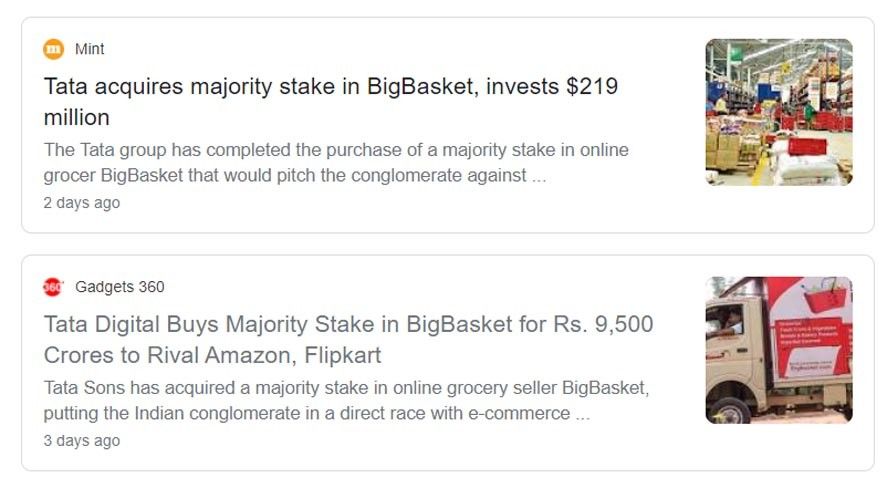
With DMart being one the most well-established companies in this segment business-wise, it needs to work on its digital marketing part to maintain the loyalty of its customers.
This brings us to the end of our analysis of the marketing strategy of Dmart to a close, let us conclude our blog by summarizing its key takeaways.

Is Digital Marketing the Right Career for You?
Find out in a free 45-min masterclass · Career paths, roles and growth explained · By Karan Shah, Founder & CEO, IIDE

Is Digital Marketing the Right Career for You?
Find out in a free 45-min masterclass · Career paths, roles and growth explained · By Karan Shah, Founder & CEO, IIDE
Want to Know Why 2,50,000+ Students Trust Us?
Dive into the numbers that make us the #1 choice for career success


MBA - Level
Post Graduate in Digital Marketing & Business Strategy

Best For
Fresh Graduates

Mode of Learning
On Campus (Mumbai & Delhi)

Starts from
Nov 27, 2026

Duration
11 Months

Live & Online
Advanced Online Digital Marketing Course
Best For
Working Professionals
Mode of Learning
Online
Starts from
Nov 2, 2026
Duration
4-6 Months

Offline
Top AI Courses to Make You Future Ready!
Best For
AI Enthusiasts
Mode of Learning
2–5 Month Program
Starts from
-
Duration
Flexiable
Offline
Undergraduate Program in Digital Business & Entrepreneurship
Best For
12th Passouts
Mode of Learning
On Campus (Mumbai)
Duration
3 Years
Offline
Degree In 2026 ≠ Enough Degree + Digital Skills = Future-Ready
Best For
12th Passouts
Mode of Learning
At IIDE Campus
Duration
3 Years
Recent Post

Lead Trainer & Business Development Head at IIDE
Aditya Shastri leads the Business Development segment at IIDE and is a seasoned Content Marketing expert. With over a decade of experience, Aditya has trained more than 20,000 students and professionals in digital marketing, collaborating with prestigious institutions and corporations such as Jet Airways, Godrej Professionals, Pfizer, Mahindra Group, Publicis Worldwide, and many others. His ability to simplify complex marketing concepts, combined with his engaging teaching style, has earned him widespread admiration from students and professionals alike.
Aditya has spearheaded IIDE’s B2B growth, forging partnerships with over 40 higher education institutions across India to upskill students in digital marketing and business skills. As a visiting faculty member at top institutions like IIT Bhilai, Mithibai College, Amity University, and SRCC, he continues to influence the next generation of marketers.
Apart from his marketing expertise, Aditya is also a spiritual speaker, often traveling internationally to share insights on spirituality. His unique blend of digital marketing proficiency and spiritual wisdom makes him a highly respected figure in both fields.