
Students Centric
Placements Report
Trackable results, real numbers
Reviews
Proven success, real voices
Trainers
Expert-led, Industry-Driven Training
Life at IIDE
Vibrant Spirit student life
Alumni
Successful Journeys, Inspiring Stories
Learning Centre
Webinars
Blogs
Case studies
Live, Interactive Masterclasses
Fresh Insights, quick reads
Real-life, Industry relevant
More
Hire from us
Hire Top Digital Marketing Talent
Work with us
Join Our Team, Make an Impact
Customised Training
Personalised digital marketing training for your company
Refer & earn
Simple, easy rewards
Contact us
Get the answers you need
About us
Know more about IIDE
Explore all course options

FOR FRESH GRADUATES
Post Graduation Program in Digital Marketing & Business Strategy- Ideal for Age: 20–25 Years

Can’t decide? Explore all our
Digital Marketing Courses
COMPARE ALL 3 PROGRAMSOnline & Offline
Explore Top AI CoursesIndustry-Aligned TRACKMost Popular
UG Program in Digital Business & Entrepreneurship- Ideal for 12th Pass out / FY Degree Student

PARTNER PROGRAMS






Can’t decide? Explore all
BBA In Digital Marketing Colleges
Orginally Written by Aditya Shastri
Updated on Dec 12, 2025
Share on:


L’Oréal has built its strategy around the idea of “Universalisation”, meaning global reach plus local relevance. It uses strong R & D, digital transformation (AI, Beauty Tech), and sustainability as pillars. Key channels include omni-channel distribution, digital/E-commerce, localized innovation and storytelling, plus a multipolar operational model.
This blog explores how L’Oréal sets its marketing goals, who its customers are, what strategies it uses, what results it has achieved, what works and what challenges remain, and future directions.
Before diving in, this analysis was prepared by Manik Jayee, a student currently pursuing IIDE's Post graduation in digital marketing course. If you found insights here useful, feel free to share feedback it's much appreciated!
Introduction
L’Oréal, founded in 1909, is a global powerhouse in beauty, cosmetics, personal care and more. Its impact is felt across hundreds of countries and its brands span price segments from mass to luxury.
In recent years, changing customer expectations around personalization, inclusivity, digital experience, sustainability have reshaped what consumers expect. To stay competitive, L’Oréal has refined its marketing strategy to not just push products, but to deliver beauty experiences that respect local culture, environment, and individual differences.
Mission & Vision: L’Oréal’s strategy is summed up as universalisation “globalization that captures, understands and respects differences.” It strives to offer “beauty for each.”

Learn Digital Marketing for FREE

Learn Digital Marketing for FREE
Marketing Objectives & Business Challenges
L’Oréal’s business objectives focus on sustaining its leadership as the world’s largest beauty brand by driving innovation, expanding into emerging markets, and accelerating its digital transformation to connect with consumers across multiple touchpoints.
- Strengthen global leadership in the beauty industry through continuous innovation
- Expand into high-potential emerging markets to capture new growth opportunities
- Accelerate digital transformation by leveraging e-commerce, social media, and tech-driven consumer engagement
- Balance premium brand positioning with local price sensitivities and diverse beauty standards
- Compete with both established global players and fast-growing D2C brands that are disrupting the market
Buyers Persona:

Kajal Singh
Urban & semi-urban cities, metro areas
Occupation: Fashion Designer
Age: 22 - 40 years
Motivations
- To look and feel confident in everyday life and special occasions
- Desire for premium yet accessible luxury beauty
- Seeking products backed by science and trusted by celebrities
- Aspirations of self-expression and glamour without compromising on quality
- Interest in sustainable beauty and inclusivity (cruelty-free, shade diversity, eco-friendly packaging)
Interests & Hobbies
- Following makeup tutorials, beauty influencers, and skincare hacks on Instagram & YouTube
- Shopping online on platforms like Nykaa, Amazon, Flipkart, Myntra
- Experimenting with fashion, beauty, and lifestyle trends
- Traveling, café-hopping, attending social events where appearance matters
- Interest in fitness, wellness, and self-care routines
- Engaging in festive & seasonal shopping (Diwali, weddings, Christmas, Valentine’s Day)
Pain Points
- Overwhelming number of beauty products → difficulty choosing the right one
- Concerns about skin sensitivity or hair damage from chemical-based products
- Struggles to find authentic shade matches for diverse Indian skin tones
- Perception that some L’Oréal Paris products may be expensive compared to local brands
- Confusion around differentiating L’Oréal Paris from other international competitors
Social Media Presence
Present on Instagram, Pinteret, Facebook, YouTube, LinkedIn
Marketing Channels & Strategies Used By L’Oréal
L’Oréal has established itself as a digital-first beauty brand by blending technology, content, and personalization across multiple platforms. The brand leverages social media, influencer collaborations, e-commerce, and data-driven campaigns to stay connected with modern consumers. Its approach focuses on storytelling, inclusivity, and innovation, ensuring relevance in a competitive and fast-evolving beauty market.
- Influencer Marketing - Collaborations with global influencers, makeup artists, and micro-creators to build authenticity and trust
- Content Marketing - Educational blogs, product videos, and campaigns highlighting diversity, sustainability, and innovation
- Paid Media & Performance Marketing - Google Ads, social ads, and retargeting campaigns for conversion-focused results
By investing heavily in digital-first strategies, L’Oréal has transformed from a traditional beauty brand into a tech-driven innovator. Its mix of content marketing, influencer collaborations, and performance marketing has not only strengthened its global reach but also built lasting trust with a diverse consumer base.
L’Oréal Marketing Strategy Breakdown
1. Influencer Marketing
- L’Oréal has long worked with high-profile global ambassadors who embody glamour and inclusivity
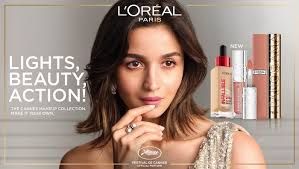
- Currently Alia Bhatt is the brand ambassador for the brand
- Recently, They conducted an event where more than 200 macro and micro level influencers Participated
2. Google Ads & Performance Marketing
- They are running Youtube video ads of Aishwarya Rai with the campaign “L’oreal paris 5 repair”
- Currently L’OREAL is doing search Ads with high intent keywords like Salicylic Acid, L’OREAL Shampoo and Glycolic Acid
3. Messaging & Brand Voice
- L’Oréal's brand voice is consistently Innovative, confident, and inclusive across its digital and influencer marketing effort
- By empowering messaging, celebrating diversity, and fostering authentic relationships with influencers
- L’Oréal effectively engages its global audience and maintains its position as a leader in the beauty industry
Results & Impact
L’Oréal Marketing strategy worked well. Here are some Key highlights, results & impact:
- L’Oréal Professionnel saw a +563% increase in Earned Media Value (EMV) over six months, generating nearly €30 million via influencer/KOL activations
- The campaign achieved 423 million+ impressions and an engagement rate of 6.69%, which is high compared to typical benchmarks in beauty
- L’Oréal’s e-commerce contributed 28.2% of the group’s sales. That’s a substantial share showing how much digital channels are driving revenue
These numbers show that L’Oréal’s influencer marketing isn’t just creating buzz - it’s generating demonstrable sales lift, strong engagement, and high earned media value.
What Worked & Why
Here are some things that are working well for L’Oréal right now, based on their recent performance and strategic moves. These are lessons that seem effective and could be models to emulate:
- Collaborations with global stars (e.g., Alia Bhatt) and 423M+ impressions and a 563% rise in EMV
- Campaigns such as “I’m Worth It” and #AShadeApart resonated emotionally, focusing on inclusivity, empowerment, and diversity
- Nearly 28% of global sales came from e-commerce, showing success in direct-to-consumer websites, apps, and partnerships
What Didn’t Work & Why
L’Oréal is performing strongly overall, but even market leaders face weaknesses and challenges. Based on 2024-2025 reports and industry analysis, here’s what is not working (or less effective) for L’Oréal right now:
- Heavy reliance on influencer and paid social campaigns sometimes leads to content fatigue. Younger audiences, especially Gen Z, demand authenticity and may disengage if campaigns feel overly polished or commercial
- While paid media drove conversions, reliance on performance campaigns sometimes overshadowed organic growth strategies like SEO and long-form content
- With constant exposure to beauty ads, users began ignoring repetitive or overly polished creatives. Click-through rates on some campaigns declined due to oversaturation
Enjoying the marketing strategy of Loreal? Now explore SWOT Analysis of The Body Shop and learn the tactics and challenges faced by the brand in the beauty industry.
IIDE Student Recommendations: Key Areas for Brand Improvement
1. Website & E-Commerce Experience
- Some country sites are slow-loading with heavy visuals → hurts SEO & conversion
- Optimize for speed, mobile-first, responsive UI
- Centralize beauty tech tools (AR try-on, AI skin/hair diagnostics) into one seamless flow
2. Campaign Execution
- Campaigns are celebrity-heavy but sometimes lack personalization
- Remarketing flows are under-leveraged across Meta/Google ecosystems
- Build full-funnel campaigns: awareness (video/reels) → consideration (influencer collabs) → conversion (performance ads with offers)
3. SEO & Keyword Strategy
- Heavy ranking on brand terms (“L’Oréal shampoo”, “Maybelline lipstick”) but less presence on non-branded, high-intent queries (“how to treat dandruff”)
- Competitors & beauty blogs often outrank L’Oréal for these search-intent keywords
- Expand content marketing hub with how-to guides, tutorials, and skincare education
- Target long-tail, solution-based keywords aligned with customer pain points
4. Performance Marketing
- Heavy budget allocation to Meta & YouTube, but Google Demand Gen and Shopping Ads are underutilized
- Weak retargeting depth cart abandoners, video viewers not always re-engaged
- Automate audience segmentation with AI (lookalikes, predictive LTV)
Want to Know Why 2,50,000+ Students Trust Us?
Dive into the numbers that make us the #1 choice for career success


MBA - Level
Post Graduate in Digital Marketing & Business Strategy

Best For
Fresh Graduates

Mode of Learning
On Campus (Mumbai & Delhi)

Starts from
Jul 31, 2026

Duration
11 Months
Live & Online
Advanced Online Digital Marketing Course
Best For
Working Professionals
Mode of Learning
Online
Starts from
Aug 7, 2026
Duration
4-6 Months

Online
Professional Certification in AI Strategy
Best For
AI Enthusiasts
Mode of Learning
Online
Starts from
Sep 8, 2026
Duration
5 Months
On Campus
Advanced Certification in Artificial Intelligence
Best For
AI Enthusiasts
Mode of Learning
On Campus (Mumbai)
Starts from
Sep 1, 2026
Duration
3 Months

Online or Offline
Top AI Courses to Make You Future Ready!
Best For
AI Enthusiasts
Mode of Learning
2–5 Month Program
Starts from
Sep 8, 2026
Duration
Flexiable
Offline
Undergraduate Program in Digital Business & Entrepreneurship
Best For
12th Passouts
Mode of Learning
On Campus (Mumbai)
Starts from
Aug 19, 2026
Duration
3 Years
Offline
Degree In 2026 ≠ Enough Degree + Digital Skills = Future-Ready
Best For
12th Passouts
Mode of Learning
At IIDE Campus
Starts from
Aug 6, 2026
Duration
3 Years
Recent Post

Lead Trainer & Business Development Head at IIDE
Aditya Shastri leads the Business Development segment at IIDE and is a seasoned Content Marketing expert. With over a decade of experience, Aditya has trained more than 20,000 students and professionals in digital marketing, collaborating with prestigious institutions and corporations such as Jet Airways, Godrej Professionals, Pfizer, Mahindra Group, Publicis Worldwide, and many others. His ability to simplify complex marketing concepts, combined with his engaging teaching style, has earned him widespread admiration from students and professionals alike.
Aditya has spearheaded IIDE’s B2B growth, forging partnerships with over 40 higher education institutions across India to upskill students in digital marketing and business skills. As a visiting faculty member at top institutions like IIT Bhilai, Mithibai College, Amity University, and SRCC, he continues to influence the next generation of marketers.
Apart from his marketing expertise, Aditya is also a spiritual speaker, often traveling internationally to share insights on spirituality. His unique blend of digital marketing proficiency and spiritual wisdom makes him a highly respected figure in both fields.