
Students Centric
Placements Report
Trackable results, real numbers
Reviews
Proven success, real voices
Trainers
Expert-led, Industry-Driven Training
Life at IIDE
Vibrant Spirit student life
Alumni
Successful Journeys, Inspiring Stories
Learning Centre
Webinars
Blogs
Case studies
Live, Interactive Masterclasses
Fresh Insights, quick reads
Real-life, Industry relevant
More
Hire from us
Hire Top Digital Marketing Talent
Work with us
Join Our Team, Make an Impact
Customised Training
Personalised digital marketing training for your company
Refer & earn
Simple, easy rewards
Contact us
Get the answers you need
About us
Know more about IIDE
Explore all course options

FOR FRESH GRADUATES
Post Graduation Program in Digital Marketing & Business Strategy- Ideal for Age: 20–25 Years

Can’t decide? Explore all our
Digital Marketing Courses
FOR STUDENTSOn-campus
Advanced Certification in AI
FOR WORKING PROFESSIONALSOnline
Professional Certification in AI StrategyFOR 12TH GRADUATESMost Popular
UG Program in Digital Business & Entrepreneurship- Ideal for Age: 18–19 Years

PARTNER PROGRAMS







Can’t decide? Explore all
BBA In Digital Marketing Colleges
Orginally Written by Aditya Shastri
Updated on Sep 30, 2025
Share on:


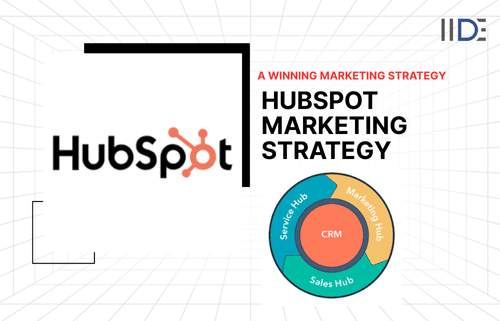
HubSpot’s marketing strategy 2025 blends SEO best practices, AI-driven personalisation, creator partnerships, and multimedia content to attract and convert audiences, making it a strong inbound marketing case study.
In this blog, we’ll dive into HubSpot’s marketing strategy, its objectives, channels, and results and uncover key lessons for brands. Scroll
Before diving into the HubSpot marketing strategy, I’d like to inform you that the research and initial analysis for this piece were conducted by Vedanti Khambit. She is a current student in PG In Digital Marketing & Strategy (March 2025 Batch).
If you found this case study on HubSpot marketing strategy, feel free to reach out to Vedanti to send a quick note of appreciation for her fantastic research - she’ll appreciate the kudos!
About HubSpot

Do you remember the old school ads that can feel annoying and pushy? That is the problem HubSpot set out to fix. Established in 2006 on the campus of MIT and founded by Brian Halligan and Dharmesh Shah, HubSpot has become a masterclass of inbound marketing, helping companies attract customers and prospects with valuable content instead of being annoying and disruptive in the form of ads.
HubSpot has evolved into a global SaaS powerhouse, originating from a small startup with 1.5 million monthly organic visitors, 307,000 ranking keywords, and a domain authority of 96, serving customers in over 125 countries. HubSpot has built a marketing engine that is hard to beat. Their offerings span CRM, marketing automation, sales, and customer service with their AI-powered customer service solution.
HubSpot has legacy competitors such as Salesforce, Zoho, and Mailchimp, but HubSpot consistently leads with product innovation, educational content, and its active ecosystem of users. HubSpot's reported revenue in 2024 was $2.62B, and it showed an increase in Q2 2025 of 8.39% to $2.84B.
For 2025, HubSpot is evolving again to tackle challenges related to disruptive new AI systems, data privacy rules, and zero-click searches, keeping brands visible and helping them win in a noisy digital landscape.

Learn Digital Marketing for FREE

Marketing Objective or Business Challenge
Even with its success as a SaaS leader, HubSpot knew that staying on top was not a guarantee.
They faced risks from competitors like Salesforce, Zoho, and Adobe, which were pouring massive marketing budgets.
To set themselves apart, HubSpot relied on thought leadership, an easy user experience, and a human-like personality.
As audiences grew tired of conventional blogs, HubSpot's strategies shifted to storytelling through podcasts and video series, while utilising interactive guides and new tools, such as the AI Search Grader, in response to zero-click search trends.
- Privacy-first marketing, layered on top of other complexities, became commensurate with the demise of cookies.
- HubSpot adopted ethical first-party data collection, as well as AI for personalisation, to promote greater engagement.
- Creator-led growth strengthened trust in the brand and lowered customer acquisition costs.
- The global expansion of the brand required localised content strategies for diverse markets.
HubSpot's mission was straightforward: grow community, encourage engagement, improve acquisition and retention, and stay top of mind, all while staying ahead in a rapidly changing digital landscape.
Marketing Channels Used by HubSpot
HubSpot followed a balanced marketing strategy that included content marketing while incorporating creator-led growth, AI personalisation, and multimedia campaigns to reach audiences across the continuum of channels.
On the digital side, they invested in:
Podcasts to build community and connect audiences and marketing leaders through a conversation of education via podcasting.
YouTube (long and short form) for growth through education and for engaging broader users with helpful content.
SEO and interactive tools (e.g. an AI Search Grader) to generate greater organic visibility and combat the challenges of zero-click searches.
AI tools for personalisation and to enrich campaigns, improving lead quality and engaging prospects.
To build trust and reach channels, HubSpot took a creator-centred approach by partnering with creators in the HubSpot Creators Program that focused on authentic, long-term relationships that reduced acquisition costs and improved engagements through creators.
For global expansion, HubSpot localised content for Asia, LATAM, and non-English language audiences. They blended performance marketing, data-driven insights, and storytelling to educate their audience, establish brand recall, and convert audience engagement into customer growth.
Marketing Strategy Breakdown for HubSpot
1. Content Marketing & SEO:
HubSpot's plan emphasised content marketing to inform audiences, establish authority, and acquire organic traffic.
- HubSpot enhanced its approach to content marketing beyond traditional blogging to include Podcasts that built connections with marketing leaders through engaging conversations.
- Interactive guides and video series to capture the attention of users on different formats, in addition to different platforms.
- SEO optimisation with tools like AI Search Grader to improve organic visibility amid zero-click searches.
HubSpot has developed smarter internal linking strategies for blog content, tools, and landing pages to establish authority and increase conversions.
This content marketing hybrid led to improved engagement and thought leadership, ultimately capturing high-intent search traffic.
2. Creator Led Marketing & Influencer Partnership:
Creator-led growth was a main driver for acquisition. HubSpot took the approach of partnering with marketing creators and experts to:
- Build authentic long-term relationships that ultimately lead to trust.
- Reduce the overall cost per lead against historical models of paid ads.
- Increase the reach and gain exposure on platforms such as LinkedIn, YouTube, and Twitter.
This approach is centred around experience-based recommendations versus solely promotions, which allowed the brand to feel more human and build an emotional connection with digital native audiences.
3. AI-Driven Personalisation & Data Marketing:
HubSpot utilised various AI tools like GPT-4 to:
- Personalise campaigns at scale.
- Improve engagement, conversions, and click-through rates.
- Enhance the overall quality of data to leverage for better marketing applications.
4. Multimedia and Video Marketing:
HubSpot used video content to educate and design a connection:
HubSpot leveraged YouTube long-form videos to showcase relevant tutorials and thought leadership.
HubSpot leveraged YouTube Shorts to reach a broader audience with bite-sized content.
Using podcasts, interactive guides, and other formats helped keep things fresh and accessible.
The combination of various formats helped combat content fatigue and diversify engagement channels.
5. Global Expansion and Localisation:
To access potential and existing markets in Asia, LATAM, and non-English speaking regions, HubSpot did the following:
- HubSpot localised content to make it more relevant for the areas.
- Campaigns were carefully crafted to incorporate cultural nuances while maintaining a consistent, engaging brand voice.
By considering global positioning and screening localised, relevant content, HubSpot was able to connect the campaign to increase awareness and engagement.
6. Brand Messaging and Voice:
HubSpot’s messaging is human, witty, and approachable:
- They had campaigns that were deliberately emotional, such as their NYC Marathon ads.
- Focused messaging on trust, thought leadership, and community building was still presented in a fun, engaging way.
Consistency is key, as their messaging/branding is consistently on point across all platforms, channels, or iterations.
Messaging in blogs, videos, podcasts, and partnerships across creators reinforced consistency.
Results & Impact
HubSpot's marketing efforts yielded substantial quantitative findings, particularly in terms of audience engagement. Some noteworthy statistics include:
- Partnerships with creators led to a 30-40% reduction in customer acquisition costs (indicating that work with creators was effective).
- The podcast, video, and guides produced content that kept users on the website for long periods of time.
- The use of AI personalisation for engagement increased conversions by 82% and click-through rates by 50%, indicating that campaigns were effective.
- The four types of localised content allowed HubSpot to reach better new audiences in Asia, LATAM, and other markets.
- The utilisation of Search Engine Optimisation (SEO) and tools like the AI Search Grader improved visibility, even in zero-click searches, and produced more organic traffic.
- Brand awareness and trust improved through creative campaigns and working with authentic creators.
Overall, HubSpot improved its community engagement and competition.
What Worked & Why
HubSpot’s creator partnerships were very effective. They built trust with prospective customers and reduced acquisition costs by 30-40%.
Furthermore, HubSpot's AI-driven personalisation led to an 82% increase in conversions and a 50% increase in click-through rates.
HubSpot utilised engaging multimedia formats, such as podcasts, videos, and interactive guides, to entertain potential customers and retain their attention.
HubSpot's search engine optimisation (SEO) and tools, such as the AI Search Grader, helped improve visibility despite the rise of zero-click searches.
Meanwhile, fun and human campaigns helped build brand recall, making HubSpot feel friendly and relatable in the SaaS market.
What Didn’t Work & Why
HubSpot's capacity for worldwide expansion was slowed by content that was not fully localised to regions such as Asia and LATAM.
Traditional blogs encountered challenges due to an overload of engagement. Competitors also adopted similar AI tools, making it more challenging to differentiate.
Finally, zero-click search trends continued to limit organic traffic, requiring HubSpot to continue innovating to pull audiences back to its owned channels.
Explore how Microsoft’s marketing strategy in 2025 leverages AI, cloud computing, and strategic partnerships to maintain its leadership in the tech industry.
IIDE Student Recommendations: Key Areas for Brand Improvement
Increase Multimedia Engagement
- Podcasts, videos, and guides work really well, but HubSpot can take engagement to the next level. Adding interactive webinars, live Q&A sessions, polls, and micro learning modules can keep audiences hooked for longer.
- These formats encourage participation and make the experience more fun, boosting time spent on the platform.
Develop a Customer Loyalty & Community Program
HubSpot can build an even stronger community by creating a “HubSpot Heroes” program for its power users. This could include:
- Exclusive creator content
- Beta access to new tools
- Rewards for sharing success stories or referring friends
This not only keeps users loyal but also turns them into brand advocates who spread the word for free.
Fix Keyword Distribution & On-Page SEO
HubSpot’s main keywords are not evenly spread across title tags, meta descriptions, and headers. This makes it harder for search engines to understand what the page is about.
- Add primary keywords in H1S, H2S, meta descriptions, and the first 100 words of content.
- Create FAQ sections to target voice search and zero-click queries.
- Utilise semantic keywords to address related search intents.
Better keyword placement helps HubSpot rank higher, get more clicks, and attract better qualified traffic - all without spending extra on ads.
Optimise Core Web Vitals for Better UX
HubSpot’s Core Web Vitals show room for improvement:
- Largest Contentful Paint (LCP): 3.8s → Aim for under 2.5s by preloading hero images and prioritising above the fold content.
- Cumulative Layout Shift (CLS): 0.1 → Prevent page “jumping” by reserving space for images and ads.
- First Contentful Paint (FCP): 3.6s → Improve server response time and use modern image formats like WebP.
Core Web Vitals are a direct Google ranking factor and a major part of user experience. Fixing them means smoother browsing, more engagement, and higher conversions.
Want to Know Why 5,00,000+ Students Trust Us?
Dive into the numbers that make us the #1 choice for career success



MBA - Level
Post Graduate in Digital Marketing & Business Strategy

Best For
Fresh Graduates

Mode of Learning
On Campus (Mumbai & Delhi)

Starts from
Jun 25, 2026

Duration
11 Months

Live & Online
Advanced Online Digital Marketing Course
Best For
Working Professionals
Mode of Learning
Online
Starts from
Jul 3, 2026
Duration
4-6 Months

Online
Professional Certification in AI Strategy
Best For
AI Enthusiasts
Mode of Learning
Online
Starts from
Jun 16, 2026
Duration
5 Months

On Campus
Advanced Certification in Artificial Intelligence
Best For
AI Enthusiasts
Mode of Learning
On Campus (Mumbai)
Starts from
Jun 15, 2026
Duration
3 Months
Offline
Undergraduate Program in Digital Business & Entrepreneurship
Best For
12th Passouts
Mode of Learning
On Campus (Mumbai)
Starts from
Aug 1, 2026
Duration
3 Years
Recent Post

Lead Trainer & Business Development Head at IIDE
Aditya Shastri leads the Business Development segment at IIDE and is a seasoned Content Marketing expert. With over a decade of experience, Aditya has trained more than 20,000 students and professionals in digital marketing, collaborating with prestigious institutions and corporations such as Jet Airways, Godrej Professionals, Pfizer, Mahindra Group, Publicis Worldwide, and many others. His ability to simplify complex marketing concepts, combined with his engaging teaching style, has earned him widespread admiration from students and professionals alike.
Aditya has spearheaded IIDE’s B2B growth, forging partnerships with over 40 higher education institutions across India to upskill students in digital marketing and business skills. As a visiting faculty member at top institutions like IIT Bhilai, Mithibai College, Amity University, and SRCC, he continues to influence the next generation of marketers.
Apart from his marketing expertise, Aditya is also a spiritual speaker, often traveling internationally to share insights on spirituality. His unique blend of digital marketing proficiency and spiritual wisdom makes him a highly respected figure in both fields.